Forgiveness Sunday
Protopresbyter Alexander Schmemann
In the Orthodox Church, the last Sunday before Great Lent – the day on which, at Vespers, Lent is liturgically announced and inaugurated – is called Forgiveness Sunday. On the morning of that Sunday, at the Divine Liturgy, we hear the words of Christ:
“If you forgive men their trespasses, your heavenly Father will also forgive you, but if you forgive not men their trespasses, neither will your Father forgive your trespasses…” (Mark 6:14-15)
Then after Vespers – after hearing the announcement of Lent in the Great Prokeimenon: “Turn not away Thy face from Thy child for I am afflicted! Hear me speedily! Draw near unto my soul and deliver it!”, after making our entrance into Lenten worship, with its special memories, with the prayer of St. Ephraim the Syrian, with its prostrations – we ask forgiveness from each other, we perform the rite of forgiveness and reconciliation. And as we approach each other with words of reconciliation, the choir intones the Paschal hymns, filling the church with the anticipation of Paschal joy.
What is the meaning of this rite? Why is it that the Church wants us to begin Lenten season with forgiveness and reconciliation? These questions are in order because for too many people Lent means primarily, and almost exclusively, a change of diet, the compliance with ecclesiastical regulations concerning fasting. They understand fasting as an end in itself, as a “good deed” required by God and carrying in itself its merit and its reward. But, the Church spares no effort in revealing to us that fasting is but a means, one among many, towards a higher goal: the spiritual renewal of man, his return to God, true repentance and, therefore, true reconciliation. The Church spares no effort in warning us against a hypocritical and pharisaic fasting, against the reduction of religion to mere external obligations. As a Lenten hymn says:
In vain do you rejoice in no eating, O soul!
For you abstain from food,
But from passions you are not purified.
If you persevere in sin, you will perform a useless fast.
Now, forgiveness stands at the very center of Christian faith and of Christian life because Christianity itself is, above all, the religion of forgiveness. God forgives us, and His forgiveness is in Christ, His Son, Whom He sends to us, so that by sharing in His humanity we may share in His love and be truly reconciled with God. Indeed, Christianity has no other content but love. And it is primarily the renewal of that love, a return to it, a growth in it, that we seek in Great Lent, in fasting and prayer, in the entire spirit and the entire effort of that season. Thus, truly forgiveness is both the beginning of and the proper condition for the Lenten season.
One may ask, however: Why should I perform this rite when I have no “enemies”? Why should I ask forgiveness from people who have done nothing to me and whom I hardly know? To ask these questions is to misunderstand the Orthodox teaching concerning forgiveness. It is true that open enmity, personal hatred, real animosity may be absent from our life, though if we experience them, it may be easier for us to repent, for these feelings openly contradict Divine commandments. But the Church reveals to us that there are much subtler ways of offending Divine Love. These are indifference, selfishness, lack of interest in other people, of any real concern for them — in short, that wall which we usually erect around ourselves, thinking that by being “polite” and “friendly” we fulfill God’s commandments. The rite of forgiveness is so important precisely because it makes us realize – be it only for one minute – that our entire relationship to other men is wrong, makes us experience that encounter of one child of God with another, of one person created by God with another, makes us feel that mutual “recognition” which is so terribly lacking in our cold and dehumanized world.
On that unique evening, listening to the joyful Paschal hymns we are called to make a spiritual discovery: to taste of another mode of life and relationship with people, of life whose essence is love. We can discover that always and everywhere Christ, the Divine Love Himself, stands in the midst of us, transforming our mutual alienation into brotherhood. As l advance towards the other, as the other comes to me – we begin to realize that it is Christ Who brings us together by His love for both of us.
And because we make this discovery – and because this discovery is that of the Kingdom of God itself: the Kingdom of Peace and Love, of reconciliation with God and, in Him, with all that exists – we hear the hymns of that Feast which once a year, “opens to us the doors of Paradise.” We know why we shall fast and pray, what we shall seek during the long Lenten pilgrimage. Forgiveness Sunday: the day on which we acquire the power to make our fasting – true fasting; our effort – true effort; our reconciliation with God – true reconciliation.

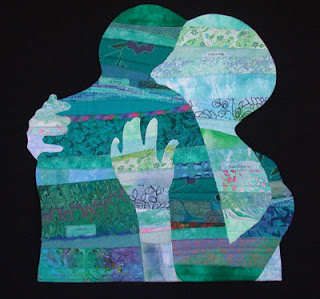
 A few weeks ago I bought a bag of Bean Soup Mix, with plans to use it during Lent. If those beans looked cheerful through the plastic bag, they more than brightened up the kitchen when released. I couldn’t stop taking their picture.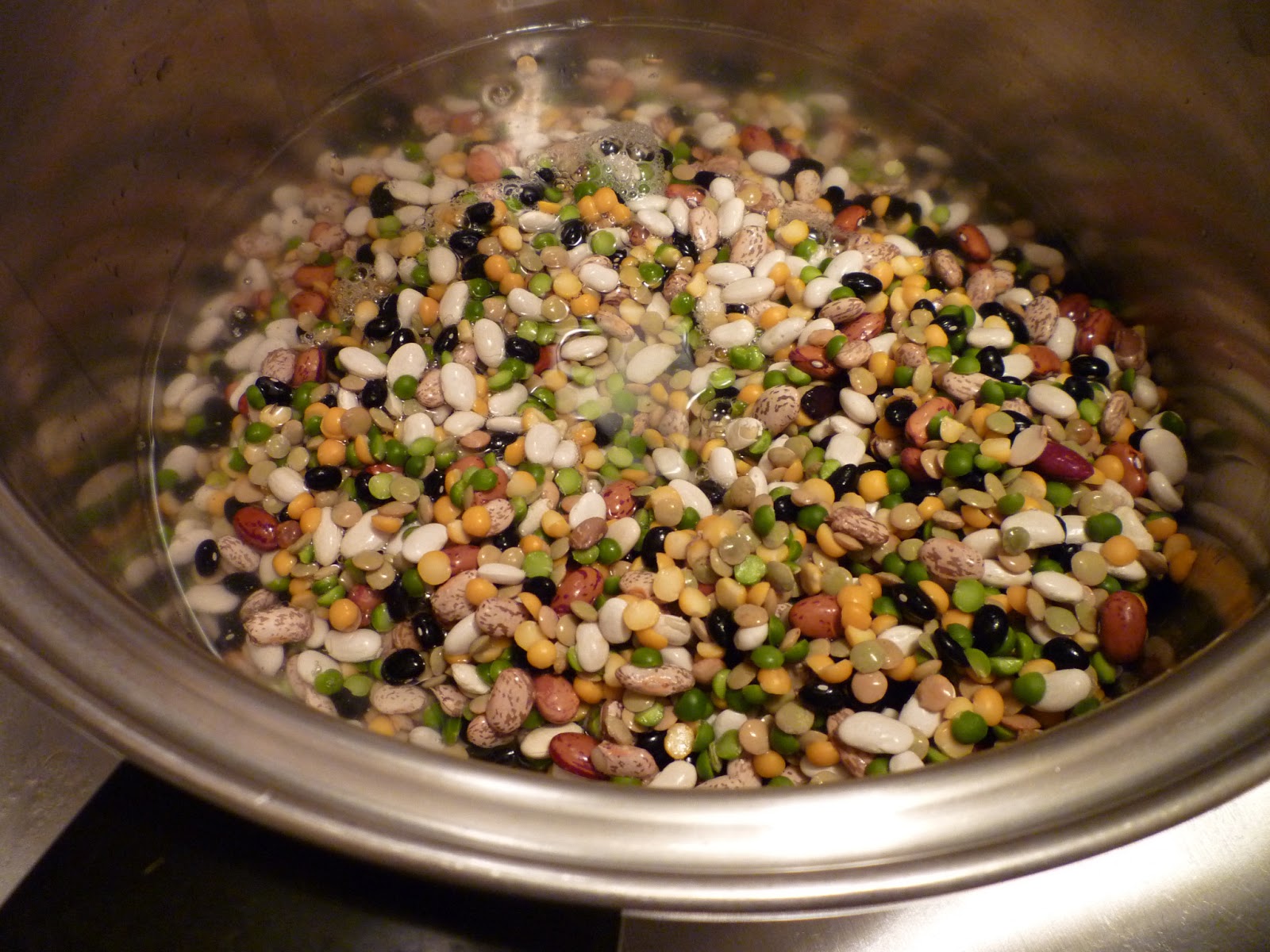


 Gladsome Lights