Category Archives: food and cooking

Pests, popcorn and pie.

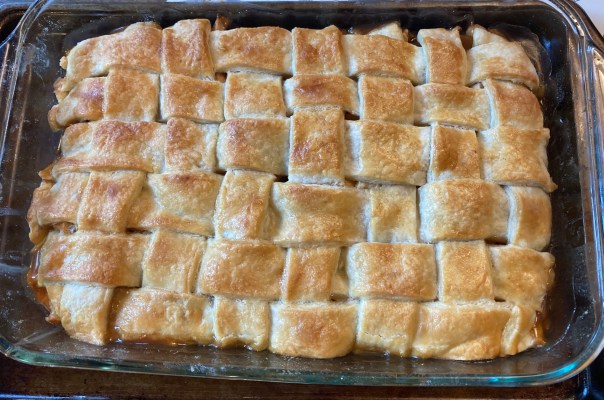
I didn’t bake this apple pie, and I won’t be at the event where it will be eaten this evening, but it is a product of my kitchen and came out of my oven, so I feel invested in it. Its beauty is obvious, but its butteriness you can only imagine.
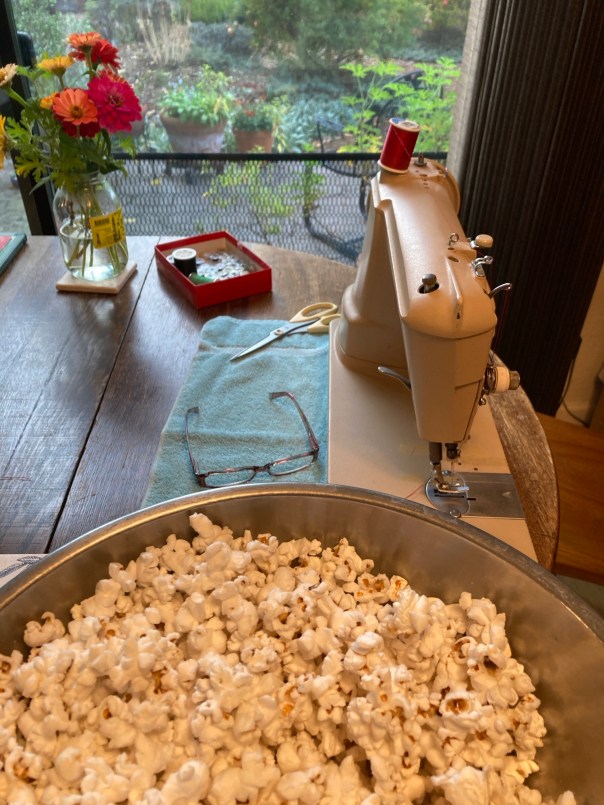
After the pie went out the door, I popped some popcorn. I have taken to eating this snack in the last few months, whereas I didn’t for many years previous. I like to cook it in beef tallow in a heavy saucepan, shaking it frequently as it pops away on the gas range. How do you pop corn? And do you like yellow or white popcorn? The last time I bought it, I tried the white variety, and was disappointed to find that the popped kernels are smaller than the yellow. I can’t decide if I like the relative softness better or not.

You can see behind the popcorn that I have my sewing machine on the table. This used to be a common sight, in the long, long ago. Yesterday I tried to start on a Christmas sewing project upstairs in my Sewing-Morning Room, but the old Kenmore in a cabinet there is not working right. So I took my other old machine out of the cupboard and after a little oiling it is running like a dream.
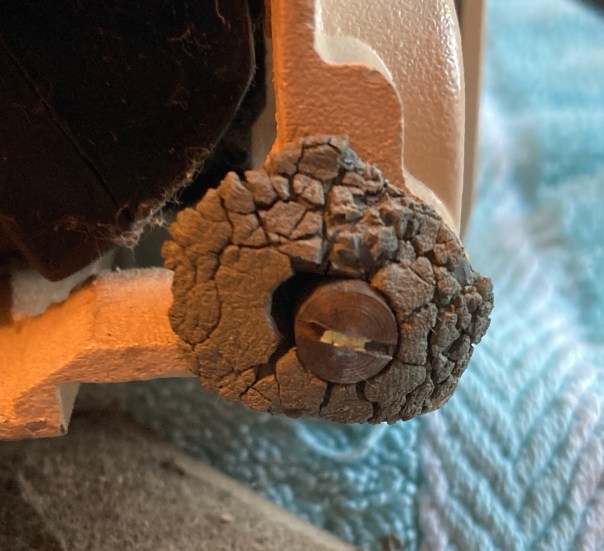
This machine I bought when a freshman in college, at a sewing and fabric store in Santa Barbara. It had been retired from its first life in a high school home economics class, and sold for $40. I am very fond of it, as it has been the most reliable of all the machines I’ve owned. But little things show its age. The pads serving as feet, that might project one’s table from the screws, are hard as rocks and crumbling. I don’t know if any shop would want to attempt a refurbishing of them…. I have the machine sitting on a towel for now.
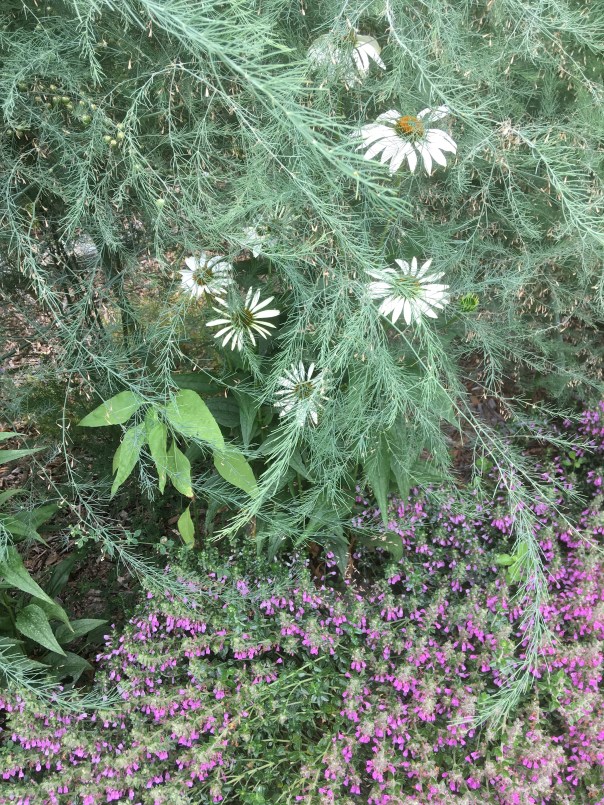
The ferny asparagus of summer 2021

Joyous news: All the work I did to “sanitize” my asparagus bed last fall seems to have paid off. I was trying to mitigate the horrid infestation of aphids my plants had suffered in their ferny stage, two years in a row, forcing me to cut them down several months earlier than is best; one wants them to carry on photosynthesis for the nourishment of the crowns underground.

What I did was to remove all the mulch, apply a fresh layer of topsoil, and finally a thick layer of fresh mulch. This year the fronds are naturally turning yellow, at the appropriate time, and I haven’t see a single aphid. It is such a relief. This picture of the neighbor cat on the renewed asparagus bed is from last October.

On the subject of pests, you might remember that I was wondering why the fruit of my fig tree was dropping when still hard and unripe. Nikkipolani suggested that Black Fig Fly might be the problem, and after researching online and looking carefully at the fruit and my tree, I discovered both the larva and the fly on site. Ugh! It seems that sanitation is once again the main thing I can do to try to solve this problem, so I’m going to remove all the (wood chip or “arbor”) mulch and old fruit from under the fig and keep the soil bare. I will spare you photos of all the damage done by these insects. It’s not pretty.
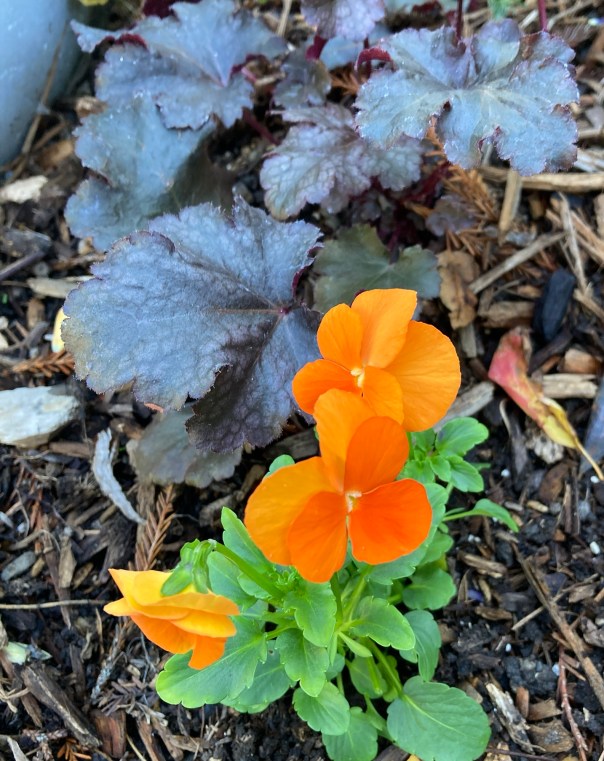
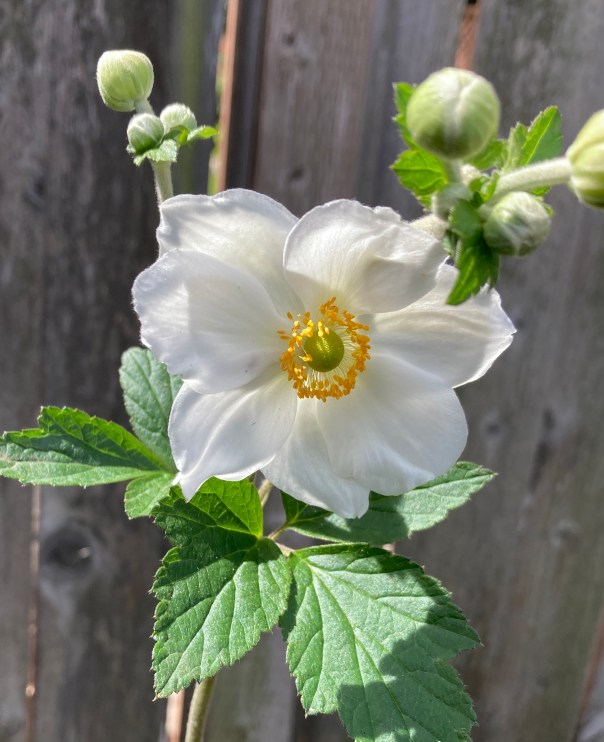
My sister Nancy was visiting recently from California’s agricultural heartland, and she and I shopped at two nurseries. I bought some heuchera plants that are just the thing I was looking for to put in this area where I also had planted white Japanese anemones and violas and some blue grass. Other finds from this fall I will wait to show you when they are looking like something next spring. I replanted the area by the front door just before the rains came.
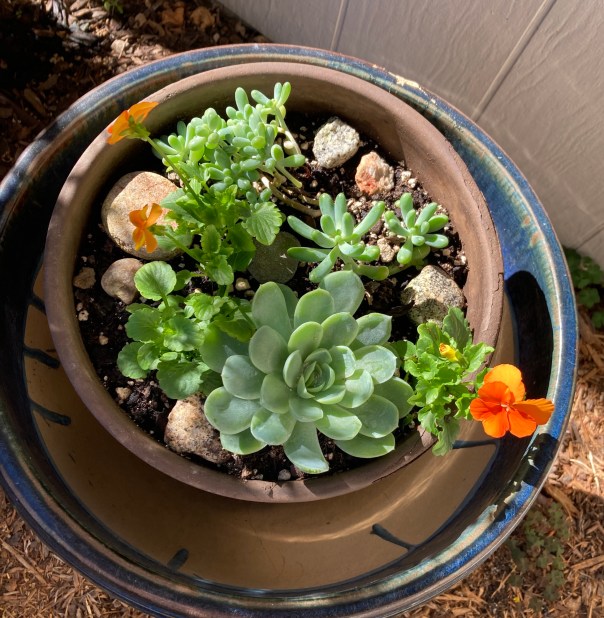
In the pot by the doorstep, I popped in more of those orange violas with succulents. I’m thinking I need to find a tall box or planter to put there, in which I can display whatever pretty thing I can find, even if I have to switch it out every month when it fades. The current pot-within-a-broken-pot system leaves something to be desired.

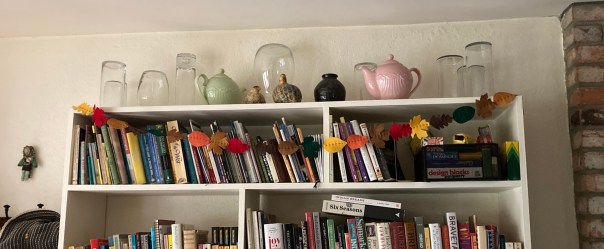
I don’t have much fall decor, but I did put up this garland that my daughter-in-law Joy made for me several years ago. We were given a giant pumpkin that we kept by the front door for a few days, and then Bea roasted it into 29 cups of puree for the freezer. So far we’ve used it for muffins, pumpkin chia seed pudding, and pumpkin pancakes.
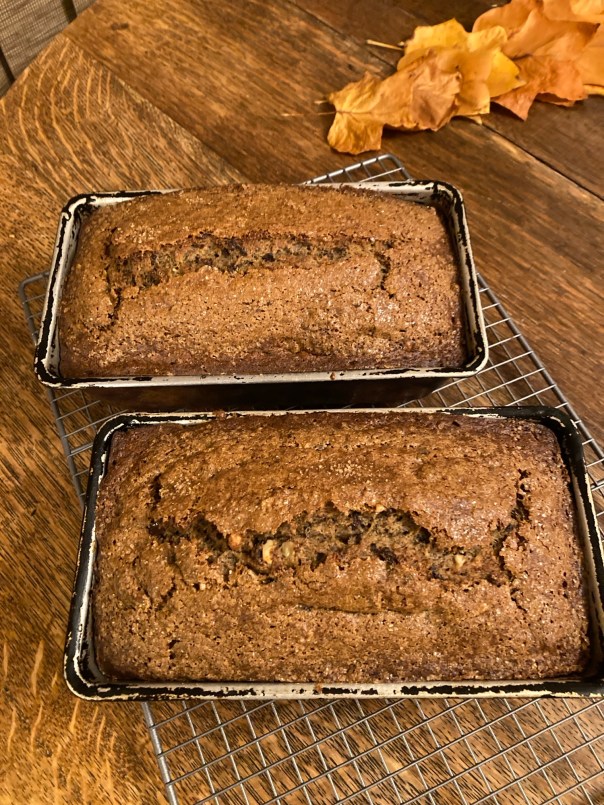
I baked hefty loaves of Chocolate Banana Bread, the recipe for which I’ll try to post soon.
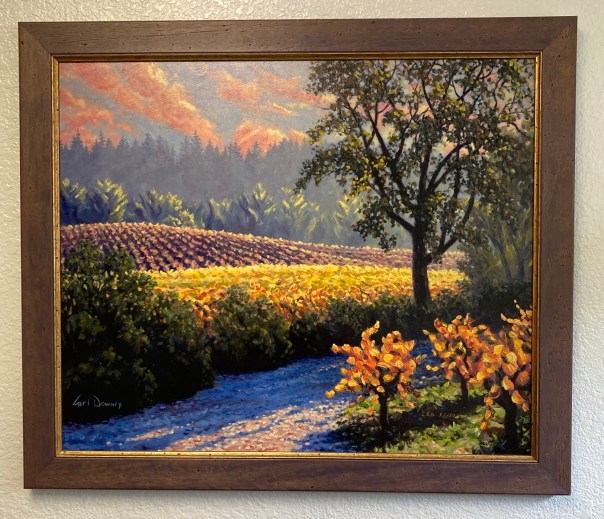
When I was waiting in an office the other day, I was seated just opposite this painting, which appears to be a depiction of the local scenery right now.

It’s a glorious autumn!
I cook and the cactus blooms.

I’ve had several house guests in the last week, for anywhere from three hours to one night’s stay. First, son Pathfinder came down for work, and this time we had dinner here. It included polenta, which I hadn’t made for a long time, and I cooked up a big batch; then later in the week I served some of it to Maggie and Wil with a meatloaf that I also hadn’t made in years.
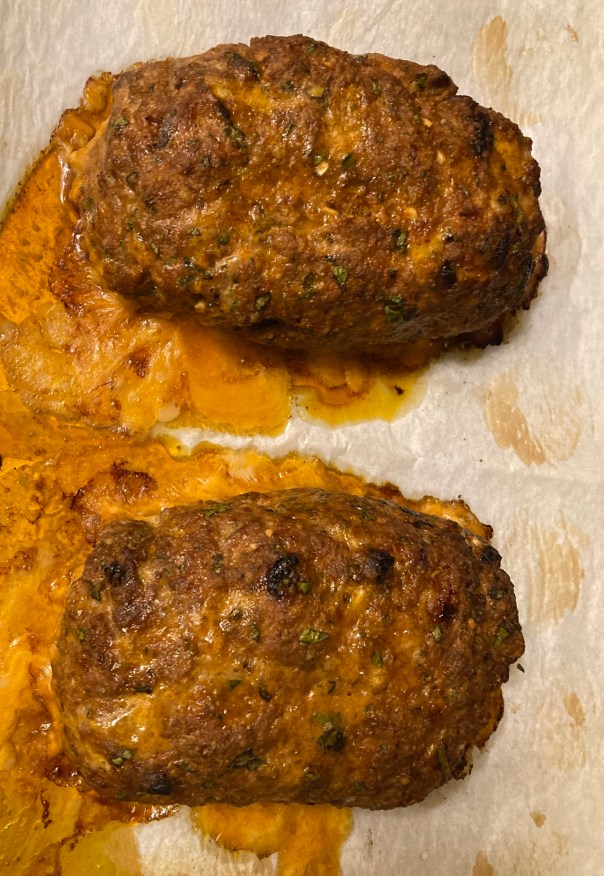
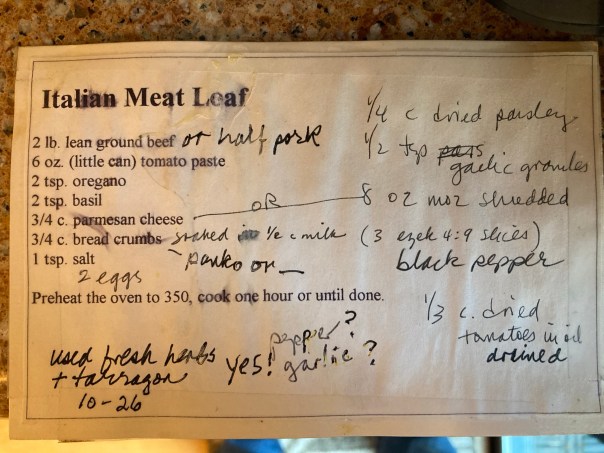
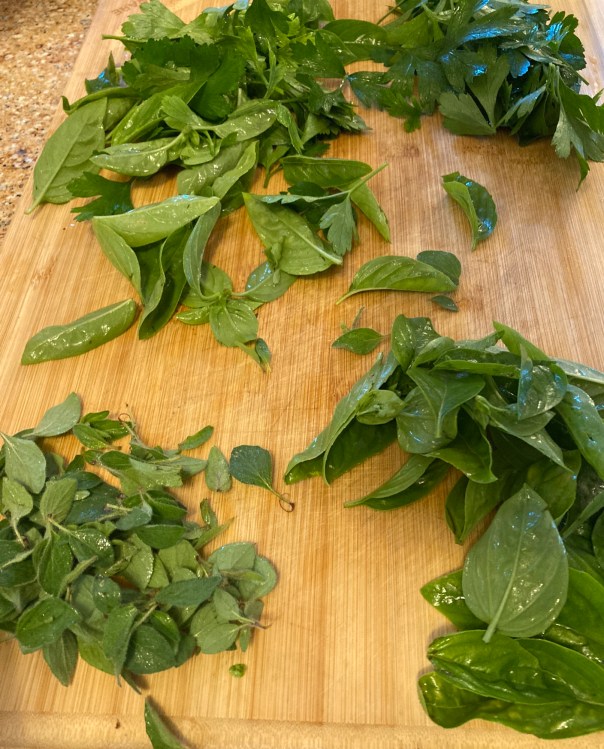
It was my Italian Meatloaf, and they liked it a lot. When I first came up with the idea for it, I wasn’t in the habit of using fresh herbs, and it even calls for dried garlic rather than fresh. But last week I was pleased to use four fresh herbs gathered that day from my garden: basil, oregano, parsley and tarragon.

Maggie wanted the recipe, so I took a picture of it and texted it to her. I need to make a new card, but in the meantime, here is the well used version, showing how adaptable it is:

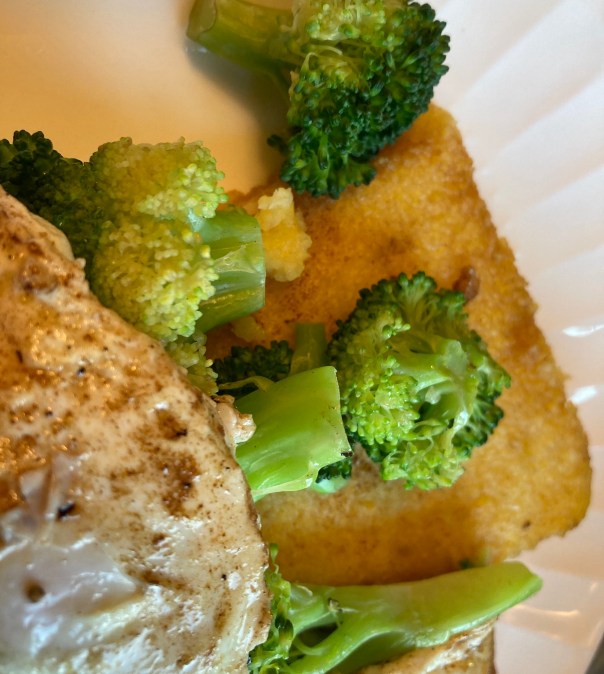
After those people had gone home, I fried slices of the remaining polenta and ate it with leftover broccoli and a fried egg. Do you like polenta? I find it all too easy to eat.

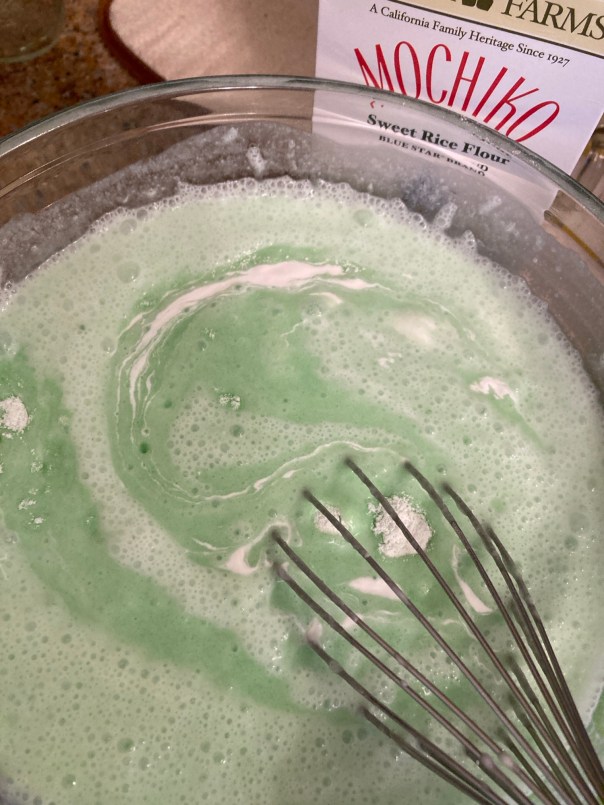
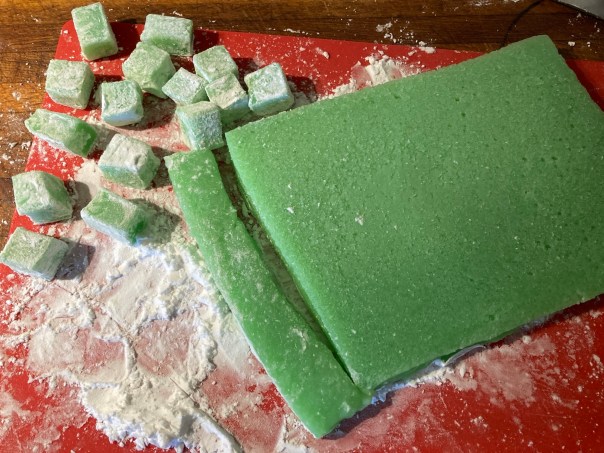
The next guests were three young children and their mother whom I’d invited over for an afternoon of play plus a snack. The snack I decided to serve was mochi. I baked my old standby that I adapted from one of the recipes in this book that a friend brought me from Maui a long time ago. I’m not going to show you another one of my messy and annotated recipes, but will just say that this one uses lime Jello, sweet rice flour (mochiko) and coconut milk. The sweet cubes cut from the slab of baked and cooled mochi are dusted with potato starch. Everyone loved it. But next time I’m going to try making a version without Jello’s artificial color and flavor — even if the color is pretty!

While I was cooking all week, both of my Thanksgiving cactuses got confused and started blooming! Are they trying to be Halloween cactuses?

September warmed and sweetened.

My worries about September being too cool did not come to pass. We even had a sort of heat wave for two days, and one night when the temperature did not drop below the mid-60’s. As soon as the sun set that evening, we opened the windows and started running the fans. It was cooler the next night, back to our usual marine air, and being able to leave the windows open night and day, and even to let the sun shine in.
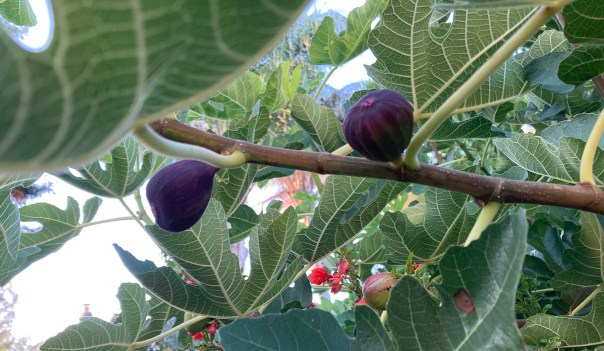
It’s warm enough to ripen figs, and we have eaten a few, but something is not right with my tree. Most of the figs turn purple before they get any size, and fall off when they are still small and hard. The ground is littered with them. I have spent a lot of time trying to figure out what the problem is, but I still don’t know.

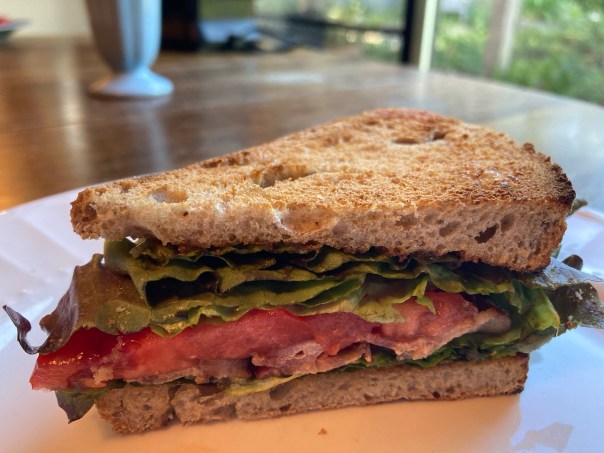
At least, this year I’m happy about the tomatoes. It’s not often anymore that I have home-grown, vine-ripened “love apples” here, other than cherry tomatoes. I suppose one could make a BLT with those, but it never occurred to me. This summer I have Early Girls, and I wanted to make at least one sandwich using slices of them, lettuce and bacon. I accomplished that goal, and it was well worth the trouble.

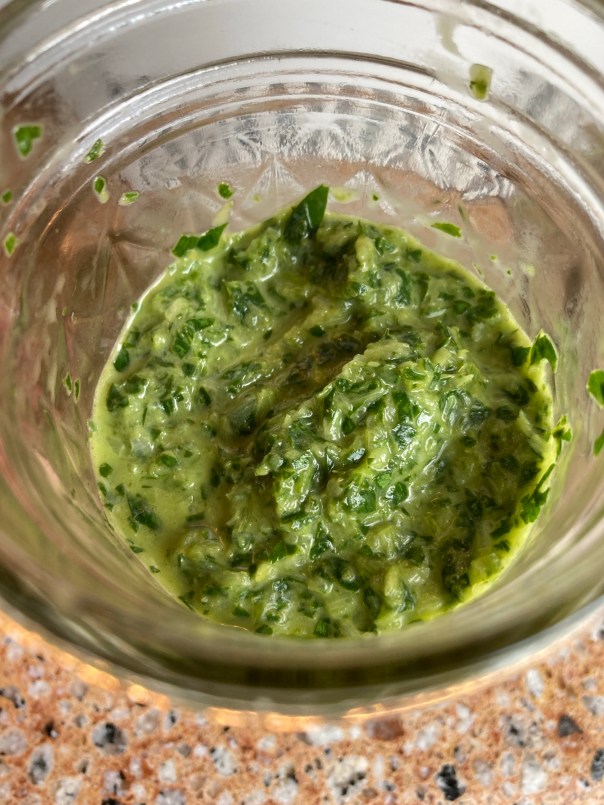
And I used a few stems of the abundant tarragon to make the wonderful Tarragon Salsa Verde:
  • leaves from 1 small bunch fresh parsley (approx. 20g / 1 cup)
  • leaves from fresh tarragon (approx. 5g / 1/4 cup)
  • 1 spring onion including green part (roughly chopped)
  • zest of 1 lemon and juice of 1/2 lemon
  • 1 teaspoon sea salt flakes or 1/2 teaspoon pouring salt
  • 6 tablespoons olive oil

Mix all in a food processor and use as a dip, a spread for bread or on baked chicken, or eggs. It’s just wonderful. I even froze a little batch one time and used it later.

It comes to mind just now, that this salsa would probably make a nice addition to a BLT… I might try that before the tomatoes and tarragon have become a memory.

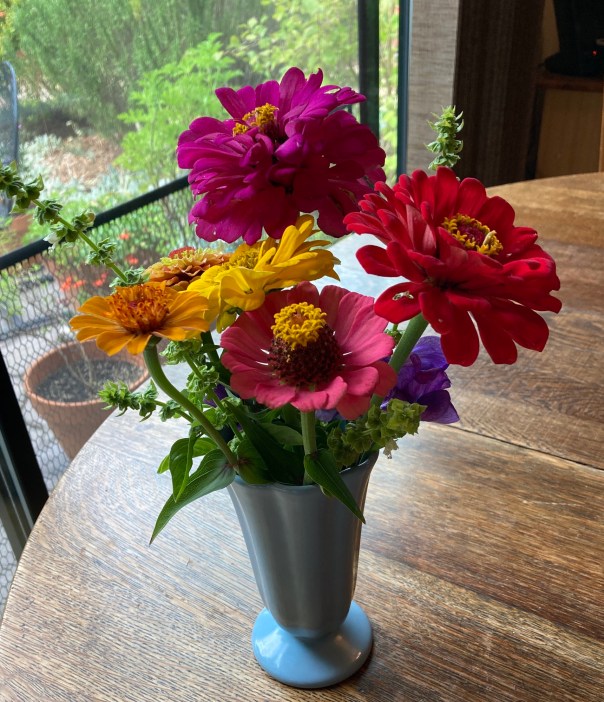
It wasn’t until last week that I got around to bringing flowers into the house, a bouquet of zinnias, with sweet peas and basil. This year I seem to be content to just stare out at the garden, or wander the paths doing little things, and procrastinating on this year’s Fall Reorganizing. Living where the winters are mild makes it possible — and often beneficial — to put off planting or transplanting until October. But extending the season has its down side; I hope next year I won’t have to do any of this moving-plants-around kind of work — but that’s what I’ve said for three years now.

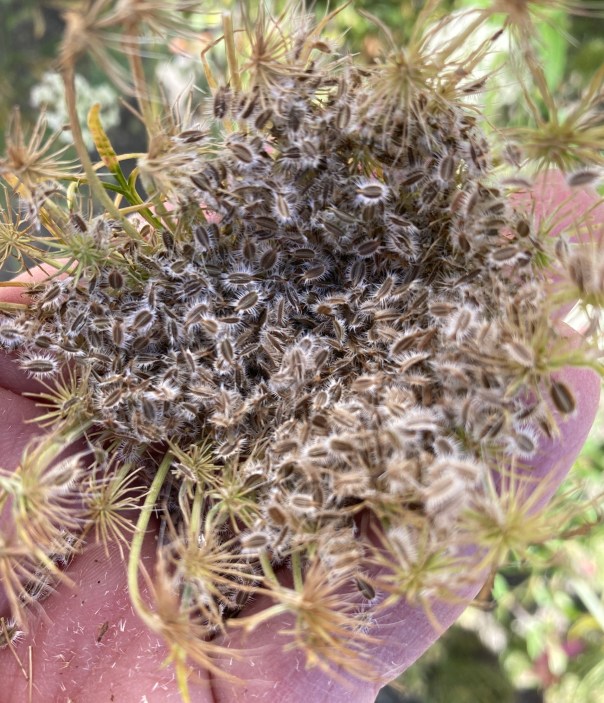
I opened up one dried flower of the Queen Anne’s Lace that had self-sowed next to my driveway, and sprinkled the seeds among the Mexican Evening Primrose that grow in that arid corner. The latter needs a least a little water in the summer, and is always overrun by weeds. The Queen Anne’s Lace grows vigorously all over the place without any summer water. Maybe it will thrive, and crowd out a few of the less beautiful weeds.

On one of those hot days I did loads of laundry, and used the clothesline. The overflowing basket of items that needed special treatment in the sink is now empty! These two pillowcases that are a hundred years old are fresh and clean. I inherited them from my husband’s aunts or grandmother, and they were a little yellow in places. Now I will start using them. I’m not certain about the monogram… I think it might be FLK? If it is, I don’t know which relative that could be.

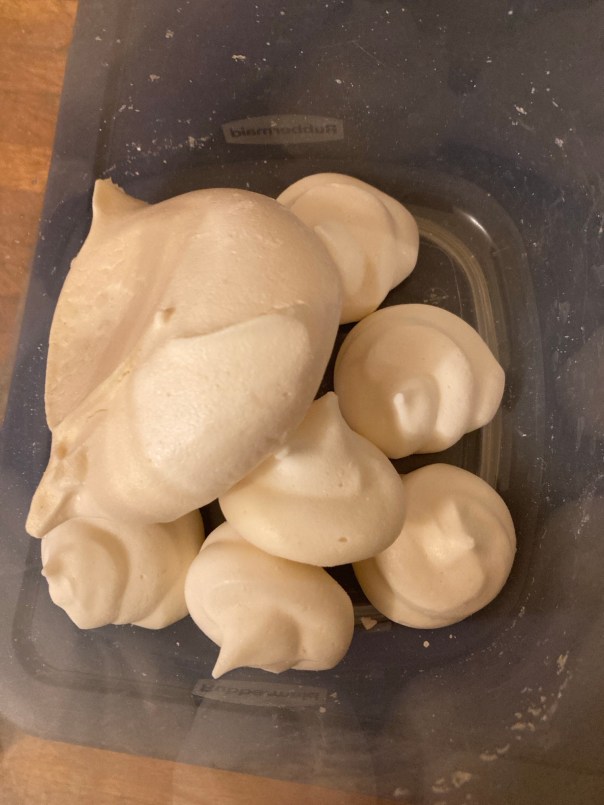
Now that Bea is living here, my kitchen is getting more use; it’s really fun to have a girl around who likes cooking and produces things for me to taste. Recently she made meringues from aquafaba! I knew that liquid from canned garbanzo beans was a versatile ingredient, but I had no idea it could substitute for egg whites in this way. She used aquafaba, sugar, and vanilla. When I was first eating the cookie, I didn’t realize it wasn’t a regular meringue, because she had made them after I went to bed. They were very nice.

Flowers, cookies, tomatoes and figs — September so far is warm and sweet.


Cakes for her birthday.

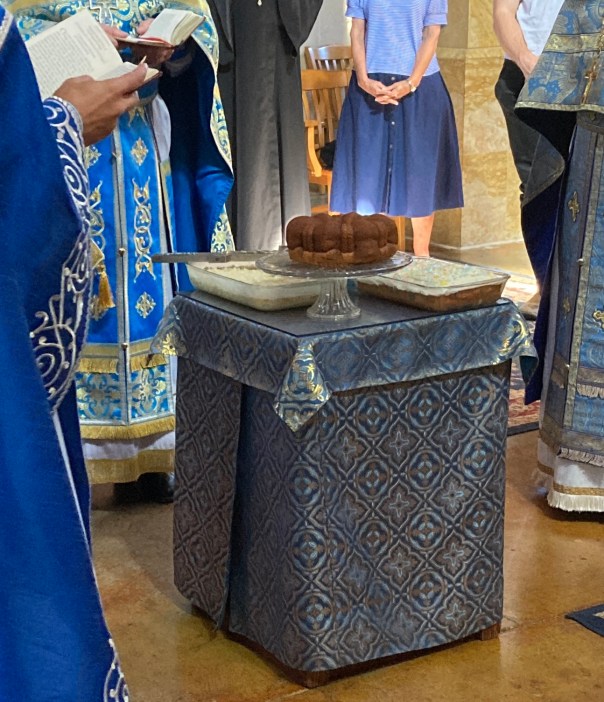
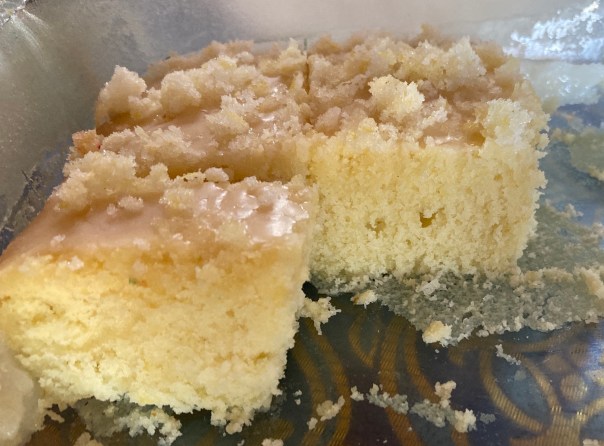
Today at church we celebrated the birth of Christ’s mother, the Theotokos (God-bearer) with Divine Liturgy. I was among those who brought birthday cakes to enjoy after the service. I have made this particular lemon cake four times now, and I like my version better than the one I adapted slightly, which was the America’s Test Kitchen version. I just now typed it up in a tidy form that I could post here. Everyone who tried it loved it; they said it was “fluffy” or “spongy,” and especially praised the crunchy topping. It is oh-so-lemony.

LEMON BUTTERMILK SHEET CAKE

Cake:

  • 2 ½ cups unbleached flour (10 oz.)
  • 1 teaspoon baking powder
  • ½ teaspoon baking soda
  • ½ teaspoon salt
  • ¾ cup buttermilk
  • Zest of 3 lemons or 3 tablespoons, grated
  • ¼ cup freshly squeezed lemon juice
  • 1 teaspoon vanilla extract
  • 1 1/2 cups white sugar (11 oz.)
  • 12 tablespoons butter, softened
  • 3 large eggs
  • 1 large egg yolk

Glaze:

  • 1 1/2 cups powdered sugar (6 oz.)
  • 2 tablespoons lemon juice
  • 1 tablespoons buttermilk

Instructions:

  1. Have oven rack in the middle, and heat oven to 325 degrees. Grease and flour a 9×13″ baking dish and set aside.
  2. Whisk together the flour, baking powder, baking soda, and salt in a medium bowl. Set aside. In a measuring cup, combine buttermilk, lemon juice, and vanilla. Set aside.
  3. Using a stand mixer fitted with the paddle attachment, beat the white sugar and lemon zest on medium speed until moist and fragrant (about 1 minute). Remove 1/4 cup of the sugar mixture and place it in a small bowl. Cover and set aside.
  4. Add the butter to the remaining sugar mixture and beat until fluffy (about 2 minutes). Beat in the eggs and yolk, one at a time, until incorporated. Reduce speed to low. Add the flour mixture in 3 additions, alternating with the buttermilk mixture in 2 additions. Mix until smooth (about 30 seconds)
  5. Scrape the batter into the reserved baking pan and smooth out the top. Bake until the cake is golden and a toothpick inserted into the center comes out clean (about 30-40 minutes). Be careful not to over bake. Transfer the pan to a wire rack and allow to cool for 10 minutes.
  6. While the cake is cooling, whisk the glaze ingredients together until smooth. Spread the glaze over the cake and sprinkle evenly with the reserved sugar mixture.
  7. Allow to cool completely, at least 2 hours.

Happy Feast to All,
and Happy Birthday to the Mother of our LORD!