Category Archives: feasts

Sleepy celebrations of Pentecost.

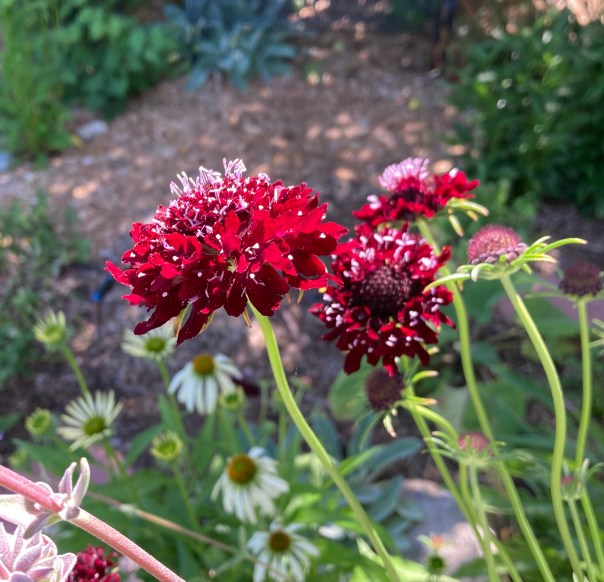
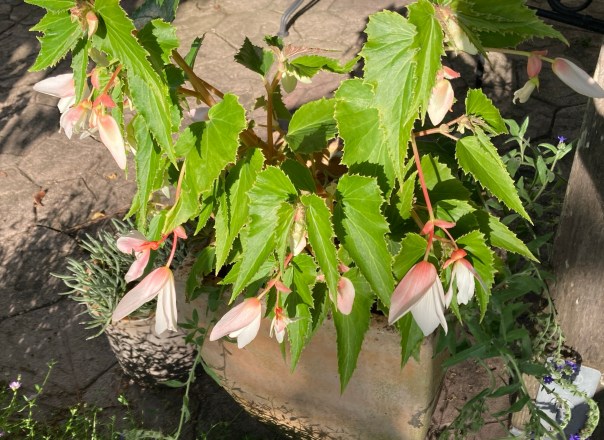
Pincushion flowers

My celebrations of Pentecost last year and this had one thing in common, that I was running short on sleep. Last year, in Thessaloniki*, it was because I had stayed up late the night before talking to an old friend. Today, I had waked at about 4:30 and was a bit dopey for the next twelve hours, until I came home and took a nap.

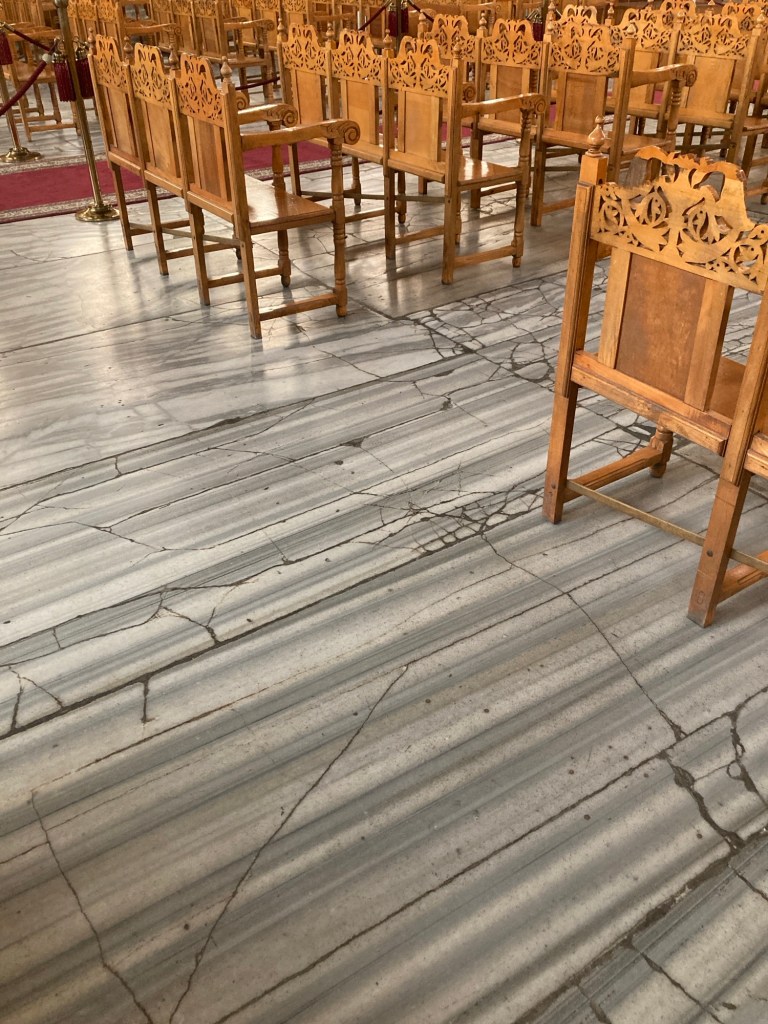
I just noticed that I never wrote here about Pentecost in Greece. I celebrated the feast at the The Church of Panagia Archeiropoietos that I had toured with my guide Maria a few days before. In the linked post I told about the blue-veined marble floors from the 5th century, symbolically arranged so that near the front, curvier veins make it look like rivers flowing out from the altar out to the back of the temple.

A few days later I attended Divine Liturgy in that church. On Pentecost we Orthodox have Kneeling Vespers shortly after Liturgy. This service includes three long prayers, “Again and again on bended knee,” and there I was down on that venerable floor, listening to the prayers in Greek, not knowing the language. I was beginning to feel sleepy, and almost dozed off. As special as it was to kneel there, I didn’t want to hit my head on that marble, knowing that any new cracks that might develop would be in my skull. So for the second two prayers I sat.

Today

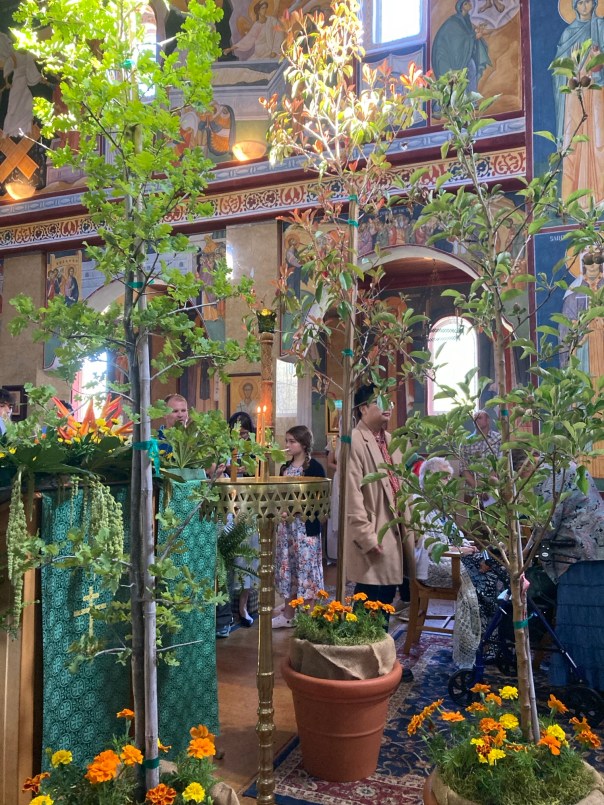
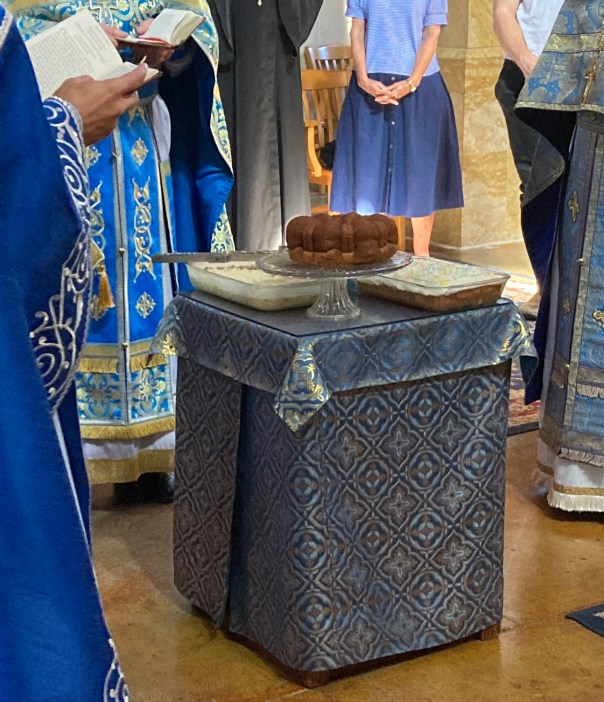
Today I was in my home parish, and it was a very joyous day! We received five new members into our church family before Liturgy, and that is always cause for celebration in itself. We typically have a potluck on Pentecost for our agape meal, instead of our usual arrangement of having a different team each week that plans and cooks a meal for 200 people. Today lots of people brought desserts, which were very popular. I was working in the bookstore, which is in the fellowship hall, and I got to meet two new catechumens and sell lots of books.

At Vespers, I didn’t kneel on the (cement) floor, because there was space on a rug. But it was a strain to make my groggy mind pay attention to the words. Soon after I came home I slept. Sunday afternoon naps are so often needed, and such a gift.

Just after I woke, a friend from church texted me that he could come over and help me move the last of my furniture back into place, things that had been moved for painting and carpet cleaning. I’m still able to move a lot of stuff myself, but this afternoon we needed to put a twin bed back together and push-pull a chest of drawers into the bedroom where my new housemate will be living. I don’t think I told you about her before, and I probably won’t tell you much about her in the future, but I’m very excited to have a student living here, a dear girl whom I’ve known since she was a baby.

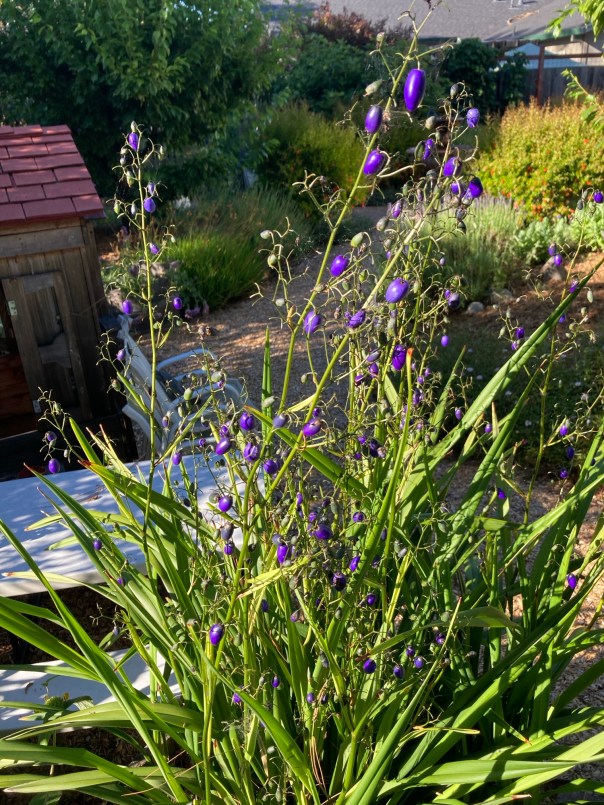
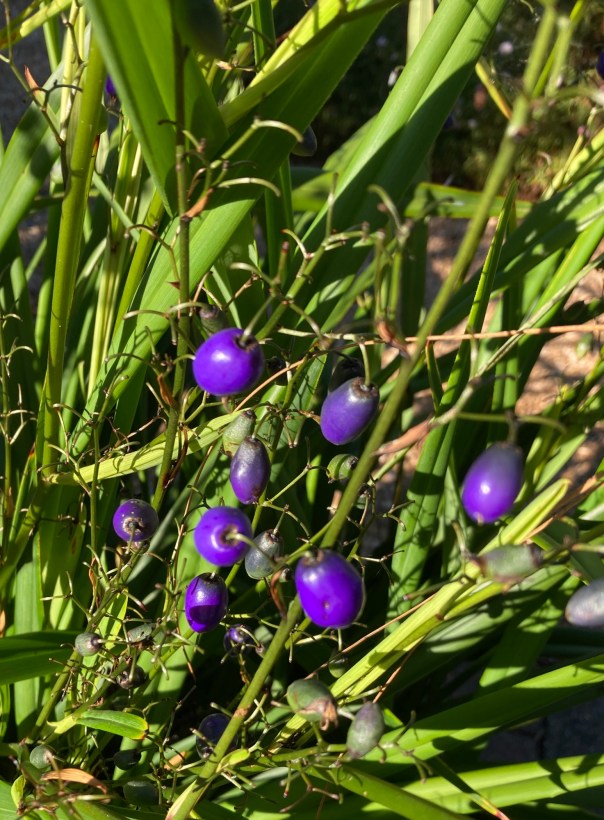
After that, there was still enough sunlight for me to wander a bit and take pictures of the garden. The Tasmanian Flax, Dianella tasmanica, is at the berry stage, covered with its grapey fruits. Those beautiful fruits are toxic “to an unknown degree,” at least to humans, but birds are said to enjoy them in the plant’s home territory of southeastern Australia.

What a wonderful day it has been. Tomorrow is Holy Spirit Day, and it would be lovely to continue the overflowing blessing of Pentecost into another day, and attend Divine Liturgy. If I go to bed early enough (like now), it could happen.

I wish you all a Happy June ❤

*If you’d like to read my other posts from Thessaloniki, they will all open up when you click on this tag: Thessaloniki. 

The week previous to being in that city, I was with family on the Island of Paros, Greece, and the posts I wrote about that time are here: Paros.

The Cross in the heart.

We are celebrating the Feast of the Elevation (or Exaltation) of the Holy Cross. This is a commemoration of historic events in the Orthodox Church, and an opportunity to ask ourselves what these outward expressions of faith have to do with our lives in the current age. The original events are more than a thousand years distant from us, but the human condition is unchanged.

“The Exaltation of the Lord’s Cross has arrived. Then, the Cross was erected on a high place, so that the people could see it and render honor to it. Now, the cross is raised in the churches and monasteries. But this is all external. There is a spiritual exaltation of the cross in the heart. It happens when one firmly resolves to crucify himself, or to mortify his passions—something so essential in Christians that, according to the Apostle, they only are Christ’s who have crucified their flesh with its passions and lusts (cf. Gal. 5:24). Having raised this cross in themselves, Christians hold it exalted all their lives. Let every Christian soul ask himself if this is how it is, and let him hearken to the answer that his conscience gives him in his heart.” 

-St. Theophan the Recluse, Letters on the Spiritual Life

Church of the Holy Sepulcher, Jerusalem

A radiant inheritance of goodness.

For various reasons, mostly laziness, it is usually a challenge on Sundays to drive back to my Orthodox church for an evening service. We don’t have such services routinely, but today was one of the exceptions: One of the Twelve Great Feasts happens on Monday this week. As the liturgical day begins in the evening, we started celebrating this (Sunday) evening, because it is already Monday  🙂


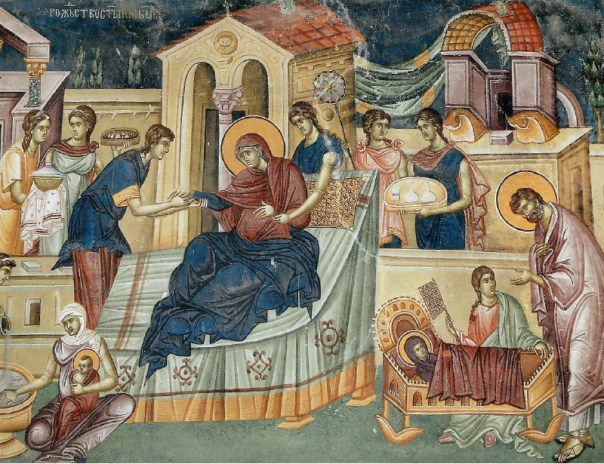
Today was blessedly different: it seemed easy to return, and because of that I can copy an old post just as it was, to share now. Happy Birthday to Mary!

What a joy to be present at the “birthday party” for the beloved mother of our Lord! We began tonight, and will continue tomorrow, to rejoice at this first event of the church liturgical cycle, one of the 12 Great Feasts of the year. In honor and remembrance, I offer this sermon by Protopresbyter Alexander Schmemann:

SERMON ON THE NATIVITY OF THE THEOTOKOS

The Church’s veneration of Mary has always been rooted in her obedience to God, her willing choice to accept a humanly impossible calling. The Orthodox Church has always emphasized Mary’s connection to humanity and delighted in her as the best, purest, most sublime fruition of human history and of man’s quest for God, for ultimate meaning, for ultimate content of human life.

If in Western Christianity veneration of Mary was centered upon her perpetual virginity, the heart of the Orthodox Christian East’s devotion, contemplation, and joyful delight has always been her Motherhood, her flesh and blood connection to Jesus Christ. The East rejoices that the human role in the divine plan is pivotal. The Son of God comes to earth, appears in order to redeem the world, He becomes human to incorporate man into His divine vocation, but humanity takes part in this. If it is understood that Christ’s “co-nature” with us is as a human being and not some phantom or bodiless apparition, that He is one of us and forever united to us through His humanity, then devotion to Mary also becomes understandable, for she is the one who gave Him His human nature, His flesh and blood. She is the one through whom Christ can always call Himself “The Son of Man.”

Son of God, Son of Man…God descending and becoming man so that man could become divine, could become partaker of the divine nature (2 Peter 1:4), or as the teachers of Church expressed it, “deified.” Precisely here, in this extraordinary revelation of man’s authentic nature and calling, is the source of that gratitude and tenderness which cherishes Mary as our link to Christ and, in Him, to God. And nowhere is this reflected more clearly that in the Nativity of the Mother of God.

Nothing about this event is mentioned anywhere in the Holy Scriptures. But why should it be? Is there anything remarkable, anything especially unique about the normal birth of a child, a birth like any other? The Church began to commemorate the event with a special feast…because, on the contrary, the very fact that it is routine discloses something fresh and radiant about everything we call routine and ordinary, it gives new depth to the unremarkable details of human life…And with each birth the world is itself in some sense created anew and given as a gift to this new human being to be his life, his path, his creation.

This feast therefore is first a general celebration of Man’s birth, and we no longer remember the anguish, as the Gospel says, “for joy that a human being is born into the world” (Jn. 16:21). Secondly, we now know whose particular birth, whose coming we celebrate: Mary’s. We know the uniqueness, the beauty, the grace of precisely this child, her destiny, her meaning for us and for the whole world. And thirdly, we celebrate all who prepared the way for Mary, who contributed to her inheritance of grace and beauty…And therefore the Feast of her Nativity is also a celebration of human history, a celebration of faith in man, a celebration of man.

Sadly, the inheritance of evil is far more visible and better known. There is so much evil around us that this faith in man, in his freedom, in the possibility of handing down a radiant inheritance of goodness has almost evaporated and been replaced by cynicism and suspicion. This hostile cynicism and discouraging suspicion are precisely what seduce us to distance ourselves from the Church when it celebrates with such joy and faith this birth of a little girl in whom are concentrated all the goodness, spiritual beauty, harmony and perfection that are elements of genuine human nature. Thus, in celebrating Mary’s birth we find ourselves already on the road to Bethlehem, moving toward the joyful mystery of Mary as the Mother to God.

-Father Alexander Schmemman

Nativity of Theotokos contemporary

Thy nativity, O Virgin,
has proclaimed joy to
the whole universe!
The Sun of Righteousness,
Christ our God,
has shone on thee,
O Theotokos!
By annulling the curse,
He bestowed a blessing.
By destroying death,
He has granted us
Eternal Life.

-Hymn for the feast

The death of John the Baptist.

The glorious beheading of the Forerunner,
became an act of divine dispensation,
for he preached to those in hell the coming of the Savior.
Let Herodias lament, for she entreated lawless murder,
loving not the law of God, nor eternal life,
but that which is false and temporal.

-Hymn for the Feast, of The Beheading of the Glorious Prophet, Forerunner and Baptist John.