Category Archives: my garden

His ornaments are fruits.

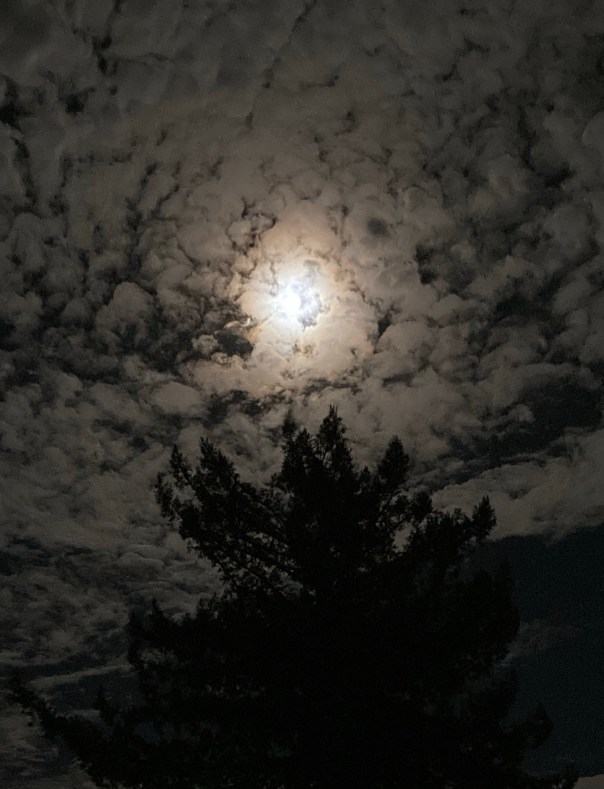
I saw that Hunter’s Moon the night before it was full, then out my bedroom window the next morning as it was near to setting, and again last night at its max. I got to feeling very familiar with that lovely Hunter. This was the view from my front yard to the east:
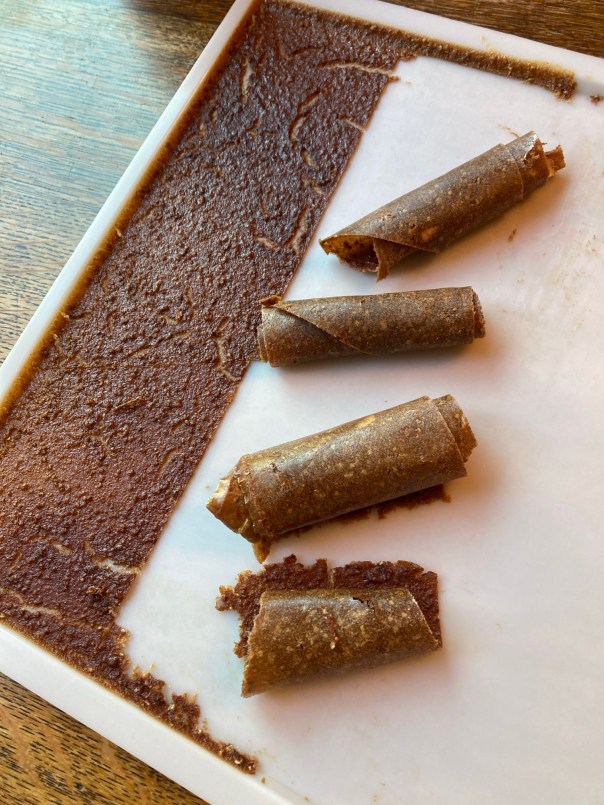
feijoa fruit leather

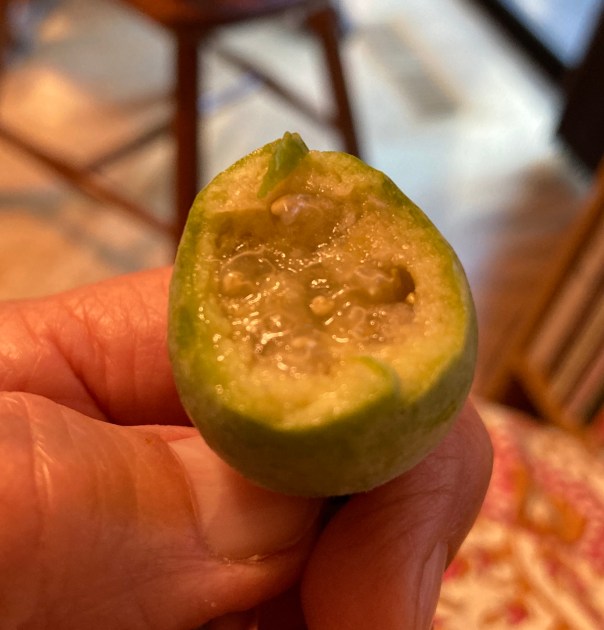
After a few drops of rain, we are back to mostly clear skies, with cool mornings and pleasant afternoons. The feijoas keep ripening, and I discovered that I don’t have to wait for them to fall, to know if they are ripe. Many of them are so near to falling, they come off at the merest touch, so I’ve taken to touch-testing them.

I read more about the feijoa on websites in New Zealand, where it is considered by many to be the unofficial national fruit, and it’s common to have one or several trees in your back yard. People might harvest pounds and pounds of feijoas (down there they don’t call them pineapple guavas) and eat them in many ways during the winter. They don’t like to throw away the skins, even after they have scooped the flesh out. If compared to the lemon peel, they say it has a “floral and eucalyptus-tinged green note (from its myrtle family) that lemons lack.” Its tartness has been described as less intense than that of lemons, “a blend of citrus peel and green apple skin.” Eating the whole package together sets my taste buds to ricocheting wildly.
For more than a year, off and on in the briefest of spurts, I have worked at memorizing the “stanza of the month” of Henry Wadsworth Longfellow’s “The Poet’s Calendar”; there are twelve verses, one for each month. I even got so far as writing a few in one of these little booklets that are handy to take on walks. This afternoon I wanted to read poetry, but I also wanted to wander under those blue skies, so after making sure the autumnal stanzas had been added to the Mini Composition Book, I headed out the door. My phone’s battery was nearly dead, so I left it at home, and was blessedly without the option to take pictures.

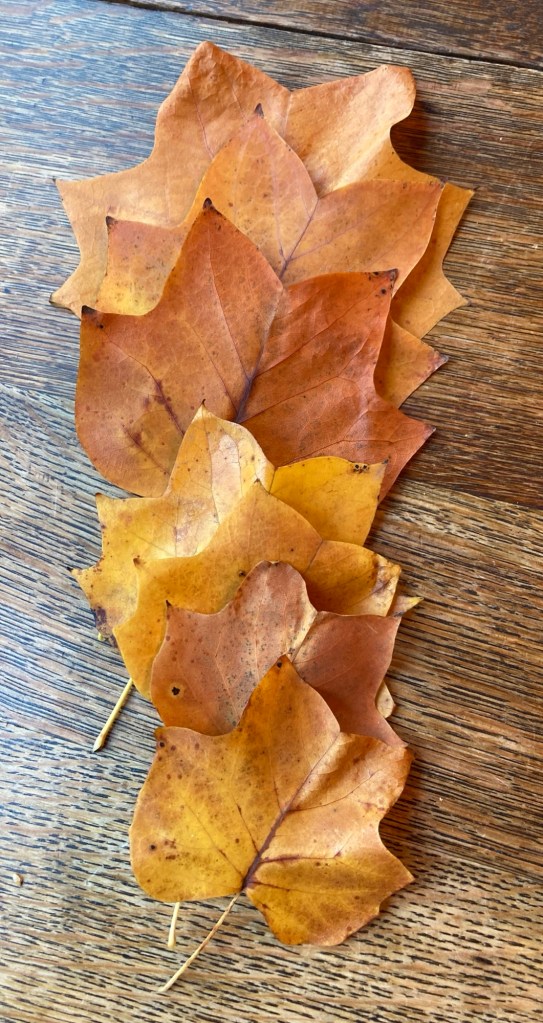
American Tulip Tree

I had ignored this poem through several months, but today I tackled the October and November parts as I walked, crunching acorns, along the paths and sidewalks where in some places the scent of baking redwood needles came up from the ground, and in other places leaves lay waiting there for me to notice and pick them up.

October

My ornaments are fruits; my garments leaves,
  Woven like cloth of gold, and crimson dyed;
I do not boast the harvesting of sheaves,
  O’er orchards and o’er vineyards I preside.
Though on the frigid Scorpion I ride,
  The dreamy air is full, and overflows
With tender memories of the summer-tide,
  And mingled voices of the doves and crows. 

-Henry Wadsworth Longfellow

In “The Poet’s Calendar” all but one of the months of the year are characterized by an astronomical constellation and/or a mythological figure that Longfellow ties into the weather and agricultural customs of the season. Was it the perfect weather of this afternoon that made it easy to learn these few lines? Or maybe only the particular, evocative images he sketches. I hope my memorization project will be a little less sporadic from now on, so that my own “tender memories” might be enriched by more Poems Along the Paths.
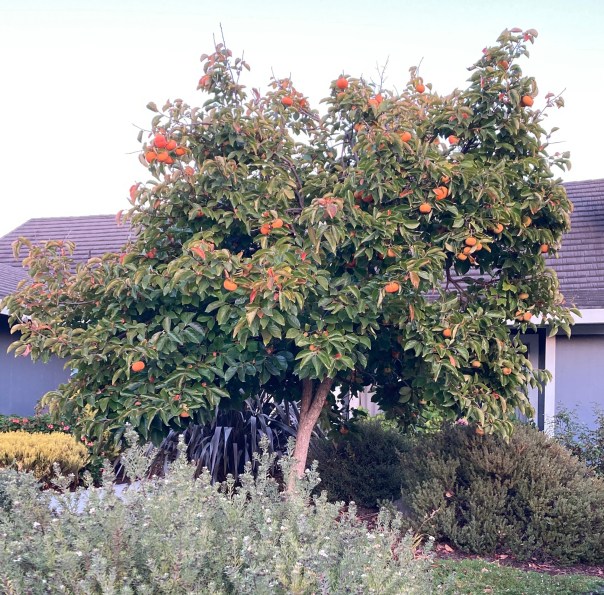
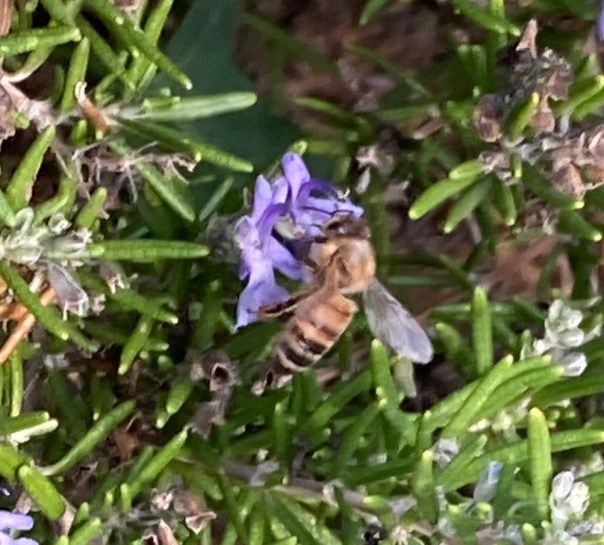
My neighbor’s Fuyu persimmon tree is certainly decorated beautifully, its whole self an ornament to our street. And it might be that same front yard where I saw a lone honeybee drinking at a rosemary bush. The poor thing seemed to be finding most of the flowers empty, and moved quickly on….
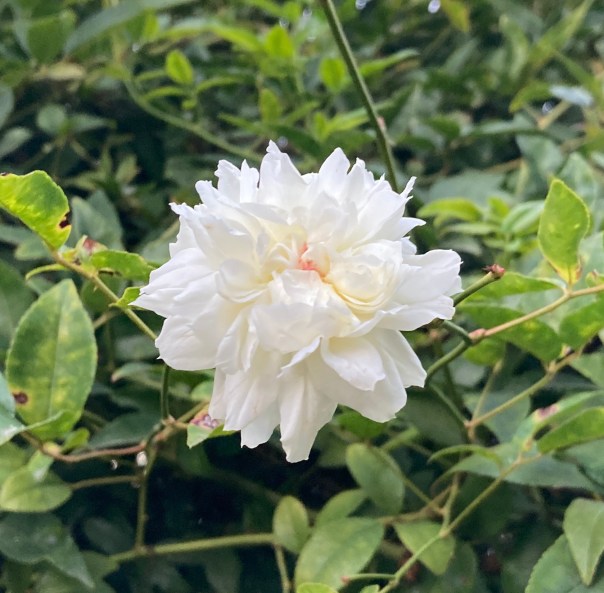
A few roses hang on to the tall hedge along the path. I hope the bushes can let go of summer pretty soon and enjoy a nice rest in dormancy for at least a few months. I’m looking forward to some of that myself — but not while it is still October!
Balmy with bread and honey.

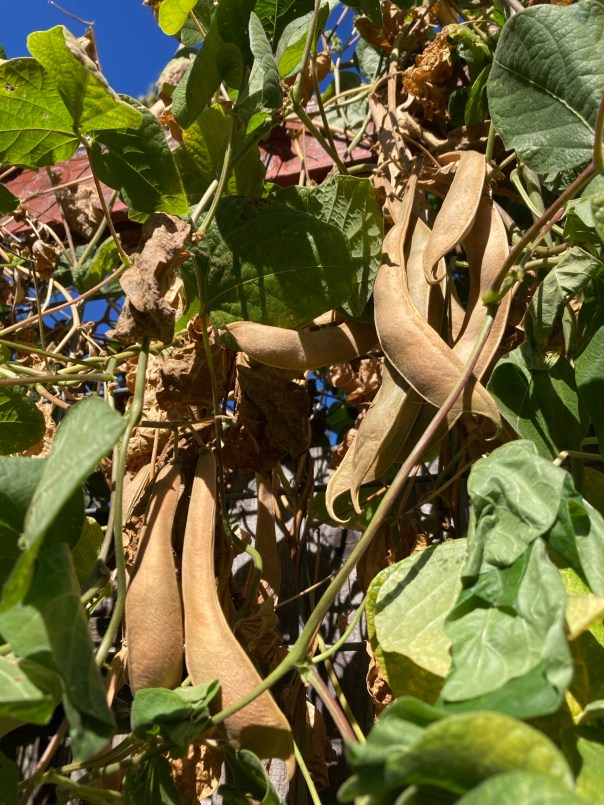
The sun was hot on my back as I reached up on the trellis to gather the dried Painted Lady runner beans. I separated the beans from the vines and carried loads of still vigorous leafy matter to the green bin. After a while the sun went behind the pine tree, but the balminess hung on.
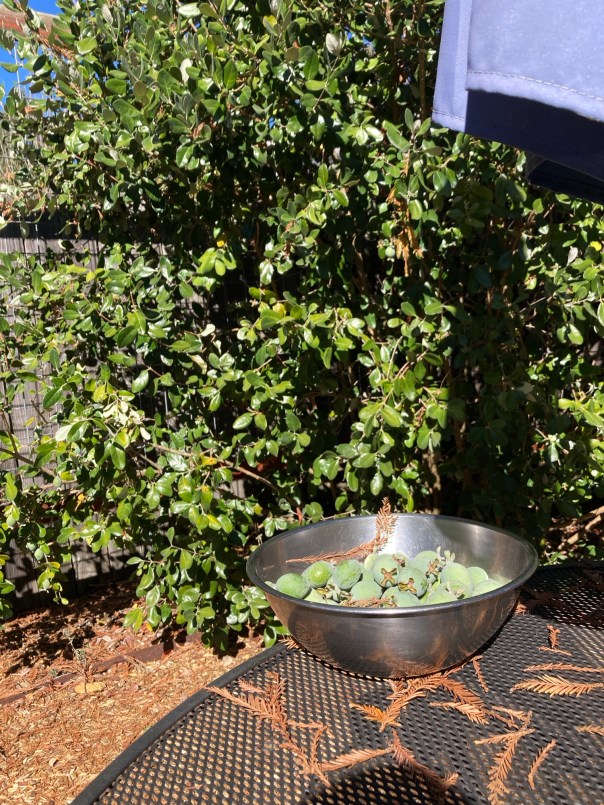
It was quite a workout climbing up and balancing on the planter box, hauling vines back over the fence from the neighbor’s yard where they always wander. So when I had stashed a five gallon bucket full of bean pods into the garage, I leaned back in my orange plastic Adirondack chair (stained from being out in the weather for years) that I’d moved away from the bean corner, and drank a can of sparkling water.

I was intensely aware of my riches. This morning I had picked another several dozen feijoas, and we put them and what remained from the last week into the dehydrator. Reading ideas for how to use a heavy crop, I learned that people do eat the skins. So I tried a few with their skins on and they are nice that way. The skins are a little more tart than the flesh, but they add another layer of complexity to the overall flavor, and a little crunch. The neighbor’s redwood tree looms over my pineapple guava, so that the dried and prickly twigs that fall are always interspersed with the fruit, and usually tangled in my hair when I come inside from picking.
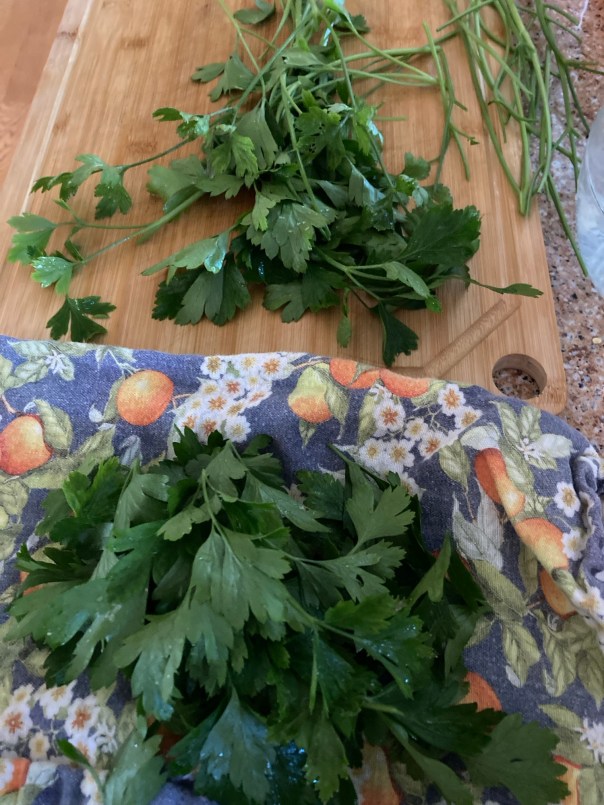
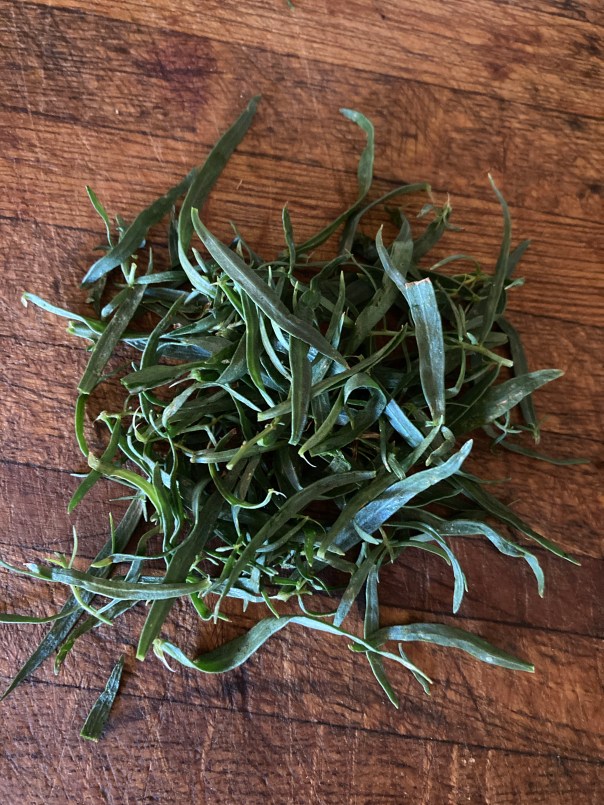
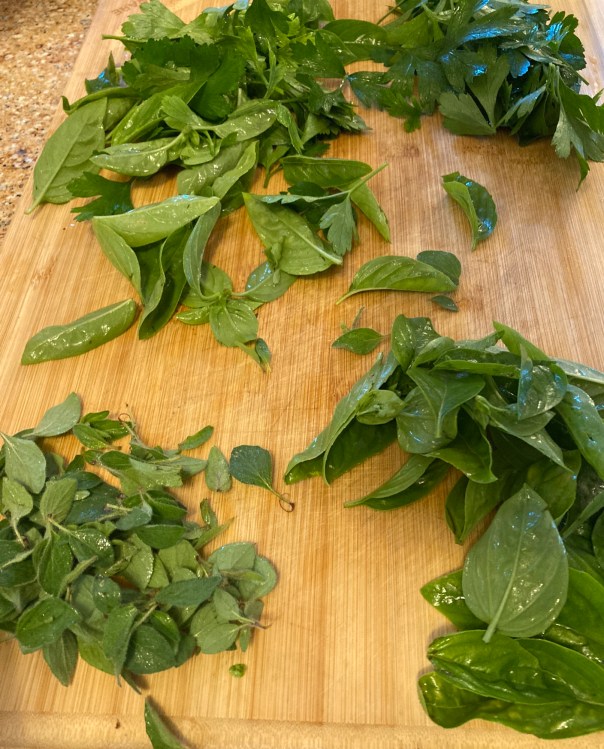
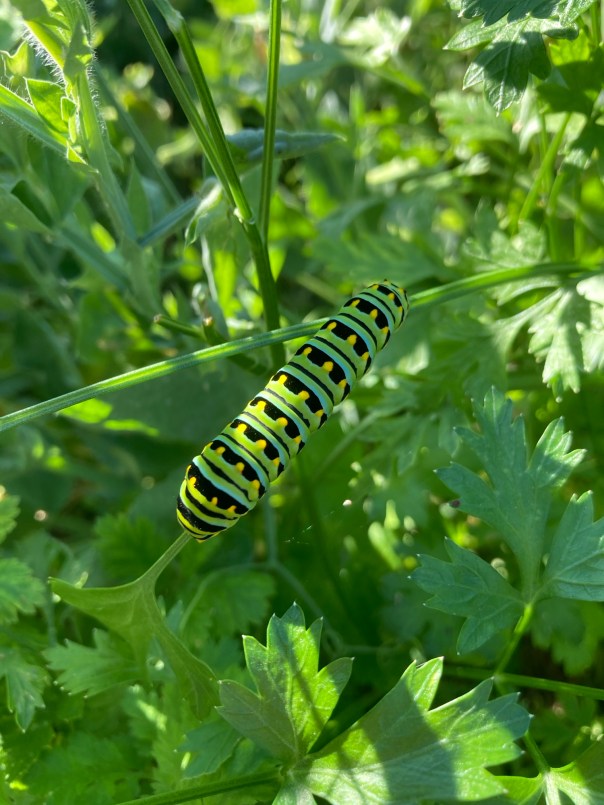
Below, parsley, which I was prepping to put into the Parsley-Tarragon Salsa Verde, and in which I was exulting. When I have a good sized parsley patch it feels like the most versatile resource. Plus the swallowtails love it!

tarragon

Last year I never got around to harvesting those runner beans until they had been rained on a few times and ruined. So it felt good to have put them under cover, and also to not let the feijoas go to waste. I had made that extra batch of salsa before the tarragon went into dormancy. I could sit back and relax, and just be in the garden. The awareness of my wealth brought to mind the king who was in his counting house, counting out his money, the queen in the parlor, eating bread and honey, and the maid in the garden getting her nose bitten off.

Well, I was the king, taking account of my bounty. But in the garden. And the queen, feasting on the most satisfying and sweet soul food — in the garden. Some days I hang the laundry in the sun, as does the maid, but that also makes me feel rich.

The king was in the counting house,
Counting out his money.
The queen was in the parlor,
Eating bread and honey.
The maid was in the garden,
Hanging out the clothes,
When along came a blackbird,
And snipped off her nose.

-Sing a Song of Sixpence

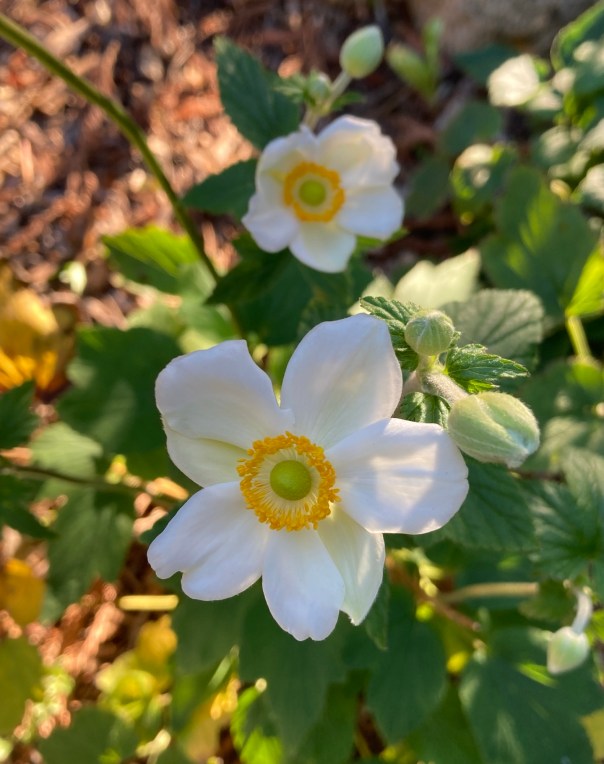
The first of the newer white Japanese anemones buds opened today, October 16! I’d have to say I’m rich with anemones at this point. The pincushion flower plants that I cut down to stubs and moved to the planter boxes have started blooming again amongst the basil that also won’t stop.

Back to the feijoas:

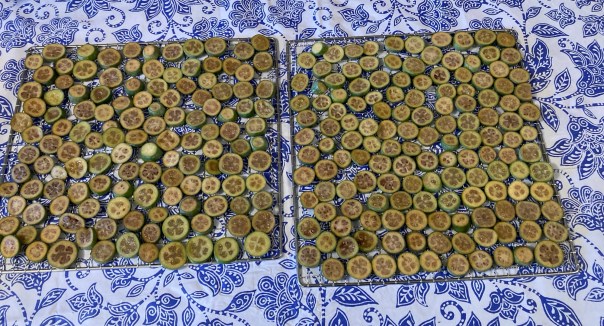
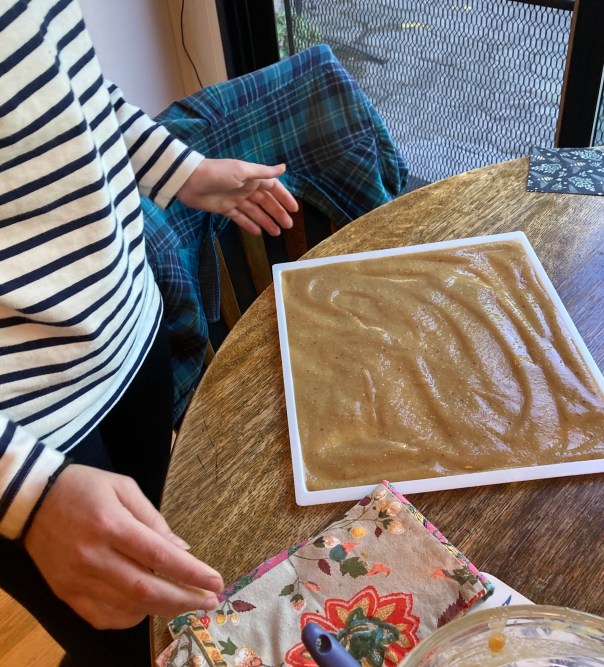
Bea blended up some pulp with an apple to make fruit leather, and I sliced the rest with the skin on. Now all of that experimental goodness is in process in the dehydrator, and filling the garage with its aroma.

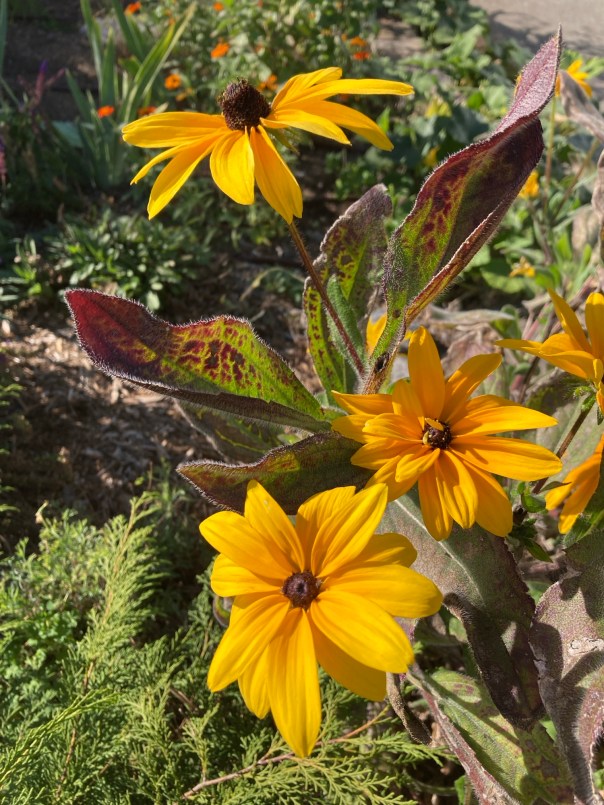
One last thing to illustrate my brimming treasure stores: The rudbeckia is still blooming!! It has been showing off its gold since May 22, and I expect it will go another week at least, which will add up to five months of opulence. Not only are its flowers still lovely, but the leaves are turning all purply and mottled at the end of the season, a patina of autumn. Because it sits close to the street for everyone to see as they drive by, it’s the part of my abundance that gets shared with the most people. I hope it might cause some of them to say, Glory to God for His most generous gifts!

I cook and the cactus blooms.

I’ve had several house guests in the last week, for anywhere from three hours to one night’s stay. First, son Pathfinder came down for work, and this time we had dinner here. It included polenta, which I hadn’t made for a long time, and I cooked up a big batch; then later in the week I served some of it to Maggie and Wil with a meatloaf that I also hadn’t made in years.
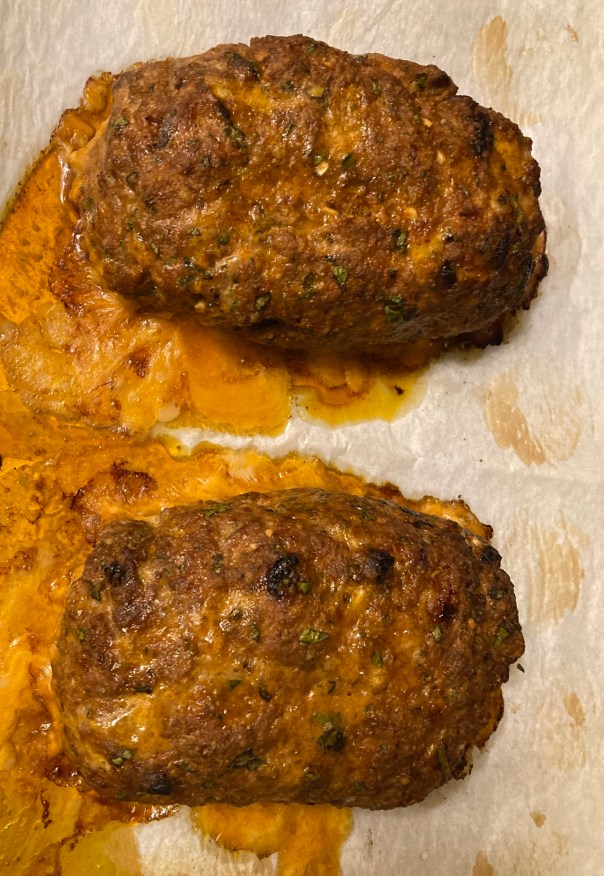
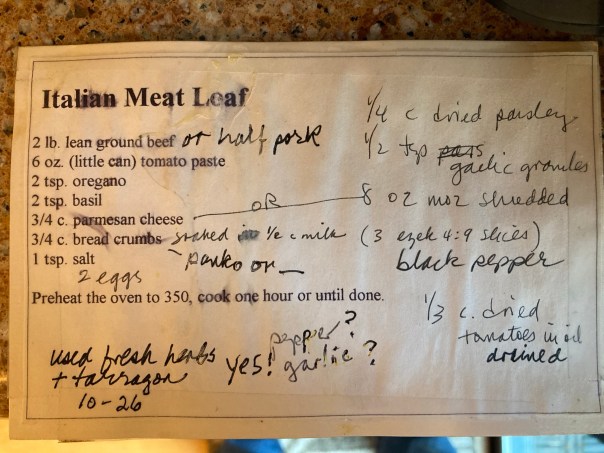
It was my Italian Meatloaf, and they liked it a lot. When I first came up with the idea for it, I wasn’t in the habit of using fresh herbs, and it even calls for dried garlic rather than fresh. But last week I was pleased to use four fresh herbs gathered that day from my garden: basil, oregano, parsley and tarragon.

Maggie wanted the recipe, so I took a picture of it and texted it to her. I need to make a new card, but in the meantime, here is the well used version, showing how adaptable it is:

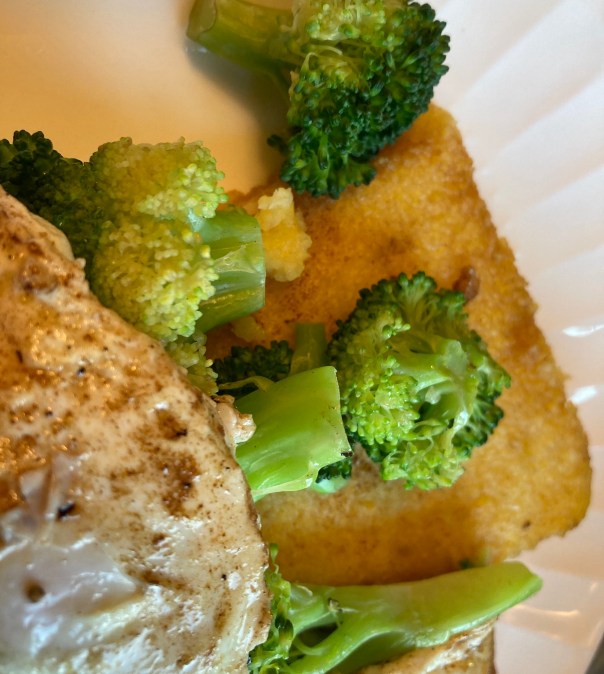
After those people had gone home, I fried slices of the remaining polenta and ate it with leftover broccoli and a fried egg. Do you like polenta? I find it all too easy to eat.

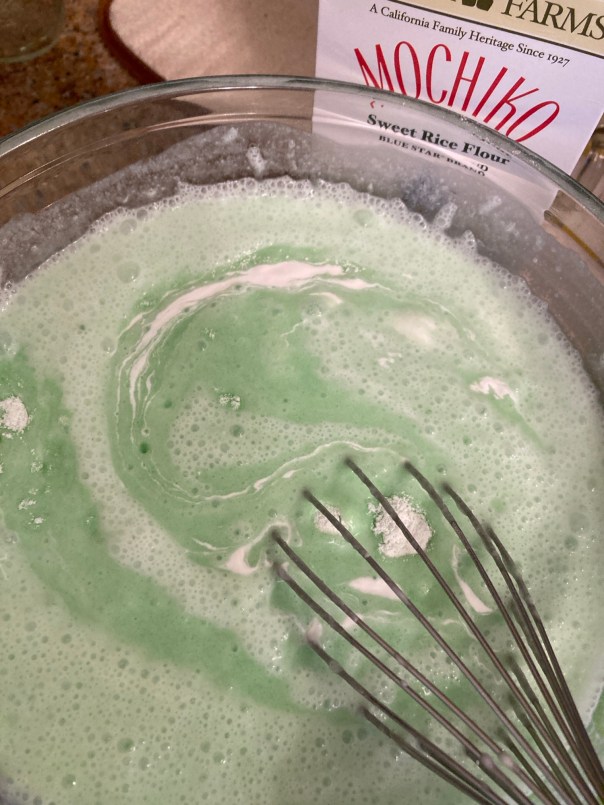
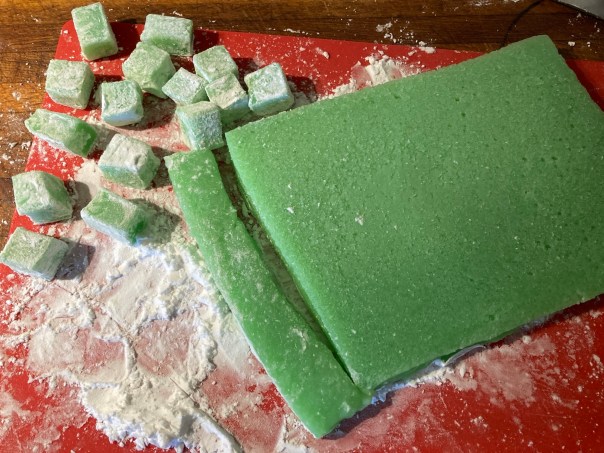
The next guests were three young children and their mother whom I’d invited over for an afternoon of play plus a snack. The snack I decided to serve was mochi. I baked my old standby that I adapted from one of the recipes in this book that a friend brought me from Maui a long time ago. I’m not going to show you another one of my messy and annotated recipes, but will just say that this one uses lime Jello, sweet rice flour (mochiko) and coconut milk. The sweet cubes cut from the slab of baked and cooled mochi are dusted with potato starch. Everyone loved it. But next time I’m going to try making a version without Jello’s artificial color and flavor — even if the color is pretty!
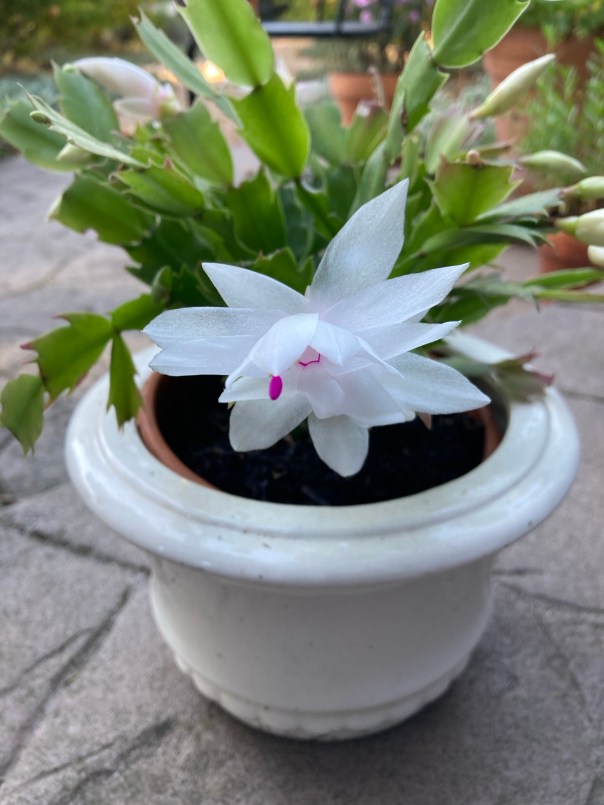
While I was cooking all week, both of my Thanksgiving cactuses got confused and started blooming! Are they trying to be Halloween cactuses?

A baby and a butterfly.

It’s been an exciting week. I have to share the most wonderful happening first, which is that my grandson Pat’s wife just gave birth to their first baby. Glory to God! This is my fourth great-grandchild. So far among the Greats there are three boys and one girl. I’ll share a photo as soon as I get a suitable one. Welcome, Little Boy!

(In the meantime, here’s Pat at left, long before he was considering marriage and children.)

My grandma, born this week in 1892.

“The essential rectitude of our view of children lies in the fact that we feel them and their ways to be supernatural while, for some mysterious reason, we do not feel ourselves or our own ways to be supernatural. The very smallness of children makes it possible to regard them as marvels; we seem to be dealing with a new race, only to be seen through a microscope.

“I doubt if anyone of any tenderness or imagination can see the hand of a child and not be a little frightened of it. It is awful to think of the essential human energy moving so tiny a thing; it is like imagining that human nature could live in the wing of a butterfly or the leaf of a tree. When we look upon lives so human and yet so small, we feel as if we ourselves were enlarged to an embarrassing bigness of stature. We feel the same kind of obligation to these creatures that a deity might feel if he had created something that he could not understand.”     

– G.K. Chesterton

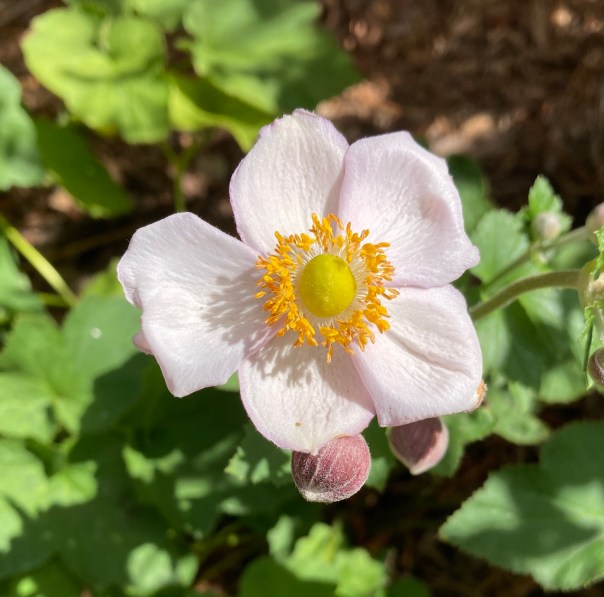
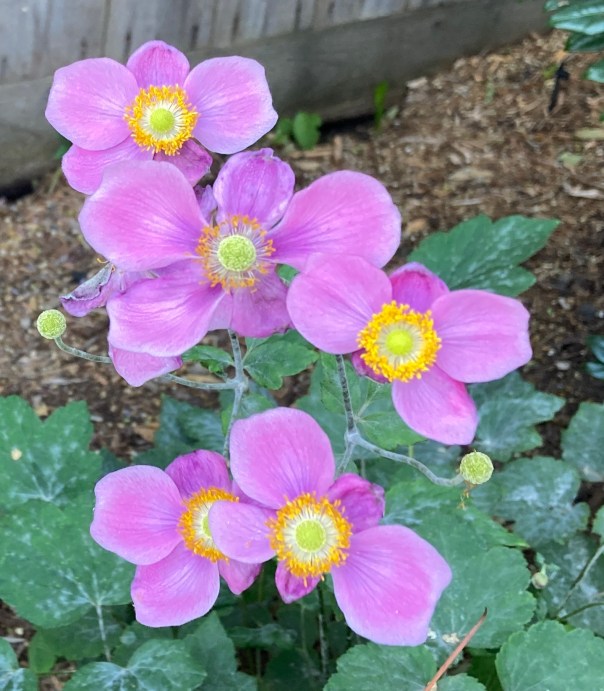
In the last year I’ve planted three different types/colors of Japanese anemones, and the second of these new groups, the pale pink, opened its first flower yesterday. My old white ones have been blooming for a few weeks, and the new dark pink flowers with a wonky petal pattern also. The dark pink ones are the most enthusiastic, thriving on the amount of sun and water they get; I’m hoping the mildew they have suffered is just from unusual weather this year, and won’t always happen.

Recently my daughter Pearl and I were talking about Elizabeth von Arnim’s books, as we often do, and she suggested I might like The Adventures of Elizabeth in Rügen. I got it right away and have been reading it on Kindle — many of von Arnim’s books are out of print — to great enjoyment. In her telling of her travels around the German island and among other tourists, Elizabeth often uses words such as happy, blessed, joy, light and radiance to convey how she feels when out of doors, particularly when the sun is shining. She is my kindred spirit for sure. Here is one excerpt that reminded me of my own joy this very week:

“Oh blessed state, when mere quiet weather, trees and grass, sea and clouds, can make you forget that life has anything in it but rapture, can make you drink in heaven with every breath! How long will it last, this joy of living, this splendid ecstasy of the soul? I am more afraid of losing this, of losing even a little of this, of having so much as the edge of its radiance dimmed, than of parting with any other earthly possession.”
In other places her descriptions of the people she meets and the conversations among them are, as is usual with her, both insightful and very funny!

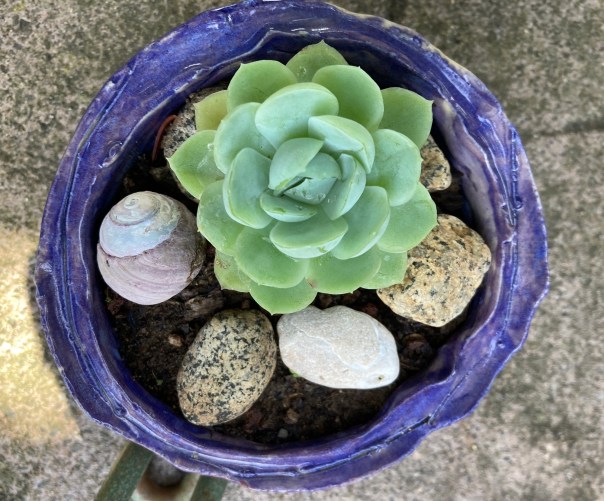
This little purple pot above was given to me by my granddaughter Ivy. It was the first thing she ever made of clay, and it has a convenient hole in the bottom so it can serve as a planter pot. It’s small, and just the right size and color to set off the beauty of a little chick type of succulent. When it becomes a hen I may have to substitute another chick in its place.

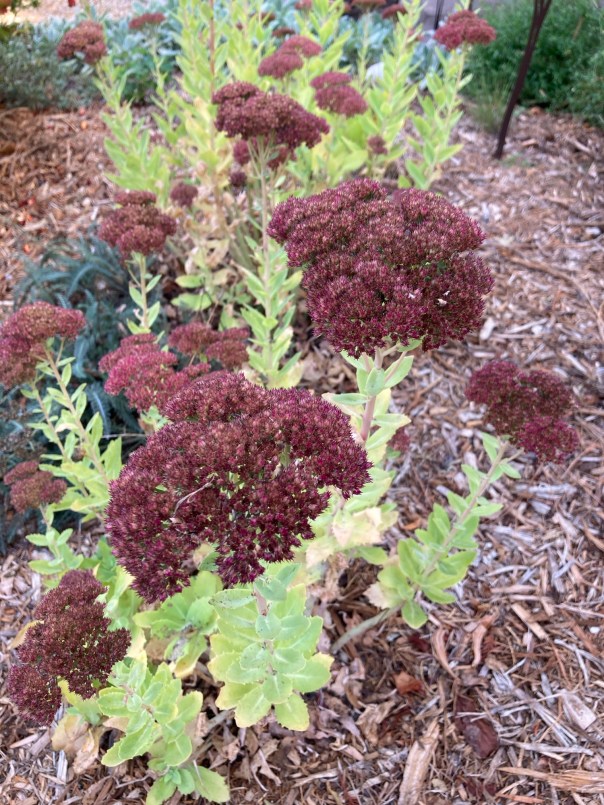
The Autumn Joy have turned burgundy.

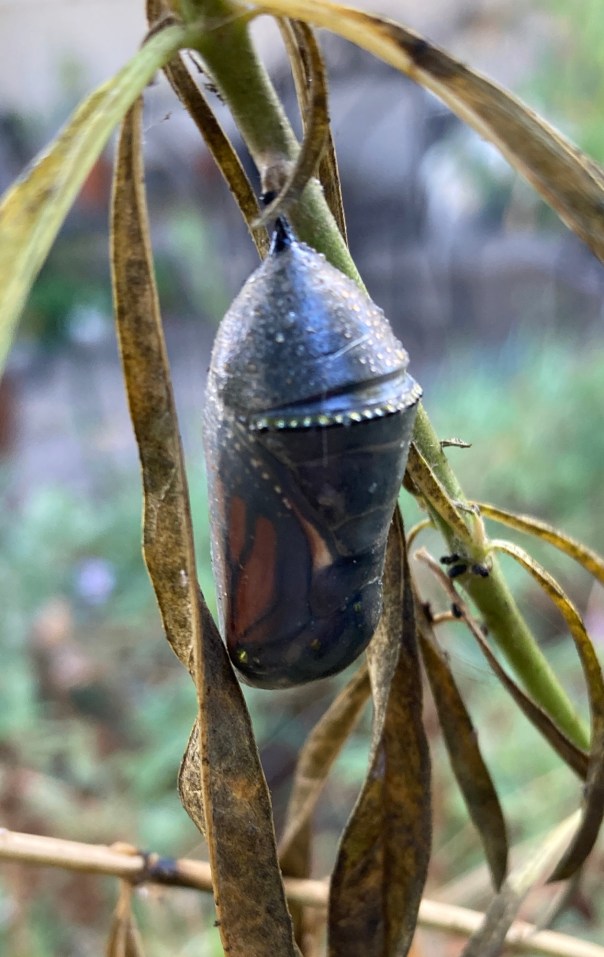
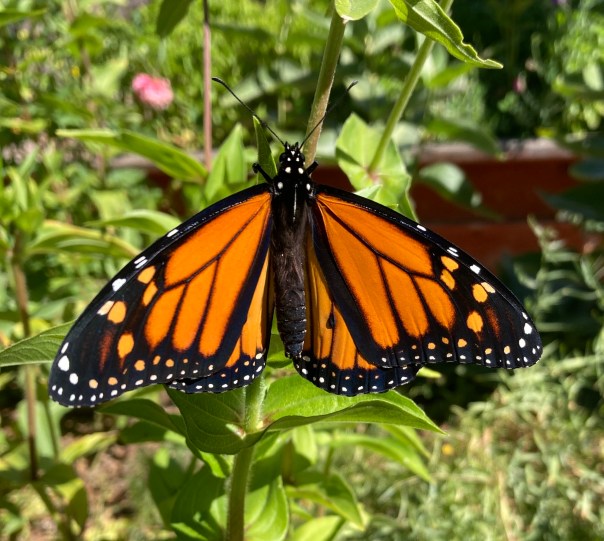
I had another super exciting day when the Monarch chrysalis we’ve been watching matured and the butterfly emerged. The pupa stage lasted about three weeks, which is on the long side, and I wondered if possibly the insect had died. But the delay was likely just due to the week of cool and drizzly weather we had recently; the case darkened, and I began to see the Monarch colors inside.
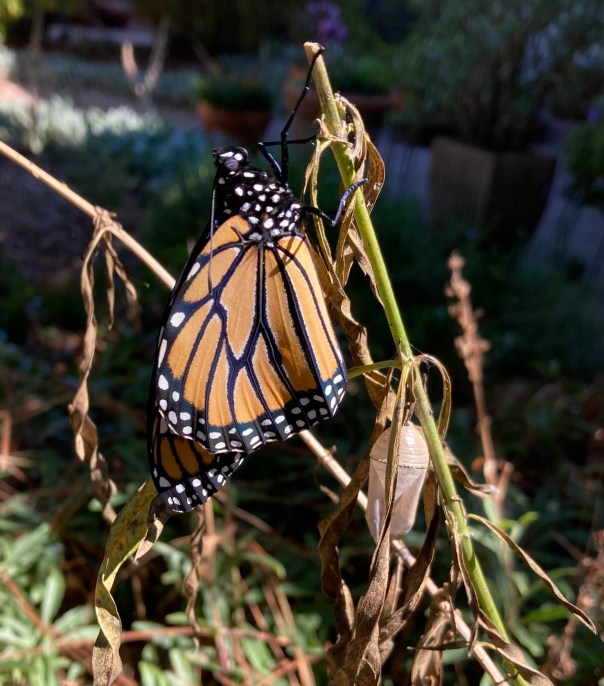
Early in the morning I went out to look, and it was a chrysalis. An hour later, still in my nightgown, I checked again, and the butterfly had broken out. (This makes a total of four Monarchs I have monitored closely, yet missed their big event.) He was clinging to the mostly-bare milkweed stem, his wings hanging behind, heavy and damp.

All along I’d been worried that there was not enough food on those plants to grow a caterpillar to sufficient size, especially since the aphids were devouring the leaves at a fast rate. Then when the caterpillar entered the pupa stage, I thought, “Isn’t that chrysalis kind of small? Maybe it’s undernourished….” Now I stared and stared some more, amazed at how such a creature could have been so tightly packed into the thin case. A full-sized Monarch!

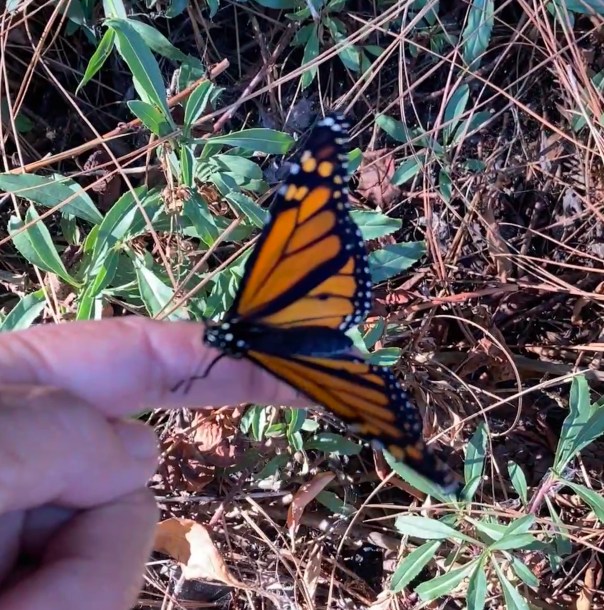
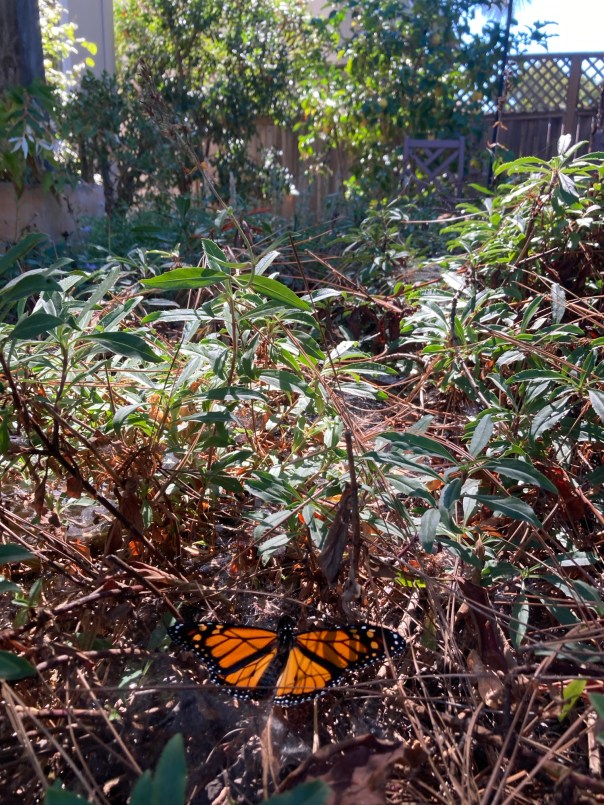
The sunlight was weak, so we waited, Mr. Monarch and I, for his wings to dry; intermittently and gently he opened and closed them. Drops of meconium (I looked it up) fell from his body several times. After a couple of hours he began to flap them a lot and flew/fell into the twiggy penstemon patch.

Down there I feared he’d dropped into a spider’s web, so as he struggled to walk out through the tangle, I put my finger near his head so he could climb onto it. Then I carried him, walking up my sleeve, to the zinnias in the planter box, where he was glad to attach himself to a stem.

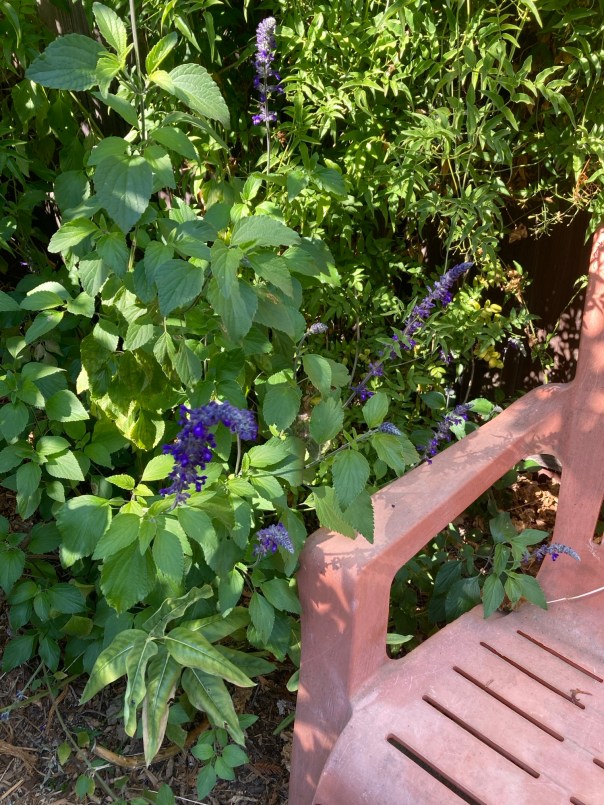
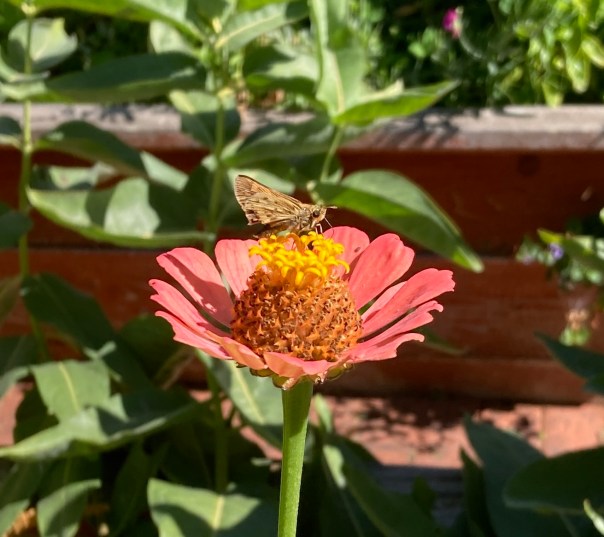
I sat for a while in this chair nearby, where the buzzing of the bees in the salvia made garden music for me. Skippers were all over the zinnias, too, but they are hard to catch at their business, they are so quick to take a drink on the fly.

The glorious Monarch stayed another full hour on his zinnia stem before he flew up and away, eventually to a perch high up in the neighbor’s redwood tree. There’s no flower nectar to drink there, so I imagine he came down soon, but by then I was very late in Getting On With My Day, and had to go in.
The Anise Swallowtail caterpillars Bea and I had seen a couple of weeks ago disappeared; I hope they are hidden away in their next stage of development somewhere. But two more of these gorgeous creatures can be seen feasting on the parsley now (at right).

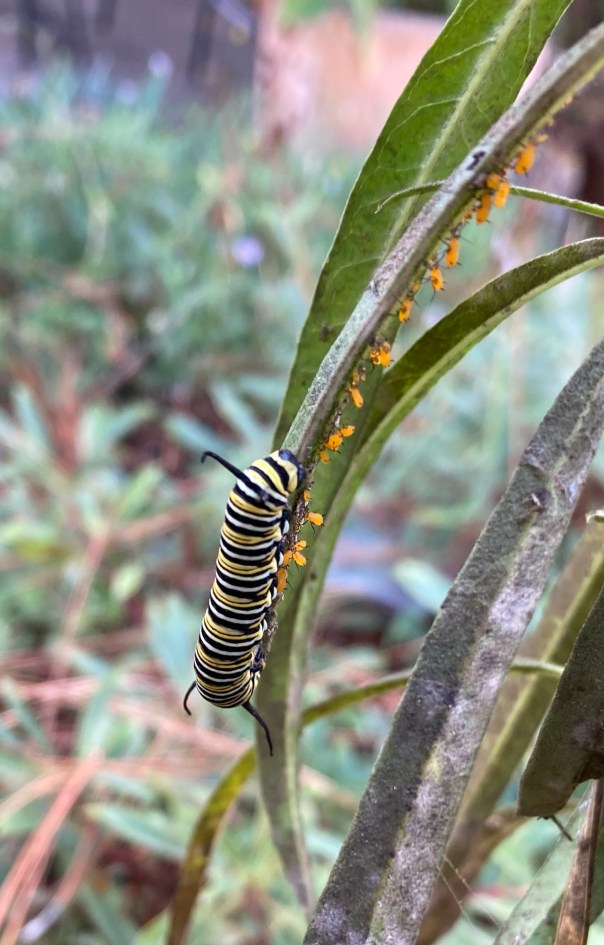
And there is another Monarch caterpillar not fourteen inches from where the one just emerged. It seems that there is indeed enough of the narrow milkweed leaves to support not only a large aphid population but at least one butterfly.

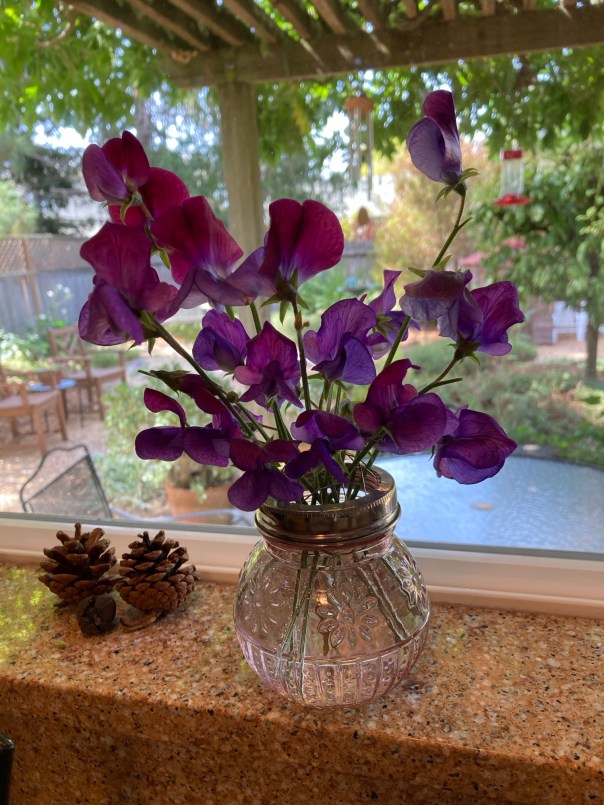
As you can see, the week was rich and full beyond the baby and the butterfly. But let me mention two more things that amazed me this week: Sweet peas blooming in September! Not many, but enough for a tiny bouquet. And the music of the piano.

I try not to talk overmuch here about my new housemate, so I will only say that a certain person has been playing my piano more than it’s been played in a very long time. Sometimes she plays morning and evening, and once I woke to the comforting sounds, and once it was as a lullaby when I went to sleep. This is a gift I never thought to ask for, but my Father thought to give it to me.

Do you suppose next week will be calmer?