Category Archives: Psalms

The day that the LORD has made.

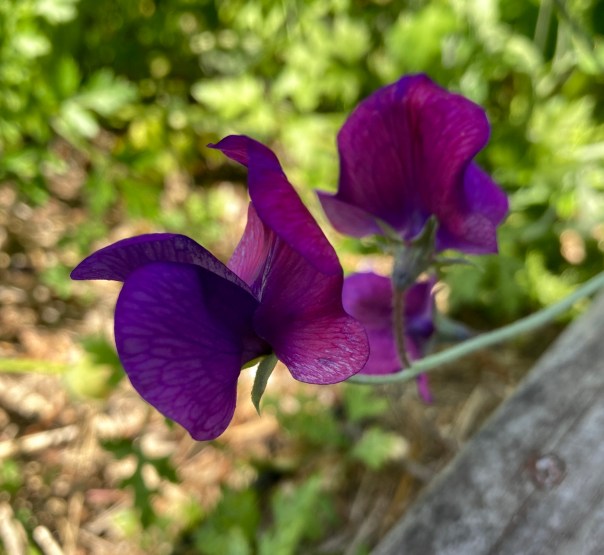
Sweet peas in September!

Do you know a chorus or hymn to those words in my title?

This is the day that the Lord has made;
We will rejoice and be glad in it.

We used to sing it in the Bible churches that my family attended back in the day, and now I sing it in the Orthodox Church, in a different setting. Many times recently I’ve had cause to meditate about the significance of both the fact and the exhortation in those lines from the Psalter. Often I wonder, as does G.K. Chesterton,

Here ends another day,
during which I have had eyes, ears, hands
and the great world around me.
Tomorrow begins another day.
Why am I allowed two?
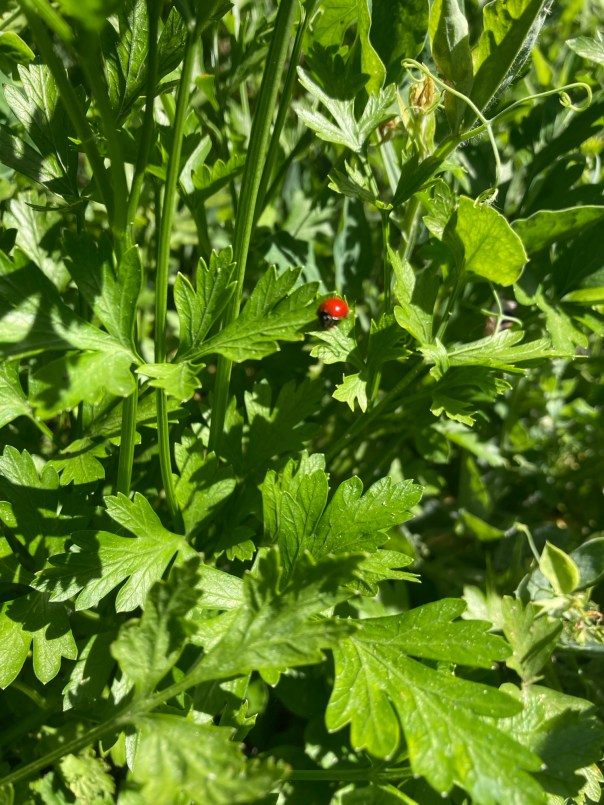
I could not possibly list all the things I am thankful for every day. But I can occasionally write a blog post about a few of them, which I am doing this afternoon…

It’s Sunday, so fresh on my heart is the most extravagant and Life-giving thing: that I was a recipient of the Holy Mysteries of the Eucharist, the very Body and Blood of Christ. I was not kept at home by illness, nor was my attention distracted from the service by pain — right there are two of those Things That Didn’t Happen that are always infinite in number for any of us. If we are feeling grumpy, thinking on those non-events, the ones we wouldn’t have desired, can help move the mind in a positive direction to things that actually exist.
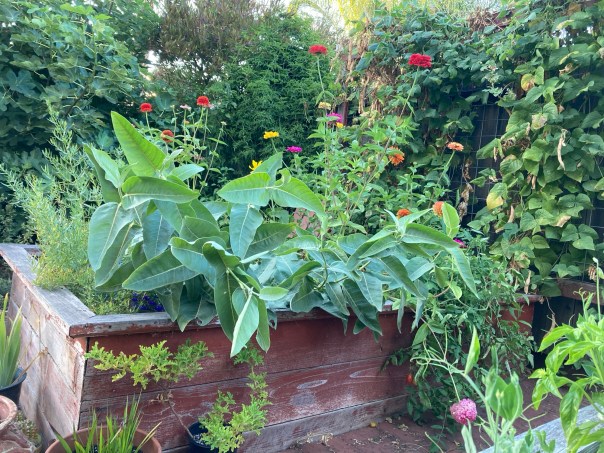
If my garden is full of unsightly areas, and posing problems for me to solve, I can go for hours or days without worrying about them, because I am so thankful to have a garden of any sort.  I feel like saying to God, “I have a gorgeous fig tree! How can it be possible that I also have a lemon tree, a begonia, and a fountain??”

Time Management is a term I do not like. Long ago, I used to think a lot about my days in terms of T.M., and it wasn’t happy thinking. It was Happier thinking when I was sitting on the couch with several children around me, reading A Child’s Garden of Verses, or Winnie the Pooh, or The Jungle Book.
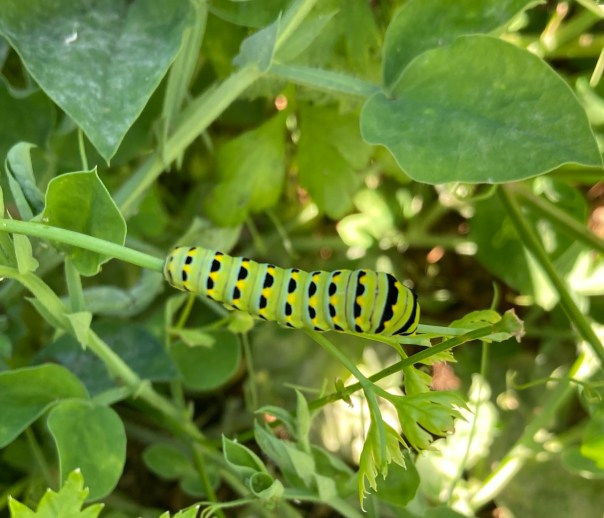
Anise Swallowtail

Another Happy kind of thinking is when I walk around the garden considering all the wildlife out there. Currently we have caterpillars feasting on the plants, including two Anise Swallowtails in the parsley patch. On the milkweed, Monarch Caterpillar #2 has entered the pupa stage, and Caterpillar #3 is still munching. This is a pollinator gardener’s joy  ❤  and I hope that there are dozens more caterpillars that I haven’t noticed, that are reaping the bounty and thanking God with me. …even if they are Cabbage Whites, which like to eat everything — though I haven’t seen many of those around this year.
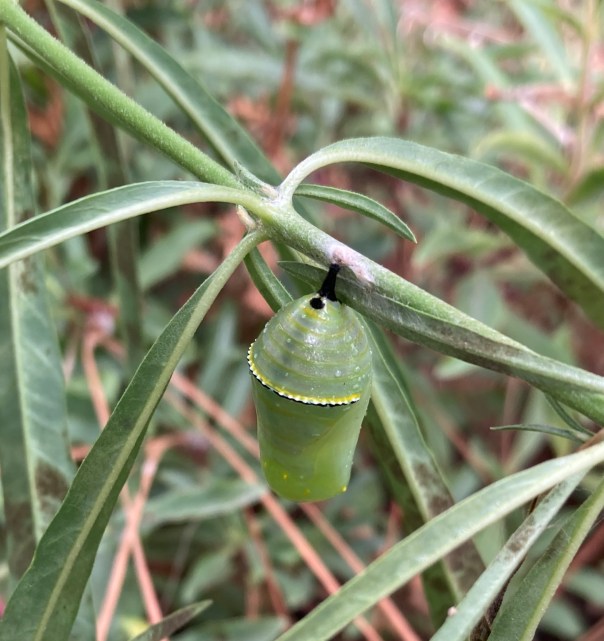
Monarch chrysalis

The problem that Time Management poses is, “How can I get everything done?” But I now know that I can’t. Whenever I’m doing one thing, like typing here, and/or exulting in the caterpillars and flowers, I’m not doing dozens of other things, which threaten to Never Get Done.

There is some kind of Russian proverb that I remember roughly as, “If I don’t die today, I can do Those Things later. If I do die today, it won’t matter that I didn’t do them.” 

Even King David could not do everything he wanted. He wanted to build a temple, and God even told him that was a Good Idea, but that it wasn’t for him. It seems like the vast majority of Good Ideas I’ve had throughout my life have not or will not come to fruition, so they will remain in the Theoretical category. I want to focus on the Real things that I am participating in right now.

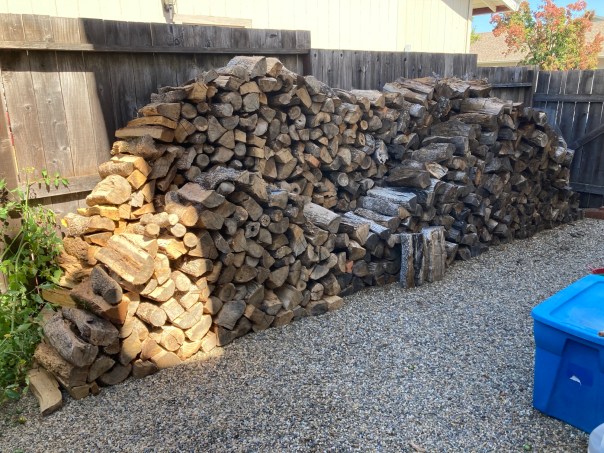
It probably wouldn’t have mattered, if I hadn’t got a delivery of firewood this month. I feel a little silly about it, because I still have wood left from the last two late-summer deliveries. I will definitely be prepared, if the power fails. After Bea and I stacked it, at one end of the rows that were left over, it seems that I must have well over a cord, and maybe I won’t have to buy wood next year. The newer, golden logs are on the left, and the oldest, grayest ones on the right. It looks like rolling hills of cordwood; that wasn’t planned.
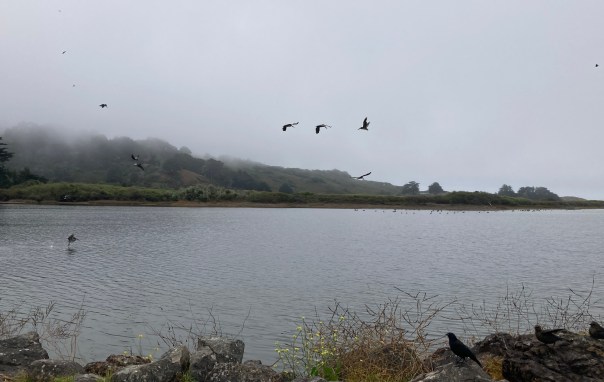
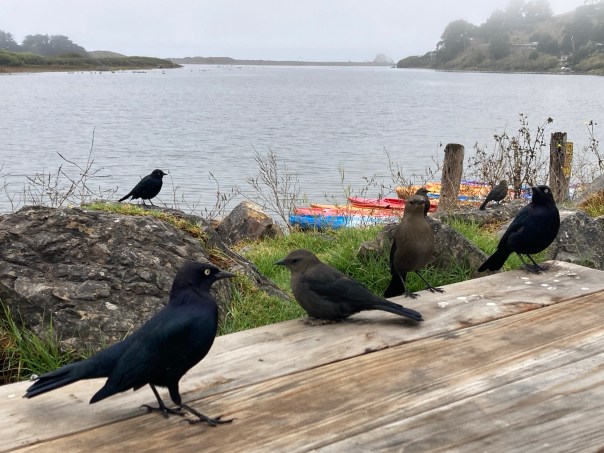
Last week I drove my friend Mrs. C to the coast, where we ate clam chowder overlooking the mouth of the Russian River, in the town of Jenner-by-the-Sea. I had been mentally dragging my feet about spending the time, but once I got out the door the day unfolded perfectly. It was the Day That the LORD had made, after all. If I had stayed home, I may have cleaned the bathroom (probably not), but I would not have been able to watch a hundred pelicans swirling, swooping, and doing belly flops on the river. Even the fog was not unpleasant; I had forgotten that it would not be a cold fog out there. Inland it had been quite rainy, but by the river we were able to sit outside, where blackbirds joined us at our table and welcomed any crumbs we offered.
The recent rain was a very welcome change from the chill winds we’d been having, that made me fear for an early departure of summer. Once the clouds moved in, the temperatures rose. I will be able to relax again, and hope for more figs ripening.
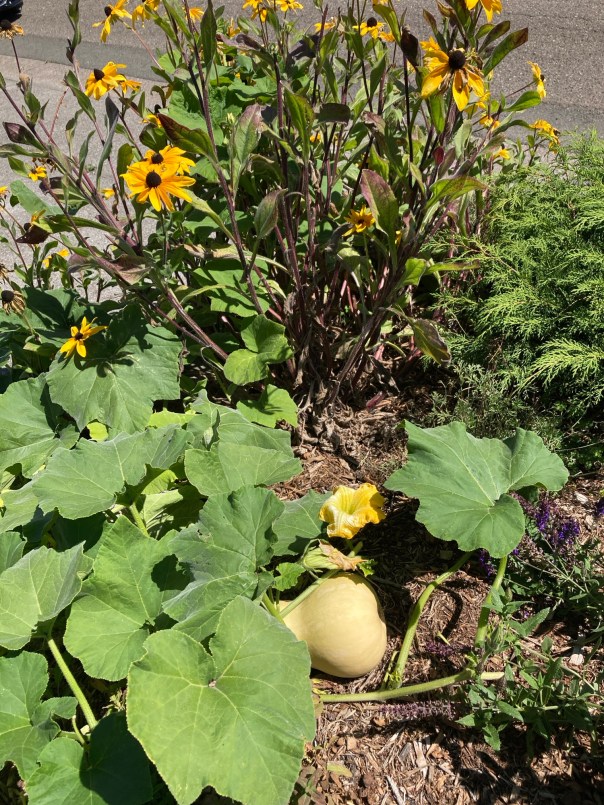
Several butternut squashes are ripening on the plants that have spread into the driveway. This one peeking out (above) is one of the largest. The rudbeckia at that corner of the driveway has been blooming for months and months and I have been amazed at it all summer. But it is winding down…

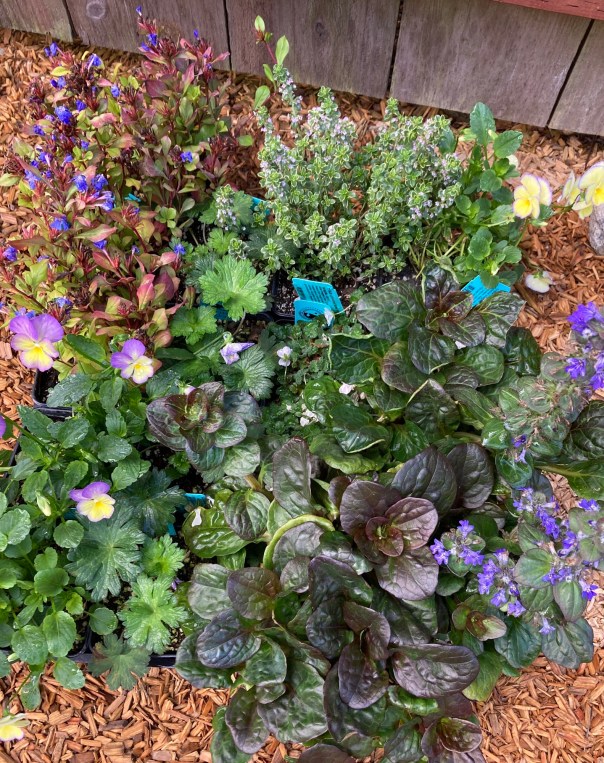
Just before the rain, I had bought a flat full of plants for that challenging area by my front door. These are all species that can thrive in Part Shade. I will hope to plant them this week or next; ajuga, violas, cranesbill, dwarf plumbago, and more.
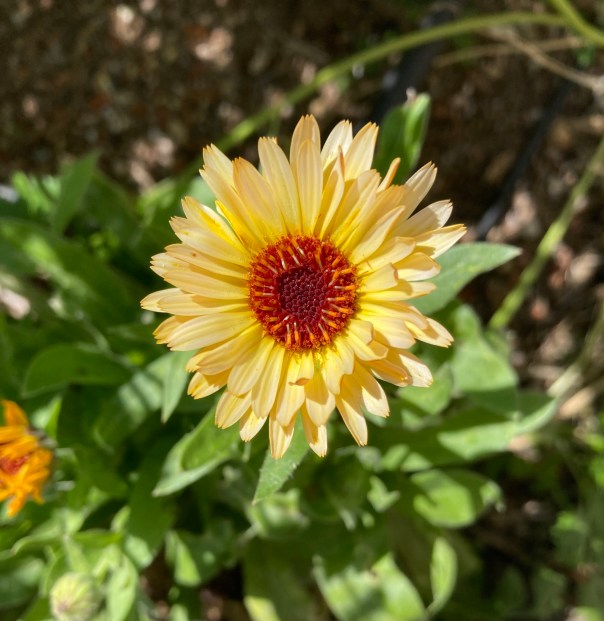
A late calendula.

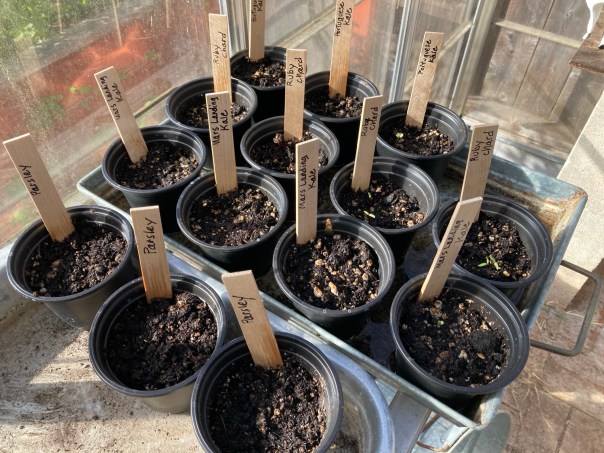
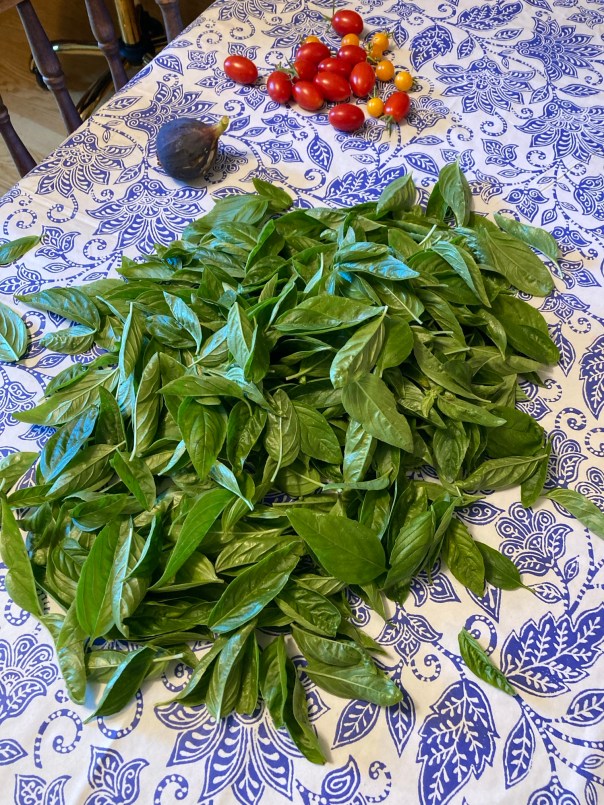
My leafy green seeds have sprouted, indoors and out. I harvested a pile of that basil that had been calling to me, and made pesto. There’s been a lot of Happy Thinking-Thanking through the days in Gretchen’s Garden. It helps that more than any other month, I love September.
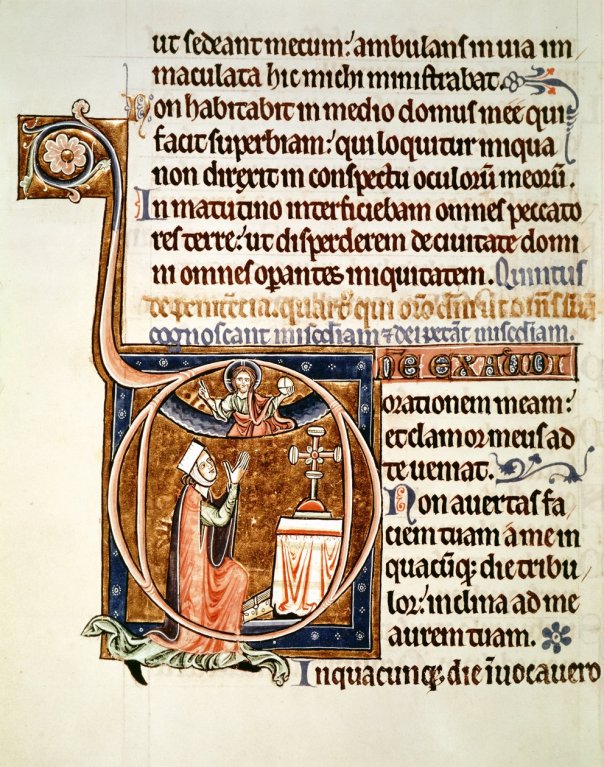
Here is the key to the power.

From the Psalter of St. Louis and Blanche of Castile, 13th c.

“…how did the monks train? By singing the psalms. Here is the key to the power, such as it is, of medieval communal prayer: it was focused on the psalms. And why on the psalms? Because, as every medieval Christian knew, they are focused on Christ the Lord, the Word who is with God and who is God, through whom everything was made (John 1), who set his tabernacle in the sun and came forth as a bridegroom from his wedding chamber (Ps. 18:6), the king of glory mighty in battle (Ps. 23:8) who entered into his temple (Heb.) to rescue his people from their sins (Ps. 21).

“Religion, properly speaking, is about worship, and it is the object of worship that defines the community. If the community worships itself (as a city, nation, or empire) then its religion is about belonging to the group (see, pagan Rome, and its opposition to Christians). But a community worshiping Christ is defined by Him—and its individual members have strength to stand up against other communities who define themselves by something other than Christ.”

-Rachel Fulton Brown, interview

A Psalm and a tree for Advent.

This is a re-post from only three years ago, but it’s meaningful to me in a fresh way this year because now, instead of teaching little ones at church, I’m back with the high schoolers, and our lesson on the Holy Forefathers will be presented differently.
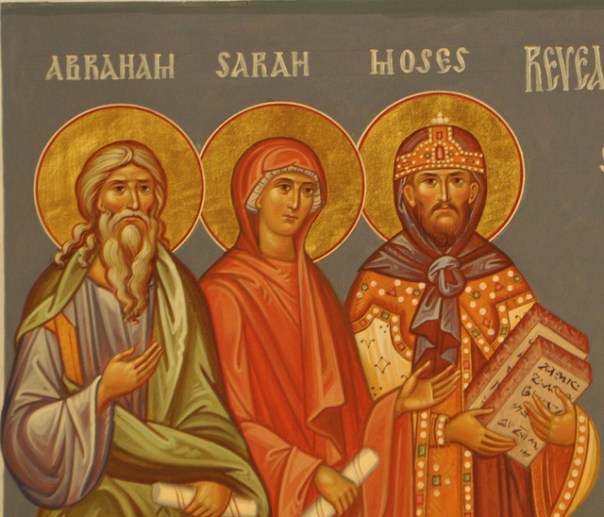
Also, this week I meditated on Psalm 89/90, “A Prayer of Moses, a man of God,” and Moses is one of those Holy Forefathers we are remembering. Because of its repentant tone, it was an answer to my prayer for guidance in how better to prepare for the Feast of the Nativity of Christ, in the short time remaining.

It’s a morning prayer, to help us focus at the outset on God instead of on our sorrows, and to keep at bay the feeling of hopelessness that lies in wait at the door of our heart. The poetry conveys so well the patience of God, and the way our longings and heartaches coexist with thankfulness and repentance:

….Lord, Thou hast been our refuge in generation and generation.
….Before the mountains came to be and the earth was formed, and the world, even from everlasting to everlasting Thou art.
….
….As for the days of our years, in their span they be threescore years and ten.
….And if we be in strength, mayhap fourscore years; and what is more than these is toil and travail.
….For mildness has come upon us, and we shall be chastened.
….
….Return, O Lord; how long? And be Thou entreated concerning Thy servants.
….We were filled in the morning with Thy mercy, O Lord, and we rejoiced and were glad.
….In all our days let us be glad for the days wherein we saw evils.
….And look upon Thy servants, and upon Thy works, and do Thou guide their sons.
….And let the brightness of the Lord our God be upon us, and works of our hands do Thou guide aright upon us, yea, the works of our hands do Thou guide aright.

From 2022:

Today is the Sunday of the Forefathers of Christ, His ancestors according to the flesh. We remember these who lived “before the Law and under the Law,” especially the Patriarch Abraham, to whom God said, “In thy seed shall all of the nations of the earth be blessed” (Gen. 12:3, 22:18).

I brought an icon of the Prophet David to stand up on the table in my church school class, and we talked about David as a shepherd boy, his killing of a lion who was threatening the sheep, his composing songs, and his anointing by the Prophet Samuel. (But first, we must chat about St. Nicholas and Santa, because he was strongly on the minds of the four- and five-year-olds.)

When I took the icon out of my bag again at home, I set it up downstairs, and lit a candle to help me keep remembering for the remainder of today. Maybe I will leave it here through next Sunday, when we remember more of these saints; the next church school lesson will focus on the Hebrew Children in the Fiery Furnace.

One thing I didn’t discuss with the children, but would be fun to teach older students about, is the Tree of Jesse, a visual depiction of the genealogy of Jesus Christ. Jesse was the father of King David; his roots extend down and back to his own forefathers including  Abraham, the Father of the Faithful; and Jesse was himself the root, or progenitor, of David’s line, which culminated in Christ the Messiah.

Jesse Tree icons must necessarily include so much information, they somewhat overwhelm me. When looking at them I tend to concentrate on Jesse himself, lying at the base of the tree, with its trunk growing out his very body.

Jesse Window detail, Dorchester Abbey
Wells Cathedral Jesse Window

Stained glass windows portraying the Jesse tree, which abound in Britain, are also a bit much for me to take in. Often they are in tall cathedrals and extend up a whole wall, the figures distant and their names unreadable. As I was looking at some online I was happy to find Val Stevens talking about the Jesse Window at Wells Cathedral, which window I no doubt saw when I visited there with daughter Pippin, but I don’t remember.

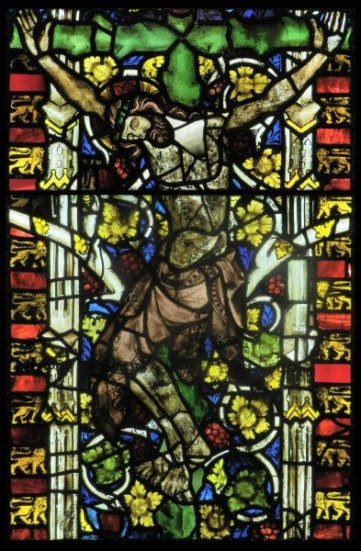
It’s a very short video (which ends with a request for contributions which are no longer needed, because the repairs have been completed), and she speaks for only two minutes, but she made me laugh with joy when she began to speak about the rare crucifixion scene that is in that window, which dates from the 14th century. The stem turns green, and takes the form of a cross, on which the Savior hangs. When she got to the part about the meaning of the green wood, or what it meant to the medieval mind, my heart leapt to hear it, and to see the change in her body language as she moved from purely artistic ideas, to the more compelling realities of the heart: Jesse Window of Wells Cathedral

Ansgar Holmberg

Also I want to share a quote I have posted before, more than once, because it pulls together several of these images, metaphors, and real people in our salvation history, in our cultural tradition. This is about a different sort of tree, the more familiar and ubiquitous Christmas tree! From Metropolitan Hierotheos Vlachos:

“I suspect that the custom of decorating a tree at Christmas time is not simply a custom which came to us from the West and which we should replace with other more Orthodox customs. To be sure, I have not gone into the history of the Christmas tree and where it originated, but I think that it is connected with the Christmas feast and its true meaning.

“First, it is not unrelated to the prophecy of the Prophet Isaiah: ‘There shall come forth a Rod from the stem of Jesse, and a Branch shall grow out of his roots’ (Is. 11:1). St. Cosmas the poet had this prophecy in mind when he wrote of Christ as the blossom which rose up out of the Virgin stem from the stump of Jesse. The root is Jesse, David’s father, the rod is King David, the flower which came from the root and the rod is Theotokos. And the fruit which came forth from the flower of the Panagia is Christ. Holy Scripture presents this wonderfully.

“Thus the Christmas tree can remind us of the genealogical tree of Christ as Man, the love of God, but also the successive purifications of the Forefathers of Christ. At the top is the star which is the God-Man (Theanthropos) Christ. Then, the Christmas tree reminds us of the tree of knowledge as well as the tree of life, but especially the latter. It underlines clearly the truth that Christ is the tree of life and that we cannot live or fulfill the purpose of our existence unless we taste of this tree, ‘the producer of life.’

“Christmas cannot be conceived without Holy Communion. And of course as for Holy Communion it is not possible to partake of deification in Christ without having conquered the devil, when we found ourselves faced with temptation relative to the tree of the knowledge of good and evil, where our freedom is tried. We rejoice and celebrate, because ‘the tree of life blossomed from the Virgin in the cave’.”

-Excerpt from: “The Feasts of the Lord: An Introduction to the 12 Feasts and Orthodox Christology” by Metropolitan of Nafpatkos Hierotheos Vlachos – November 1993. 

I’ve known families who used a Jesse Tree along with their Advent wreath as helps in Advent. But oh, my, out of curiosity I just looked at some current Pinterest-era examples, and had to abort that browsing quick; it was plenty for a Sunday afternoon to look at stained glass windows.

My daughters and I have been sharing memories this month, from our homes scattered across the country; posting photos of past and current Christmas trees, reminiscing about Christmas caroling, and recalling their father’s voice and his Christmas joy. This year I will have neither a Jesse nor a Christmas tree, but I feel rich with history and symbols and family. There’s my earthly family, and there is the heavenly family into which I’ve been adopted by the Father. Today I’m especially grateful for all those patriarchs and prophets who have gone before and who encourage me by their lives of faith.

By faith You justified the Forefathers,
when through them You betrothed Yourself beforehand
to the Church of the Gentiles.
The saints boast in glory,
that from their seed there is a glorious fruit:
she who bore You without seed.
By their prayers, O Christ God, save our souls.

-Hymn for the Feast

We survive neglect.

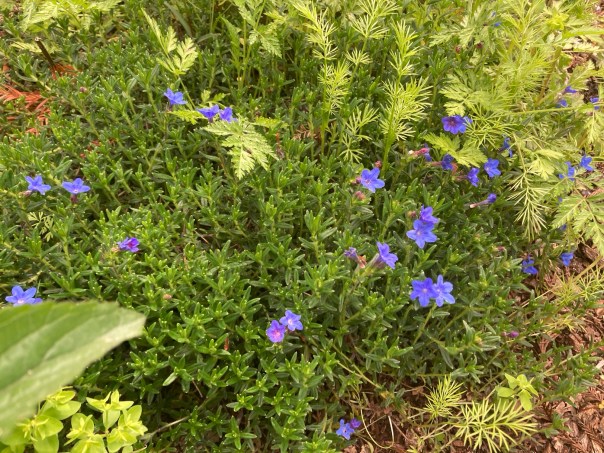
Helianthemum Henfield Brilliant

I use “we” in the title to show solidarity with my beloved garden. Several times a year, a complaint is lodged against Gardener Gretchen for failing to live up to her vision. I guess it’s just the reality of Life Right Now. Tomorrow will be a big gardening day, a day of improvement, but today is when I had a few minutes to stroll about taking stock, taking pictures. All the plants are calling me to come out and admire them, and to notice how they thrive; they don’t want me to feel bad about how much I ignore them.

Lithodora with nigella and weeds.

Lithodora is one of my favorites. This week I’m going to pull out all the Love-in-a-Mist sprouts that are growing through and around it and under the fruit trees. In the front I already did as Gardener Dan advised me: I “edited” (thinned) the nigella, which he says will help them produce larger blooms. I think I reduced the number of plants in that bed from roughly 1,000 to 100.

Let me get the rather sad picture below out of the way now, the planter boxes where I typically grow squash and tomatoes. I’m at a loss as to what to do there, as my travels will take me away at just the wrong time for summer vegetables. Maybe the earth will have to lie fallow until August, when I can plant winter greens.

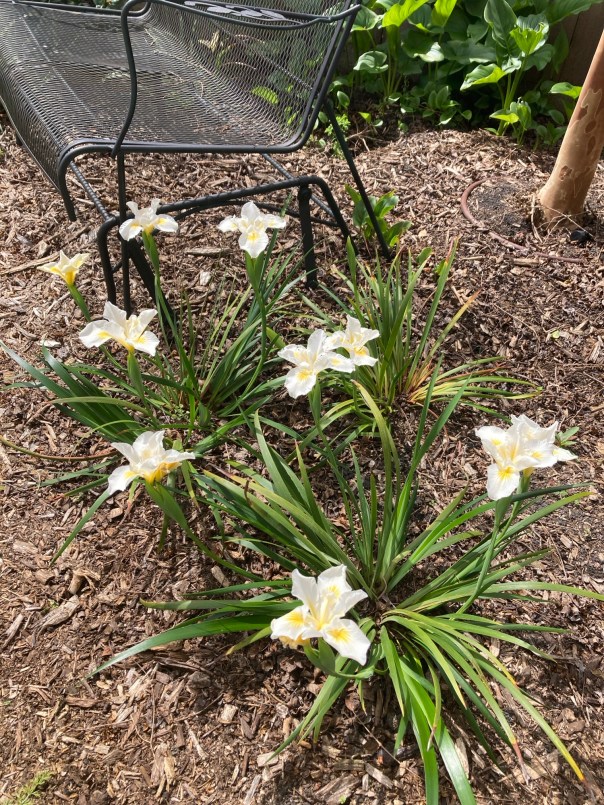
The native Pacific Coast Iris is now blooming in my very own garden (below). I am completely thrilled. This plant is so popular on the West Coast — not just near the ocean but up into the mountains — that it has its own fan club, the Society for Pacific Coast Native Iris.

In native plant nurseries one can find many colors and species of this type, Iris subsect. Californicae, which is in the same family as the Siberian irises. The Flora of North America site says, “Series Californicae presents some of the most complex taxonomic problems in all of our American irises.” In the wild a specimen can be difficult to identify as to which of the three main groups it is in because of “their willingness to cross pollinate whenever their ranges overlap.”

Pacific Coast Iris

When I was offered a choice by Dan, I knew I wanted the white. But maybe I will find a place to plant other colors in the future. One plant site explained, “If the tall bearded iris is the queen of the garden, the natives are the pixies.” My queens are nearby, in the front garden, rising up tall and elegant, with the pale yellow California poppies (and lots of weeds) for contrast.

Back by the lemon tree, I had a sort of iris dumping ground for a few years, where I planted whatever extra corms came my way, usually gifted by iris sellers who threw a few odd ones into the shipment. The colors or the quantities didn’t fit in with the others, so I saved them in that corner, where they never did well. Last fall I put them in a double row behind a plum tree, where they are surprisingly starting to bloom. Yes, I saw that milk thistle — I just need gloves before I will tackle it!

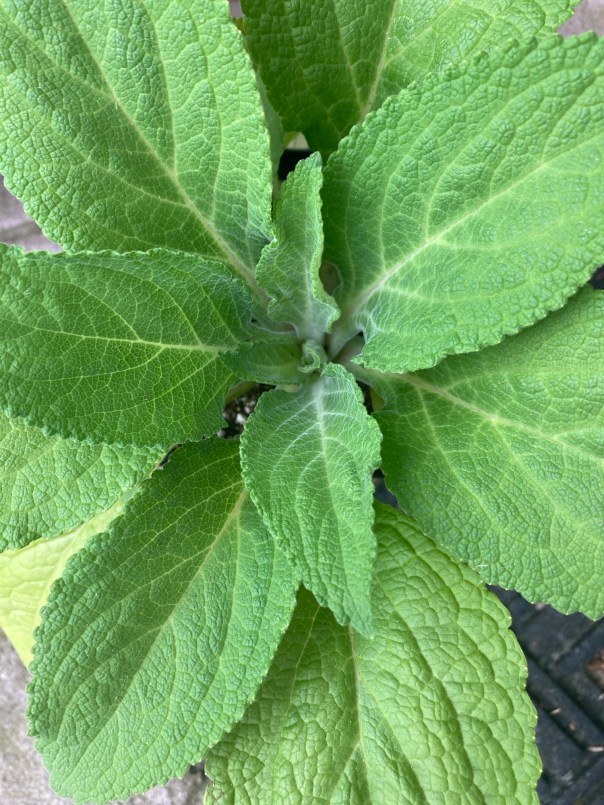
This spring, I bought exactly one plant on my own, without any idea of where I might install it. I will wander tomorrow and find a setting for a foxglove plant.

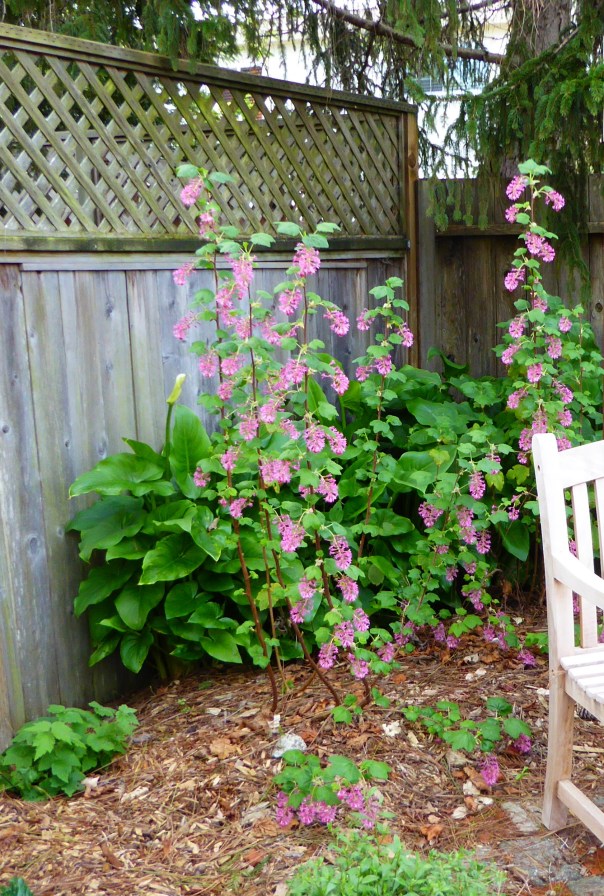
For a few years, back when my garden was newly landscaped, I had three native currant bushes (ribes) with their showy flowers and intoxicating scented leaves.

Ribes, March 2017

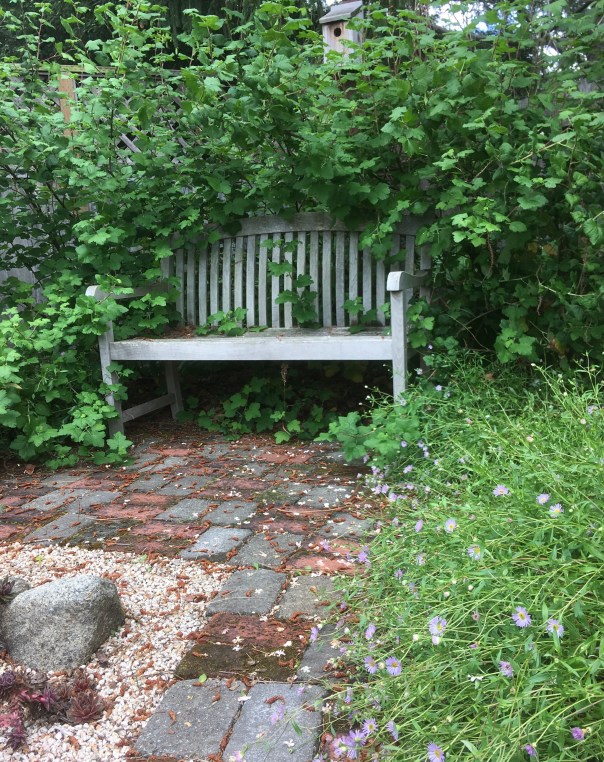
They grew so large that they engulfed the bench in front of them, making it impossible to sit there:

Ribes, May 2019

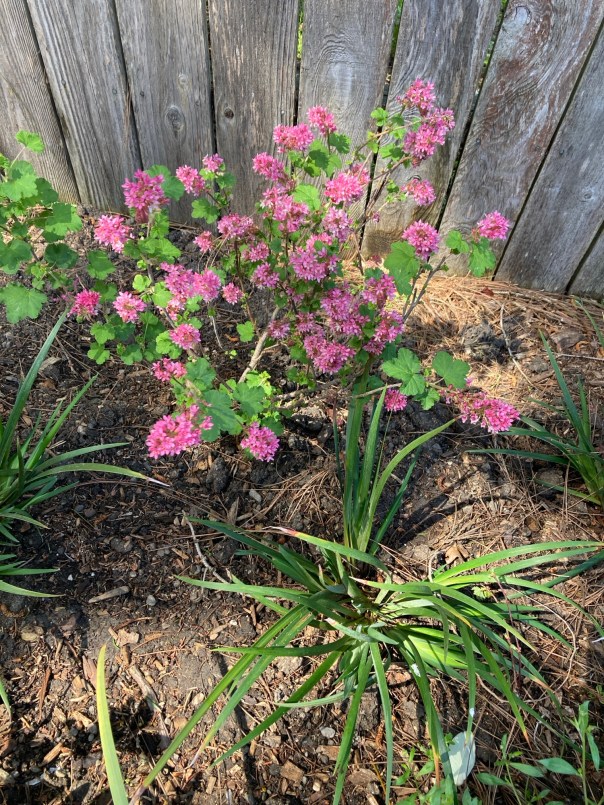
After I pruned them, they bloomed again …. and then one by one they died. No one could figure out why. Now we are trying some new ones, which don’t look like the same plant exactly, but they are blooming very prettily right now:

Last fall I made it to the hardware store after most of the bulbs were already bought up. All they had of muscari were these “special” ones below. I bought a big bag, and then regretted it, thinking they might turn out to be just weird. So instead of planting them near the front door, I put them in various places in the back garden, where they are blooming late… and I do think they are odd.

Revived survivors from last year.

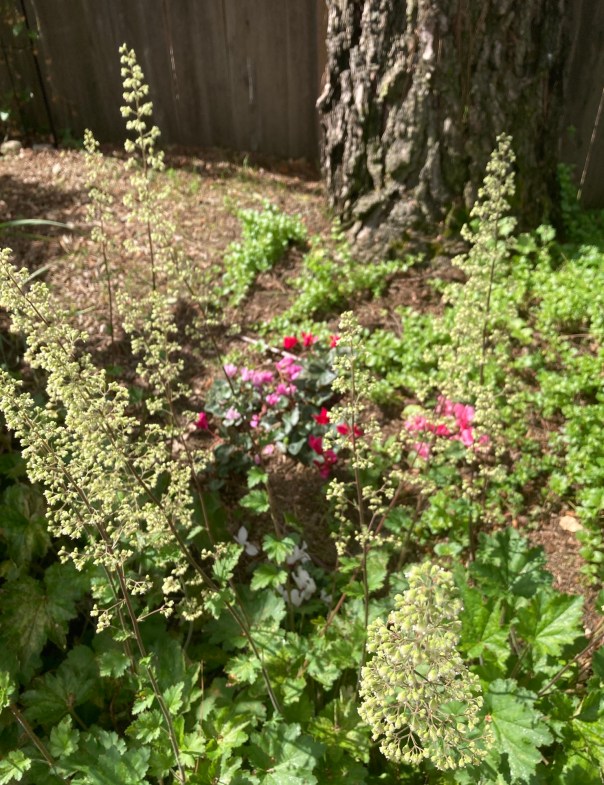
The heuchera are covered with their bells already, and you can see my little cyclamen plantation behind. The soil is very shallow because of tree roots, but they come back year after year; recently I added two more to their family.

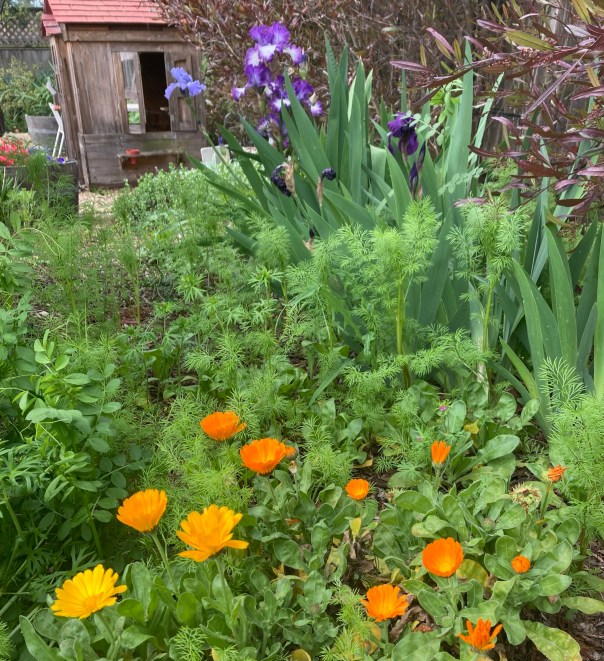
I will close with a cheery calendula group. They are brighter than ever because of all the rain they got, and will never look this good again until next winter or spring, if they get a good winter watering. It’s just too dry in my garden for them to thrive, but they are like many of us that way, right? Rarely are all the conditions optimal for our looking and feeling our best. The calendulas are surrounded by tall, pushy, more drought-tolerant “tares” that don’t seem to bother them at all. I hope to follow their example and cultivate more hardiness, and cheeriness too. Or — merriment.

Because this morning I was reading a Psalm not in my usual translation, and it went like this:

And let the righteous be glad;
Let them greatly rejoice before God;
Let them be glad with merriment.