Monthly Archives: June 2013

Oregon – Sand, Waves, and the Carrot Family

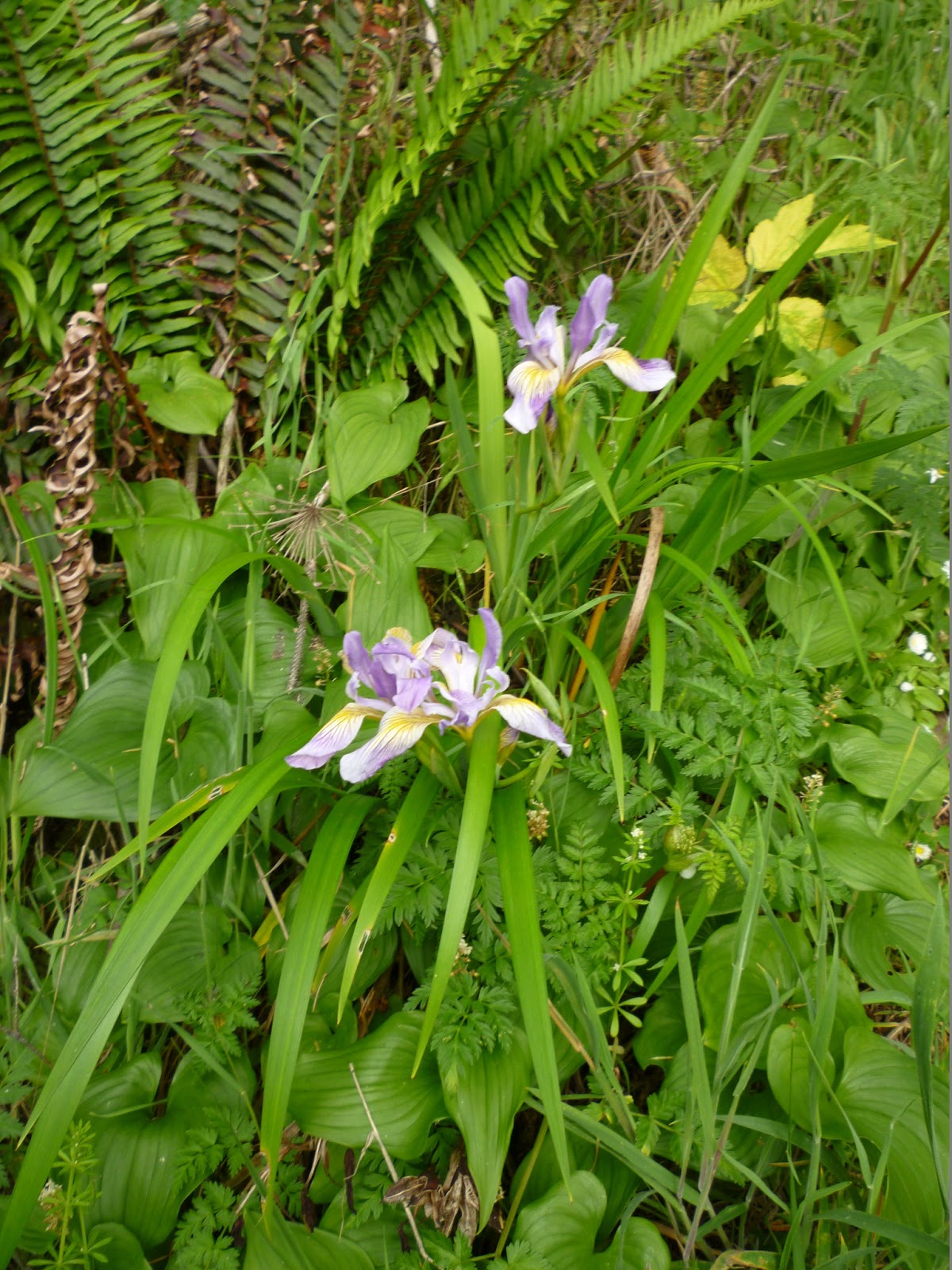
wild iris

From southern Oregon we headed northwest to the coast. This trip involved lots of driving, of which I did a fair amount, and that kept my nose out of a book and my eyes on the scenery. I tried to memorize the components of the lush countryside, forests thick with every kind of tree, bordered by wide bands of blackberry hedges in bloom. The Deer Brush (mentioned in my last post) in white and blue made big pastel splashes, and I’m sorry to say that a species of noxious weed, Scotch Broom, was rampant here, making gaudy yellow blotches on the hillsides in quantities I’d never seen before. I now do believe what they say: Broom is taking over.

Cow parsnip bloomed everywhere, too. It wasn’t until we got to the coast and walked down to the shore that I noticed what seemed to be two types of cow parsnip. I had to wait until we got to Pippin’s house a few days later to read in her wildflower books and get the two cousins straight. They are both in the Apiaceae family, also known as the carrot or parsley family. The one on the left below is the more familiar-to-me Cow Parsnip, Heracleum maximum (named after the god Hercules) and on the right is Angelica lucida, known as Sea Watch or Seacoast Angelica. That one doesn’t grow so much inland.

Cow Parsnip and Seacoast Angelica


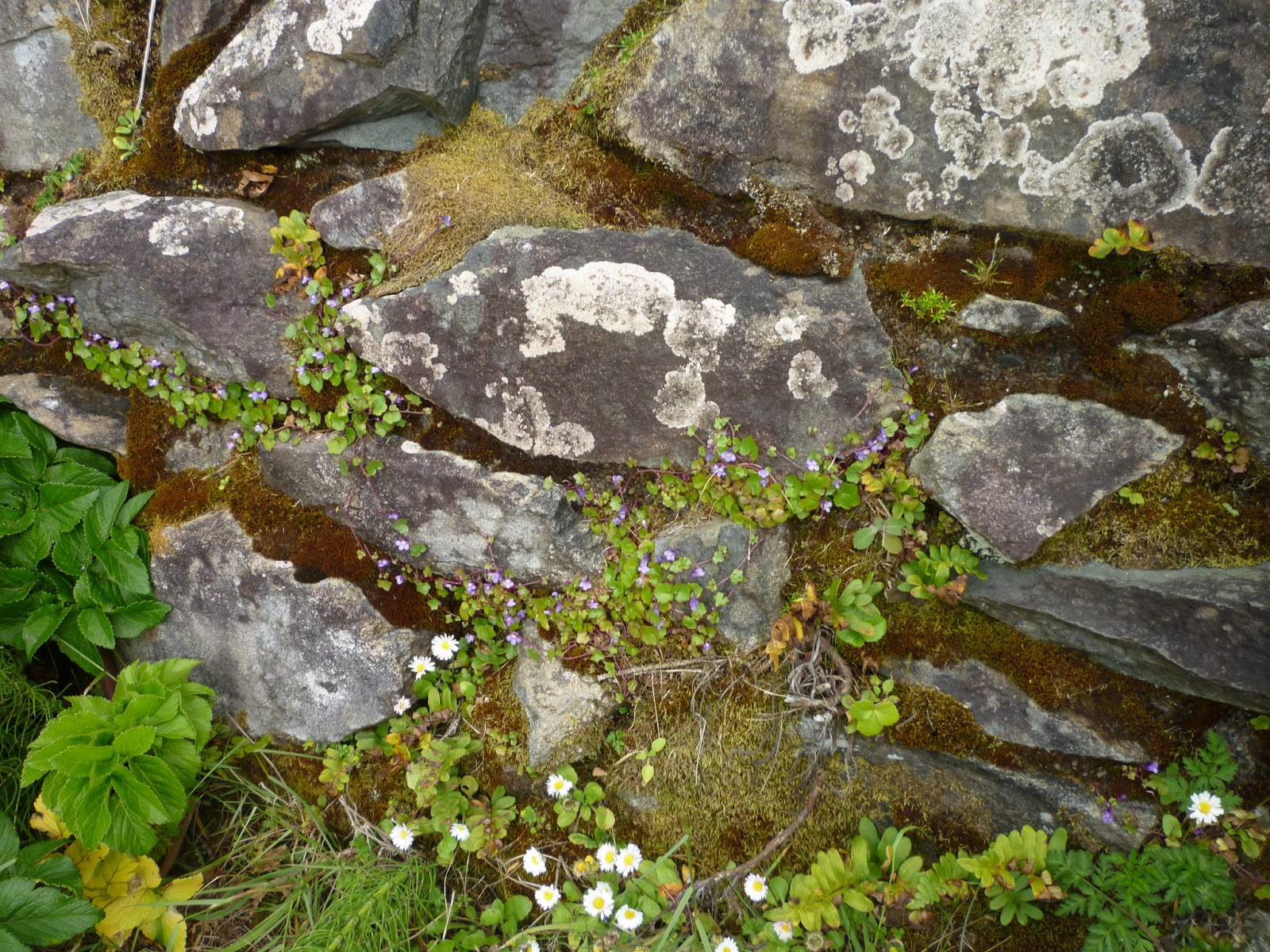
Wish I could identify the viney blue flower that grew nearby, in the middle of the photo at right, but I’ve already spent a fruitless hour trying. Anyone?

enlargement of the unknown flower above

Heceta Head Lighthouse in the distance

Our first night on the coast was spent in Yachats, where our room looked out on this scene. That made the long drive worth every mile – nothing like going to sleep to the sound of ocean breakers.

One more plant was new to me, and I eventually found it in an Oregon wildflower guide: Maianthemum dilatum, common name False Lily of the Valley or May Lily or Two-leaved Solomon’s Seal (below).
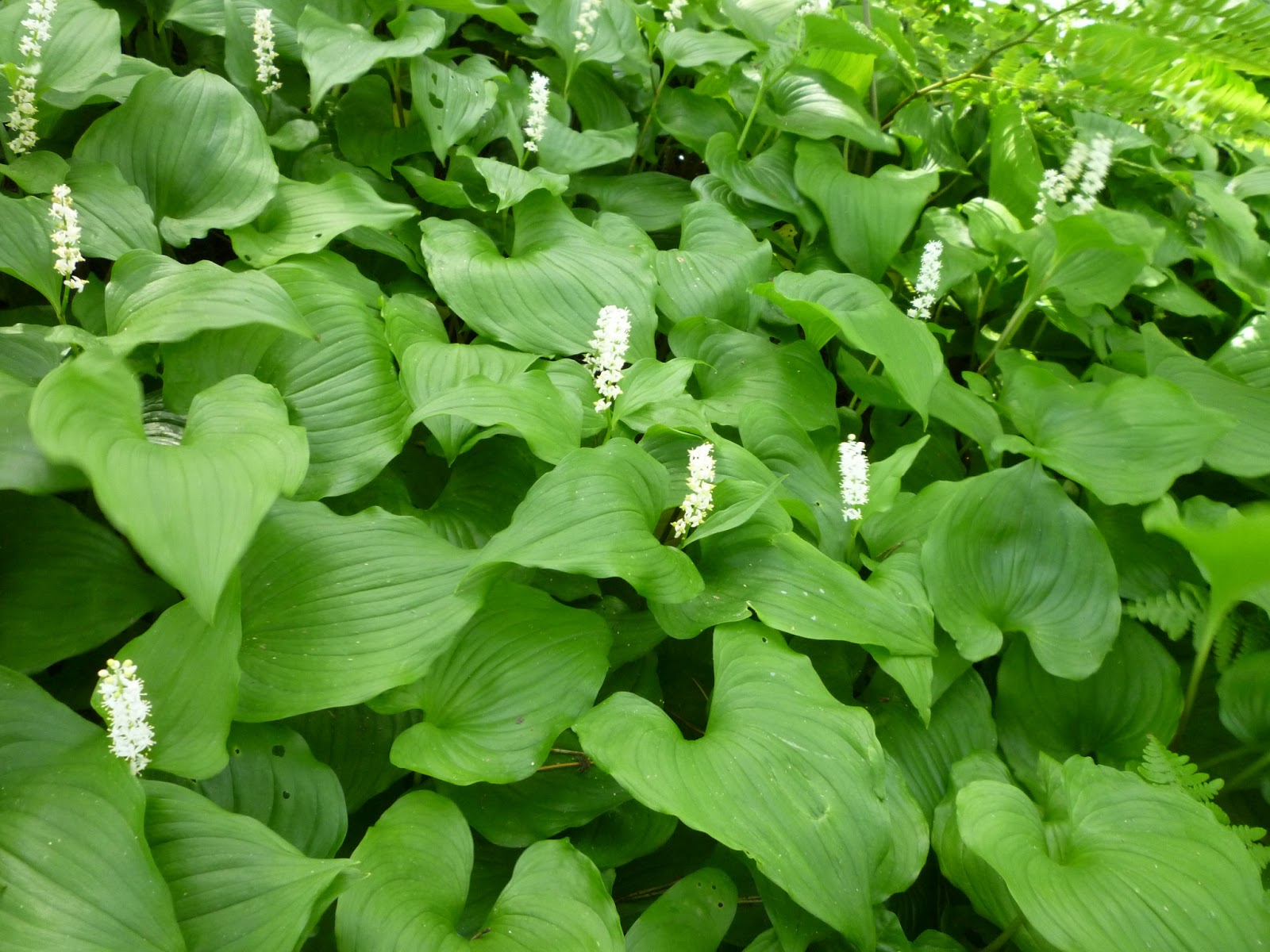
Maianthemum dilatum

Wherever we drove or walked, big rhododendrons met us around every corner, covered with big pink or red or white blooms. Purple vetch and foxgloves, long-stemmed white daisies blowing at the roadsides, and even giant blue lupines added to the visual feast.

We did stop at the famous Oregon dunes on our way up the coast, miles of broad and high sand dunes you can get lost in. I left my shoes in the car and trudged up a tall sand hill, the wind blowing my pink flowered skirt all over. Deep sand is the most cushiony thing you could desire to hold you up, so after pausing a minute at the top to look all around, I galloped down again, feeling young and strong.

Oregon – Granite Man, Pennyroyal, and Deer Brush


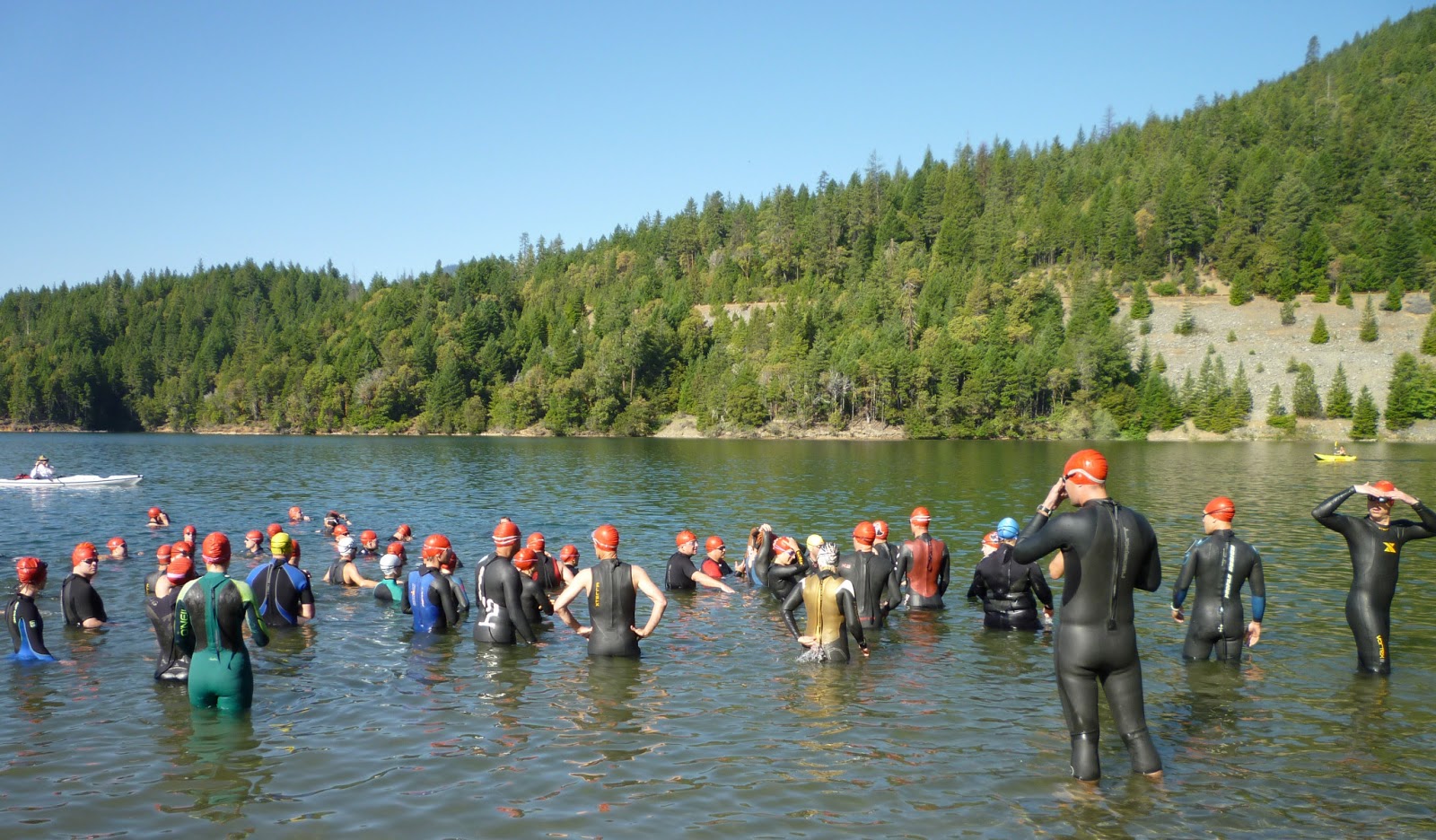
An hour before the race began

On the first of June Mr. Glad competed with other members of the family in the Granite Man Triathlon in southern Oregon. It was one of several events and meetings that formed the outline of a little trip around our neighboring state.

My husband was doing the swimming leg, as was the other grandpa of our Oregon grandchildren, and the two of them were the team captains. Our son and three grandsons made up the remainder of the teams, with the younger athletes compensating somewhat for the slowness of their elders. We womenfolk and some out-of-town kin were the support crew and also played with the baby (cute boy even if he isn’t one of my grandchildren).

My favorite swimmer left of center with his hands on his hips

Perfect weather, and a lovely setting, with trees leafing out, flowers beginning to bloom. As we stood around on the grassy slope of Applegate Lake waiting for the race to start with the swimmers’ portion, I had my first botanical experience of the trip. It started with a smell that only gradually broke into my consciousness enough to make me look down and search out what source my feet were tramping on.

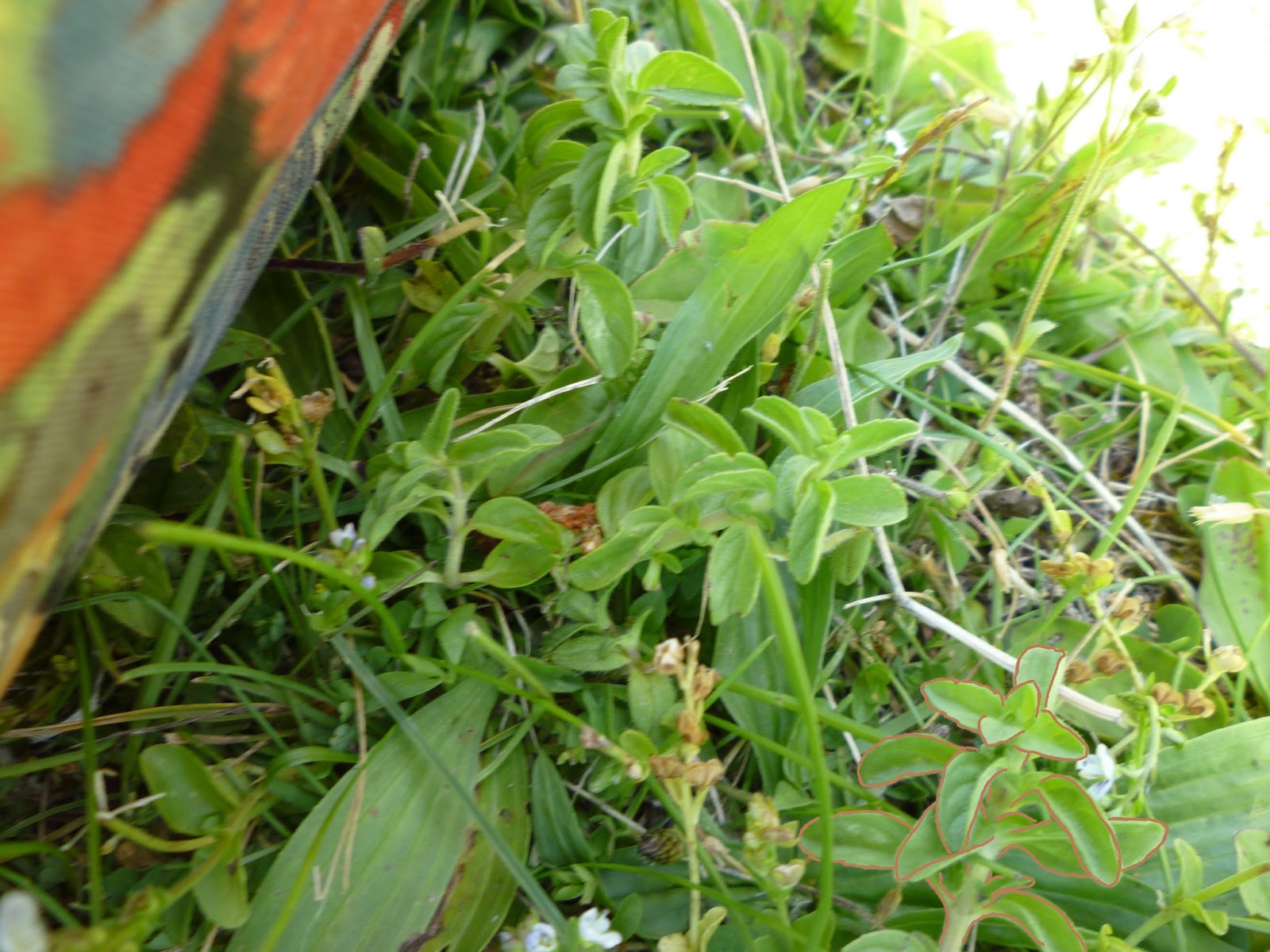
pennyroyal – or not?

Pennyroyal was my first thought, as I picked off some of what was growing in the wild lawn, and in case you aren’t familiar with it, I outlined one cluster faintly in red, in the photo above, in the lower right corner. Even so, you may have to click on the photo to see it.

But it doesn’t exactly look like pictures of Mentha pulegium, though that pennyroyal is considered mildly invasive in California and Oregon. It doesn’t even look like pictures of the Oregon “field mint” Mentha arvensis, which I looked at in case my sniffer is not able to distinguish between members of the mentha family.

Pennyroyal has what I’d call a sharper aroma than most mints, and this one under my feet had that distinctive smell that I have met many times in my life, often in the mountains. Was I mistaken? Its leaves do look in some ways more like Monardella odoratissima, whose common names include “Mountain Pennyroyal” – but not exactly.

This Applegate Lake variety looks like a cross between it and another mint, as I study it further. And that impression might not be too far from reality, because it turns out that pennyroyal has an ability to hybridize with other mint species, adding to its troublesome weediness. It may crowd out native plants and even threaten Oregon’s commercial peppermint and spearmint crops, as I read in this article.

I learned a new word while reading it: allelopathy: a biological phenomenon by which an organism produces one or more biochemicals that influence the growth, survival, and reproduction of other organisms. I am familiar with this kind of influence from my experiences in gardening, but I didn’t know the name for it. The latest instance is the way nothing much grows under my manzanita bush because of its negative allelopathic qualities. The authors of the article experimented by treating seeds of a rare Oregon plant with a weak extract of pennyroyal root, and found that the germination rate dropped.

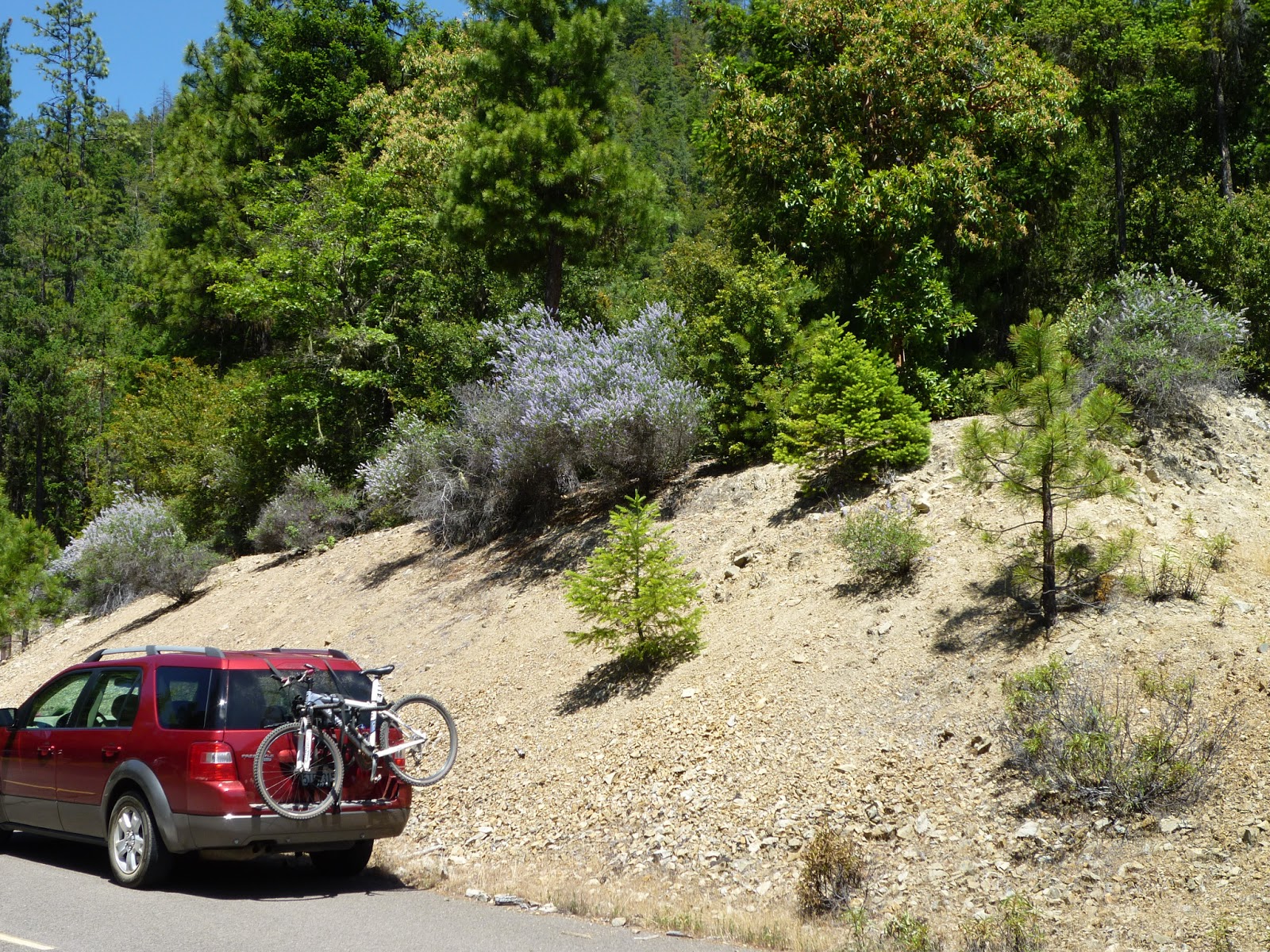
Deer Brush near Applegate Lake, Oregon

I didn’t know all of this bad stuff when I was lolling about in such a bucolic place; I was only pleased to have found a plant to check on as soon as I got home.

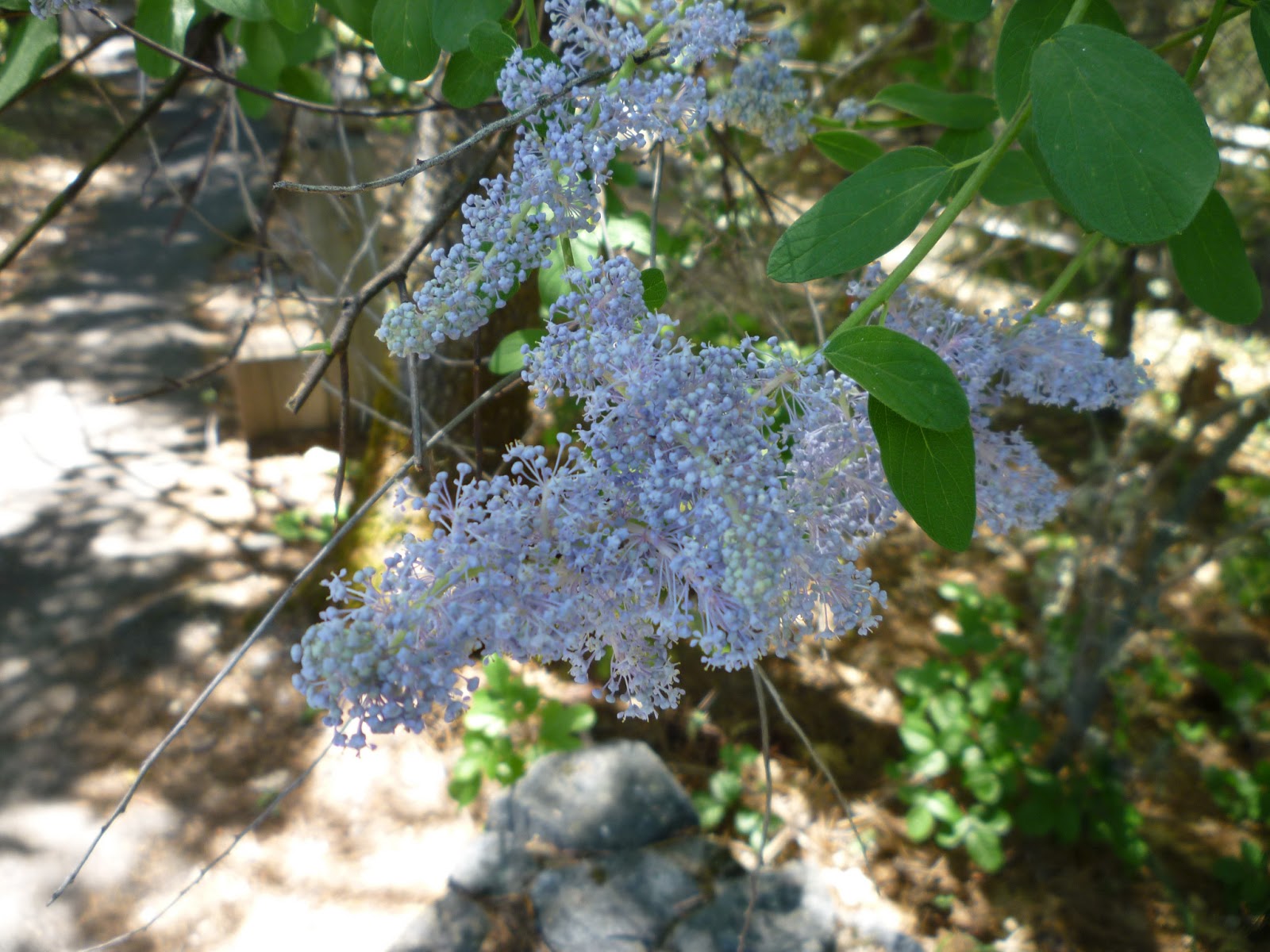
When we went out to the parking lot after all our guys were done (and some were done-in) I found another, a bush covered with honey-scented flowers. I thought it might be a type of Ceanothus, and I was right. But about the common name, I was wrong. I guessed Mountain Lilac, and it is in fact called that by some people, but maybe by mistake…? It’s officially known as Deer Brush.

The flowers come in shades of light blue and white, mostly, and it’s native to the western states. All of its uses are positive: animals eat it, the Indians made baskets from it, and it fixes nitrogen in the soil. Everybody likes this one!

Ceanothus integerrimus