Many of my favorite books do not have particularly memorable first lines. Some books that I will never read have clever, captivating, even brilliant openers, and among those are quite a few that are well known. If you want to test your knowledge of famous first lines, you can do so here. Thanks to my friend E. for that link.
In 2002 Jay Nordlinger on National Review‘s website mentioned a couple of his favorite first lines–not necessarily from favorite books–which led readers to send in nominations for Great First Lines. Many of those were also Famous, overlapping with a few in the quiz linked above, but often they were obscure. Warning to nit-pickers: Some of these are actually more than one sentence.
What makes a first line “great”? Does it have to hint at what the whole book is about, or only hook you in? For me, I do like a good sentence (and I liked this article exploring the field), and if the first one in a book is well-crafted, it would make me want to keep reading, for pleasure. If it is curiosity-piquing as well, all the better.
One boring or poor opening sentence would not discourage me from reading on, but if the whole first paragraph or page is confusing or muddy I might lose patience. I am getting too old to fool around with the gazillions of pages by authors who need to practice more.
Whether one can search the archives of NR for Nordlinger’s blog posts I don’t have to know, because back then I saved all of the nominations in a document. Unlike much of my document collection, I am making use of this one, to bring a number of good first lines into this small light. Whether they are Great, I won’t judge; I will just give you a few that I liked. These are from books that aren’t my favorites, so I won’t be tempted to put them into the next List of Five. And I hope I haven’t put too many below and spoiled it for a blogger who wanted to use one of these in her own quiz-list.
Nordlinger includes this fact out front: “We have already decided — we, the great collective ‘we’: my readers and I — that ‘In the beginning . . .’ is the all-time champion. Everything else is competing for second place.” I’m glad they got that straight.
Now, a few of the competitors:
“As I write, highly civilized human beings are flying overhead, trying to kill me.” — Orwell, “England Your England” (an essay)
“‘Where’s Papa going with that ax?’ said Fern to her mother as they were setting the table for breakfast.” — Charlotte’s Web
“For forty years my act consisted of one joke. And then she died.” — George Burns, Gracie: A Love Story
“I am a sick man. . . . I am a spiteful man. I am an unattractive man. I believe my liver is diseased.” — Fyodor Dostoyevsky, Notes from the Underground
“A sky as pure as water bathed the stars and brought them out.” — Antoine de Saint Exupéry, Southern Mail
“She stood on the fox until it died.” — Mitchell Smith, Due North
 A good sentence is a thing of beauty. This afternoon Mr. Glad and I started taking books off the shelves, turning pages to the first line, perusing those words we had long neglected, but not wanted to get rid of. (“Get rid of” suddenly sounds so crude and unfitting.) So many good phrases and clauses, and some excellent ones.
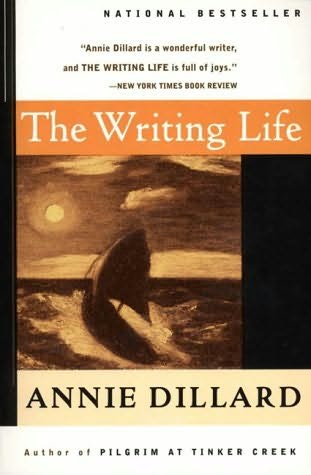
This is not the end of the matter; what is a blog, after all, but words and sentences, and the will to keep spitting them out? Annie Dillard wrote in The Writing Life, “It is no less difficult to write sentences in a recipe than sentences in Moby-Dick. So you might as well write Moby-Dick.”
The way I see it, I might as well write sentences in a recipe.