I hadn’t read this poem carefully since 2011 when I first posted it. Now that I consider it afresh, that last line about Things I Didn’t Do is haunting me again!
BURNING THE OLD YEAR
Letters swallow themselves in seconds. Notes friends tied to the doorknob, transparent scarlet paper, sizzle like moth wings, marry the air.
So much of any year is flammable, lists of vegetables, partial poems. Orange swirling flame of days, so little is a stone.
Where there was something and suddenly isn’t, an absence shouts, celebrates, leaves a space. I begin again with the smallest numbers.
Quick dance, shuffle of losses and leaves, only the things I didn’t do crackle after the blazing dies.
~ Naomi Shihab Nye, born 1952, American poet
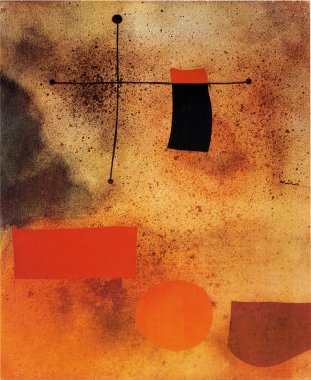
When when Maria Horvath posted this poem on her blog in 2011, she included the painting below, “Abstracto,” 1935 by Joan Miró
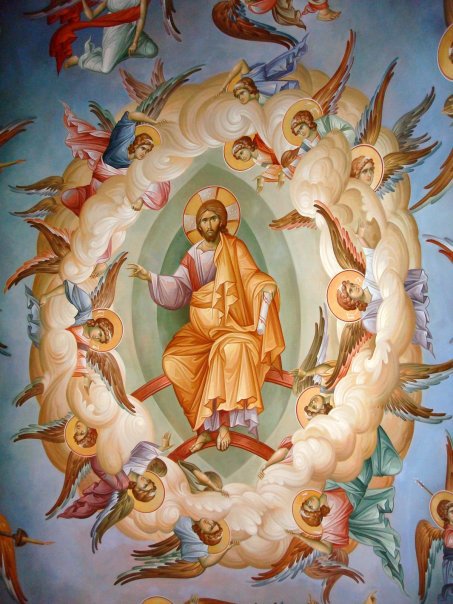
As we close in on the end of the calendar year, our rector posted thoughts about the liturgical calendar in our parish bulletin. We Orthodox know at some level that the calendar of festal events and saints’ days “sanctifies time” — but do we live it fully? It’s not an easy thing to prioritize the “holy appointments,” as Fr. Stephen Freeman recently characterized them, in our lives that are typically super busy with various other activities. An excerpt:
This feast, this day, this time in my life, if I will keep the appointment, I can meet God. The feasts on the calendar are not appointments with memorials, the recollection of events long past. They are invitations to present tense moments in the liturgical life of the world. In those moments there is an intersection of the present and the eternal. They are theophanies into which we may enter. The events in Christ’s ministry that are celebrated (to use one example) are of little importance if viewed in a merely historical manner. It is not enough to say and remember that Christ died. The Christian faith is that I must become a partaker of Christ’s death. Christ is Baptized, but I must be a partaker of His Baptism. This is true of all the feasts and is the reason for our liturgical celebrations. The Church is not a memorial society—it is the living presence of Christ in the world and the primary means by which we may share in His presence. There is no time like the present, for only in the present does time open its riches to us and bestow its gifts.
“When hit by boredom, let yourself be crushed by it; submerge, hit bottom. In general, with things unpleasant, the rule is: The sooner you hit bottom, the faster you surface. The idea here is to exact a full look at the worst. The reason boredom deserves such scrutiny is that it represents pure, undiluted time in all its repetitive, redundant, monotonous splendor.
“Boredom is your window on the properties of time that one tends to ignore to the likely peril of one’s mental equilibrium. It is your window on time’s infinity. Once this window opens, don’t try to shut it; on the contrary, throw it wide open.”
― Joseph Brodsky
It’s interesting how metaphorical the poet Brodsky gets in this passage on boredom — and his metaphors are so physical. Boredom hits us, and crushes us. We sink under water, we hit bottom. Then we surface fast, and even when encountering a window, we don’t just look through it but throw it open. Take the bull by the horns, I might add. Don’t miss the opportunity — go for it!
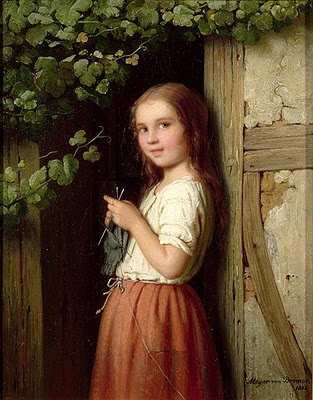
It may be that my interest in boredom has something to do with its connection to Time. When we are experiencing the restless kind of boredom, it’s often because we think whatever we are doing is a waste of time, or at least that there might be a better use of our time than what has been given to us, what we are stuck doing. But Brodsky doesn’t see time that way, as something to use. We are beings in time, and just letting the seconds and minutes go by as we contemplate that reality — something splendorous — can reveal aspects of our existence that we might miss, if we keep ourselves constantly busy.
Contemplation is mental and hopefully spiritual work. Not laziness, not sloth. Possibly the opposite of sloth, which is another word for acedia. I still hope to explore the idea of acedia, but that will probably not happen soon. In the meantime, I’m growing bored with thinking about boredom. Here’s one last thought to contemplate:
Boredom is the feeling that everything is a waste of time; serenity, that nothing is. –Thomas Szasz
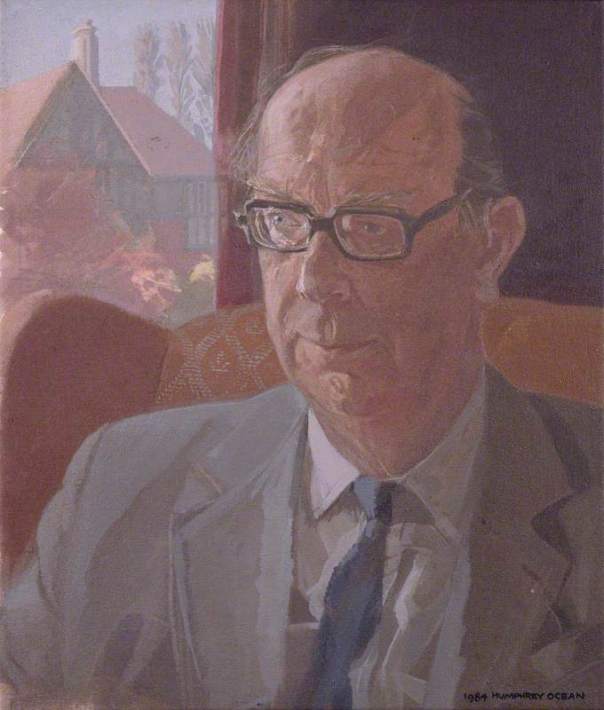
All those times I was bored out of my mind. Holding the log while he sawed it. Holding the string while he measured, boards, distances between things, or pounded stakes into the ground for rows and rows of lettuces and beets, which I then (bored) weeded. Or sat in the back of the car, or sat still in boats, sat, sat, while at the prow, stern, wheel he drove, steered, paddled. It wasn’t even boredom, it was looking, looking hard and up close at the small details. Myopia. The worn gunwales, the intricate twill of the seat cover. The acid crumbs of loam, the granular pink rock, its igneous veins, the sea-fans of dry moss, the blackish and then the graying bristles on the back of his neck. Sometimes he would whistle, sometimes I would. The boring rhythm of doing things over and over, carrying the wood, drying the dishes. Such minutiae. It’s what the animals spend most of their time at, ferrying the sand, grain by grain, from their tunnels, shuffling the leaves in their burrows. He pointed such things out, and I would look at the whorled texture of his square finger, earth under the nail. Why do I remember it as sunnier all the time then, although it more often rained, and more birdsong? I could hardly wait to get the hell out of there to anywhere else. Perhaps though boredom is happier. It is for dogs or groundhogs. Now I wouldn’t be bored. Now I would know too much. Now I would know.
-Margaret Atwood
Here we have a different perspective on boredom from what I posted yesterday… and I love this poem. But I wondered about the line, “Now I would know too much.” Why would the narrator prefer less understanding — which is what I took as the meaning of knowing — ? In what way would it be too much? But then I mused on how well I relate to the feeling of regret, regret that there were any moments or hours in which I was not fully conscious, and thankful for my late husband. That of course would have been the perspective of a saint; if I had the chance to go back, I’m sure I would still not be one of those.
That made me think, maybe the line I didn’t get refers to the fact the narrator has come to realize, that “he” was not going to be around indefinitely, and that the loss of him would be incredibly painful. It’s the sort of intelligence that sinks deep into the soul, where the struggle to comprehend it continues indefinitely. Now, if she could go back, she would not be the same person, and the kind of knowledge she would take back to the past would be truly too much to bear in that “present.” It isn’t given to us humans to skip back and forth through time, which is a good thing, because just reading this poem demands more of my mind than is comfortable. Most of us can barely attend to the present, and excessive theorizing can be a sad waste of our hours.
That I should read the poem during the holiday season, when I’m already prone to missing my husband a LOT… well, it happened, and it’s okay. It prompted me to think of some specific moments and places, my own husband’s hands (easy for me to pay attention to), and habits, and “boring” things he would talk to me about. I even remember a time when I was sitting in a boat, trying really hard not to be bored.
Nowadays, I’m increasingly thankful for all the days that God gave me before, during and after the years I lived with him, though I can’t go back and be this thankful retroactively. And even if I was not always present in the moment, God was always present with me. That is a thought that wakes me up, again and again.