 At church we’re still busy on Monday nights baking cookies for the upcoming food festival. The fair features foods from the Balkans, Eritrea, Russia, and even Italy. Last Monday we made another Greek cookie and a Bulgarian pastry. I hear that biscotti are on the schedule for next week.
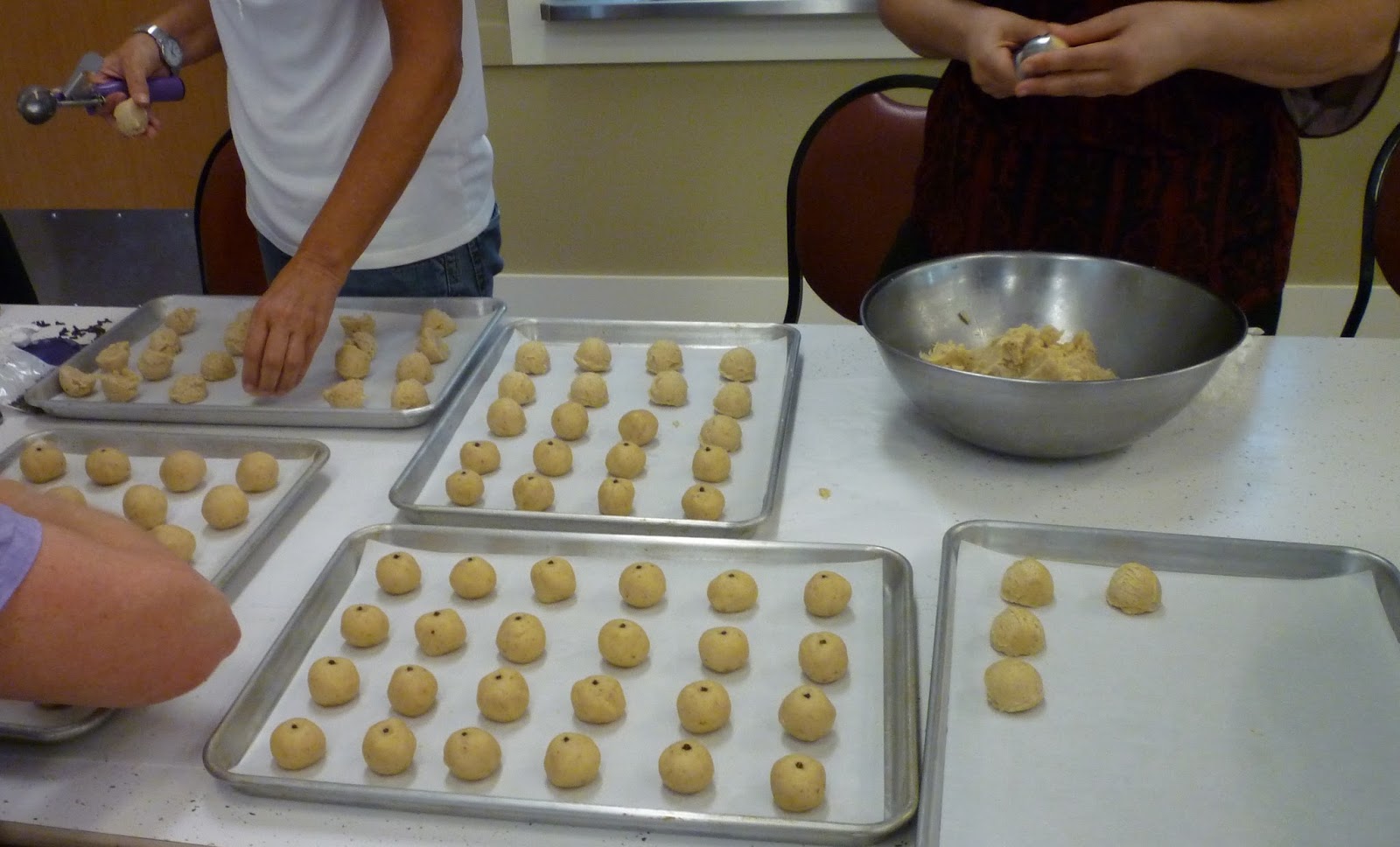
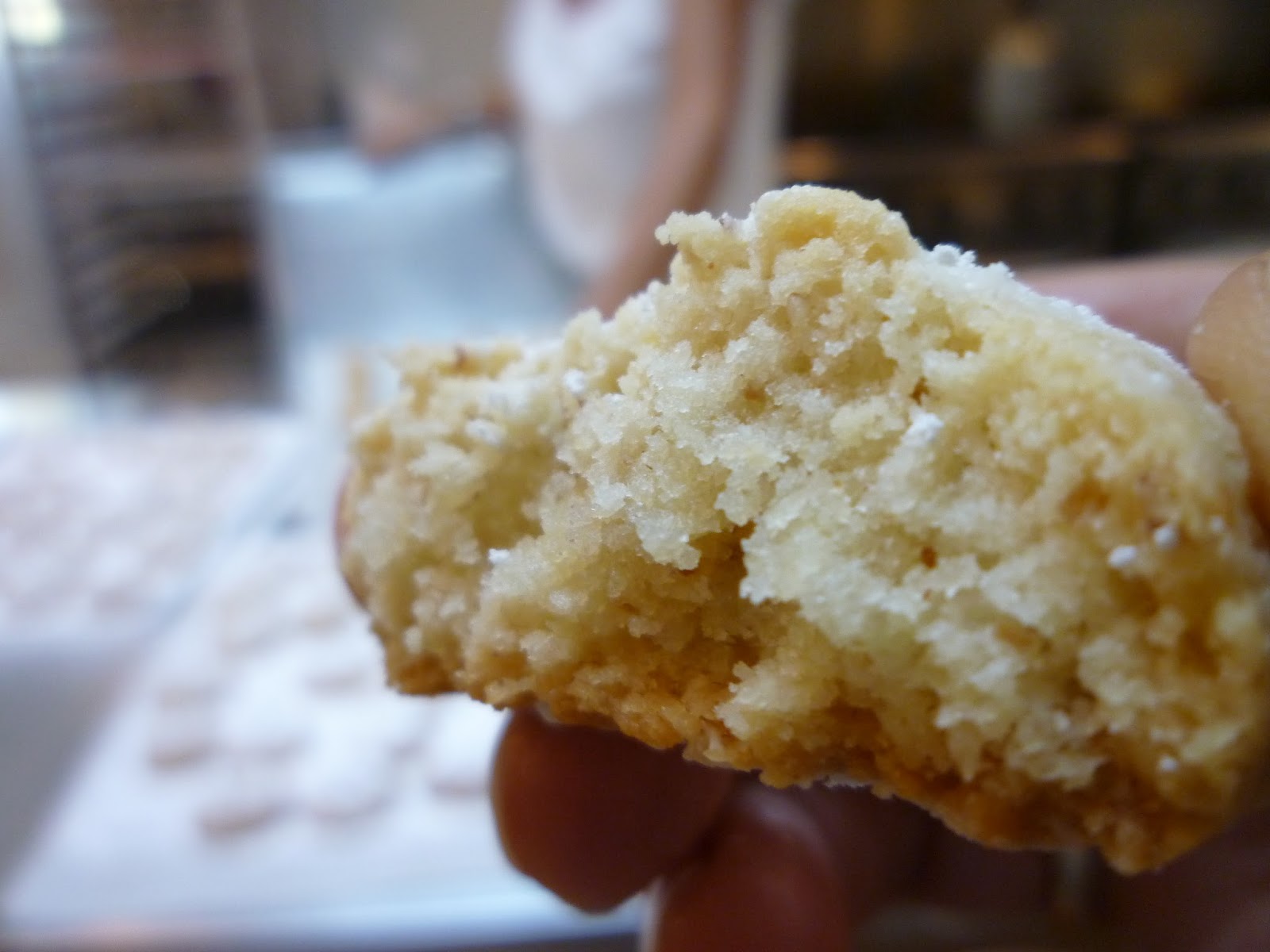
Kourabiedes are reminiscent of Russian Tea Cakes or Louisiana Pecan Balls, only softer. Our recipe uses ground almonds, and we stick a clove in the top of each rolled ball of dough before baking. I see variations in recipes online that use walnuts, roll the dough into different shapes, and leave out cloves altogether. I tasted a cookie and found that the clove does indeed become crumbly during the long baking and is easy to chew. It spices up the cookie very nicely.
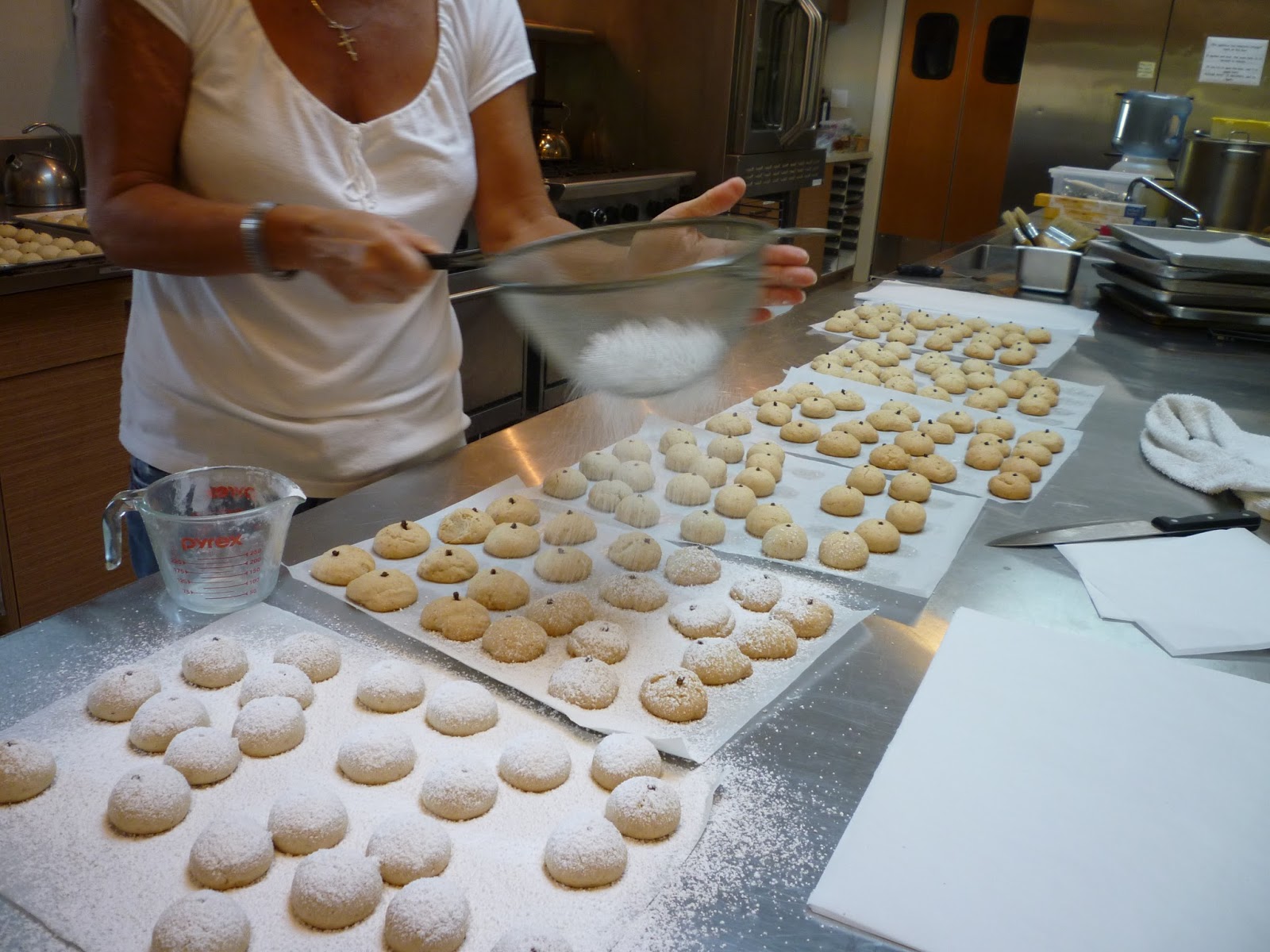
The dough itself is not very sweet, so the heavy dusting of powdered sugar while the cookies are warm and again later before serving round out the flavor of the butter and nuts. I found the result to be softer than a Russian Tea Cake, and really yummy.
 Pumpkin Banitsa were the second type of dessert made that night. According to Wikipedia this pastry is commonly filled with eggs and cheese, or savory vegetables, but we use a spicy dessert version.
They went into the freezer uncooked, and will be baked the morning of the event. A pumpkin filling gets rolled up in sheets of filo dough – I’ll give you the recipe for that pastry down below.
As is often the case with filo dough, butter is brushed on the thin sheets at intervals. I’m sure that vegan versions of these goodies have been invented, but we like to go with tradition – and lots of butter!

Pumpkin BanitsaPumpkin Filo Pastries – A Bulgarian specialty that is traditionally made at Christmas.
2-3 pounds pie pumpkin, peeled and cut into 1″ dice
1 cup brown sugar
1 tablespoon cinnamon
1 1/2 cups walnuts — chopped finely
1 pound filo dough
1 cup butter, melted or clarified (see baklava recipe) powdered sugar and cinnamon for dusting
Makes about 20 pieces
1. Preheat oven to 350 degrees. Place pumpkin on a large baking tray and add 1/4″ of water. Bake until tender, about 30 minutes. Leave oven on to stay preheated for baking finished pastries.
2. Place pumpkin in a large saucepan with sugar and cinnamon. Mash pumpkin and stir to combine. Cook over low heat, stirring constantly, until sugar is dissolved and you have a smooth mixture. Turn off heat, add walnuts and set aside.
3. To make banitsa: Fold a sheet of filo in half. Brush with melted butter. Place 1/4 cup of pumpkin mixture at the bottom center and fold in sides. Roll up, and place on buttered baking sheet, seam side down. Repeat until all filo is used up, placing rolls about 1″ apart. Brush tops with remaining melted butter.
4. Bake for 30 minutes, or until golden brown. Remove from oven and dust with powdered sugar and cinnamon.
I was back at the church kitchen Tuesday morning on the most important and eternally valuable baking job: making the Bread of Offering that becomes the Eucharistic bread. What a blessing to be part of that team!
 In the afternoon I picked tomatoes and basil in my garden. And there was so much of both, I needed to use the produce right away.
The tomatoes at right are Rainbows in back, red Early Girls, and little stripey Michael Pollans.
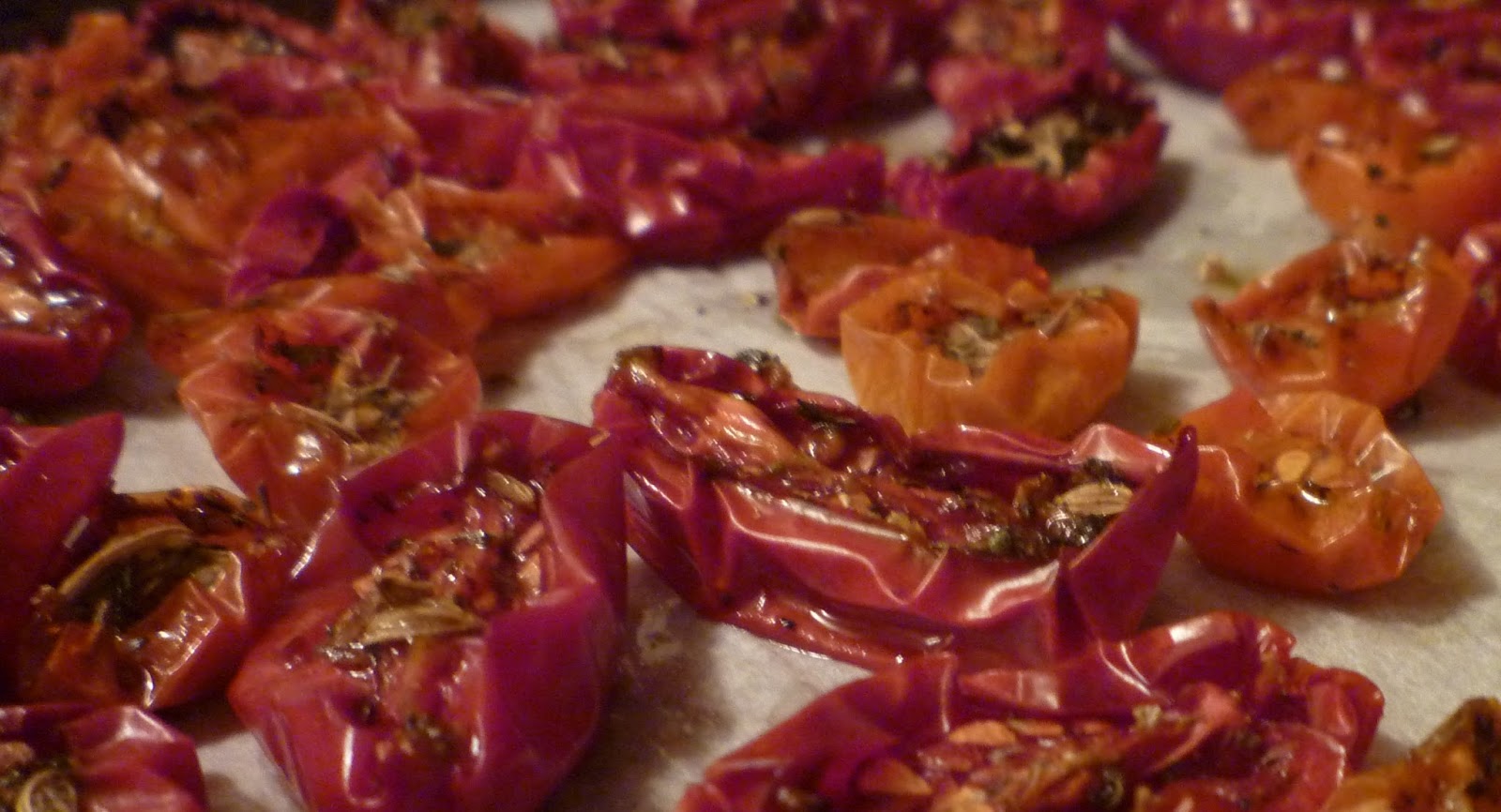
But it was cherry tomatoes I put in the oven to be transformed into Slow-Roasted Cherry Tomatoes. This recipe was my inspiration four years ago, and this is how I made them the first time.
While they were drying out for hours I made several masses of basil pesto in the food processor, totaling 40 oz. This time I used walnuts instead of pine nuts because even at Costco the pine nuts had increased too much in price for me to bear.
Now I can give the basil a deep watering and forget about it for a time. The flowers that had been forming are not there anymore with their warning of the demise of my whole basil patch.
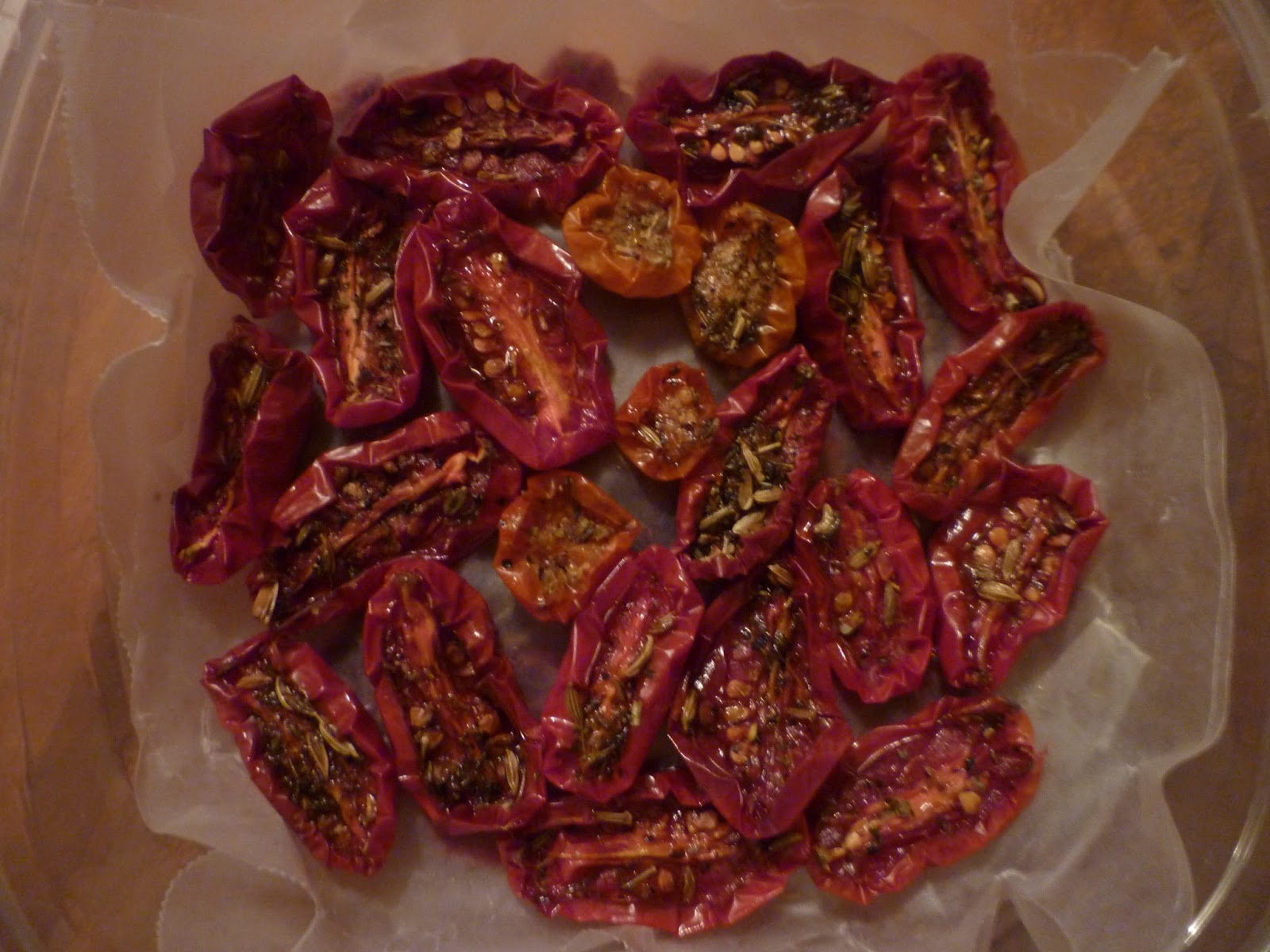
When the tomatoes came out of the oven – they were mostly Juliets and SunGolds – I packed them into the freezer to use for appetizers or garnishes. All that work was yesterday; after crashing and sleeping I woke with enough energy to tell all about it.
In our area we can look forward to harvesting tomatoes and basil through September and up until a frost. Those of you who say your tomatoes are “done” — is that because they are determinate varieties? I wish I could give you some of my now bountiful harvest. I can now look forward to BLT’s and tomato-basil salad and salsa. Cookies we can do anytime, but Summer is for tomatoes.




 Gladsome Lights