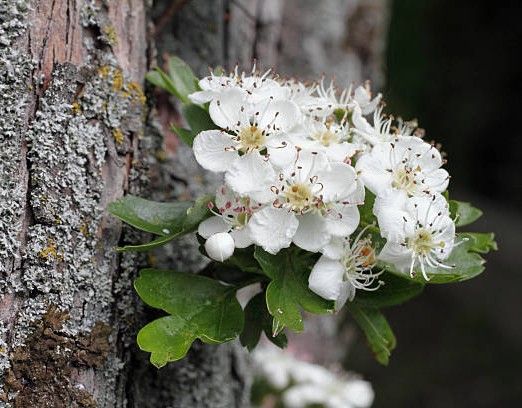
Beauty, and grace, and wit are rare; And even intelligence: But lovelier than hawthorn seen in May, Or mistletoe berries on Innocent’s Day The face that, open as heaven, doth wear — With kindness for its sunshine there — Good nature and good sense.
-Walter de la Mare
Thanks to Stephen Pentz for giving me this “bonus poem” earlier this year.
Sconzani reports a hawthorn, also known as the May-tree, blooming right now: Earthstar
For it is the God who commanded the light to shine out of darkness, who has shone in our hearts to give the light of the knowledge of the glory of God in the face of Jesus Christ. -II Corinthians 4:6
My priest mentioned in a homily recently that the verse above was his favorite; of course that made me pay close attention to it. Soon afterward I read an article by the iconographer Aidan Hart, “Lighting in Orthodox Churches: Liturgical Principles and Practical Ideas,” which has kept me thinking on this Light … and I’m certain I could benefit from further meditation on Hart’s ideas — because they flow from the truth that Christ Himself stated, that He is The Light of the World.
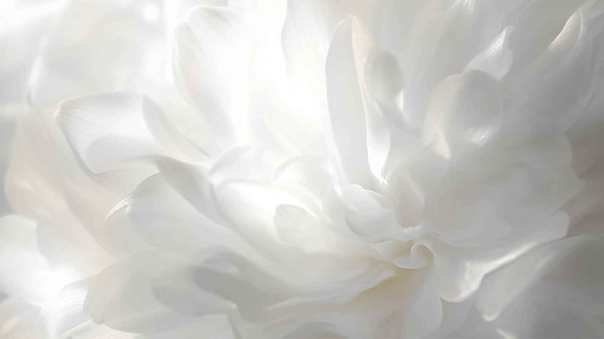
How do we reflect this reality symbolically when choosing physical lighting for our churches? And how might lighting help us to worship or distract us? If any of these questions is interesting to you, you might like to read the whole article, which I have linked above and below. Or skip the text and look only at the more than two dozen photographs of most beautiful churches and monasteries — and one mosque — illustrating the principles that Hart discusses. I especially loved the photo showing alabaster windows such as this one:
Mausoleum of Galla Placidia, Ravenna
Hart reminds us that “The Church is ultimately a community of persons and not a building.” It follows that “Its light should illuminate the personal rather than the abstract.” He compares the needs of monasteries to those of parish churches, and The Blue Mosque to Hagia Sophia. The pros and cons of natural light, candles, oil lamps and electric lights are discussed; he explains how an environment with quiet light can help us to “learn the art of stillness, watchfulness, interiority.”
I’ll close with one paragraph that is rich with theological principles worth musing on, and leave you to click on the link for the whole article:
The second century neo-Platonist Plotinus wrote that “beauty is symmetry irradiated by life”. This was interpreted by the Byzantines as symmetry irradiated by light, for light was regarded an image of divine, animating and transfiguring life. But this Byzantine aesthetic of moving rather than static light was ultimately rooted in Trinitarian theology. The uncreated light of divine love is One, but it is also dynamic, moving within the Trinity and moving down to creation. Of course the term moving is a human concept and is ultimately inapplicable to God, who has no need to move from place to place. But the term is applicable inasmuch as it reminds us that God is not a single monad, that God is love because He is Three. Christian beauty is therefore rooted in relationship rather than an abstract and static ideal. And this can be reflected in church lighting.
This evening I made it out for a walk, which turned into two walks, because of something new I saw on my usual route. I stopped at the bridge to look down at the seasonal creek that is getting low… and up at all the bushes and trees growing out of it. Every few years the city maintenance crew dredges out these waterways, but right now everything is growing lush and thick.
The willows are the tallest plant that grows down there, and buckeyes are numerous. What was that I saw climbing up in the tallest willow bushes? White flowers… if I only had a better camera, or even binoculars… I pointed my Seek app at the flowers and it said Lady Banks’ Rose. Even as poorly as I could make them out, that didn’t seem right.
The roses were growing in the area in the middle of the creek bed, between two creeks right where they join to become one. I thought I would try to go down closer to the water where there is a jumble of unpaved dry-season paths that some people run on with their dogs, and a few children explore. Also there is a sloping cement driveway of sorts for the maintenance vehicles, that is submerged in the winter. Two paved creekside paths also meet at the bridge. But when I got to the place where I would cross the southern stream to get to that middle area, the rocks were covered with algae, and it all seemed too muddy and messy for me to attempt while wearing my new boots.
So I came home and looked up Lady Banks Roses. They did not at all resemble what I’d seen; I guess they were too distant for Seek to make out. The bright idea occurred to me: Why not change into my old boots that I was thinking of giving away, and go back? Why not, indeed?
lemon balm
When I arrived at the crossing place again I had to squish through the mud and the algae, but with only a few steps I was over, and my old boots were mostly waterproofed and barely noticed.
watercress
My, what a lot of plants in that mid-creek jungle! Once before I walked down there, but it was in September when everything starts drying up. The roses today were growing in the middle of the willows, honeysuckle, horsetail grass, fennel and bedstraw.
Watercress, Greater Plantain, and Bermuda Grass
Many of the plants are naturalized from backyard escapees. The Bermuda grass for sure, and the lemon balm, and the roses. Wild blackberry brambles snagged my clothes and grabbed at my hair, but I managed to feel my way with my feet along the edge of the creek that was hidden by bullrushes, right up close to the flowers I wanted to see better.
When Seek could assess the image better it identified it as Rosa multiflora or Rosa polyantha, a native of eastern Asia. It also told me I’d observed it two years ago near my daughter Pippin’s place in the farther north part of the state. These roses were to me the prettiest thing in all that jungle.
It really made my day to make this little excursion and discover who they were, and to meet as well many of their companions in the creek. I think I’ll hold on to my old boots.