Category Archives: church

There is no lesson plan for it.

The desire to be beautiful seems to be common to mankind, but the very atmosphere of this age is toxic with something that feeds a disease, making us obsessed with our image. One part of the toxic mix is the overwhelming abundance of pictures of faces and bodies in magazines and on every electronic device, forming a kind of lesson plan on How to Look. I was happy for a respite this morning when I read St. Nikolai’s homily for the day in The Prologue of Ohrid.

HOMILY
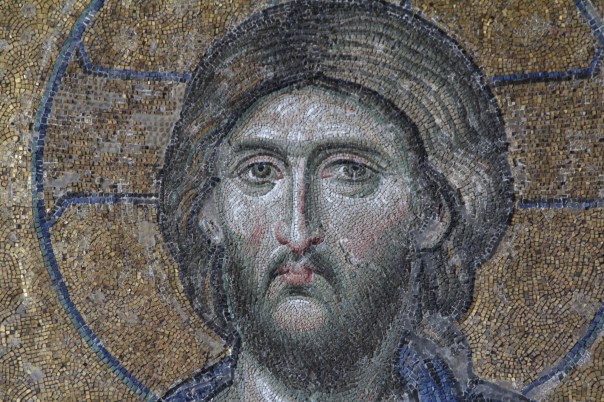
on the beauty of Christ above all other beauty
Thou art fairer than the sons of men (Psalm 45:2).
 

Holy Scripture does not ascribe any particular value to physical beauty, and in general to anything transient. That is why everyone who reads Holy Scripture should take care to be sufficiently attentive and wise to transfer the praise of physical beauty to the soul and to spiritual values. Without a doubt, spiritual beauty gives a wondrous attractiveness to the most unattractive body, just as an ugly soul makes even the most attractive body repulsive. The Prophet David, pouring forth good words (Psalm 45:1), says to his King, the Lord Jesus Christ: Thou art fairer than the sons of men. 

The Lord Himself created His bodily cloak as He wanted. Had He wanted to appear in the world as the physically fairest of men, He could have done so. But there is nothing in the Gospel to indicate that He drew followers to Himself or influenced men by His appearance. He Himself said: the flesh profiteth nothing (John 6:63). Therefore, it is clear that David was not speaking of the physical beauty of Christ, but of His spiritual, divine beauty. This is clearly seen in the following words of the Psalmist: Grace is poured forth upon thy lips (Psalm 45:2). So it is that the unsurpassed beauty of the Son of God is not in the form and shape of His lips, but rather in the stream of grace that flows from His mouth. 

Again, the Prophet Isaiah speaks of Christ: He had no form or comeliness; and when we shall see Him, there is no beauty that we should desire Him (Isaiah 53:2-3). Do Isaiah and David agree? Perfectly well. David speaks of Christ’s inward beauty, and Isaiah speaks of Christ’s external abasement. Isaiah said that He would not be seen as a king or a rich man, but as a servant and sufferer.

O Lord Jesus Christ, Thou art fairer to us than all men and angels: glory to Thine immortal and unending beauty. O gracious Lord, correct the ugliness of our souls, which are disfigured by sin, we pray Thee.

To Thee be glory and praise forever. Amen.

From the archives

Mostly agricultural and culinary.

My parish has a team of bakers who prepare not only the loaves that eventually go into the cup of Holy Communion, but two other forms used in other ways in the services. There are several people who take turns making the dough in the church kitchen early in the morning on baking days, and different people who finish the process, shaping, baking, bagging and finally storing the loaves in a freezer. These top two pictures are of some exemplary loaves we’ve made recently.

This morning I was on the baking team, and when I turned the dough out of its big stainless steel bowl and began to handle it, right away it seemed to me that it had already been kneaded too much. Those of you who make bread know that kneading develops the gluten and makes the dough stretchy; but did you know that if you go on working the dough too long, the molecules of gluten get damaged, and there is no repairing them? The dough begins to tear instead of stretching, and the resulting loaves do not look smooth but rather lumpy.

I don’t recall how the texture of the baked bread is affected by this problem. I read that the loaves will be heavy and dense, but my finished loaves didn’t seem to be much smaller than usual; we don’t sample them, but we can get reports from the priest as to the quality when he cuts it in the altar, and I will be sure to do that next week.

When I was finished with baking for the morning, it was lunchtime, and I stayed on the property to eat the food I had brought to sustain me during the afternoon when I needed to run several more errands. The air was cool and still; I sat at a table in the garden and read the story of St. Gabriel of Georgia who was commemorated today.

I admired the layout of the fruit trees and ground cover that have replaced the lawn. Roses and other flowers had been drizzled on for a few days and were sparkly, especially when the sun came out from behind the clouds, just as I was leaving.

Two of my afternoon stops were at friends’ houses. First my godmother, who with her husband plants a huge garden every year, and they wanted to share their harvest of pie pumpkins, since I didn’t manage to get any from my own garden this year. If it hadn’t been so muddy from the heavy rains we got, I’d have wanted to walk up and down the rows there, because I know it smelled good; instead, I stood gazing out over the landscape of soggy tomatoes fallen from their vines, spied the remains of the pumpkin patch in the distance (all the fruits had been removed), and passed through a field of tiny green blades of freesia sprouts.

From there, I drove west to where my friends Mr. and Mrs. Bread live and keep a charming homestead that my late husband used to say evoked a French country garden. Mrs. Bread and I have traded many plants over the years, sometimes things that we have grown or propagated ourselves. Lately she has grown apricot trees from pits, and she gave me one of those, and a Meyer lemon tree she started!

I feel lucky that the trees do not need to go into the ground soon, though one of them might benefit from a larger pot. The fact is, it will be a squeeze to fit them in here, but I know I can do it if I have a year to figure out the puzzle challenge. I’ll have to show you a picture of my new little trees later; it’s dark now, and my day is coming to an end. It was a little bit of commercial, but that was of relatively little interest. The agricultural and culinary aspects of the day were the fun and satisfying parts — and I was glad for the hagiographical introduction to Fool-for-Christ Gabriel, too. Glory to God for all things!

He sold this coat, and drank the money.

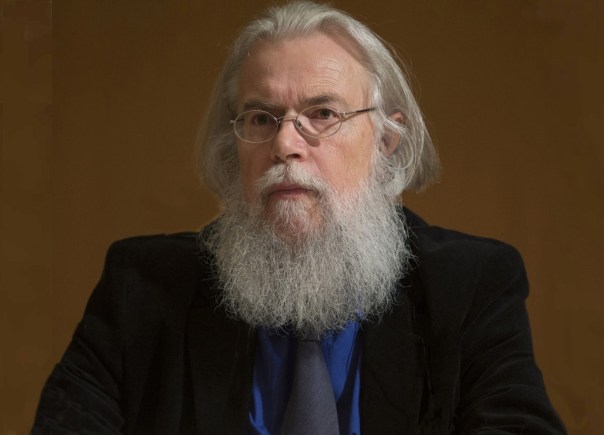
A question that was posed to Romanian Elder Justin Parvu, with his answer:

I once heard from a priest that it is a sin to give alms to those like yourself, who are fully able to work, but who have become accustomed to begging and no longer think of any other life for themselves. Children grow up with them and are forced to beg from childhood, and then they’re busy with this “work” their whole lives, having learned it from their own people. What do you think about that? Is it a sin to encourage idleness?

—As one of the fathers said, “My dear, if you consider someone good, then you will find him good, and if you consider him bad, then you will find him bad.” The same father cites a case from the Patericon, when a rich man gave a poor man his coat, and the poor man took and sold this coat, and drank the money. Then the rich man hesitated: “What? I gave him my coat to wear, but he sold it and went drinking!” and he was displeased. That night the Lord Christ appeared to him in a dream, wearing the coat he had given to the poor man, and asked the benefactor: “Do you recognize these clothes?” And he replied: “Yes, Lord, I recognize them; it’s my coat!” To which the Lord Christ said: “Do not be grieved. I wear it.”

And there is an example to the contrary. It will be greater help to a poor man if you teach him how to fish, so he would have the chance to feed himself for the rest of his life, than to let him eat his fill of fish one time, and then put him back on the street.