Category Archives: church

Forgiveness Sunday – Schmemann


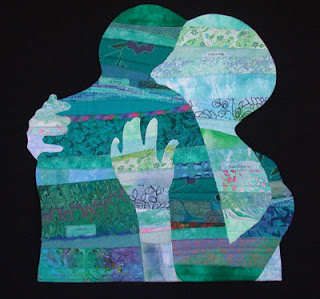
Forgiveness Sunday

Protopresbyter Alexander Schmemann

In the Orthodox Church, the last Sunday before Great Lent – the day on which, at Vespers, Lent is liturgically announced and inaugurated – is called Forgiveness Sunday. On the morning of that Sunday, at the Divine Liturgy, we hear the words of Christ:

“If you forgive men their trespasses, your heavenly Father will also forgive you, but if you forgive not men their trespasses, neither will your Father forgive your trespasses…” (Mark 6:14-15)

Then after Vespers – after hearing the announcement of Lent in the Great Prokeimenon: “Turn not away Thy face from Thy child for I am afflicted! Hear me speedily! Draw near unto my soul and deliver it!”, after making our entrance into Lenten worship, with its special memories, with the prayer of St. Ephraim the Syrian, with its prostrations – we ask forgiveness from each other, we perform the rite of forgiveness and reconciliation. And as we approach each other with words of reconciliation, the choir intones the Paschal hymns, filling the church with the anticipation of Paschal joy.

What is the meaning of this rite? Why is it that the Church wants us to begin Lenten season with forgiveness and reconciliation? These questions are in order because for too many people Lent means primarily, and almost exclusively, a change of diet, the compliance with ecclesiastical regulations concerning fasting. They understand fasting as an end in itself, as a “good deed” required by God and carrying in itself its merit and its reward. But, the Church spares no effort in revealing to us that fasting is but a means, one among many, towards a higher goal: the spiritual renewal of man, his return to God, true repentance and, therefore, true reconciliation. The Church spares no effort in warning us against a hypocritical and pharisaic fasting, against the reduction of religion to mere external obligations. As a Lenten hymn says:

In vain do you rejoice in no eating, O soul!

For you abstain from food,

But from passions you are not purified.

If you persevere in sin, you will perform a useless fast.

Now, forgiveness stands at the very center of Christian faith and of Christian life because Christianity itself is, above all, the religion of forgiveness. God forgives us, and His forgiveness is in Christ, His Son, Whom He sends to us, so that by sharing in His humanity we may share in His love and be truly reconciled with God. Indeed, Christianity has no other content but love. And it is primarily the renewal of that love, a return to it, a growth in it, that we seek in Great Lent, in fasting and prayer, in the entire spirit and the entire effort of that season. Thus, truly forgiveness is both the beginning of and the proper condition for the Lenten season.

One may ask, however: Why should I perform this rite when I have no “enemies”? Why should I ask forgiveness from people who have done nothing to me and whom I hardly know? To ask these questions is to misunderstand the Orthodox teaching concerning forgiveness. It is true that open enmity, personal hatred, real animosity may be absent from our life, though if we experience them, it may be easier for us to repent, for these feelings openly contradict Divine commandments. But the Church reveals to us that there are much subtler ways of offending Divine Love. These are indifference, selfishness, lack of interest in other people, of any real concern for them — in short, that wall which we usually erect around ourselves, thinking that by being “polite” and “friendly” we fulfill God’s commandments. The rite of forgiveness is so important precisely because it makes us realize – be it only for one minute – that our entire relationship to other men is wrong, makes us experience that encounter of one child of God with another, of one person created by God with another, makes us feel that mutual “recognition” which is so terribly lacking in our cold and dehumanized world.

On that unique evening, listening to the joyful Paschal hymns we are called to make a spiritual discovery: to taste of another mode of life and relationship with people, of life whose essence is love. We can discover that always and everywhere Christ, the Divine Love Himself, stands in the midst of us, transforming our mutual alienation into brotherhood. As l advance towards the other, as the other comes to me – we begin to realize that it is Christ Who brings us together by His love for both of us.

And because we make this discovery – and because this discovery is that of the Kingdom of God itself: the Kingdom of Peace and Love, of reconciliation with God and, in Him, with all that exists – we hear the hymns of that Feast which once a year, “opens to us the doors of Paradise.” We know why we shall fast and pray, what we shall seek during the long Lenten pilgrimage. Forgiveness Sunday: the day on which we acquire the power to make our fasting – true fasting; our effort – true effort; our reconciliation with God – true reconciliation.

Butter Week Quiche

Don’t know yet how it will taste, but it has the desired cream, cheese, milk and eggs, and butter in the crust. When I took two leftover lumps of pie crust dough from the freezer and mashed them together before rolling them out, I didn’t think about how they might not behave identically in the oven. I’m blaming the wonky edge on the split personality.

Other ingredients: spinach, Parmesan cheese, some leftover mix of cheeses from the freezer, caramelized onions, and tarragon. S & P. The Frugal Gourmet uses 4 eggs, 3/4 cup cream and 1 1/4 cups of milk in his basic quiche, so I followed those proportions approximately – and sliced a Roma tomato on the top for color.

Orthodox Easter or Pascha comes late this year, not until May 5th. This week is our last before the beginning of Lent, which officially starts with the Vespers of Forgiveness on Sunday. We sort of ease into Lent by fasting from meat only, and know it as Cheesefare Week, or as I enjoy calling it, Butter Week. Yum!

[Later in the evening] It was indeed yummy, better than I expected. That pie dough didn’t suffer at all being in the freezer for months, and the Frugal Gourmet’s advice to pre-bake the shell for 12 minutes was well taken; the crust came out just perfectly flakey and rich.

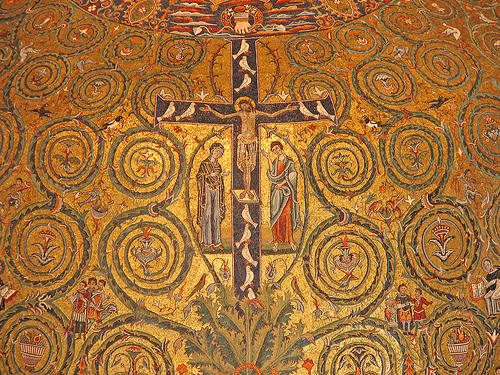
Choose your tree.

Thank you to Leah for posting this excellent word from St. Nikolai.

excerpt: Prayer V

How stupid the servants of the tree of knowledge are! They do not measure their strength in You, but in their num­bers. They do not adopt a law of justice in Your name, but by their numbers. Whichever way the majority of them choose is the way of truth and justice. The tree of knowledge has become the tree of crime, stupidity, and icy darkness.

Truly, the knowledgeable men of this world know every­thing except that they are servants of Satan. When the last day dawns, Satan will rejoice in the number of people in his harvest. All the meager ears of grain! But in his stupidity, even Satan counts on quantity rather than quality. One of Your ears of grain will be worth more than the entire harvest of Satan. For You, O Conqueror of death, rely on the fullness of the bread of life, and not on numbers.

In vain I tell the godless: “Head for the Tree of Life and you will know more than you could possibly wish to know. From the tree of knowledge Satan fashions a ladder for you to descend into the nether world.”

Prayers by the Lake St Nikolai Velimirovic

Rise and go and do the next thing.

I was reminded by another blogger this week of how we need to ask God, not to remove our burdens, but to give us grace to bear them, and to bear them to Him, so that He can use them in our lives to bring us fully into His Heavenly Kingdom.

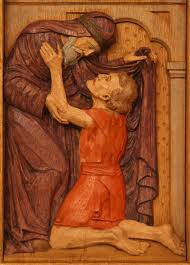
In the Orthodox Church this Sunday of the Prodigal Son is one of our markers letting us know that Lent is approaching, and I’ve been thinking again about what I can learn from the story about this grace I need.

The parable for this week is about a journey, and every journey consists of putting one foot in front of the other, or “doing the next thing.” We are all familiar with this sort of activity when we are ill, and need to take our medicine, follow the prescriptions of our doctors, according to schedule. And don’t stop taking the medicine until you are all well!

The extra effort we put forth during Lent is not to show our zeal but to acquire humility which puts us in the place to receive grace. Paul Evdokimov writes about just one of the many “treatments to be taken” in the Church:

The sacrament of confession is metanoia or transformation more than penitentia. Confession is understood as a ‘clinic,’ that is, a place of healing. That prayer before confession says: ‘You have come to the physician, may you not return without being healed.’ … St. John Chrysostom describes this quite precisely: ‘Time is of no matter. We do not ask if the wound has been treated often but if the treatment has been successful. The state of the wounded one indicates when the disease has been removed.”

“In patience you possess your souls,” the Lord has told us. (Luke 21:19) That is what I have to learn, to say, “I will arise and go to my Father,” as the prodigal did, today, tomorrow, and the next day and the next, until I am completely healed. And I don’t expect to see the day on this earth that I won’t need to stay with the program.

Here are the thoughts I had on this parable a few years ago:

He Came to Himself

One thing that impressed me about the story was the distance factor. The son was in a far country, when he realized what he needed to do. He was hungry and wasted, but he still needed to rise and go, to travel a long way, which must have been a struggle.

All of humanity is represented by the prodigal son, and most of us are still on the journey. Some of us have begun to repent and are a bit farther on our way, but we are all clothed in our flesh, struggling with our sins, anticipating the day when we sit in the Kingdom and feast with our Father, enjoying the restoration of our full inheritance.

In the story, the son receives everything he had thrown away and lost. For now, we have the earnest of the Holy Spirit, and the grace of God to help us continue. Every day I need to decide to take the next step on the way. But I know more than the son in the parable, who hoped for a corner of the pig shed. “…for he that cometh to God must believe that he is, and that he is a rewarder of them that diligently seek him.” (Hebrews 11:6)

I’m afraid I often act a bit nonchalant, as though I am at the gate or even in my Father’s arms already. My initial coming to myself has to be followed up by a constant facing-up to the toil of the road. Maybe I have been sitting on the grassy shoulder wishing the trip weren’t so long, wondering if maybe someone will arrive and carry me the rest of the way.

St. Herman of Alaska reminds me: “The true Christian is a warrior making his way through the regiments of the invisible enemy to his heavenly homeland.”