Category Archives: my garden

We survive neglect.

Helianthemum Henfield Brilliant

I use “we” in the title to show solidarity with my beloved garden. Several times a year, a complaint is lodged against Gardener Gretchen for failing to live up to her vision. I guess it’s just the reality of Life Right Now. Tomorrow will be a big gardening day, a day of improvement, but today is when I had a few minutes to stroll about taking stock, taking pictures. All the plants are calling me to come out and admire them, and to notice how they thrive; they don’t want me to feel bad about how much I ignore them.

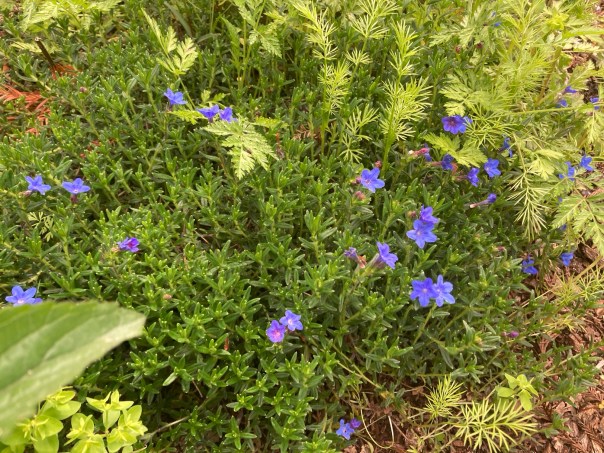
Lithodora with nigella and weeds.

Lithodora is one of my favorites. This week I’m going to pull out all the Love-in-a-Mist sprouts that are growing through and around it and under the fruit trees. In the front I already did as Gardener Dan advised me: I “edited” (thinned) the nigella, which he says will help them produce larger blooms. I think I reduced the number of plants in that bed from roughly 1,000 to 100.

Let me get the rather sad picture below out of the way now, the planter boxes where I typically grow squash and tomatoes. I’m at a loss as to what to do there, as my travels will take me away at just the wrong time for summer vegetables. Maybe the earth will have to lie fallow until August, when I can plant winter greens.

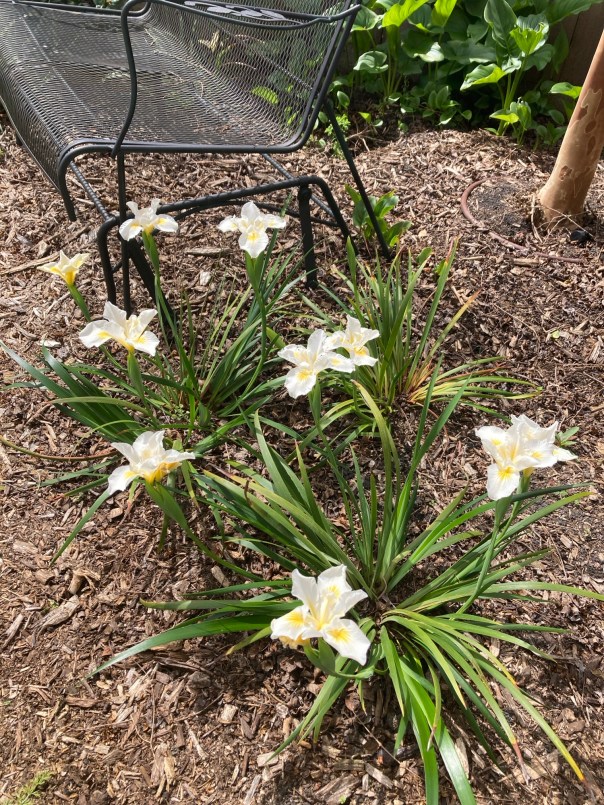
The native Pacific Coast Iris is now blooming in my very own garden (below). I am completely thrilled. This plant is so popular on the West Coast — not just near the ocean but up into the mountains — that it has its own fan club, the Society for Pacific Coast Native Iris.

In native plant nurseries one can find many colors and species of this type, Iris subsect. Californicae, which is in the same family as the Siberian irises. The Flora of North America site says, “Series Californicae presents some of the most complex taxonomic problems in all of our American irises.” In the wild a specimen can be difficult to identify as to which of the three main groups it is in because of “their willingness to cross pollinate whenever their ranges overlap.”

Pacific Coast Iris

When I was offered a choice by Dan, I knew I wanted the white. But maybe I will find a place to plant other colors in the future. One plant site explained, “If the tall bearded iris is the queen of the garden, the natives are the pixies.” My queens are nearby, in the front garden, rising up tall and elegant, with the pale yellow California poppies (and lots of weeds) for contrast.

Back by the lemon tree, I had a sort of iris dumping ground for a few years, where I planted whatever extra corms came my way, usually gifted by iris sellers who threw a few odd ones into the shipment. The colors or the quantities didn’t fit in with the others, so I saved them in that corner, where they never did well. Last fall I put them in a double row behind a plum tree, where they are surprisingly starting to bloom. Yes, I saw that milk thistle — I just need gloves before I will tackle it!

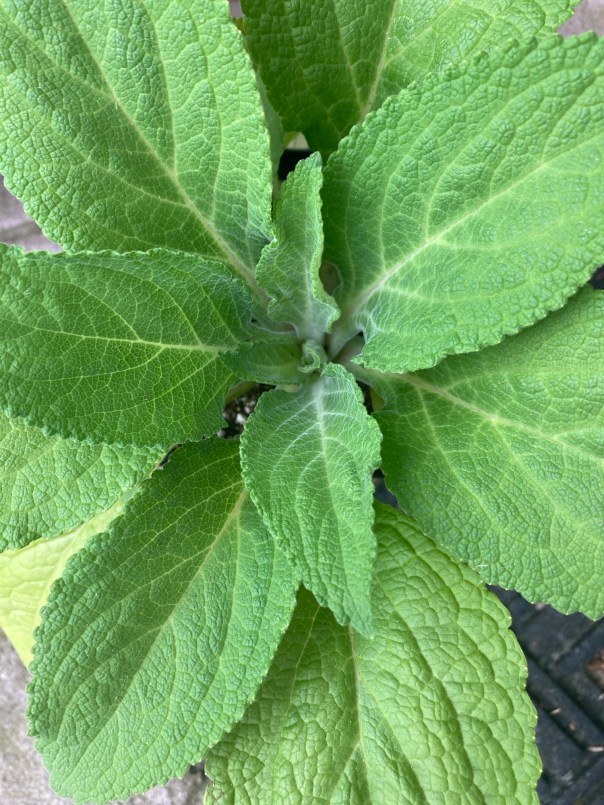
This spring, I bought exactly one plant on my own, without any idea of where I might install it. I will wander tomorrow and find a setting for a foxglove plant.

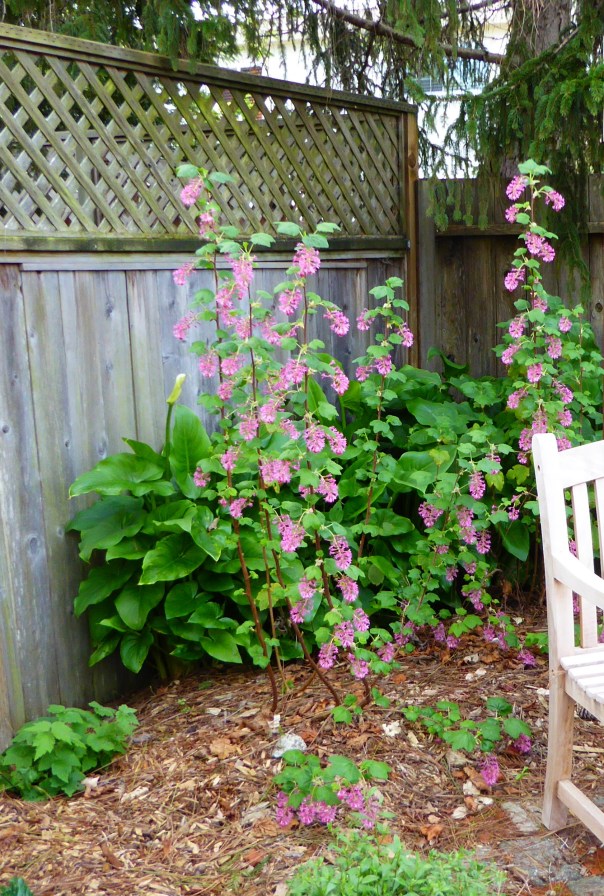
For a few years, back when my garden was newly landscaped, I had three native currant bushes (ribes) with their showy flowers and intoxicating scented leaves.

Ribes, March 2017

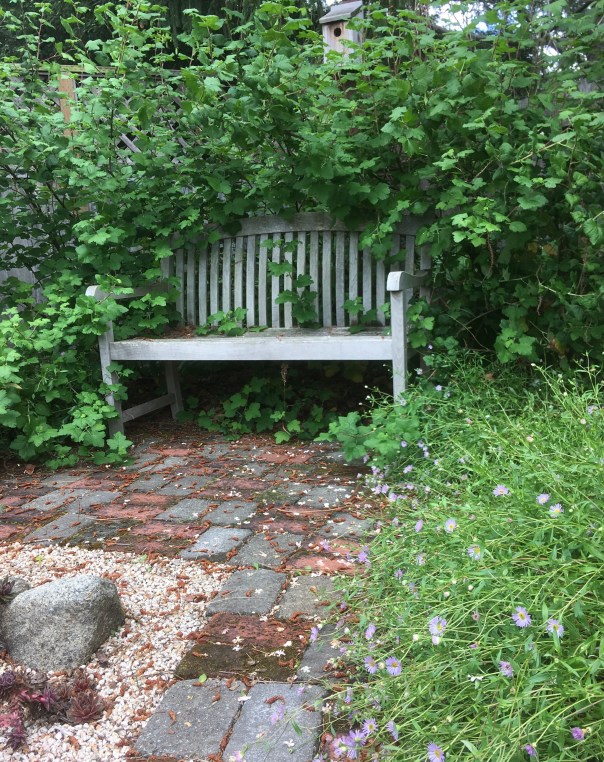
They grew so large that they engulfed the bench in front of them, making it impossible to sit there:

Ribes, May 2019

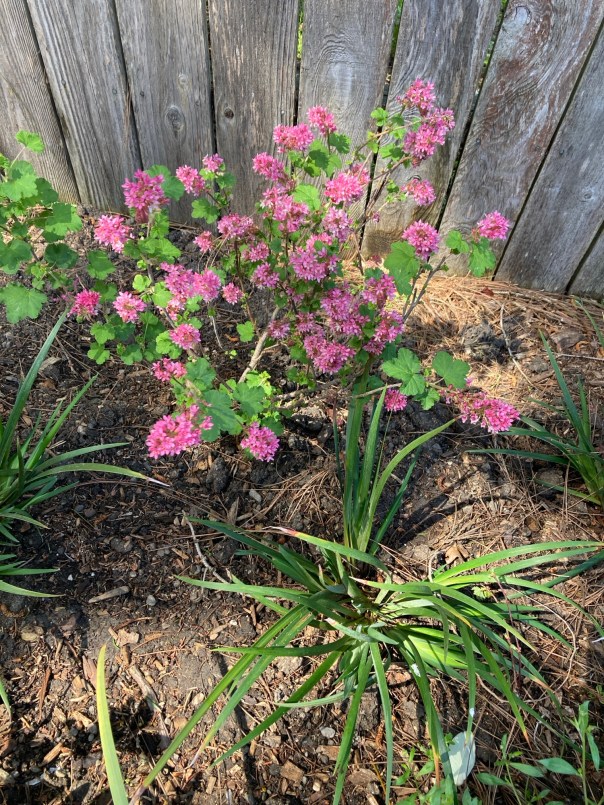
After I pruned them, they bloomed again …. and then one by one they died. No one could figure out why. Now we are trying some new ones, which don’t look like the same plant exactly, but they are blooming very prettily right now:

Last fall I made it to the hardware store after most of the bulbs were already bought up. All they had of muscari were these “special” ones below. I bought a big bag, and then regretted it, thinking they might turn out to be just weird. So instead of planting them near the front door, I put them in various places in the back garden, where they are blooming late… and I do think they are odd.

Revived survivors from last year.

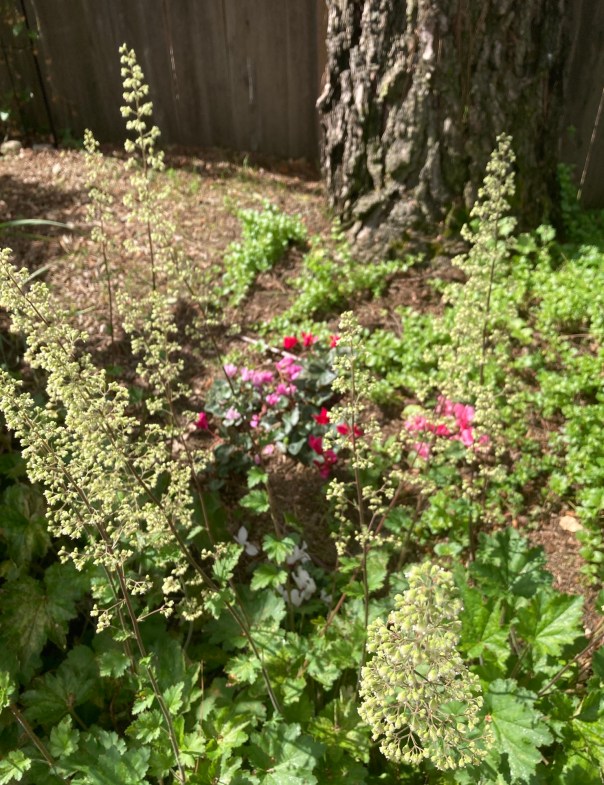
The heuchera are covered with their bells already, and you can see my little cyclamen plantation behind. The soil is very shallow because of tree roots, but they come back year after year; recently I added two more to their family.

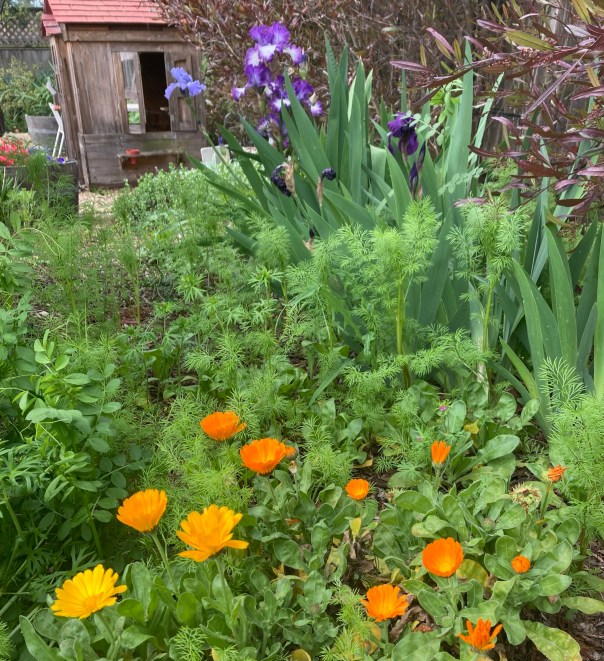
I will close with a cheery calendula group. They are brighter than ever because of all the rain they got, and will never look this good again until next winter or spring, if they get a good winter watering. It’s just too dry in my garden for them to thrive, but they are like many of us that way, right? Rarely are all the conditions optimal for our looking and feeling our best. The calendulas are surrounded by tall, pushy, more drought-tolerant “tares” that don’t seem to bother them at all. I hope to follow their example and cultivate more hardiness, and cheeriness too. Or — merriment.

Because this morning I was reading a Psalm not in my usual translation, and it went like this:

And let the righteous be glad;
Let them greatly rejoice before God;
Let them be glad with merriment.

The garden glows.

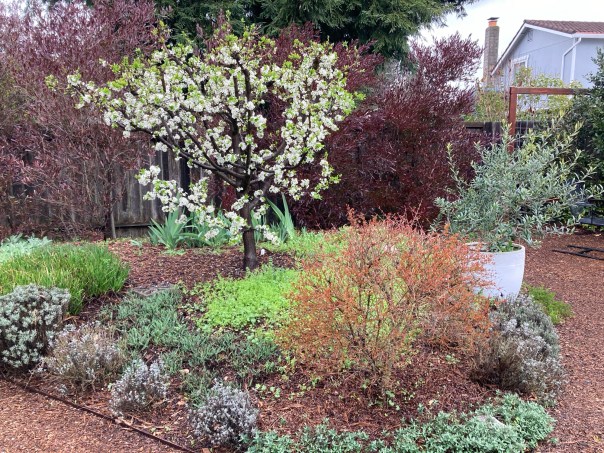
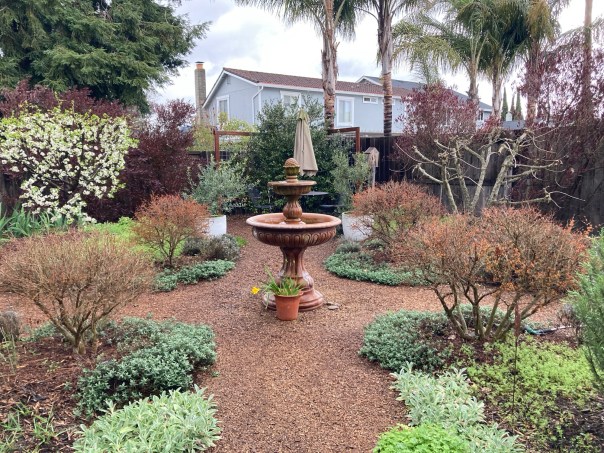
The last time I mentioned my plum trees here, I didn’t include a photo of the whole garden, even though I’d taken quite a few. They just didn’t convey what I was seeing. Then a storm moved in and we got drenching rains. It turns out that when the plants are well watered, at the same time that they are leafing out, they start to glow. This special condition is most noticeable when the clouds are blocking most of the sun.

Even though there aren’t many flowers — other than plum — blooming in the back garden, all the different leaf hues and textures add up to a colorful early-spring show.

I’m really grateful to those of you who told me in the comments that you don’t get tired of garden pictures. You encouraged me to keep trying, to look for new angles and views of the “same ol'” plants.

For anyone who is wondering, I’ll tell you what plants are creating the most colorful contrasts right now: Along the back fence, the tall dark reddish bushes are dodonaea, or hopbush; the flowering trees are Elephant Heart plums; the small bushes with new, tiny orange leaves are dwarf pomegranates; the cropped blue-gray bushes along the path are lavender; the pale green swath in front of the plum tree is nigella or Love-in-a-Mist; and olive trees are growing in the big white pots.

In these views you can’t see all the weeds that are also springing up, and with the continuing rains I know there will be more of those to keep up with. But let’s not think about work just yet. There’s a fire in the wood stove, and it’s the season for watching from inside my cozy house as the the cold wind blows outside, making a wild moving picture of my glorious garden.

The oddest plant in the garden.

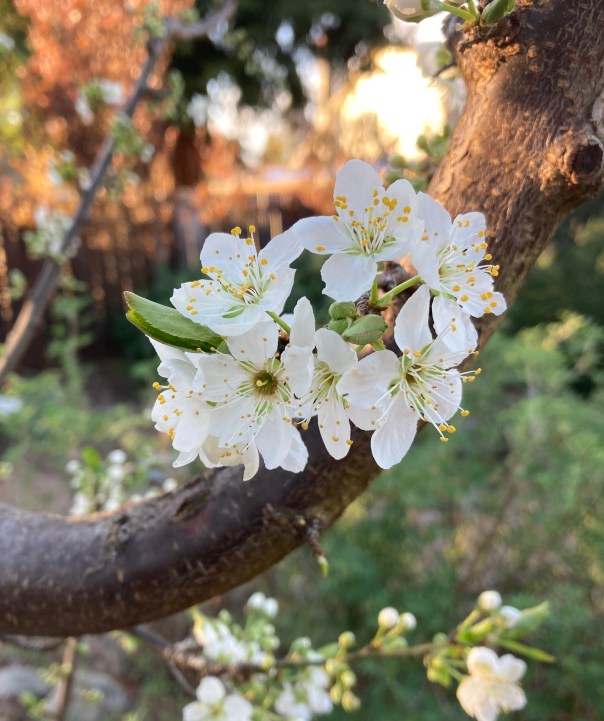
I’m holding myself back with all my might, from sharing a dozen flat images in an effort to convey the magnificence in the garden. The plum trees are adorable, short and squat as I’ve trained them to be, dotted with their pristine white blossoms. The Iceland poppies sway gracefully in the breeze, and the anemones are coming on in red, violet and white.

I ate lunch out there near the pineapple guava one day this week, because it was sunny, and much more pleasant than in the house. As I wandered around I gave thanks for all the hardiness of the plants, their constancy in coming back again and again. Most of them look fairly ordinary in their pictures, at least the way I take them — and I really think no one else could love them the way I do.

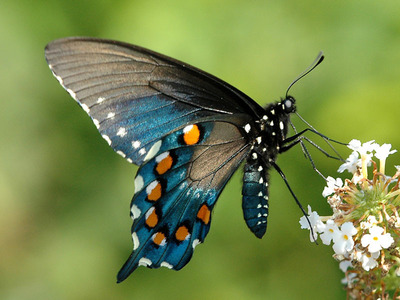
But I will share the funny and fantastic Dutchman’s Pipe Vine again (above). It’s in the peak of bloom right now, and the leaves just coming out. Mine is the native Californian species, modest in comparison to some exotic ones (a few far-out examples here), which I planted in hopes of attracting the Pipevine Swallowtail butterfly. So far I haven’t been aware of success in that way, but I enjoy the plant itself very much. This is what the butterfly looks like:

I’ll be sure to tell you if I ever see one in person!

Homey doings in early spring.

This month I had two occasions when friends visited me for one or two nights, two different friends each time. It was fun to have people to cook for. About an hour before the first pair of guests were to arrive I found out that one of them couldn’t eat the bread I had planned to serve with soup, because of gluten intolerance. I have just enough time to make muffins, I thought, using Bob’s Red Mill gluten-free flour again. I mixed up the wet ingredients, and then — could not find that flour anywhere.

Though I rarely bake anymore, I have a dozen sorts of flours in a refrigerator in the garage. I rummaged through those and decided to use one cup of cassava flour and one cup of buckwheat flour. The latter was the sort one would use for buckwheat pancakes, that is, from roasted groats. Some people don’t like that flavor, so I was taking a chance that my guests would.

The muffins turned out very nice, we all thought. But the cassava flour is a little heavy, and I think if I try this again, I’ll use more buckwheat and less cassava. That very evening I discovered the missing flour, in the wrong refrigerator.

The last time I made pancakes I did not use buckwheat flour, but I did use this beautiful batter bowl that I received as a Christmas gift. It holds an amount of batter that is just right for one person, and its presence on my kitchen counter has encouraged me to make pancakes for just myself, for the first time ever.

Another type of bread I helped to bake recently was the little prosphora that our parish uses as one type of altar bread at Divine Liturgy. That day we only made these small ones, and two people prepared dough. One of the dough makers used more flour than usual, and we ended up with a record number of prosphora — so while they were cooling I took their picture:

Lent is coming right up — for us Orthodox it begins on Monday. Many people I know like to choose some “spiritual reading” for Lent, and I have done that many times. Our women’s book group has often chosen a book to read together and discuss after Pascha. But this year we didn’t; we still haven’t discussed the last book we chose, to read during Advent.

At one point I thought I would read The Seer: The Life of the Prophet Samuel and its Relevance Today during this season. And then I looked around my house and noticed so many other worthy titles. Maybe I would cast lots among these below, and let God decide for me:

But the finality of that action frightened me. It’s not likely that I will finish any of these big books during Lent anyway, because I always seem to use any extra time to attend the lovely Lenten services at church. So in the end I decided to read (from) all of them, and I’ve stacked them up next to my reading chairs as my Lenten Library; my plan is to read at least a little from one or two of them every day. Being goal-oriented does not come naturally!

hairy bittercress

The last couple of days have been sunny at times, and the weeds in the garden are getting my attention, as they grow like weeds in springtime. So I got out there and pulled a bunch. I try to keep a thick layer of mulch on my garden to prevent weeds, but I guess I got behind in adding to that layer. I’m hoping to do that this week.

The anemones and crocuses that I planted at the end of November are starting to bloom, and the muscari and daffodils are showing leaves; obviously so late in the fall was not optimal for getting them in the ground. One reason I got busy weeding was to make sure they won’t be hindered from lifting their pretty faces to the sun. Of course, it’s good for me to do that with my own face when I get the chance, and I trust that will be the case more and more as springtime unfolds, in the earth and the air, and in these anemones.