Category Archives: travel

An Olive Tree is More Than Interesting

In a recent post I said that my birthday olive tree was “an interesting gift.” I suppose it was because I was dead tired that I couldn’t think of a more telling word. I’m embarrassed to use such an uninteresting word as interesting. Ugh. The truth is, to receive the gift of an olive tree on the occasion of getting older made a huge impression on me. If I hadn’t needed to finish that post quickly and make dinner…well, enough of the excuses.

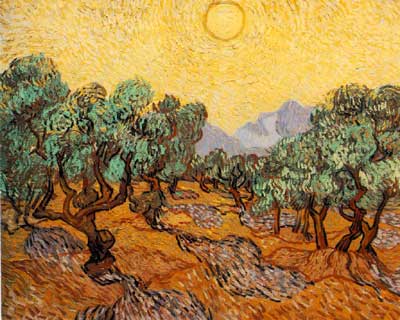
I love to look at these trees, so as I was browsing them on the Internet I pasted some pictures here. Vincent Van Gogh painted several scenes of olives.
A post about olive trees was one of the first in my string of blogs. And recently on my tree-rich trip I saw old California orchards. My childhood was near the groves that made Lindsay Ripe Olives famous, though as I have mentioned, I don’t like the fruits, and my family never had an olive tree on our property. Olive oil gelato? Very West-Coast, and I would be willing to give that a try.

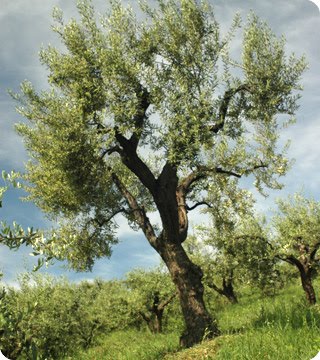
You can adopt an olive tree growing in Italy, like the one at top, and then receive its produce for a year. I suppose you have to adopt it, or a different one, again the next year. Not very good parenting.

Montenegro is the home of this pocked giant, which is reputed to be 2000 years old. The longevity intrigues me, along with all the Biblical references, which I haven’t even begun to think about. Mention of them often goes along with general descriptions of abundance and productivity of gardens, and with pomegranates and figs and vineyards.

There’s a story of the olive tree who was asked to be king, and the olive branch in the dove’s mouth after The Flood. Doors for the Temple were carved in olive wood. Many people make reference to it being the tree of Peace, and God knows I need that–I need Him.

What does it mean, “I am like a green olive plant in the house of my God.” ?  It means alive, if it is green. Let me flourish in Your House, O Lord. Let me live in You.

Getting back to the trees themselves, the grove I would most like to visit is this idyllic one in Turkey , the fifth-largest seller of olive oil in the world– but trying to get to second place. Olive oil I do much appreciate, and can imagine having a picnic on the warm yellow grass, of bread dipped in oil, sitting on a blanket under the sun. Once during my sojourns in that very country, I helped women in shalvar* gather olives from the ground where they’d fallen. I even sampled one of the wrinkly brined olives they cured in flat pans spread around under the trees, and had to restrain myself from immediately spitting it out.

*(I tried in vain to find a picture of these baggy pants that so many women still wore in Turkey in the 60’s and 70’s. These days a version has become high fashion, and the ones worn by chic models are not the ones I saw and wore. Perhaps this will be be the subject of a future post.)
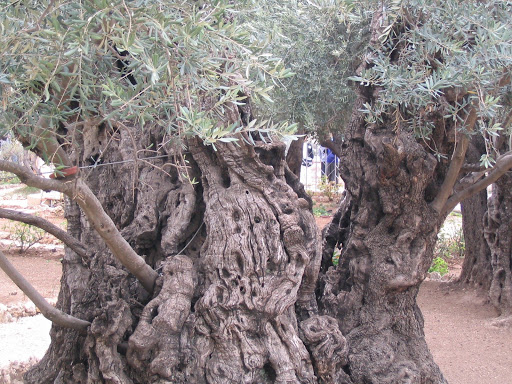

The Garden of Gethsemane figures prominently in the events of our salvation history, into which we entered last week through the services and events leading up to Pascha. And this tree lives there. What if it is also 2,000 years old?

I planned to post this blog before Pascha, but now here we are post-Gethsemane, post-Golgotha. Wherever olive trees, any trees, are living, this week they are dancing.

North Coast Beauty

To celebrate our 38th wedding anniversary, B. and I spent a whole day on an outing to coastal places.

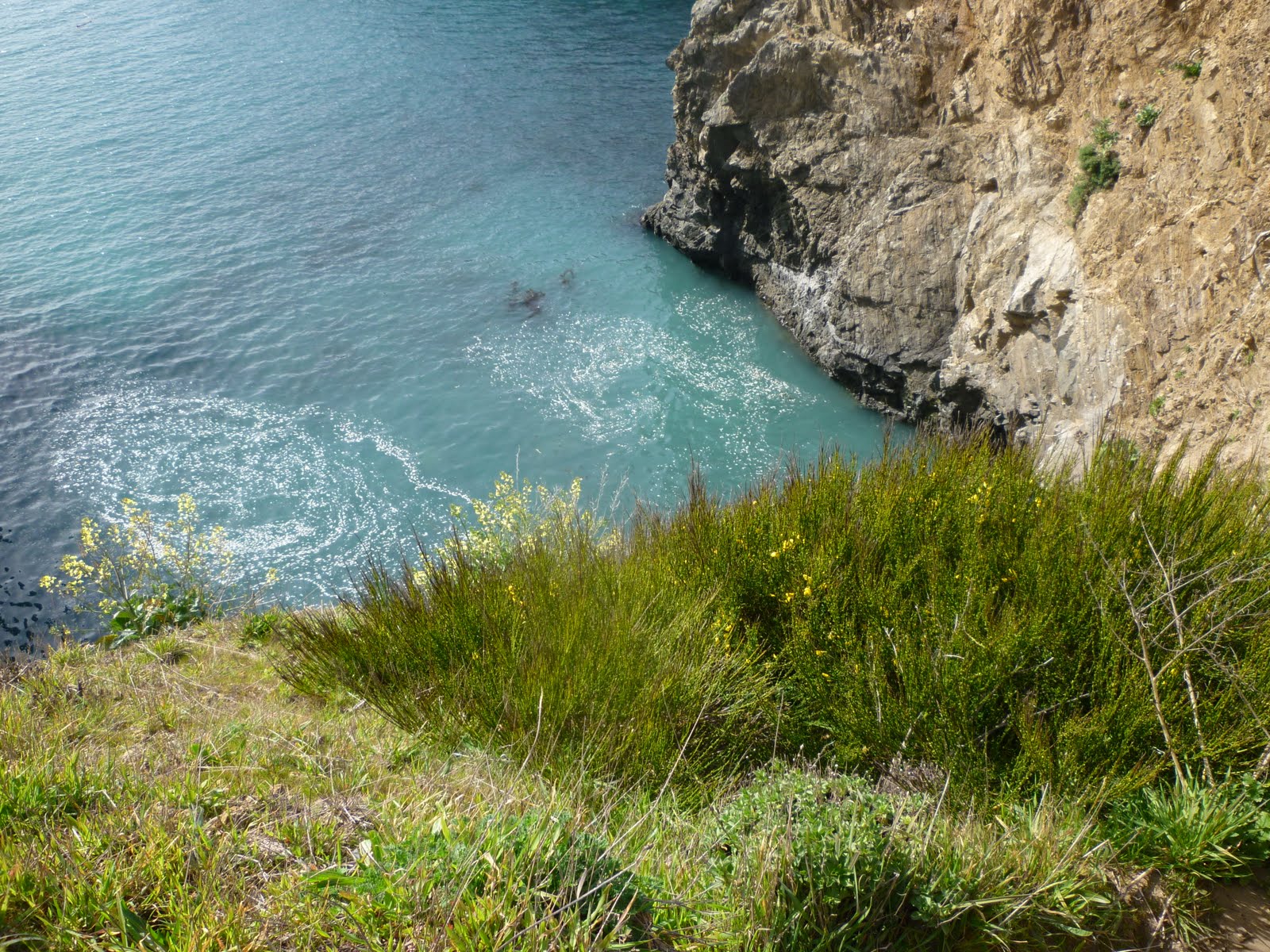
We stopped at this spot by the Navarro River and wondered at the water color.

It was chilly under the ramrod-tall redwoods there, but on the whole, the day was unseasonably warm for the coast, and we thanked God for that extra gift. After a long drive through spectacular landscapes we reached the little artsy town of Mendocino. First we ate lunch, which provided respite for the visual senses, while we indulged our taste buds.

There’s lots of nice driftwood on display in the town –see the faces?

One of the first shops we visited was full of kaleidoscopes that were amazing works of art and engineering, some priced at well over $1000. Looking through just one kaleidoscope gives the aesthetic mind a lot to ponder.

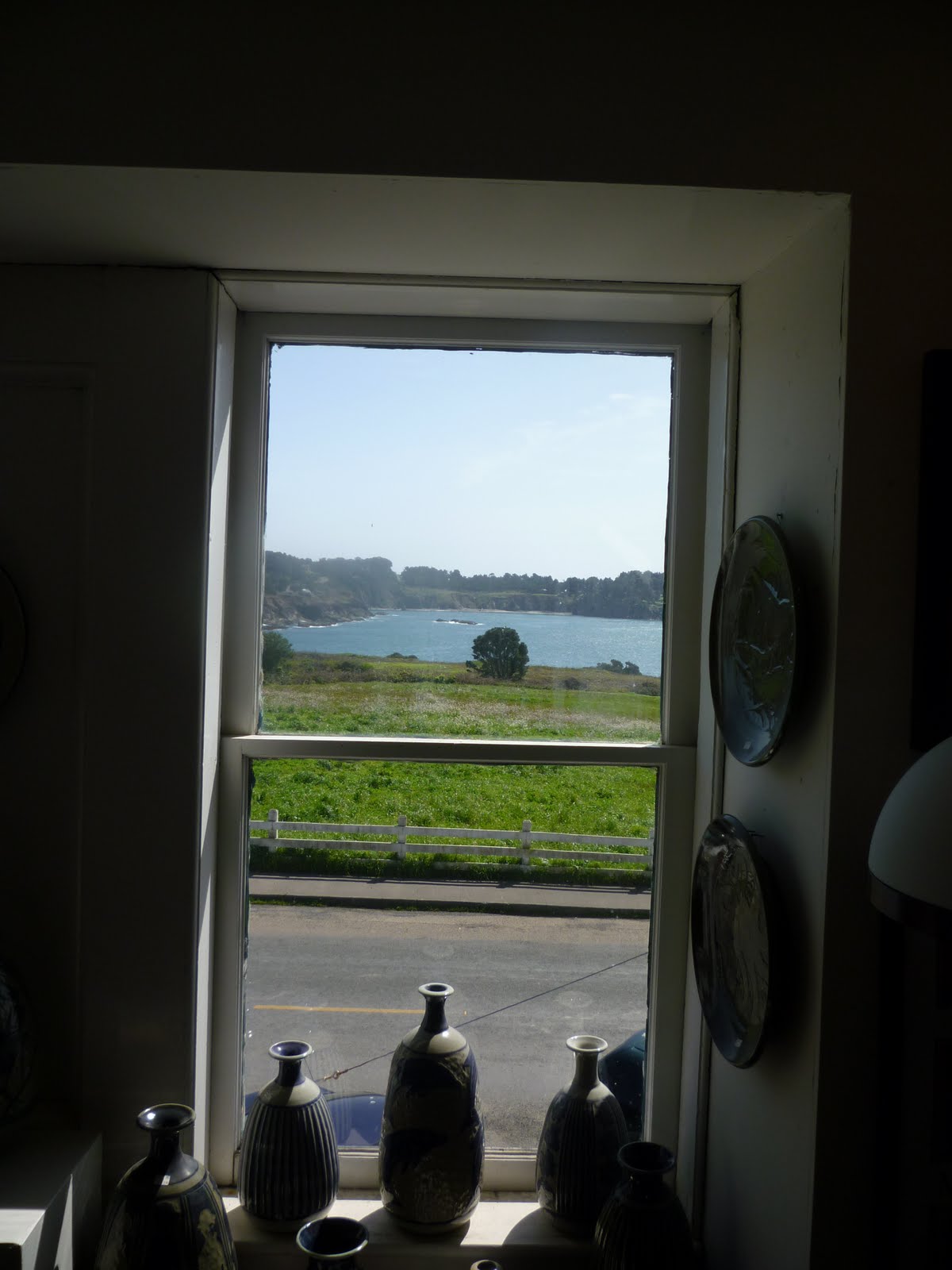
In other art galleries we feasted our eyes and fingers on wooden bowls and buffets, ceramic platters and sculptures, quilts, and paintings of the landscapes that are beloved by us after living in Northern California for most of our adulthood.

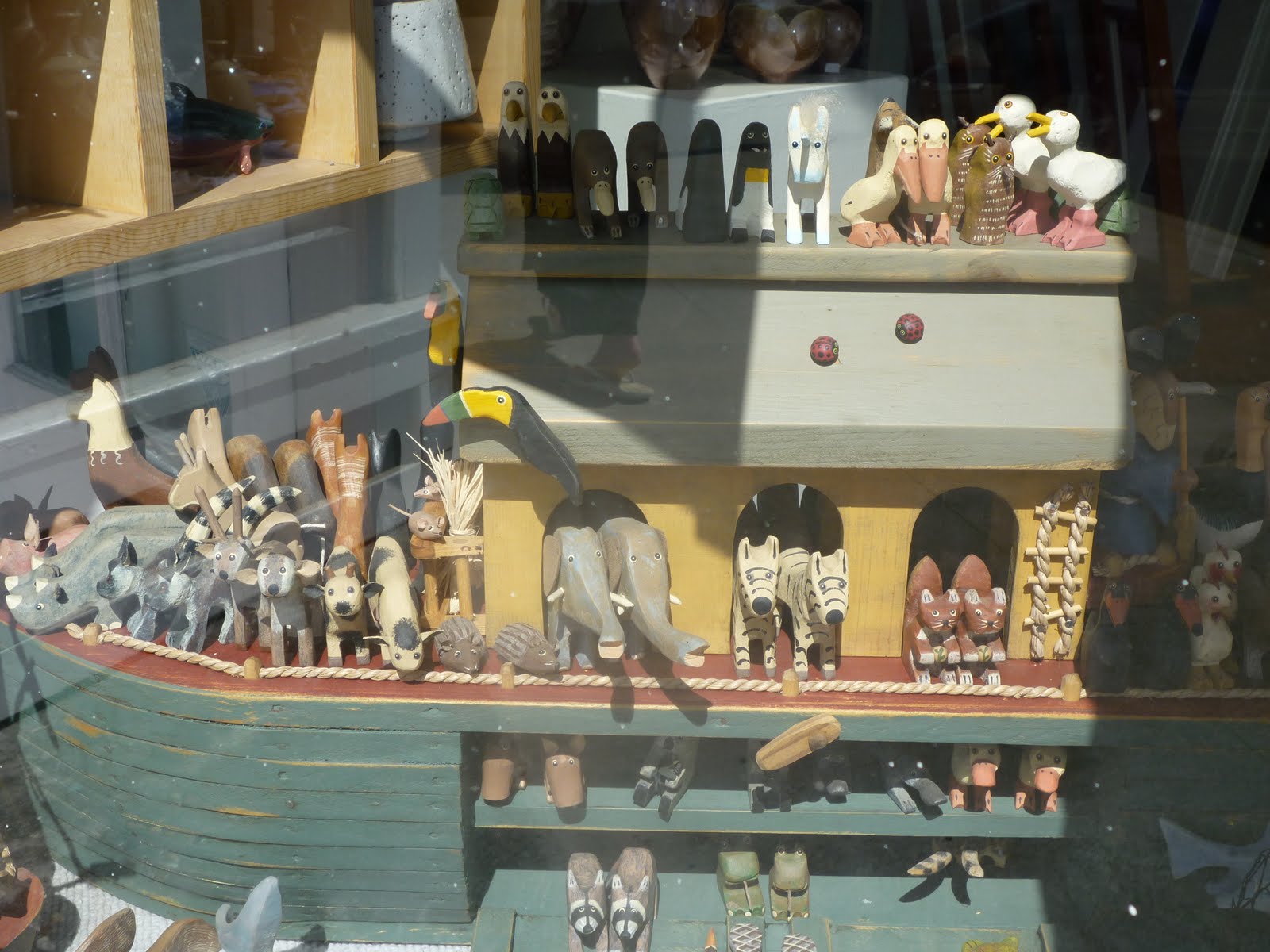
To think of all the craftsmen making these lovely things, it made me glad. I snapped this hand-carved wooden Noah’s ark in one window…

…mostly because I loved the sea otters,
in a characteristic pose with little “abalone” shells on their chests.

We wanted to go out on the bluffs to look at the flat ocean, because by then we were experiencing Art Beauty Overload.

Maybe it is because we aren’t used to protracted active examination of the visually sublime. I usually have lots of work to do and break it up by occasional joy in one flower or tree.


Any one of these objects might be more satisfying if you could sit and hold it a while, or put it on your wall to befriend slowly. The whirlwind tour of so much creativity makes for too much to actually “take in.”

Outside again, I did have work to do, trying to get good pictures of the world around me, adding my own sub-creative endeavors to my Father’s.

Anatole France said that “Man is so made that he can only find relaxation from one kind of labor by taking up another.”

Studying is a kind of work, and I already know more about the plant world than the art world, providing some foundation for further study and making it easier on my brain to examine the flora of Mendocino than the things in galleries.

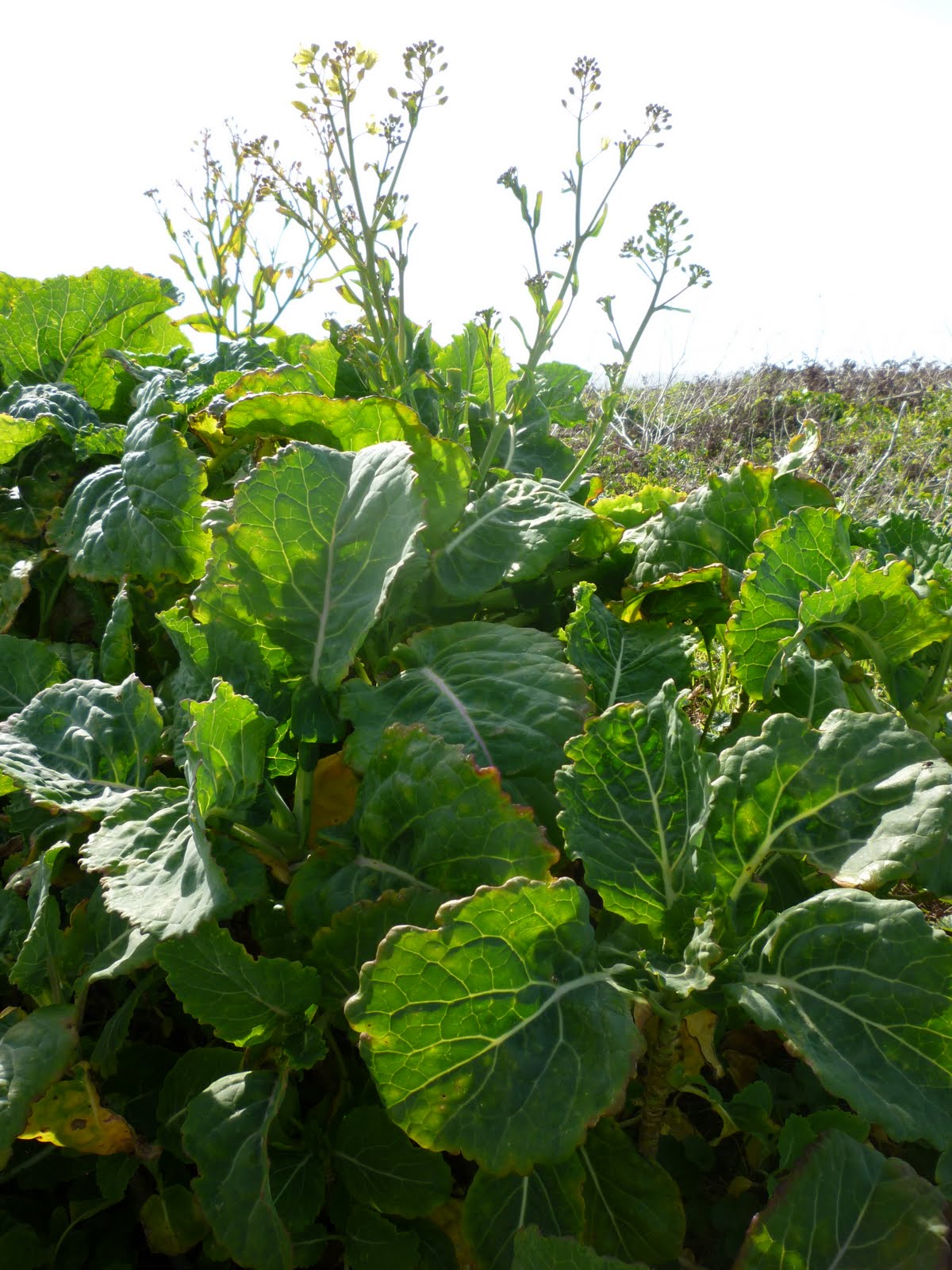
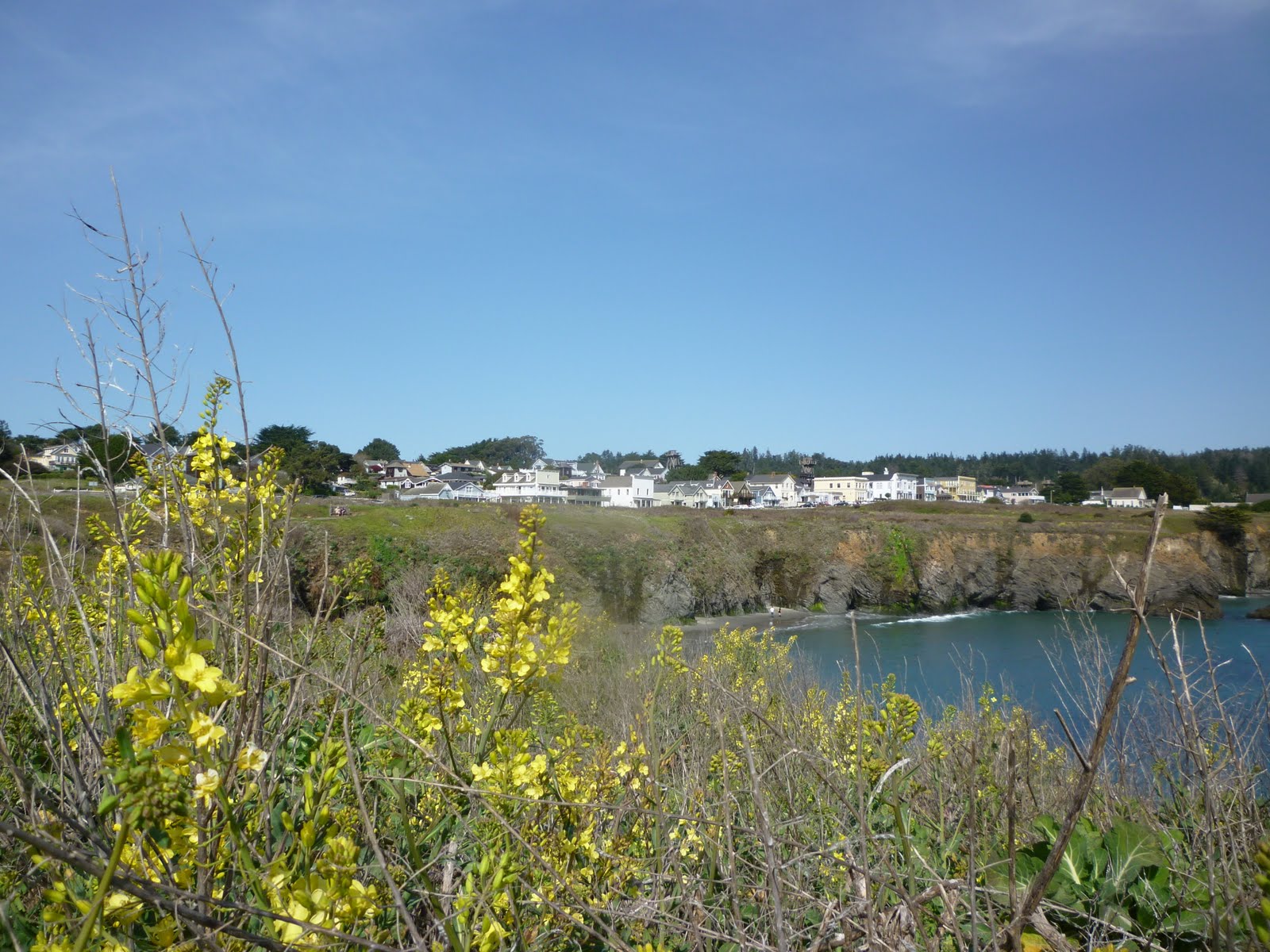
Mustard trees like these above could easily hold birds, as mentioned in the Gospels. Their “trunks” are sturdy enough to survive the blustery winters out there above the surf, and in the spring they scatter their yellow cheer all over the rough brownness.

Surely the dark bushy stuff can’t be broom….wish I could get closer to look better. It would be a lot shorter and denser than what we see inland. But so many plants on the coast do seem to squat down close to the ground to brace themselves against the wind.

Lupine plants are spread all over the fields, not blooming yet. I think they will be blue when they come out. The giant yellow lupines we often see on the coast stand three feet tall. They haven’t flowered yet, either, but on our way out we passed large patches of purple lupines along the road–a medium-sized variety.


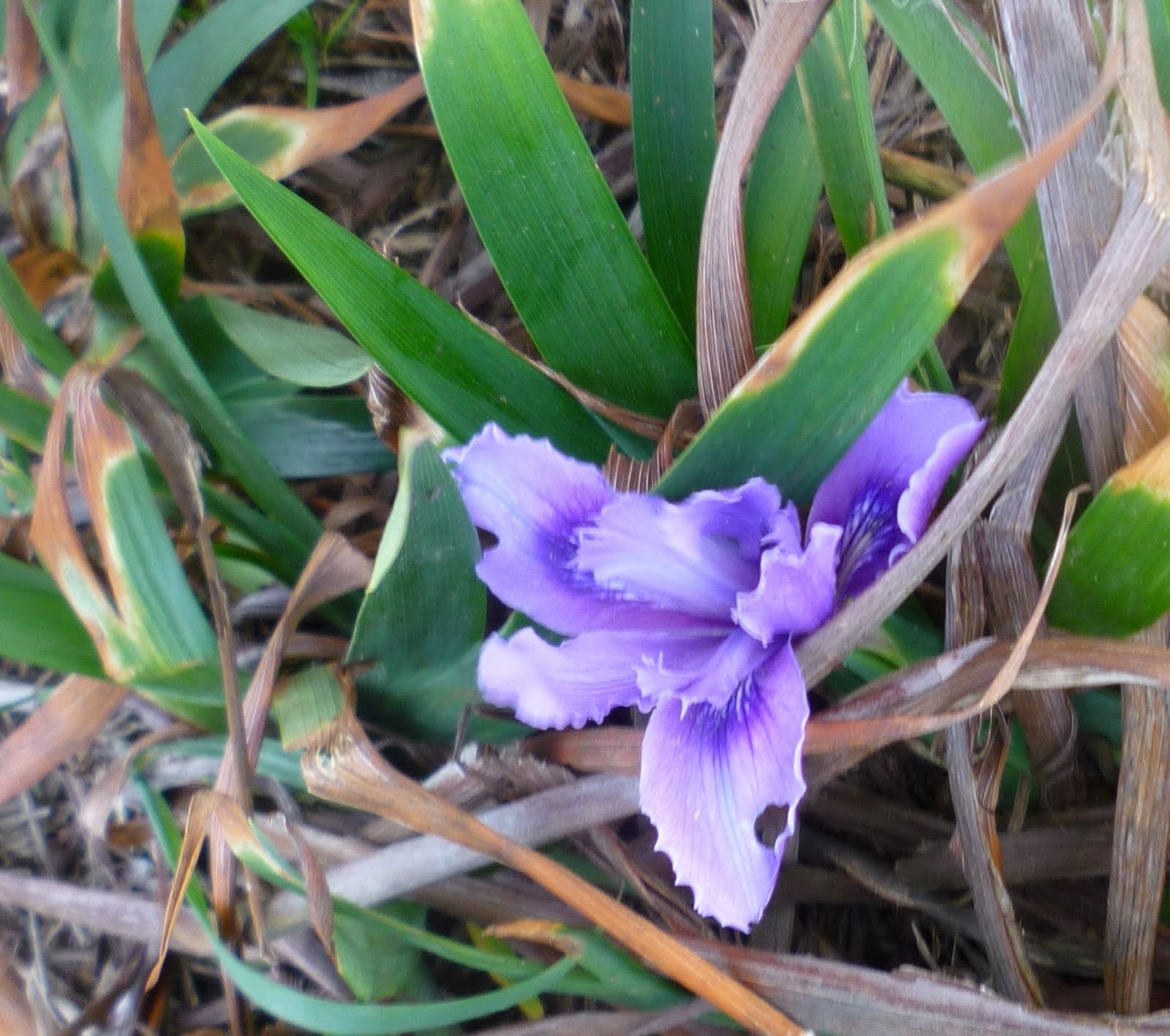
A little iris nestled into the tangle.

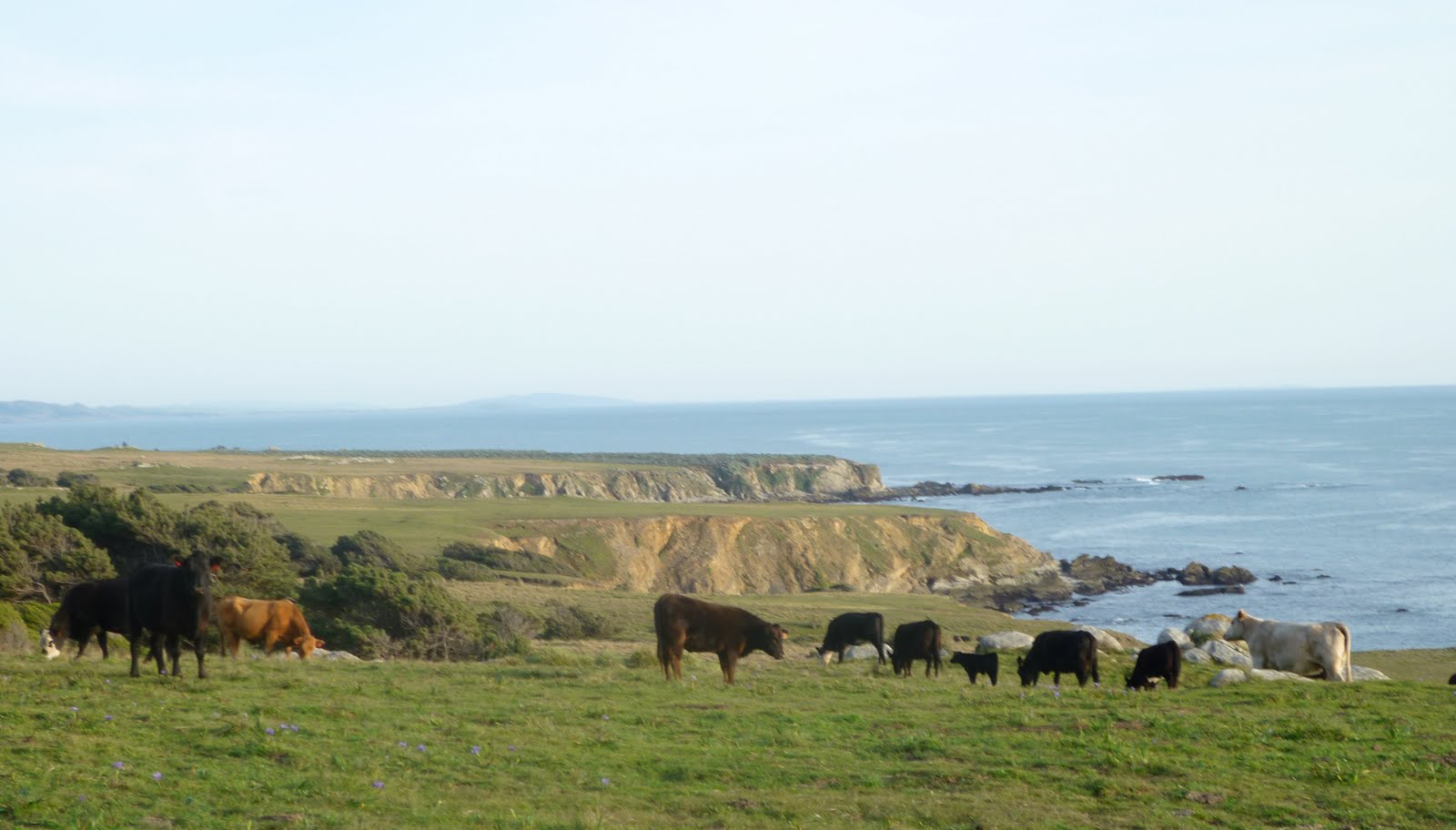
We took the long way home, which included hours of driving along the cliffs, with repeated vistas of cattle grazing below a backdrop of dark forests and clear blue sky, and redwood stake fences running along the highway intermingled with stands of spreading cypress trees.

These sights became familiar enough after a while that they were comforting and not so overwhelming. Look at the steers–they are doing their work, so they can bear the view without it tiring them out.

During part of the car trip, we listened to a whole disk of George Gershwin, which was another relaxed intake of beauty and appreciation of artistry, this time through the ear gate. At home, I never give my full attention to the music that might be playing, because I have too much else to think about. Sometimes we were in silence, just enjoying the sights. And for some hours B. played many of his iPod songs that I like, and we even sang along together with tunes that have accompanied us through our married years.

It was a splendid day!

Trains and Stations

Lying in bed at night as a child, I used to hear trains pass less than a mile away, as the whistle blew at the intersection where I also would catch the school bus in the mornings. We were out in the middle of citrus orchards, on a dead-end road, so there was little else to hear at night. The coyote howling was a different tone from the locomotive’s warning. Now that my daughter lives where trains toot-toot as they go by many times throughout the day and night, I find that the sound still strikes a chord of comfort and regularity.

While we are busy about our work and play and sleep, thousands of people are being diligent to do their jobs driving the trains, loading them, keeping the schedules updated, whatever all is necessary. I know so little about it, it’s like magic.

Books I enjoyed with my children fed this romantic feeling I have: The Little Red Caboose, The Boxcar Children, The Railway Children, even The Narnia Chronicles with its train trips here and there during holiday. Children and trains.

When I was still a young child I was allowed to ride the Santa Fe with just my two sisters, four hours to my grandmother’s house, which no doubt also makes me love trains, and the train stations just as much. Excitement and heightened emotion pervade these meeting places of people who might be returning from exotic and faraway lands, or perhaps are just now being reconciled face-to-face with kinfolk after years of estrangement….One never knows all the stories, one hardly knows all that churns in one’s own heart at meeting one’s own people.

When I rode the train, it was to visit my most dearly beloved maternal grandparents. I can see in my mind’s eye, just as I saw them from the train window before they could see me, Grandma and Grandpa, standing in the crowd waiting for us. We climbed down the steps and went to them, and got a kiss, and Grandma’s warm hands in ours (those were the days before hugging was expected), and her remarking how cold my own hands were.

There is mention of British trains and stations, even Victoria Station, on this blog recently. I’ve been on some British trains, and the last time I was on that island, my hotel was quite near Victoria Station, which was awfully modernized from the first time, and certainly a different world from what lives in my memory and heart’s imagination. When you can’t even throw your own trash away, but must hand it to someone walking around in a sort of spacesuit, it feels like a new age, and not of flower children.

One recent sight jived with the old world, though. Driving through the mountains of forests last week, I looked down the wooded slope at a railroad track snaking along a river, and thought I caught a glimpse of the little red caboose.

Tree Friends on the Way

The trees kept calling to me to stop and take their pictures yesterday, turning what should have been a five-hour drive into six hours. I think it’s just been too long since I took a walk in the forest, and when I saw some old friends, it wasn’t possible just to give a glance and continue on my way.

The buckeye first caught my eye; it’s a tree I dislike at other times. In the late summer, when the world is full of lush greenery and flowers, its leaves turn brown and spoil the landscape. But when humans are saying, “I’m ready for Spring,” and it’s still February, the buckeye, or horse chestnut, puts on its party clothes way ahead of time and is, for a while, the prettiest one.

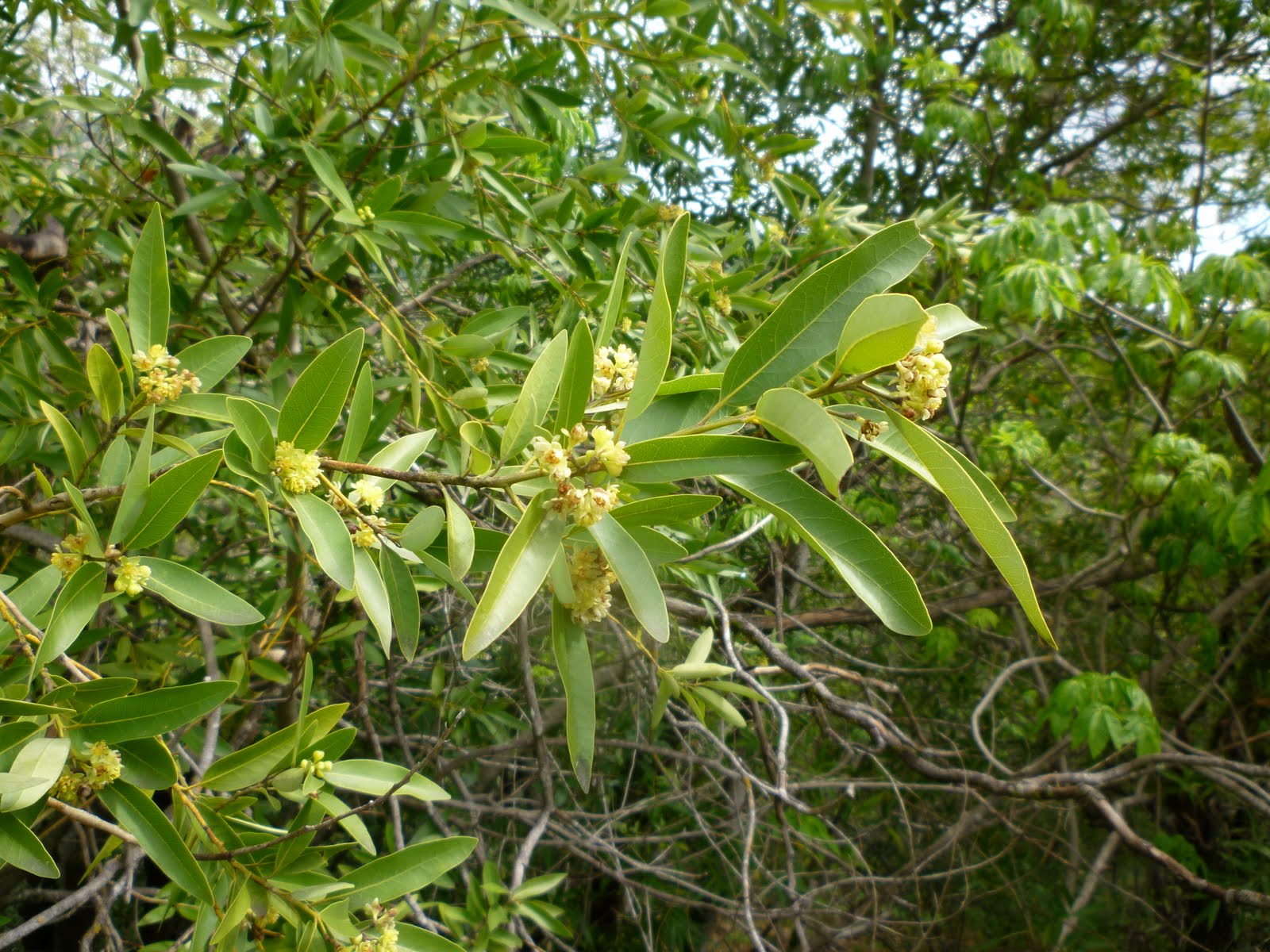
The California Bay Tree is dear to my heart. Until I moved to Northern California I didn’t know anything of it, though I had probably at least heard of bay leaves for cooking. Since then I’ve seen what may be the biggest bay tree on earth, and I’ve stuck many a spray of leaves into my flour buckets to keep out bugs. In Oregon they call this tree the Oregon Myrtle, and some people know it as Pepperwood. The usual leaves you buy in a jar for cooking are milder and come from a different tree altogether–though the California “bay” leaves that I can gather on my walks  have been good enough for this culinary make-doer.

Here’s another picture of the bay with a live oak backdrop. Which live oak? I couldn’t tell you. Once I decided I would learn about all the oak trees in our area so I could know what I was looking at, and I brought home a stack of botanical books from the library. I quickly discovered that if I took on that project I wouldn’t have time to look at any other trees, much less cook meals or do laundry. My daughter told me it was a live oak–otherwise I’d have left out this picture.

This bay tree has full flowers on it…which makes me wonder if some are male and some female; but the Wikipedia article on this species doesn’t say anything about that.
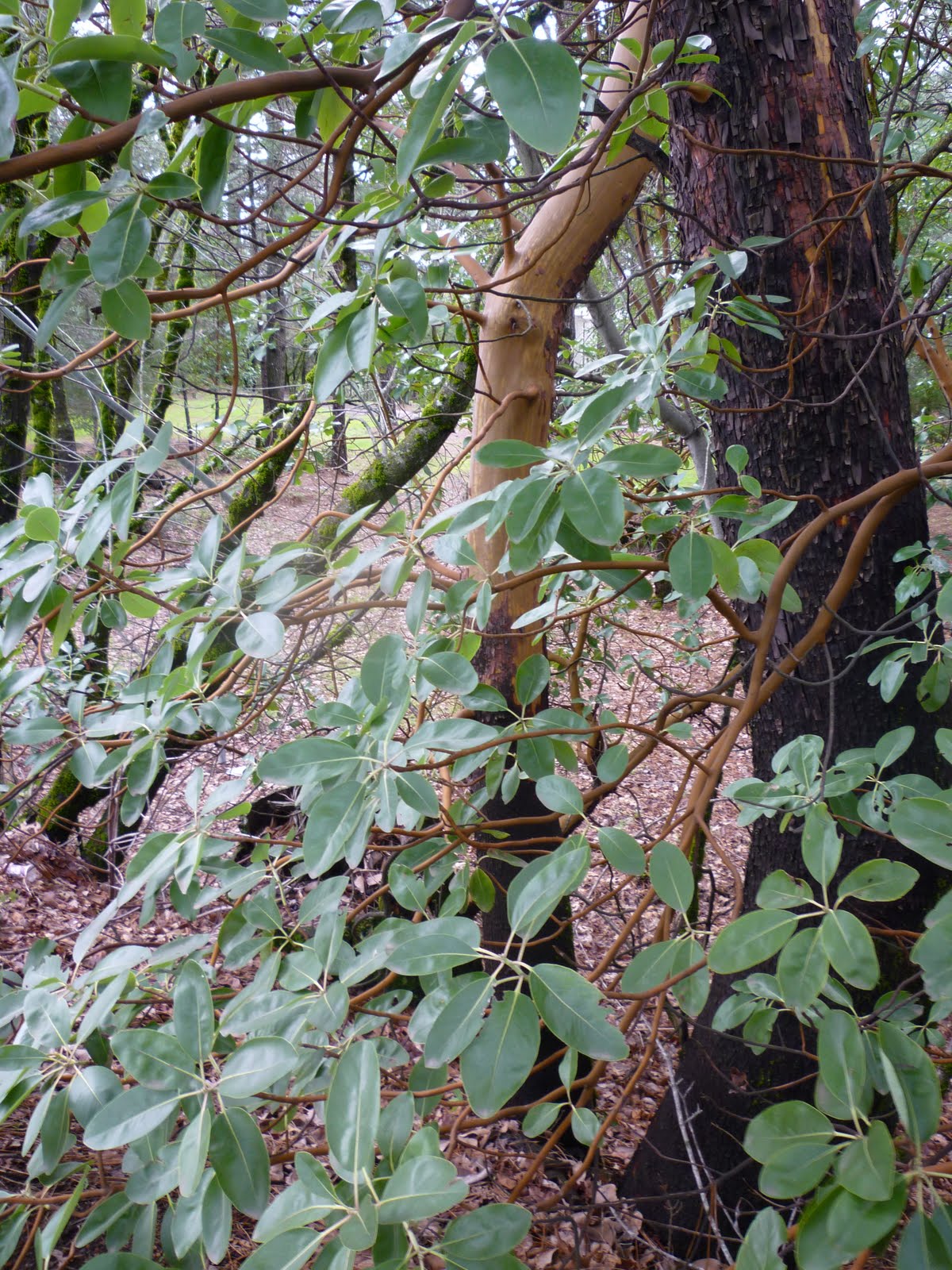
The handsome Pacific Madrone trees, which I’ve always known just as Madrones, it turns out are related to the Strawberry Tree in my own back yard, as they are both arbutus.

I have to give two photos to fully show the beauty of the leaves and smooth orangey branches.


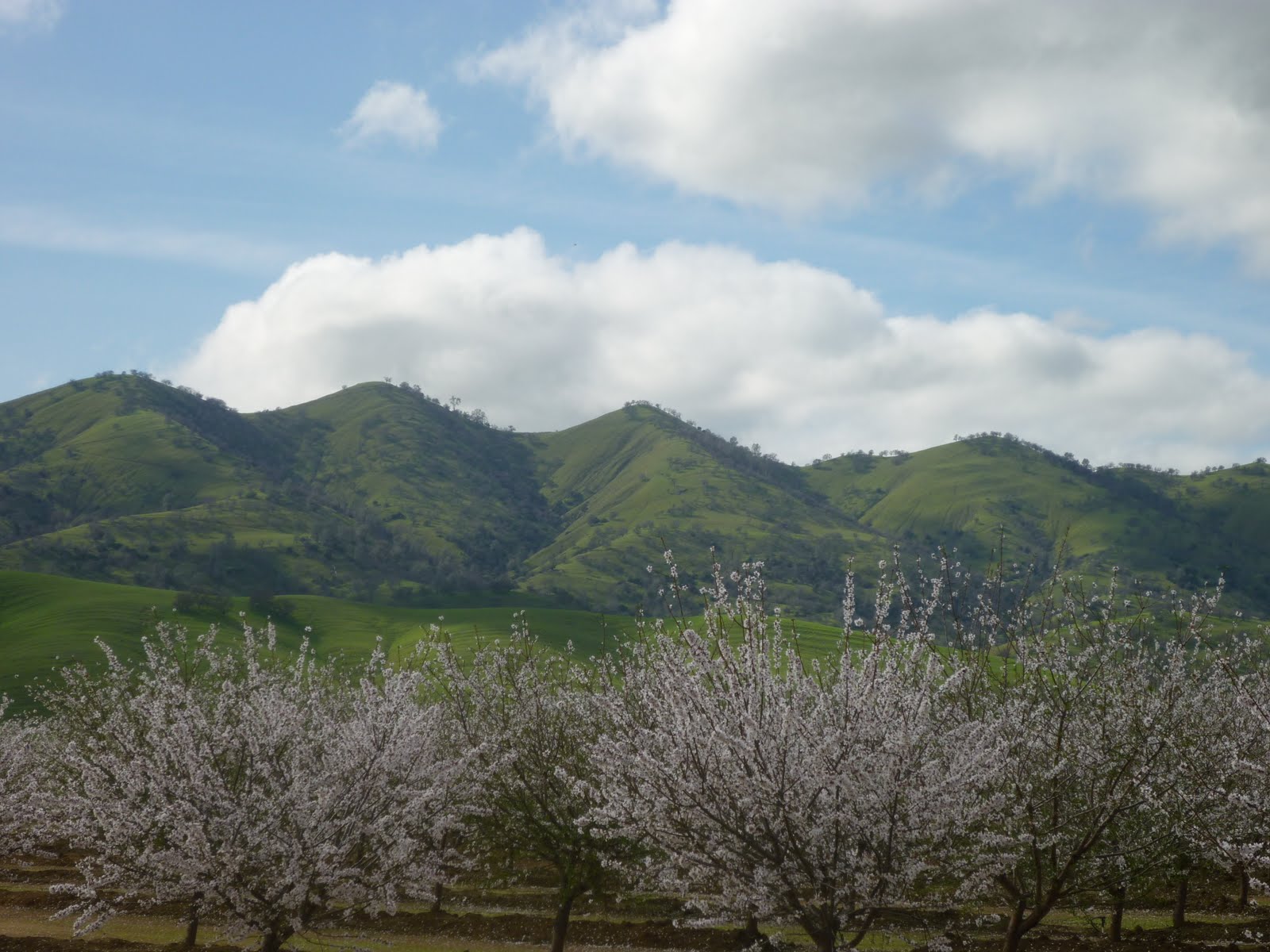
I emerged from the forest into the broad Central Valley of California, to the lovely display of barely pink almond blossoms. These are younger trees than the ones I photographed last month, but in the same neighborhood.

And the clouds, and the blue sky! Going north on the interstate, with the wide flatlands spreading out on either side of me, the ceiling was huge and broad. Dark clouds piled up like stair-stepping plateaus, and then disappeared behind me. I so wanted to catch their drama with my camera, and I’m ashamed to say I’d probably have tried while zooming along the freeway, but by then my windshield was too buggy.

I had to find a likely exit, where there would be a nice view, and a place to park. The first public rest area had a tall chain link fence all around it and not a very good look at the sky, but even the scraggly eucalyptus seemed lovely to me that day.

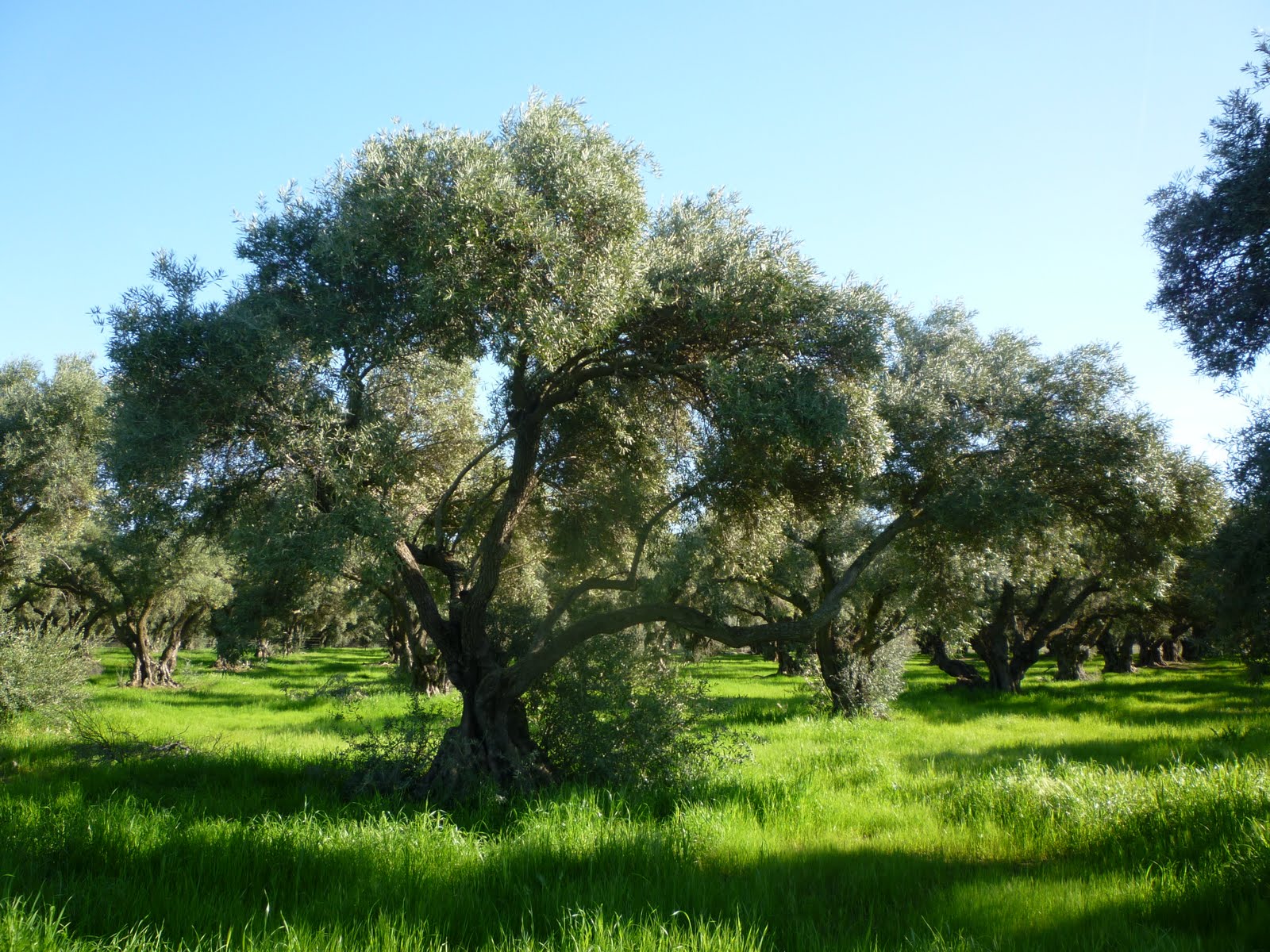
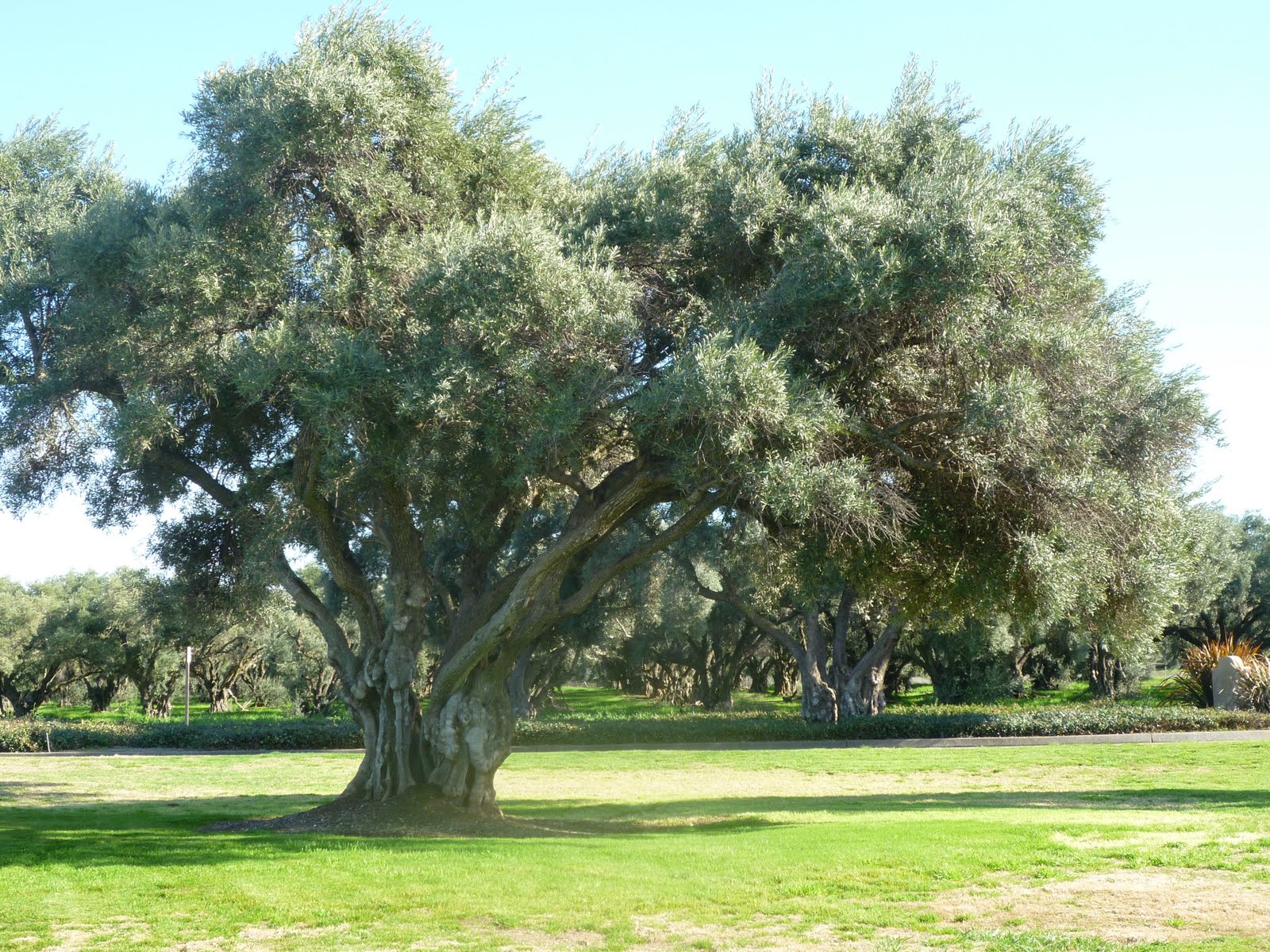
The almond trees gave way to old olive orchards, and I do love olive trees, so I stopped at another rest area that had been plopped into the middle of an orchard. I wandered around for quite a while, admiring these old stalwarts. Olive trees can live thousands of years, but these are probably just over a hundred years old.

There is so much to be said about trees. Right now it’s probably enough to quote Psalm 1, which says of the man who delights in God:

He shall be like a tree
Planted by the rivers of water, 
That brings forth its fruit in its season,
Whose leaf also shall not wither;
And whatever he does shall prosper.

Lord, water me with Your mercy and make me like my tree friends.