 Over the years I’ve often written about St. Herman of Alaska and Father Alexander Schmemann, two important people in my life whom we remember on this day. This year I want to add St. Lucia of Syracuse, whose day it also is; we are blessed to have four Lucys in our parish, one of whom is my dear goddaughter.
This morning we had a glorious Divine Liturgy in honor of the saints, with our rector testifying to the power of Fr. Alexander as well, saying that if it weren’t for his influence, teaching and prayers, he would not be our priest today. We sang “Memory Eternal” for Fr. Alexander and for Leonid Ouspensky, whose legacy as an iconographer continues to enrich our parish year after year.
 St. Herman and Fr. Alexander have both contributed hugely to the presence of true and living Orthodox faith in America, that Church in which I’ve found the fullness of Him Who fills all in all. Every year that we come to this date finds me more thankful.
Saint Herman of Alaska arrived in Alaska in 1794 and died there in 1837. On the occasion of his canonization in 1969 Bishop Dimitri spoke:
The Church on earth lives in a loving fellowship with the saints who have already run their race, who have fought the good fight, and have received their crowns (2 Timothy 4:7) (James 1:12). This is what the Apostle means when he says that we are compassed about or surrounded by the witness-martyrs or saints. We are assured both of their presence and their interest in us. In fact, they are concerned about the whole world and its salvation, for “there is joy in heaven over the repentance of one sinner” (Luke 15:7).
Father Schmemann was born in 1921 into a family of Russian emigres, and came to the United States in 1951 to join the faculty of St. Vladimir’s Seminary, where two of my own parish priests sat under his teaching. He reposed in the Lord in 1983. Not only has my life been enriched broadly by his contributions to the whole of Orthodoxy in America, but by my reading directly what he wrote, especially For the Life of the World, and his journals. Most recently I read his The Eucharist, which was a treasury of living truth, so vast, I haven’t known how to begin to say anything about it here.
It seems fitting that we commemorate St. Herman of Alaska on this date, when winter is making itself felt. I’ve written before (and yes, before that) about how he spurned the cold, befriended the animals, and interceded between the Aleuts and the powerful people who would exploit them. His is a good example in the Advent season, of how to keep our hearts and activities focused on the Kingdom of God in the face of distractions.

The mother of the youngest Lucia in the parish brought darling Santa Lucia buns as she always does, and a few of us stayed to drink coffee in the parish hall. But now I am home, with hospitality on my mind and heart: I have been welcomed into the household of God and fed at His table, and will go in that strength throughout the day and on to the Feast of the Nativity of Christ.
May we all prepare ourselves for the celebration by entering into the spirit of St. Herman, who advised us:
“…let us make a vow to ourselves, that from this day, from this hour, from this very moment, we shall strive above all else to love God and to fulfill His Holy Will.”

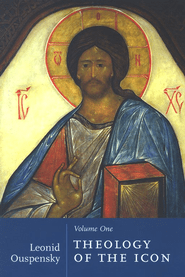 In church to commemorate
  f a bet and burned it. From that moment, he would regularly settle down at Grinberg’s place to contemplate the icons at length, trying to penetrate the mystery and understand how they were made. This is how little by little he became a Christian and an iconographer. We can rightly say that the icons themselves led him to faith.”
 Gladsome Lights