It is a great blessing that some of my family are still here with me during Christmastide. This morning after breakfast, while I was listening from around the corner in the kitchen, my son “Soldier” taught his children a little Bible lesson, and I think he mentioned the passage that includes the words, “all things pertaining to life and godliness,” because when I read an article online just now, that line jumped out at me, as being a theme of his message.
The article is “Keeping Christmas All the Year,” by Mark Dooley; here is the first paragraph:
 “We have just celebrated the sacred feast of Christmas and are embarking upon yet another new year. But why talk about Christmas when, as many may remark, it is over and done with? This question reveals a profound misunderstanding about the nature and meaning of the birth of Christ. The fact is that we do not so much celebrate Christmas as become it. The wonder of this divine intervention in human history, is that the separation between man and God was bridged through the Incarnation of Christ. Not only were we reconciled with our Creator, but, through his “divine power,” we have been granted “all things that pertain to life and godliness.” Indeed, as the Apostle Peter writes, we have “become partakers of the divine nature, having escaped from the corruption that is in the world because of sinful desire.”
And Dooley continues to gather up many such uplifting passages from scripture, such as:
“Put simply, Christmas is neither day, a feast, nor a celebration—even if that is how the world perceives it. Rather, it is a transformation of life from “being alienated and hostile in mind, doing evil deeds,” to being “reconciled in his body of flesh by his death.”
Truly, this event of Christ’s birth, the Incarnation, empowers us to live an exalted life:
“Becoming Christmas means realising that we have died and been reborn in Christ. It is coming to terms with the revelation that ‘God is love, and whoever abides in love abides in God, and God abides in him.’ It is living in the knowledge, as St. John writes, that ‘as he is, so also are we in this world.'”
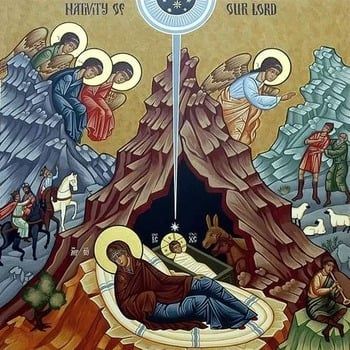
Read the whole article here: “Keeping Christmas All the Year”
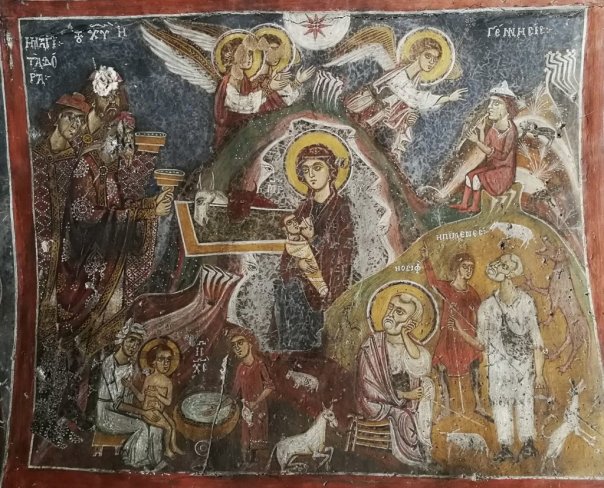
 Father, are the dawn luminaries, the twin rays, the Son and the Spirit, that are the life and delight and purification of the whole world.

 Gladsome Lights