Monthly Archives: February 2012
Love and Language
Over my car’s radio yesterday morning I caught the end of an interview with an author talking about her husband’s aphasia and recovery from it. As I drove into the Target parking lot the women were still talking, and I hadn’t heard any names of books or people yet, so I sat in the car a little longer, digging around in my purse to find a tiny black notebook to write in.
Eventually the host mentioned that we were listening to Diane Ackerman talking about her book 100 Names for Love, which tells the story of her husband Paul West’s recovery from a stroke, and the ways in which she was able to help him in the process, though their relationship was challenged and changed. The 100 names were the new pet names he came up with for his wife, when he could not recover the old ones. One of them that she mentioned was My Bucket of Hair. (She has a good head of it.) Many of the nicknames were as unusual and poetic, like My Remains of the Day, and My Residue of the Night.
I have tried reading Ackerman before, and there is too much about her prose and perspective that makes her tedious, but the things she said on the radio about love and care-giving and language recovery made me think I really wanted to read this particular book. I came home and put it on my Amazon list, but then I went on to read about Paul West, and found an excerpt online from the book he himself wrote, The Shadow Factory.
In the interview Ackerman had shared that, when he was depressed about not being able to write — and writing had been his profession — she suggested that he write a book about his experience, and he agreed to dictate to her as he labored to find each word and phrase in the rubble that was his brain. The following day he would rework the text, and the whole project became a huge part of his rehabilitation both emotionally and mentally.
I heard Ackerman describe her husband’s book as a “free associative dream version” of how it felt to have a stroke and to heal from it. Those words gave me the impression of it as the type of writing that I find hard to endure. But now that I’ve read this small part, I’m not sure I agree with her description. Here are a couple of paragraphs from the article I link to:
There was a bewildering assortment of false starts and incomplete sentences for the mind only. I no sooner thought of something to say to myself than I forgot it, and I was lucky to get beyond the second or third imagined word. Of course no one in his right mind overheard any of this, the dumb speaking to the silent in a reverse image, so no one was upset. But if this happens 50 or 60 times, one wants a little revenge of some sort. Of course, one was in all probability speaking no kind of written English, so this meant that whatever you said was relevant and you could not say anything irrelevant.
…
Reading, at which I used to be no slouch, now gave me the most incredible, disheveled experiences of my print-bound life. Now print jigged toward me, then it hung back. The one part of it that was readable swam backward or forward to render the reading experience at best incomplete, or subject to the vilest, maddest vagaries of a proofreader’s nightmare.
So far I am thoroughly enjoying West’s post-stroke prose, and find it much more focused and readable than Ackerman’s, so perhaps I’ll be content with having heard her radio voice, which seems to absorb better, and in my Amazon shopping cart I’ll trade her book for The Shadow Factory.
Bird’s Open Heart
I am taking a tutorial from Bird on aging gracefully; she is graceful and gracious both. The two of us were talking about how we both are forgetful hostesses, never remembering to offer our guests so much as a glass of water, much less tea and cookies. But my friend never locks her door, and usually doesn’t even shut it all the way, because she wants visitors to come in without knocking; she doesn’t always hear a knock or the doorbell.
She is always so glad for company, and rarely talks about herself, preferring to ask about her younger friends and their families, and to hear other people’s stories. Her own stories are only told when they pertain to some matter that concerns her guest, or after emphatic prompting. Bird is almost 95 years old; is she ever going to become what I find to be the more typical elderly person, living in the past, and impatient with recent people and their doings?
When I had her for tea last week she was the guest of honor. I picked her up and drove her to my house, and on the way here in the car I showed her a list of topics we wouldn’t mind her talking about. She started laughing — I don’t know at which question — and said teasingly, “I am not going to come to any more of your tea parties!” But when the guests had all arrived she was willing to share of her past and her tales with them, and entertain us all with her humor.
There is the story about her novel, written in high school, about the Spanish dancer Juanita. It was a love story, but Bird knew nothing about “the kind of love you have when you are married.” At the end of the romance, when Juanita and her suitor have progressed in their relationship to the point where the ardor is intense, the novel closes with the line, “Juanita leaned.”
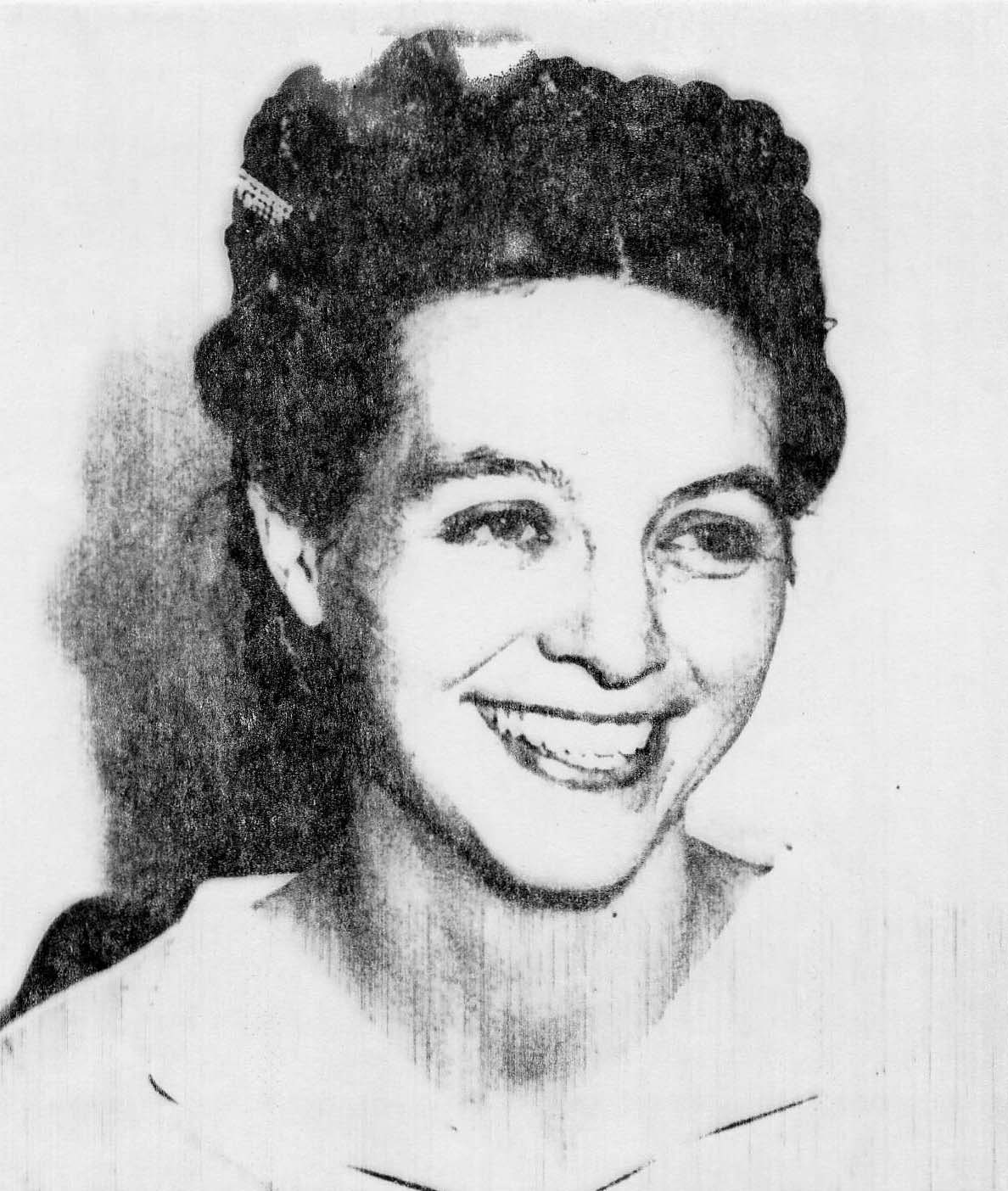
The photo here was taken when her 11th child was a toddler and Bird was about 35 years old. She looks happy enough to burst—serene at the same time. I think she must have been the best wife for her husband; she was apparently not contrary, but neither was she wimpy. She had to be strong and steady when he was depressed and couldn’t work for — was it three years? The kind of person who would keep doing her own job of running the household, waiting and praying for things to change.
She told us over tea that decades ago, when some of us used to see the couple walking “together,” Bird ten yards behind, that Mr. Bird had needed long walks to help with his “emotional problems.” He would be in shirtsleeves, and she was wearing a sweater, and he told her he was embarrassed by her wearing the sweater, and asked her not to. She replied that she needed the sweater because she was cold, and suggested that he walk by himself if he was embarrassed. And he said, “But I need you to talk to!” This was funny because he was way too far ahead for them to be able to carry on a conversation. When one of their adult children later died, the priest told her husband, “Now today, you walk beside your wife.”
Bird seems to have walked as close to her husband as he allowed, as long as he lived. She has been a dear and encouraging companion to me, as we both try to walk with God. My prayer is that He would give me a measure of her spirit.
(I wrote the piece above several years ago; more recent posts in which Bird appears are here and here. Now she has reached 100 years, and is as young as ever. She still keeps her door unlocked and her smile bright.)

Of that I must be shriven
I love the way Richard Wilbur gets to the heart of things.
A Reckoning
If I’m to be forgiven.
–Richard Wilbur