Monthly Archives: December 2014

Dayspring in winter.

We are waiting for Christmas, for the Incarnation of Christ, not that I think that is what Wyeth is referring to in the quote below; for nature’s Spring we have to wait months more.

But Christ is our “Dayspring from on high,” as Zacharias foretold when prophesying about his son John the Forerunner who had just been born:

And thou, child, shalt be called the prophet of the Highest: for thou shalt go before the face of the Lord to prepare his ways; to give knowledge of salvation unto his people by the remission of their sins, through the tender mercy of our God; whereby the dayspring from on high hath visited us, to give light to them that sit in darkness and in the shadow of death, to guide our feet into the way of peace. (Luke 1)

I’m feasting on that thought today, how every morning Christ wants to be our souls’ Warmth and Light, like the life-giving sun of spring and summer, no matter what the weather outside.

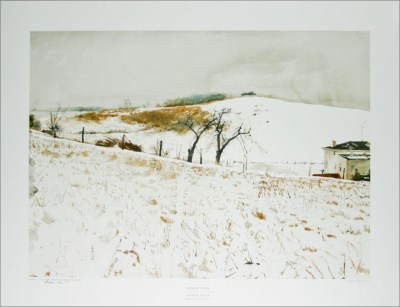
andrewWyeth-FenceLine
I prefer winter and fall, when you feel the bone structure of the landscape –
the loneliness of it, the dead feeling of winter.
Something waits beneath it, the whole story doesn’t show.

 –Andrew Wyeth

More reasons to love Christmas trees.

The only thing I don’t like about the modern Christmas tree custom is paying a lot of money for the tree. If it weren’t for that, I’d want one in every room of the house. One time I did have two trees; I put a tiny one that my sister sent me in the kitchen and hung only bird and pine cone ornaments on it.

What follows about Christmas trees in Orthodox tradition comes from the St. Tikhon’s Seminary bulletin, I understand, but I read it on Svetlana’s blog. I added paragraphs to make it more readable online. The theology in this short article demonstrates how in Orthodox thinking and practice everything is related to everything else in God’s creation. Thank you, God, for Christmas trees!

Larsson tree

“I suspect that the custom of decorating a tree at Christmas time is not simply a custom which came to us from the West and which we should replace with other more Orthodox customs. To be sure, I have not gone into the history of the Christmas tree and where it originated, but I think that it is connected with the Christmas feast and its true meaning.

“First, it is not unrelated to the prophecy of the Prophet Isaiah: ‘There shall come forth a Rod from the stem of Jesse, and a Branch shall grow out of his roots’ (Is. 11:1). St. Cosmas the poet had this prophecy in mind when he wrote of Christ as the blossom which rose up out of the Virgin stem from the stump of Jesse. The root is Jesse, David’s father, the rod is King David, the flower which came from the root and the rod is Theotokos. And the fruit which came forth from the flower of the Panagia is Christ. Holy Scripture presents this wonderfully.

“Thus the Christmas tree can remind us of the genealogical tree of Christ as Man, the love of God, but also the successive purifications of the Forefathers of Christ. At the top is the star which is the God-Man (Theanthropos) Christ. Then, the Christmas tree reminds us of the tree of knowledge as well as the tree of life, but especially the latter. It underlines clearly the truth that Christ is the tree of life and that we cannot live or fulfill the purpose of our existence unless we taste of this tree, ‘the producer of life’.

“Christmas cannot be conceived without Holy Communion. And of course as for Holy Communion it is not possible to partake of deification in Christ without having conquered the devil, when we found ourselves faced with temptation relative to the tree of the knowledge of good and evil, where our freedom is tried. We rejoice and celebrate, because ‘the tree of life blossomed from the Virgin in the cave.’”

Excerpt from: “The Feasts of the Lord: An Introduction to the 12 Feasts and Orthodox Christology” by Metropolitan of Nafpatkos Hierotheos Vlachos – November 1993
.  Illustration by Carl Larsson

(Reposted from 2010)

Leonid Ouspensky

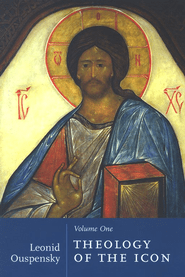
ouspensy bookIn church to commemorate St. Herman of Alaska today, we also remembered the iconographer Leonid Ouspensky who died in 1987. He was born in Russia in 1902 and while still a teenager began to be an activist for the cause of Communism, going about preaching atheism and destroying icons. He joined the Red Army in 1918 and was captured by the White Army and forced into their service; after the war he ended up in Paris in a community of artists. The following tells what happened there that changed the course of his life:

“Looking at [a collection of icons], Ouspensky understood that the icon was something that had no equivalent whatsoever…. Ouspensky…made a bet with Krug that he could easily paint an icon even though he was a non-believer. He painted an icon of the Mother of God in a fortnight. But while he was working on it, he understood that it was holy and could not be the object oChrist+the+Savior ouspenskyf a bet and burned it. From that moment, he would regularly settle down at Grinberg’s place to contemplate the icons at length, trying to penetrate the mystery and understand how they were made. This is how little by little he became a Christian and an iconographer. We can rightly say that the icons themselves led him to faith.”

His life story has many twists and turns with elements of suffering and adventure, and obvious interventions of God’s grace and mercy. He went on to paint many icons and to teach others, and write books on the subject. You can read more about Ouspensky here: orthodox wiki and here: iconeorthodoxe .

leonid-ouspensky-full

Gleanings – Fashionable Philosophy

I’m going along slowly through David Bentley Hart’s book The Experience of God: Being, Consciousness, Bliss. It takes me longer to eat my soup at lunchtime, because I so often put down my spoon and pick up a pencil to underline one passage after another, sometimes just because the most obvious ideas are expressed in eloquent prose that makes me happy.

On the other hand, I also have to stop and consult the dictionary about quite a few words I don’t know, some that seem completely new to me and others I just haven’t read for several years and whose meanings have become foggy. Sapient, proleptic, etiolated, deracinated, lacunae, phylogenic, otiose. Really, I should make myself a Vocabulary List to keep handy for study and review, and maybe I wouldn’t forget so soon. This list should include scores of words I have circled on the pages of almost every book I read, words that I don’t often take the time to investigate right then — or sometimes ever.

In the second chapter, from which the following paragraphs are taken, Hart is discussing “Pictures of the World,” and he cautions the reader that “the philosophical tendencies and presuppositions of any age are, to a very great degree, determined by the prevailing cultural mood or by the ideological premises generally approved of by the educated classes.”

“…inasmuch as the educated class is usually, at any given phase in history, also the most thoroughly indoctrinated, and therefore the most intellectually pliable and quiescent, professional philosophers are as likely as their colleagues in the sciences and humanities (and far more likely that the average person) to accept a reigning consensus uncritically, even credulously, and to adjust their thinking about everything accordingly.”

“…I think it is fair to say that a majority of academic philosophers these days tend toward either a strict or a qualified materialist view of reality (though many might not use those terms), and there may be something of a popular impression out there that such a position rests upon a particularly sound rational foundation. But, in fact, materialism is among the most problematic of philosophical standpoints, the most impoverished in its explanatory range, and among the most willful and (for want of a better word) magical in its logic, even if it has been in fashion for a couple of centuries or more.”

–David Bentley Hart in The Experience of God, Chapter 2