
…in the fourth week of Lent I was busy:
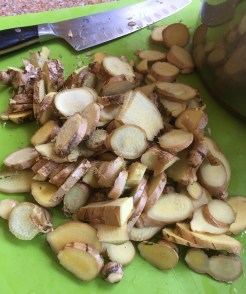 1) I cooked seedy crackers, vegan tapioca pudding, and pans and pans of roasted vegetables, including my own asparagus. I boiled a few quarts of ginger tea and tried out another vegan lemon cake recipe that I probably won’t make again. I’m done with cakes for a while. It makes sense to make cakes when one can use eggs and butter.
2) I baked communion bread at church. For a year we haven’t been using the little prosphora loaves that get sent into the altar along with our prayer requests, but we are starting that tradition again; four of us made 200 prosphora. What we call lambs, the larger loaves that we didn’t bake this week, are cut up and consecrated along with wine for Holy Communion. This photo is from the past.

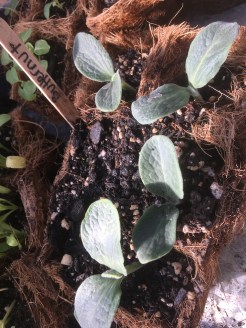
3) I worked in the garden and the greenhouse. Most days now, when the sun shines, I open the door and vent of the greenhouse so that the seedlings don’t swelter. Then I close them up at night to shut out the cold marine breeze. Soon I’ll need to put a shade cloth on one side of the roof as well. The first butternut squash seed took an entire month to sprout; the next several were even later. Nothing like the pumpkins which were the first of all to emerge. I’ve moved most of the plants to larger pots so they can spread their roots in the next few weeks.
4) I shopped at a farmers market with Bella. We ate breakfast there and bought a few vegetables. How long had it been since I’d been to one of those? The sun shone and everyone was cheery. Then we went across town to her community garden plot, because she had a few potatoes that really needed to get into the dirt. I wandered around dreamily while she dug. Besides us, only a very quiet father and little daughter were working their plot, in which they had strawberries in process.

Bella sent me home with some horsetail which she told me to make tea out of, but it is still waiting in the refrigerator.

5) I went to church several times, and did a little housework, and got my taxes paid. I prepared for my church school class by reading more of The Screwtape Letters, and for the women’s book group by reading some of First Fruits of Prayer, which we discussed on ZOOM this afternoon. I ended up not enjoying that book very much. The Canon was not “itself,” plucked out of its normal context of Compline, extracted as a text to read, with explanatory notes but without the usual accompanying music, prostrations, and other tactile and sensory aspects, not to mention the fellow worshipers in the services in which we pray it, divided into four parts for the first week of Lent. This week we will do the whole Canon again, all in one morning.

6) I attended a doubly belated birthday party with my friends with whom I have celebrated for 36 years now, ever since we learned that we were born in the same week of the same year. At that time we lived on the same block of our “village.” Last spring we couldn’t manage it, so this was our 35th luncheon. We ate on the patio at S.’s house and the sun was just warm enough to make it easy to sit and chat for several hours.
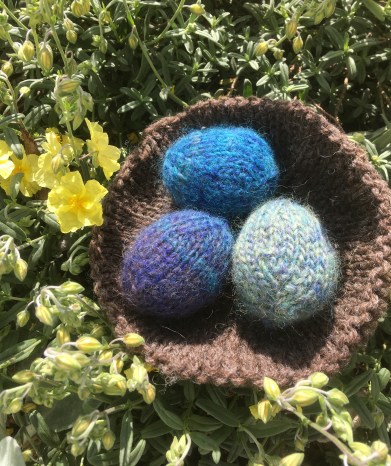
7) I found these eggs that my daughter-in-law Joy knitted for me a few years ago, but which were stashed away in a box during the remodel. I posed them among the flowers but then brought them in to brighten up the living room.
This will be another full week. It’s such a blessing to have many different things to do, but — can you tell how worn out I am? It’s a great gift that God gives us rest, too. It’s the 5th Week of Lent – Pascha is coming!
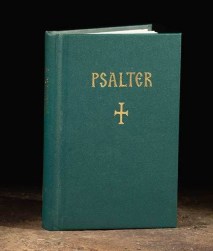 The Psalms of the Bible are the poetry that I am focusing on this year in National Poetry Month. They are helping me to also keep a Lenten focus. I’ve had my eye on two Psalms in particular that I wanted to memorize, but deliberately working at memorizing seems to “not be happening.” Maybe if I at least read them (a little) more frequently some of the lines and verses will start to stick. I love this green pocket Psalter so much. It is from
  This literal reading of the Psalms however is only the beginning. As one prays the Psalms one soon begins to realize that the enemy, the Amalekite or the Philistine, the nations that rage against God, are not people or situations outside myself, but are most poignantly referring to the wicked impulses and evil thoughts that I must battle within myself. The psalmist’s cry for deliverance becomes my own as I see within my own heart and mind the struggle between good and evil; the betraying thought, the accusing word, or the mocking laugh.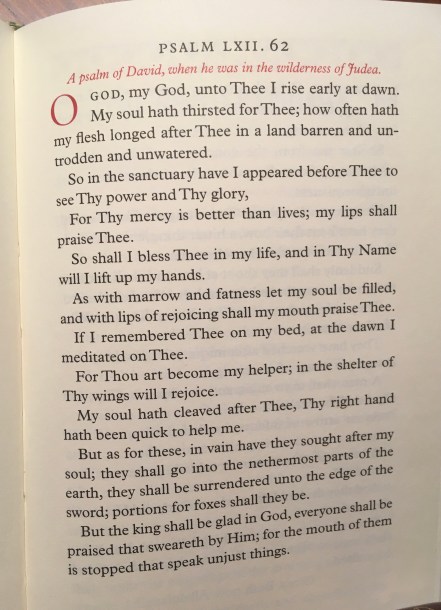








 Gladsome Lights