What Dorothy Parker describes in her poem below reminds me of what C.S. Lewis called sehnsucht, the heart’s longing, seemingly for its home – in God. These episodes often happen at moments when we experience something very good or beautiful, and realize deep in ourselves that it doesn’t quite satisfy, but only reveals our homesickness.
In The Weight of Glory Lewis describes this aching in our heart:
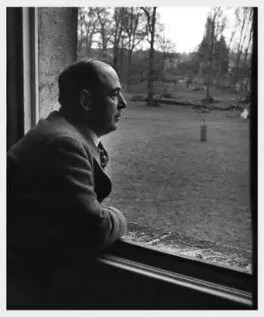 “In speaking of this desire for our own far off country, which we find in ourselves even now, I feel a certain shyness. I am almost committing an indecency. I am trying to rip open the inconsolable secret in each one of you—the secret which hurts so much that you take your revenge on it by calling it names like Nostalgia and Romanticism and Adolescence….
“We cannot tell it because it is a desire for something that has never actually appeared in our experience. We cannot hide it because our experience is constantly suggesting it, and we betray ourselves like lovers at the mention of a name. Our commonest expedient is to call it beauty and behave as if that had settled the matter. Wordsworth’s expedient was to identify it with certain moments in his own past. But all this is a cheat. If Wordsworth had gone back to those moments in the past, he would not have found the thing itself, but only the reminder of it; what he remembered would turn out to be itself a remembering.
“…These things—the beauty, the memory of our own past—are good images of what we really desire; but if they are mistaken for the thing itself they turn into dumb idols, breaking the hearts of their worshipers. For they are not the thing itself; they are only the scent of a flower we have not found, the echo of a tune we have not heard, news from a country we have never visited.”

TEMPS PERDU
I never may turn the loop of a road
Where sudden, ahead, the sea is lying,
But my heart drags down with an ancient load–
My heart, that a second before was flying.
I never behold the quivering rain–
And sweeter the rain than a lover to me–
But my heart is wild in my breast with pain;
My heart, that was tapping contentedly.
There’s never a rose spreads new at my door
Nor a strange bird crosses the moon at night
But I know I have known its beauty before,
And a terrible sorrow along with the sight.
The look of a laurel tree birthed for May
Or a sycamore bared for a new November
Is as old and as sad as my furtherest day–
What is it, what is it, I almost remember?
-Dorothy Parker

 Gladsome Lights
I always thought Dorothy Parker was a tragic figure though lionized in certain quarters as “liberated” and one of the founders of modernity. Now I understand her pain. I no longer try to remember those memories of my youth that were so infused with magic though some of them involved invitations to paths that led to broken promises or endings that were the opposite of what they appeared to promise. Lewis’ article is quite perceptive. Anyway now it is like residing in a silo whose only views show a gray wasteland (like the tv show), and although that is not literally true, to me it is becoming spiritually true and moving more and more into degradation of God’s beautiful earthly creation. I grip onto the promise that if we remain true to God we can have a place in His heavenly kingdom “whence sickness and sorrow have fled.” May God grant.
LikeLiked by 1 person
Oh, my gosh, that’s fantastic. Was she a person of faith?
LikeLiked by 1 person
I don’t know very much about her.
LikeLike
That is a beautiful pairing – the essay and the poem – and your introduction to them both!
LikeLiked by 1 person
I read this out loud to my husband and we had a good discussion. He brought up John Denver’s song ‘country roads, take me home, to the place, I belong.
Then we talked about Lord of the Rings and other readings that bolster that feeling that pops up. The feeling of being at home somewhere or searching for that ‘at home’ atmosphere.
We can be wonder struck but I like that admonition…don’t make it an idol. Don’t make your memories a dumb idol.
Thanks for letting me go on and on…
LikeLiked by 1 person
Your comment, Ellen, brings a lot to the little discussion that sometimes happens here, and which is so pleasing to me. Thank you for “going on and on.” 🙂
LikeLike
Is this the same Dorothy Parker who was part of the Algonquin circle? I’ve known her only through her witty, if acerbic, quotations, and some entirely less elevated poetry. It would be interesting to know the date of this poem; I wonder if it was earlier in her career or later. It certainly breathes a different spirit than many of her works.
LikeLiked by 1 person
I believe it’s the same Dorothy!
LikeLiked by 1 person