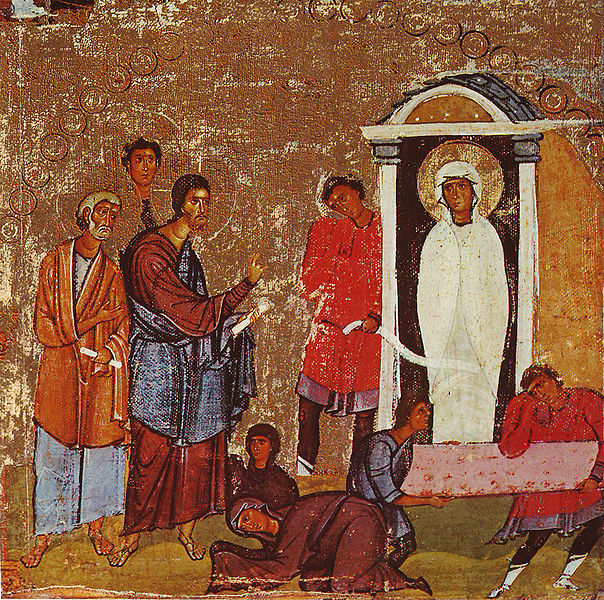
“The world, knowing how all our real investments are beyond the grave, might expect us to be less concerned than other people who go in for what is called Higher Thought and tell us that ‘death doesn’t matter’; but we ‘are not high-minded’, and we follow One who stood and wept at the grave of Lazarus—not, surely, because He was grieved that Mary and Martha wept, and sorrowed for their lack of faith (though some thus interpret) but because death, the punishment of sin, is even more horrible in His eyes than in ours.
“The nature which He had created as God, the nature which He had assumed as Man, lay there before Him in its ignominy; a foul smell, food for worms. Though He was to revive it a moment later, He wept at the shame…. Of all men, we hope most of death; yet nothing will reconcile us to—well, its unnaturalness. We know that we were not made for it; we know how it crept into our destiny as an intruder; and we know Who has defeated it.
“Because Our Lord is risen we know that on one level it is an enemy already disarmed; but because we know that the natural level also is God’s creation we cannot cease to fight against the death which mars it, as against all other blemishes upon it, against pain and poverty, barbarism and ignorance. Because we love something else more than this world we love even this world better than those who know no other.”
It’s the season in California when one is likely to encounter wildfire smoke blowing in from somewhere, hopefully distant. It happened to us this week when I was up at my daughter “Pippin’s” in the way north part of the state, but it wasn’t thick enough to keep us indoors, or prevent us from going on a wildflower walk.
Tolkien
Are you familiar with the custom of the traditional walking tours that C.S. Lewis and some of his friends would take through the English countryside, about a hundred years ago in their case? The first book of the fictional Ransom Trilogy by Lewis opens with the protagonist on a solo walking tour; it sounds like a wonderful kind of recreation. I am reading a book by Humphrey Carpenter titled The Inklings, about some members of this group, such as J.R.R. Tolkien, Charles Williams, Hugo Dyson, Owen Barfield and others. Lewis’s brother Warren (“Warnie”) was one of them, too.
Here is an excerpt about how it was on these long walks:
Tolkien ought, on the face of it, to have been an ideal companion for Lewis and Barfield on their walking tours, but when he did accompany them, he found that twenty miles or so a day carrying a heavy pack was more than he liked…. Tolkien’s own idea of a walk in the countryside involved frequent stops to examine plants or insects, and this irritated Lewis. When Tolkien spent some time at Malvern on holiday with the Lewis brothers in 1947, Warnie remarked, “His one fault turned out be that he wouldn’t trot at our pace in harness. He will keep going all day on a walk, but to him, with his botanical and etymological interests, a walk, no matter what its length, is what we would call an extended stroll, while he calls us ‘ruthless walkers.’”
I had made a point of copying that section to read to Pippin and her family this week. The relative ruthlessness of our walking styles is a continual factor to be dealt with when we are on a walk or a hike. Not just their family, but all of my children and extended family. Pippin was remembering as an example our stay in Greece last summer, when three of our group were on the ruthless side of the scale, while Pippin and I as usual lagged behind, looking at one more flower or leaf.
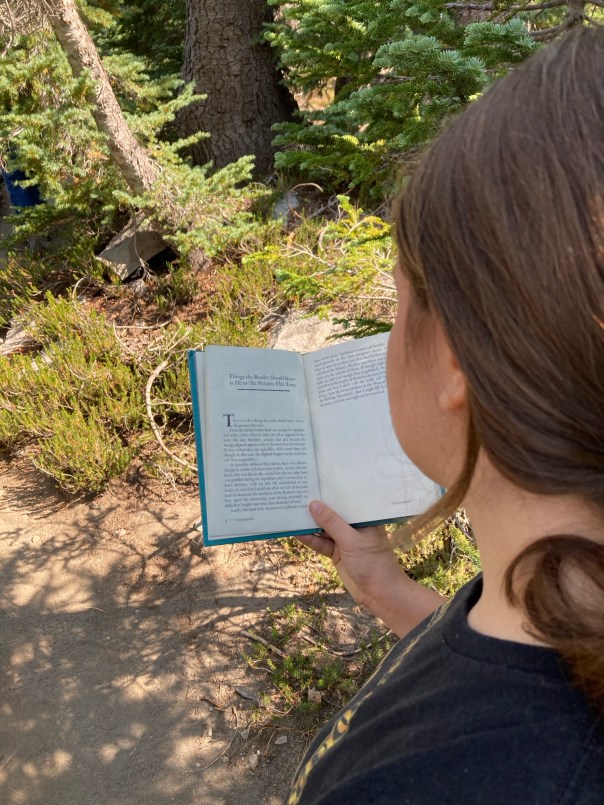
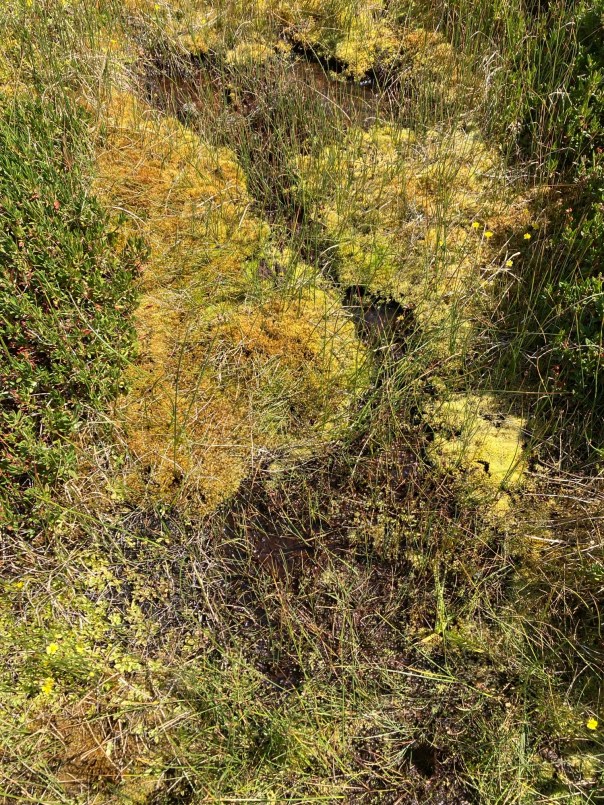
On this recent walk, however, it was just Us Girls. No one was in a hurry, but only two of us were paying much attention to the flora and fauna. Ivy was reading aloud to me from the book at right, Pembrick’s Creaturepedia, and trying not to stumble on the path that wound uphill through a meadow with mossy streams flowing alongside.
She’s been telling me for years about her favorite series of books, The Wingfeather Saga or Tales, by Andrew Peterson. This little encyclopedia of creatures illustrated by Peterson goes along with those stories, and the word descriptions and illustrations are all clever, well written and drawn, and often very amusing. Online I found one page from the book to show you as an example, a more poignant entry that Ivy didn’t read to us.
The narrator tells a story from his youth: While on a campout with a friend, he had foolishly eaten all the available food too soon, and was quite famished. Just then, “I spotted a bright yellow sweeft, aperched on the branch of an apple tree, and though hardly believing myself able to hit such a tiny target [with his slingshot], I knocked it from the tree with a single blow. It landed in a swump of sweefty feathers, dead. I held it in my hands and wept for shame. My father commanded me to honor the bird’s death by eating it, and thus I did….”
In each Creaturepedia entry is a description of how the animal tastes. For the sweeft, it is “Like sorrow.”
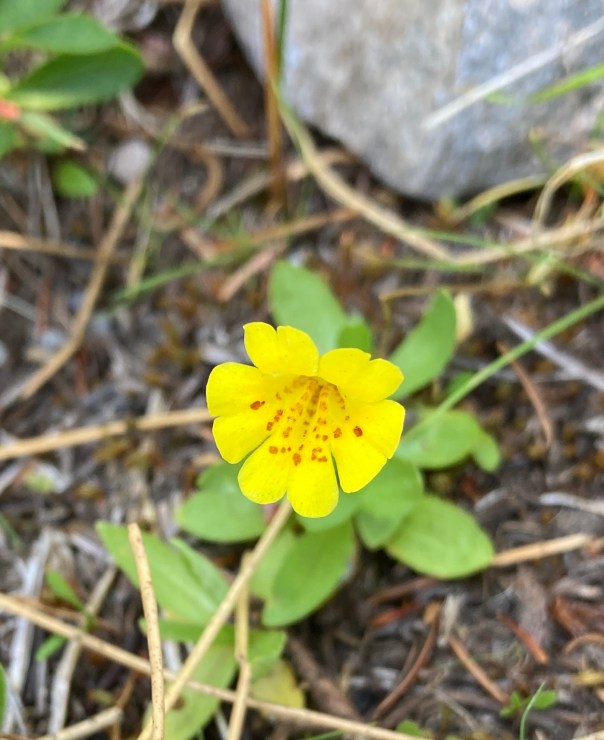
We strollers were neither hungry nor hunting that day; Pippin and I were admiring what wildflowers had not faded already, and I saw several that were new to me, including two types of yellow monkeyflowers. (Monkeyflower makes me think of the Creaturepedia again, though there is no animal in there that is named anything like monkey. I found a listing for gunkees, though…)
Though the larger landscape was blurry with smoke, we gave our attention elsewhere, to Ivy’s introduction to fantastical beasts, and making friends with the bright flowers at our feet.
“Of all tyrannies, a tyranny sincerely exercised for the good of its victims may be the most oppressive. It would be better to live under robber barons than under omnipotent moral busybodies. The robber baron’s cruelty may sometimes sleep, his cupidity may at some point be satiated; but those who torment us for our own good will torment us without end for they do so with the approval of their own conscience.”
In looking for the source of a C.S. Lewis quote recently, I came upon the website of William O’Flaherty, who has written a whole book about misquotes of Lewis. Many of these result from the mis-quoter having reduced a passage to a summary, taking bits of sentences and combining them into something that is a mere shadow of the original, or maybe even a shadow shading the sun of the original.
One thing Lewis wrote that I have long appreciated is the following passage, which in its emaciated form has made the rounds of the online world now. It’s so much better in the full version, in which Lewis quotes Samuel Johnson, and we thereby get extra support for his argument. Here is the excerpt, from “a letter to Mrs. Johnson”:
“I think I can understand that feeling about a housewife’s work being like that of Sisyphus (who was the stone rolling gentleman). But it is surely, in reality, the most important work in the world. What do ships, railways, mines, cars, government etc exist for except that people may be fed, warmed, and safe in their own homes?
As Dr Johnson said, ‘To be happy at home is the end of all human endeavour’. (1st to be happy, to prepare for being happy in our own real Home hereafter: 2nd, in the meantime, to be happy in our houses.) We wage war in order to have peace, we work in order to have leisure, we produce food in order to eat it. So your job is the one for which all others exist.”



 Barfield and others. Lewis’s brother Warren (“Warnie”) was one of them, too.
 are on a walk or a hike. Not just their family, but all of my children and extended family. Pippin was remembering as an example our stay in Greece last summer, when three of our group were on the ruthless side of the scale, while Pippin and I as usual lagged behind, looking at one more flower or leaf.
 She’s been telling me for years about her favorite series of books, The Wingfeather Saga or Tales, by Andrew Peterson. This little encyclopedia of creatures illustrated by Peterson goes along with those stories, and the word descriptions and illustrations are all clever, well written and drawn, and often very amusing. Online I found one page from the book to show you as an example, a more poignant entry that Ivy didn’t read to us.




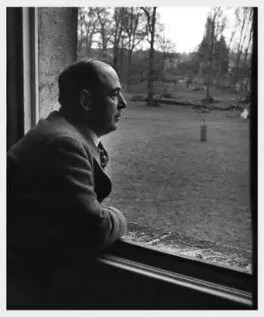 One thing Lewis wrote that I have long appreciated is the following passage, which in its emaciated form has made the rounds of the online world now. It’s so much better in the full version, in which Lewis quotes Samuel Johnson, and we thereby get extra support for his argument. Here is the excerpt, from “a letter to Mrs. Johnson”:

