I recently had two of my grandchildren staying with me for nearly a week. Most of the days and nights I had either Ivy or Jamie, but one day and night in the middle of the span I got both of them together. It was the first time we’ve had so much one-on-one time in a short period, and now that they are 10 and almost 13 years old, our options for how we spend our hours are expansive. We never ran out of books to read together, music to listen to, or things to talk about — including those books, and the music.
For example, Jamie and I listened to The Story of Beowulf, and The Eagle of the Ninth; sometimes he drew pictures while listening. Ivy played her favorite U2 songs for me, and I showed her videos of her late Grandpa Glad singing — she was only two when he passed.
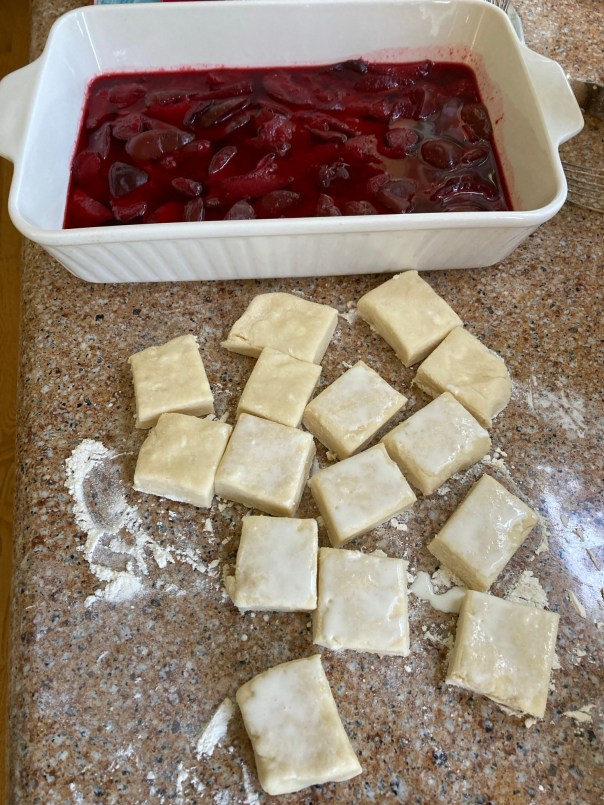
We took many walks near and far, and shopped and cooked together, making lemon curd, boba tea, Greek tzatziki, and plum cobbler.
Stirring tzatziki.Chai boba tea
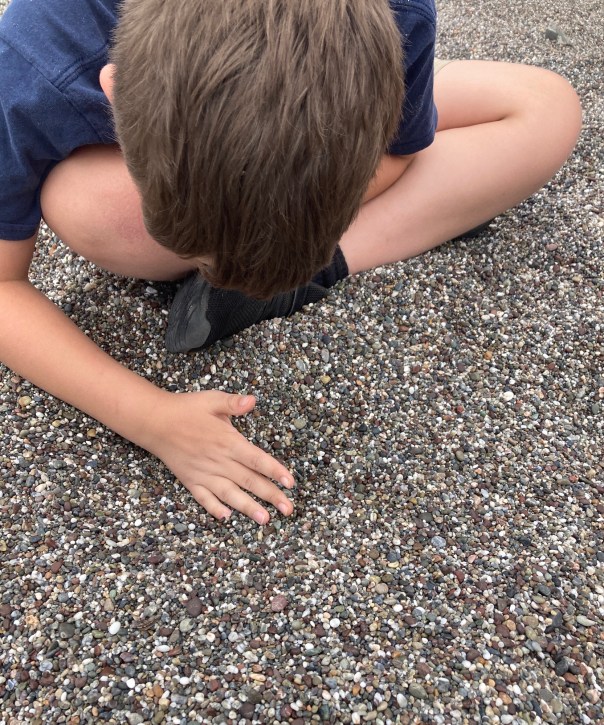
They both helped me in my big project of removing gravel from the plot where I’m going to plant my new manzanita McMinn. And the day we were all three together, we went to the beach, where it was overcast and 60 degrees all afternoon.
Greater Moon Jelly with sandy great toe for perspective.
Twice Ivy and I walked as far as the library and on to the grocery store, and with Jamie I went on a long lake stroll for which we drove a half hour to the trailhead. They both liked just rambling along the nearby creek almost daily, and remembering all the times they have done that before. Jamie wanted to find the rope swing that has been down there “forever,” but we never found it, and on the way back when we saw my neighbor watering his garden, he told us that the city always takes it down, and someone always puts it back up, but no one has put it up again for a few years.
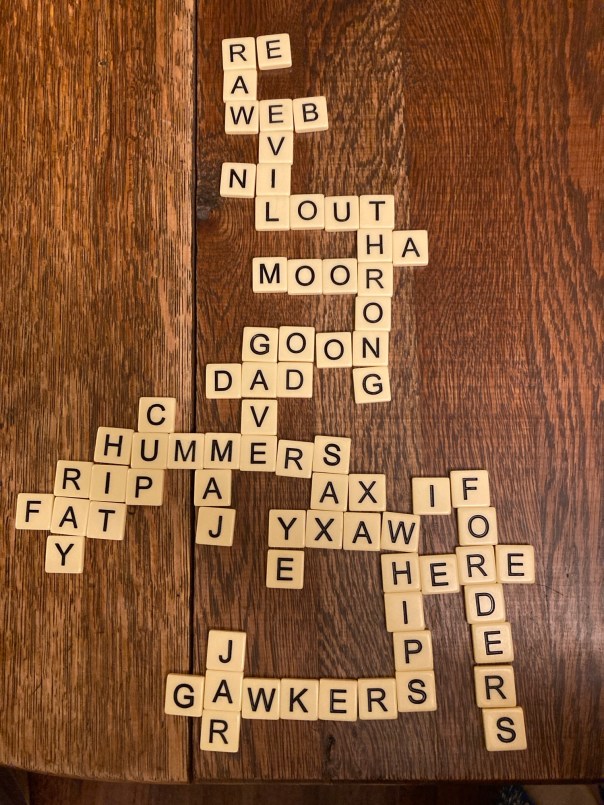
We visited my friends and their chickens, went to church, painted, did housework together — and played Bananagrams more than once.
Ivy’s winning board
One thing we didn’t do was sleep overmuch. School does not start for them until after Labor Day, so they can catch up over the next couple of weeks. I don’t feel bad about neglecting sleep, as we were taking advantage of our unhurried and summery time together, which will never come again. It was restful to our souls.
After church on Sunday I had twelve friends over for a little party. Half of them were children under ten, and all of those had been in my house before; they fell to right away playing with my dress-up clothes, dolls, and matchbox cars. At one point the squirming baby let me remove her to the armchair in the play area where we read a couple of stories together, so that in the other room her mother might drink tea with both hands.
dwarf pomegranate and helianthemum
The weather had warmed up just enough between Saturday and Sunday to make it pleasant for eating outside, and for the children to enjoy organizing the playhouse. I had spent more time cleaning that little hut in preparation than I did the real house — but I still have not sewn new curtains for its window, in these ten years since it became mine.
May is in many ways the perfect month for a garden party, because of the variety of blooms — and what a joy to have other people soaking up the beauty with me. This spring, since I “lifted the skirt” on the pomegranates, the orange helianthemums are bursting with more flowers than ever before; the wisteria is in its prime, and the bees are buzzing all over it. The snowballs on the viburnum are at their best. And we have the possibility of temperate and sunny afternoons. I always think it should be easy to host more such gatherings, but just finding a date that works for everyone takes a lot of effort; in this case I’d begun that process seven weeks ahead.
snowball bush
I’d started planning the menu, too — it needed to be items that wouldn’t need fussing over that day. One thing I made the evening before was this favorite quinoa salad that is tweakable to what one has on hand, which I found on the New York Times cooking site. I am unlocking the recipe for you, and you can access it through the link: Quinoa and Broccoli Spoon Salad.
A warning about the quantity of salad that came from one of the cooks who joked about it supposedly serving 4-6: “…it serves 4 to 6 distance swimmers during an Olympic training camp.” I used two cups of quinoa and ended up with plenty left over for my guests to take home plus more than I can eat staying here. I don’t like mustard so I left that out, and I used dried California cherries instead of cranberries, toasted walnuts instead of pecans. I like these NYT recipes because the cooks who try them share things they learned when making them according to the original instructions, or after they alter various ingredients or procedures.
figs in the fall
Few people like raw broccoli, but as I have learned and other cooks testified, the dressing in this dish quickly marinates the small pieces of broccoli and removes the unpleasant rawness, while retaining a little crispness.
In an effort to use up foods from my freezer and pantry, I made one dessert using plums from my trees that I’d put by last summer, and another dessert using figs that I had tried freezing raw for the first time. Both worked well and were heartily eaten. Plum and Cream Scone Cobbler from Smitten Kitchen I’ve made before with peaches, but this time I had enough plums to use them.
It was delicious, but I will change some things if I make it again. The scones that make the cobbler topping are just too rich, with a whole stick of butter and a cup of cream in the dough. At least, they are too rich combined with the amount of fruit called for. Maybe I would decrease the butter by half next time, and use at least 50% more fruit. (Ha! I see that last time I made it I told myself to make those very changes next time, and forgot.) I also seem to have cut my scones too large…
My guests and I didn’t only talk about books over the course of our leisurely afternoon, but many book titles popped up in our conversation, more than I even know about. A few that I can recall just from our last hour together were: The Ethics of Beauty;St. Ephrem the Syrian: Hymns On Paradise; The Hidden Rainbow; Christ the Conqueror of Hell; The Little Liar; and Orthodoxy and the Religion of the Future.
At one point I ran upstairs to get this book to show the others, my latest deep read. They all had a good laugh with me. It’s not just goofy, but is actually a very thought-provoking book! Maybe I will tell about here it sometime: How to Talk About Books You Haven’t Read. I do a lot of that already, but I’m sure there’s room for improving my skills.
Usually when children play in the playhouse, they like to prepare salads or other halfway-pretend dishes made of all the edibles I give them permission to pick from the garden, including flowers as well as vegetables.
collard flowers
I meant to point my younger guests to my exuberantly flowering kale, parsley and who-knows-what in the planter boxes I am not cultivating right now, but I never got around to it. After everyone had gone home I checked out the back garden to see if there was the sort of happy mess I’m used to in and around the playhouse. There was no evidence that anyone had done any “cooking,” but rather a lot of setting in order, with the dish soap by the sink and a lavish bouquet completing the scene. It was symbolic of all that I had received from my guests who gave me an afternoon in spring.
Palm Sunday is the beginning of Holy Week, and here on the eve of it I’m sharing again, slightly updated, my experience of about ten years ago when I was in the middle of reading The Brothers Karamazov, and I came to the the part “From the Life of the Elder Zosima,” which takes place during this week leading up to Christ’s death and resurrection:
The Elder Zosima first relates about his older brother, who only at the age of seventeen and sick unto death, turned from anger and scoffing toward a path that might lead to repentance, and seemingly only to please his mother. But that is not an entirely bad reason.
… on Tuesday morning my brother started keeping the fast and going to church. “I’m doing it only for your sake, mother, to give you joy and peace,” he said to her….But he did not go to church for long, he took to his bed, so that he had to confess and receive communion at home. The days grew bright, clear, fragrant — Easter was late that year. All night, I remember, he used to cough, slept badly, but in the morning he would always get dressed and try to sit in an armchair. So I remember him: he sits, quiet and meek, he smiles, he is sick but his countenance is glad, joyful. He was utterly changed in spirit — such a wondrous change had suddenly begun in him!
The young man asked forgiveness of everyone and talked about his great sin, but at the same time was so happy and full of thankfulness and exhortations, that people thought he was going mad.
Thus he awoke every day with more and more tenderness, rejoicing and all atremble with love. The doctor would come — the old German Eisenschmidt used to come to us: “Well, what do you think, doctor, shall I live one more day in the world?” he would joke with him. “Not just one day, you will live many days,” the doctor would answer, “you will live months and years, too.” “But what are years, what are months!” he would exclaim. “Why count the days, when even one day is enough for a man to know all happiness. My dears, why do we quarrel, boast before each other, remember each other’s offenses? Let us go into the garden, let us walk and play and love and praise and kiss each other, and bless our life.”
This older brother died a few weeks after Easter, when the teller of the story, the elder Zosima, was only eight years old. Now now near death himself, he talks more about his childhood, and how it was also during Holy Week that he began to see more when he went to church.
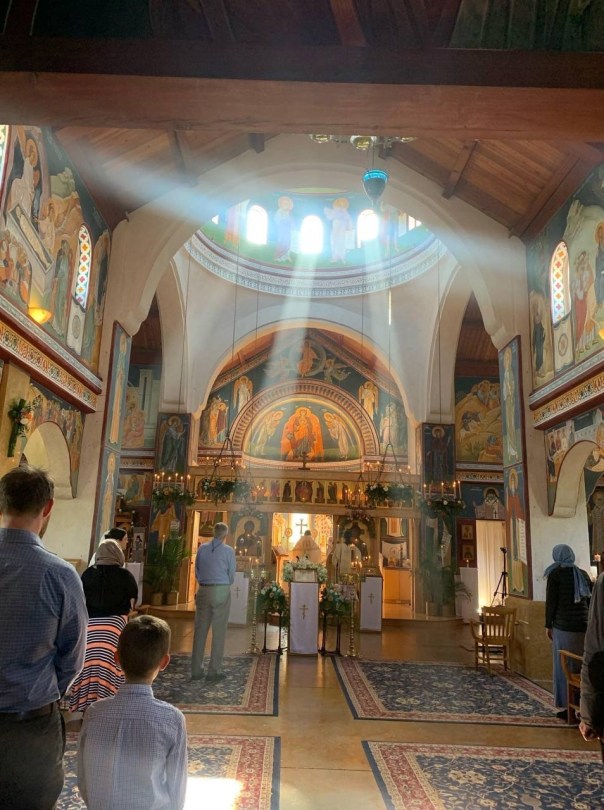
But I remember how, even before I learned to read, a certain spiritual perception visited me for the first time, when I was just eight years old. Mother took me to church by myself (I do not remember where my brother was then), during Holy Week, to the Monday liturgy. It was a clear day, and, remembering it now, I seem to see again the incense rising from the censer and quietly ascending upwards, and from above, through a narrow window in the cupola, God’s rays pouring down upon us in the church, and the incense rising up to them in waves, as if dissolving into them. I looked with deep tenderness, and for the first time in my life I consciously received the first seed of the word of God in my soul. A young man walked out into the middle of the church with a big book, so big that it seemed to me he even had difficulty in carrying it, and he placed it on the analogion [lectern], opened it, and began to read, and suddenly, then, for the first time I understood something, for the first time in my life I understood what was read in God’s church.
The reading was from the book of Job. I myself have attended these same services over the years, and they grow more precious every time I hear the readings and hymns. The gifts of the Church are too rich to ever plumb their depths, but there is no need to fret about our limitations, when, as the sick brother says, “even one day is enough for a man to know all happiness.” How many times have I also watched the beams of light shining down when I stood in church, and even felt their heat on my face, like the warmth of God’s love?
Christ the Bridegroom
The Elder Zosima is a fictional character, but he is believed to be based on a real-life monk in old Russia. In the novel the Elder proceeds from this point in his very moving fashion to tell his life’s story: “– and over all is God’s truth, moving, reconciling, all-forgiving!”
The “accidental” timing of my reading seemed to be a gift from God that morning, helping me in an unusual way to become even more receptive to His being with us at the evening service by means of hymns such as, “Let my prayer arise in Thy sight as incense….,” and the Psalms of Ascent — and the Holy Mysteries.
When our bishop was with us the previous week, he gave a good word about the last days of Lent — well, technically Lent has come to an end, but we are still in the anticipation and preparation that is Holy Week. He said that Lent is not about finding every bit of dirt in our souls, but about the bridal chamber, about discovering the great love that our Lord Jesus has for us. It is truly a “bright sadness” that colors these days as we accompany Him to the Cross.
Perhaps Zosima’s brother went to a Bridegroom Matins service on Tuesday; we have three of them during Holy Week. The Lord Himself has been filling my lamp with the oil of His Holy Spirit.
“Three forces carved the landscape of my life. Two of them crushed half the world. The third was very small and weak and, actually, invisible. It was a shy little bird hidden in my rib cage an inch or two above my stomach. Sometimes in the most unexpected moments the bird would wake up, lift its head, and flutter its wings in rapture. Then I too would lift my head because, for that short moment, I would know for certain that love and hope are infinitely more powerful than hate and fury, and that somewhere beyond the line of my horizon there was life indestructible, always triumphant.
“The first force was Adolf Hitler; the second, Iosif Vissarionovich Stalin. They made my life a microcosm in which the history of a small country in the heart of Europe was condensed. The little bird, the third force, kept me alive to tell the story.”
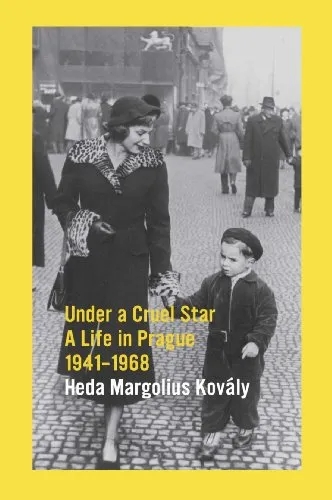
Those are the first two paragraphs of the book Under a Cruel Star: A Life in Prague 1941-1968 by Heda Margolius Kovály, which I read last year. What a survivor that “little bird” helped the author and heroine to be, again and again; her story is gripping and intriguing in every way, and I highly recommend it. She survived Auschwitz, and near the end of the war managed to escape. She ran to her friends in Prague, but none of them dared take her in. The remainder of her story is very suspenseful, and demonstrates the strength of will and hope that continued to uphold her through the suffering and loss under Communist rule.
An interview with Heda was recorded in 1980 for “Voices from the Holocaust,” which you can listen to here: Heda Kovály. The outline of her life is laid out in a transcript and episode notes. They are a good supplement to her book, but I’m very glad I learned her story first from her earlier, very personal telling of it.
Not long after reading Under a Cruel Star, I came across the poem below, which speaks of a place such as Heda’s little bird occupied — this hidden place from which help comes in the form of a song.
LACK OF FAITH
Yes, even when I don’t believe— there is a place in me inaccessible to unbelief, a patch of wild grace, a stubborn preserve, impenetrable, pain untouched by the sleeping body, music that builds its nest in silence.”

 that they are 10 and almost 13 years old, our options for how we spend our hours are expansive. We never ran out of books to read together, music to listen to, or things to talk about — including those books, and the music.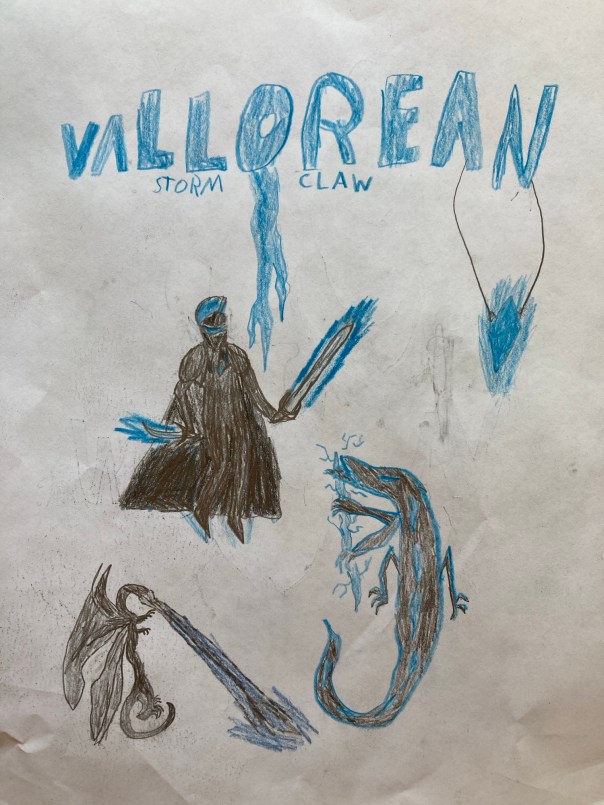














 My guests and I didn’t only talk about books over the course of our leisurely afternoon, but many book titles popped up in our conversation, more than I even know about. A few that I can recall just from our last hour together were: The Ethics of Beauty; St. Ephrem the Syrian: Hymns On Paradise; The Hidden Rainbow; Christ the Conqueror of Hell; The Little Liar; and Orthodoxy and the Religion of the Future.


 … on Tuesday morning my brother started keeping the fast and going to church. “I’m doing it only for your sake, mother, to give you joy and peace,” he said to her….But he did not go to church for long, he took to his bed, so that he had to confess and receive communion at home. The days grew bright, clear, fragrant — Easter was late that year. All night, I remember, he used to cough, slept badly, but in the morning he would always get dressed and try to sit in an armchair. So I remember him: he sits, quiet and meek, he smiles, he is sick but his countenance is glad, joyful. He was utterly changed in spirit — such a wondrous change had suddenly begun in him!

 rapture. Then I too would lift my head because, for that short moment, I would know for certain that love and hope are infinitely more powerful than hate and fury, and that somewhere beyond the line of my horizon there was life indestructible, always triumphant.
 Gladsome Lights