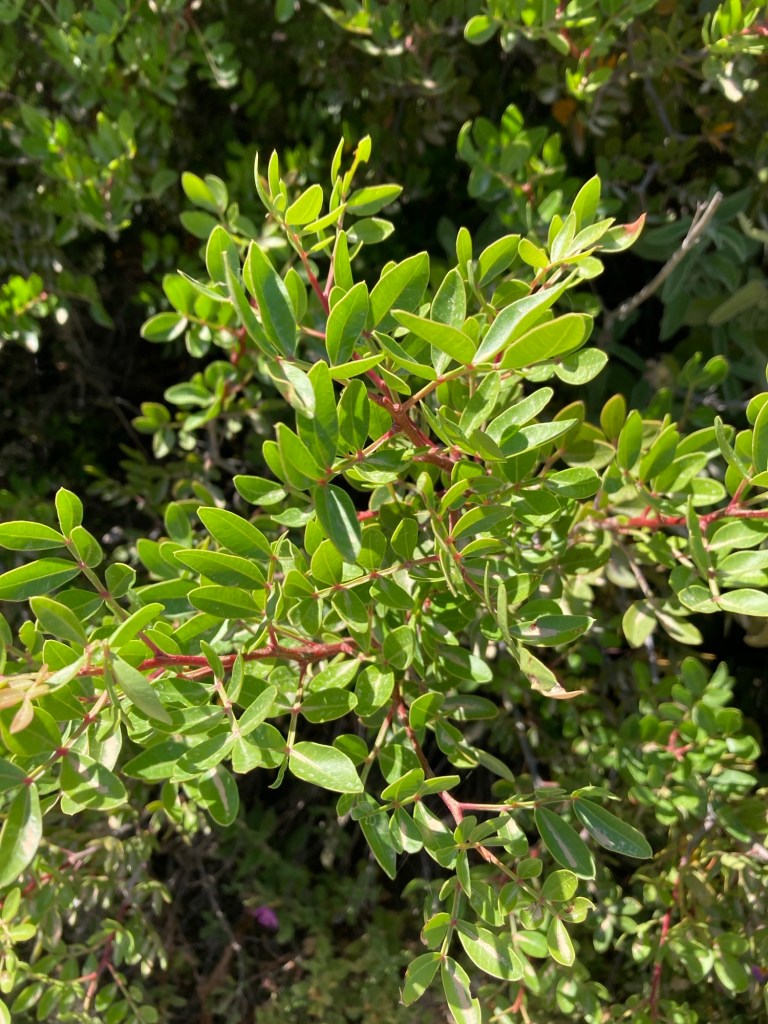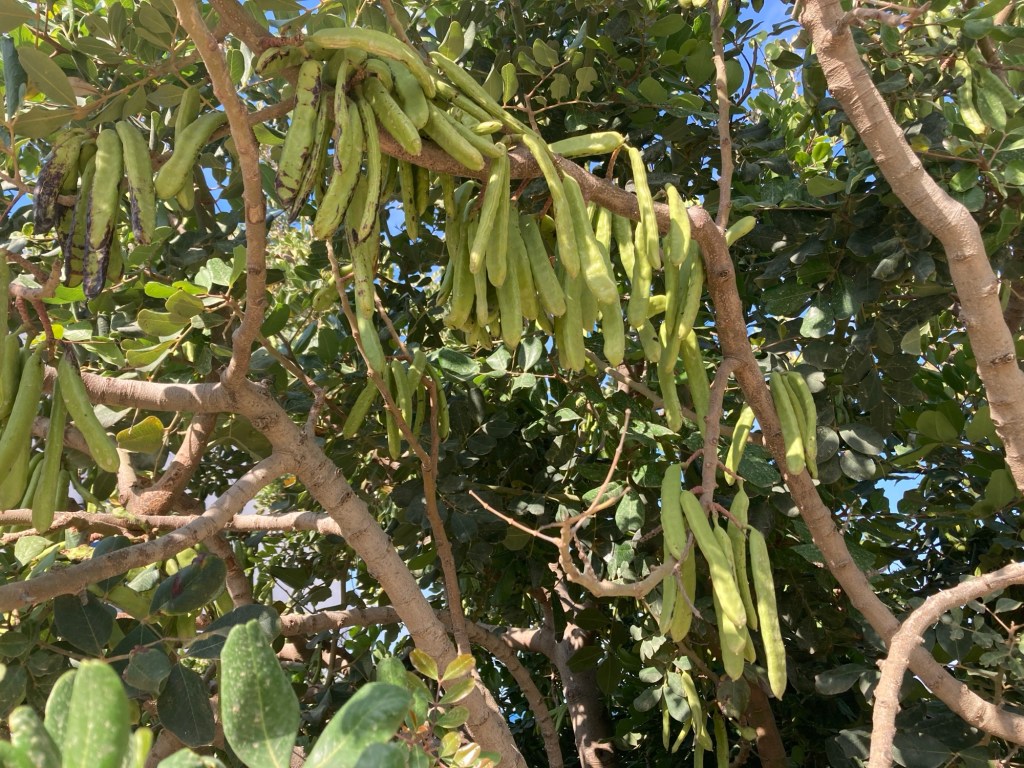
Yesterday morning Pippin went out early to explore up the hill from our house, and discovered a carob tree.
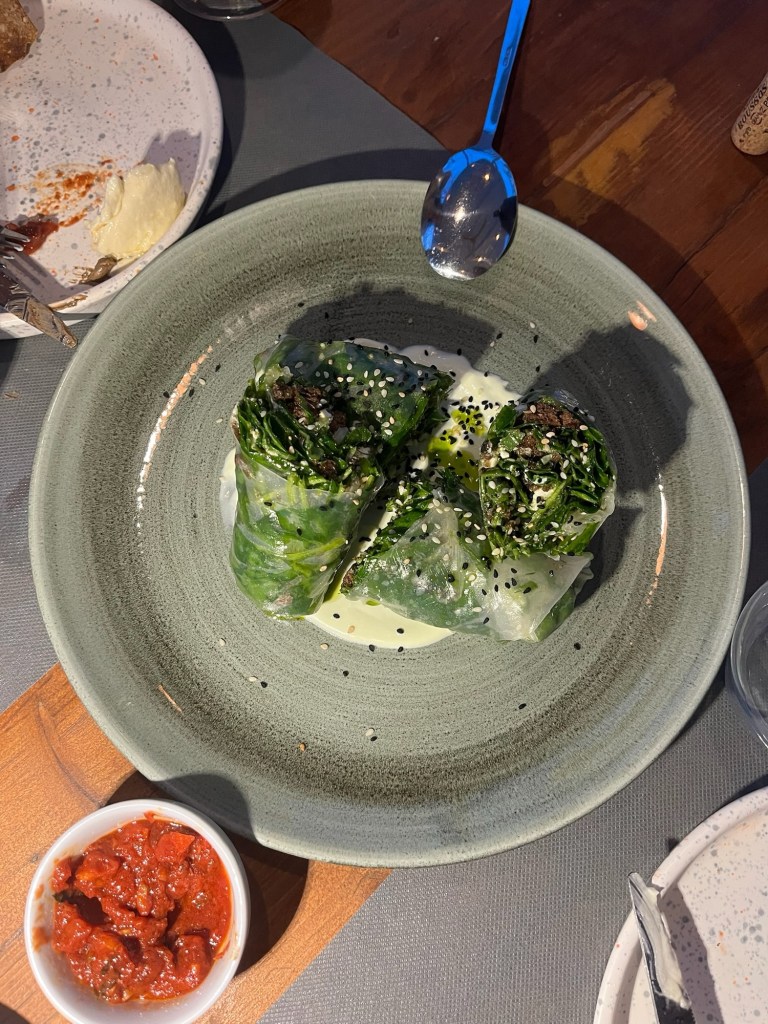
She took me back to see it, and later when everyone was up and sipping coffee on the terrace, she read to us about the uses of carob throughout history. Just the night before we had eaten spring rolls that incorporated “carob rusks” for a little crispiness in the wrap of greens and feta.
But the carob pods the tree produces have traditionally been used primarily for feeding livestock — Until the 1960’s, when some of us started using carob flour in bread and candy, and for medicinal uses. I still have carob powder in my pantry, though it’s been a while since I opened the jar. My daughters vaguely remembered the Captain Carob Bread I baked, that was featured in the Laurel’s Kitchen Bread Book.
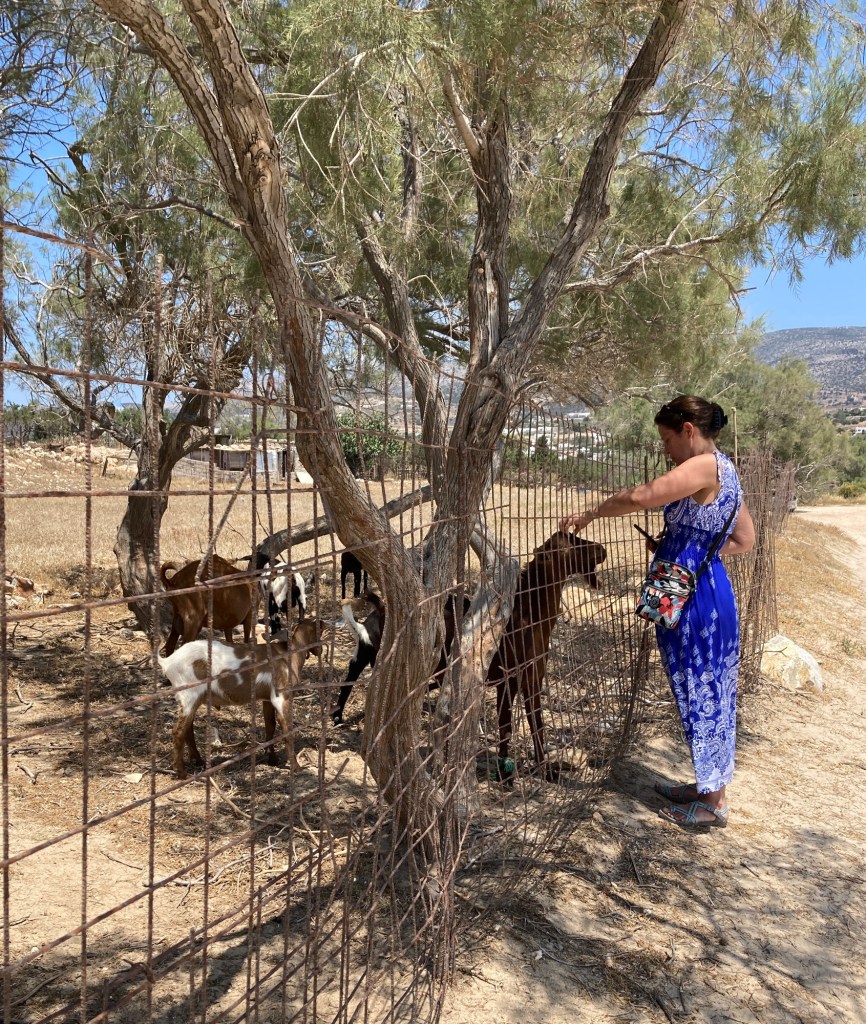
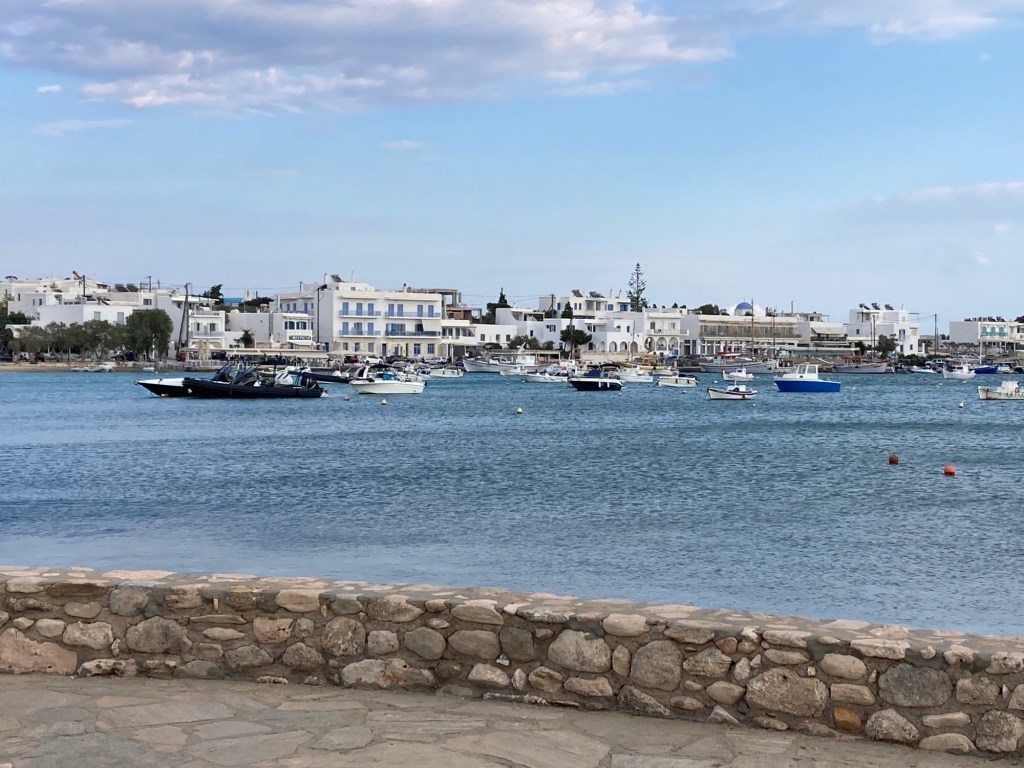
We walked to the Aliki beach for a last swim and bask in the sun. The goats that live in a dry corral came close to the fence this time and let Maggie and Pippin pet them and take their pictures.
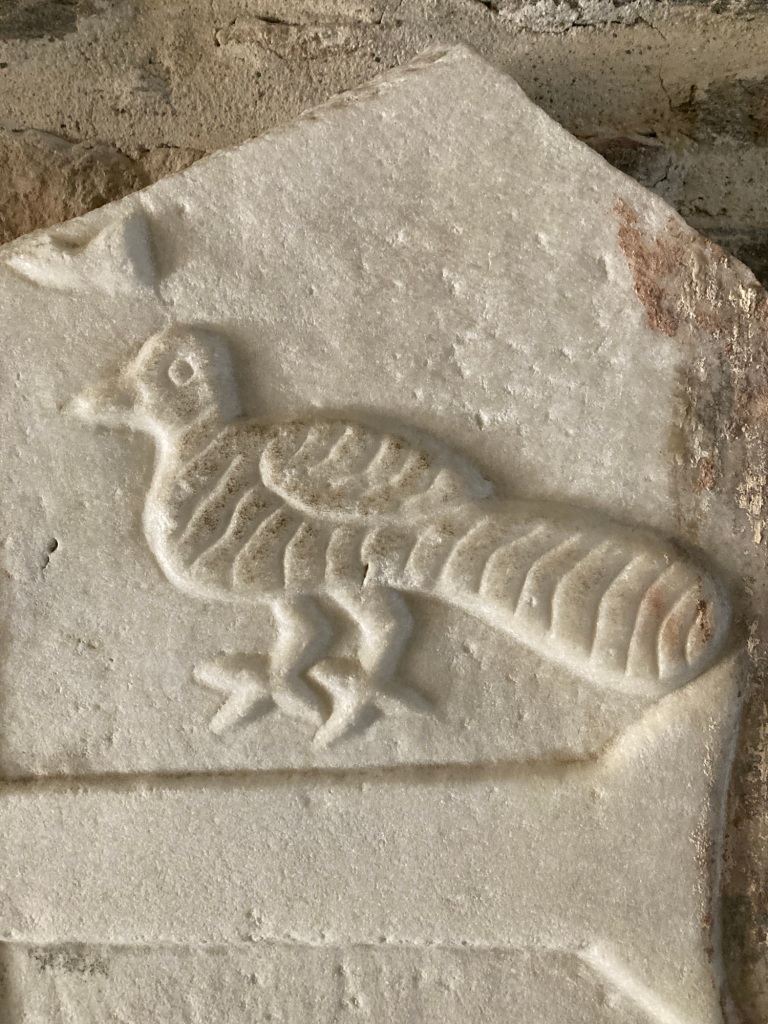
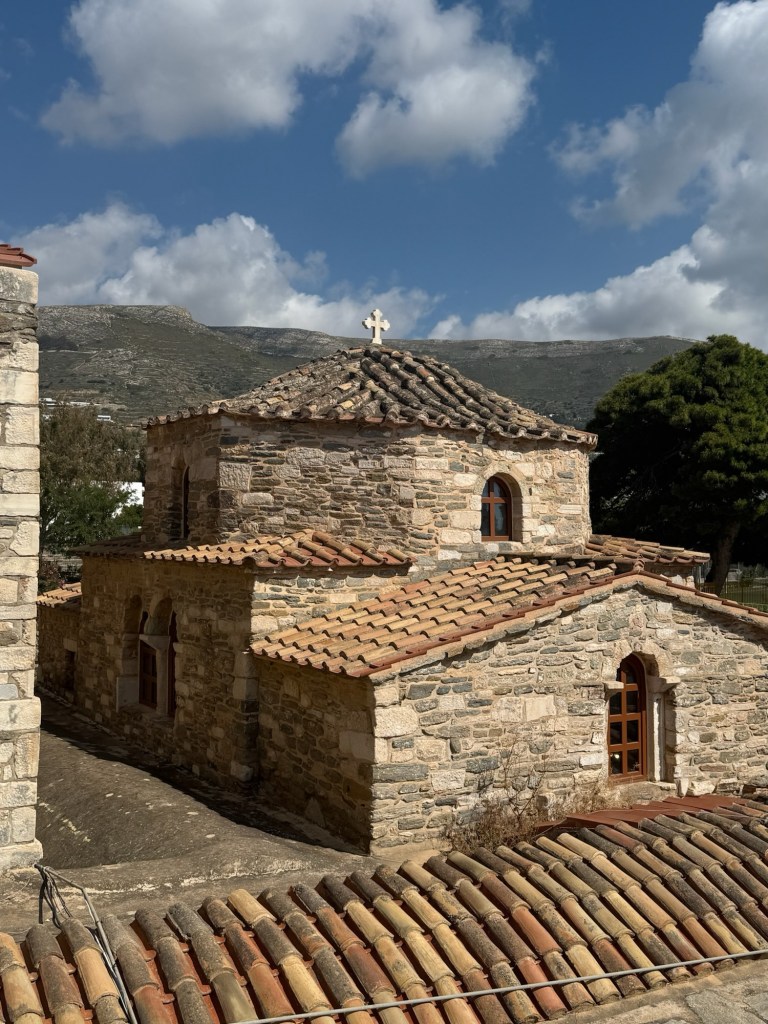
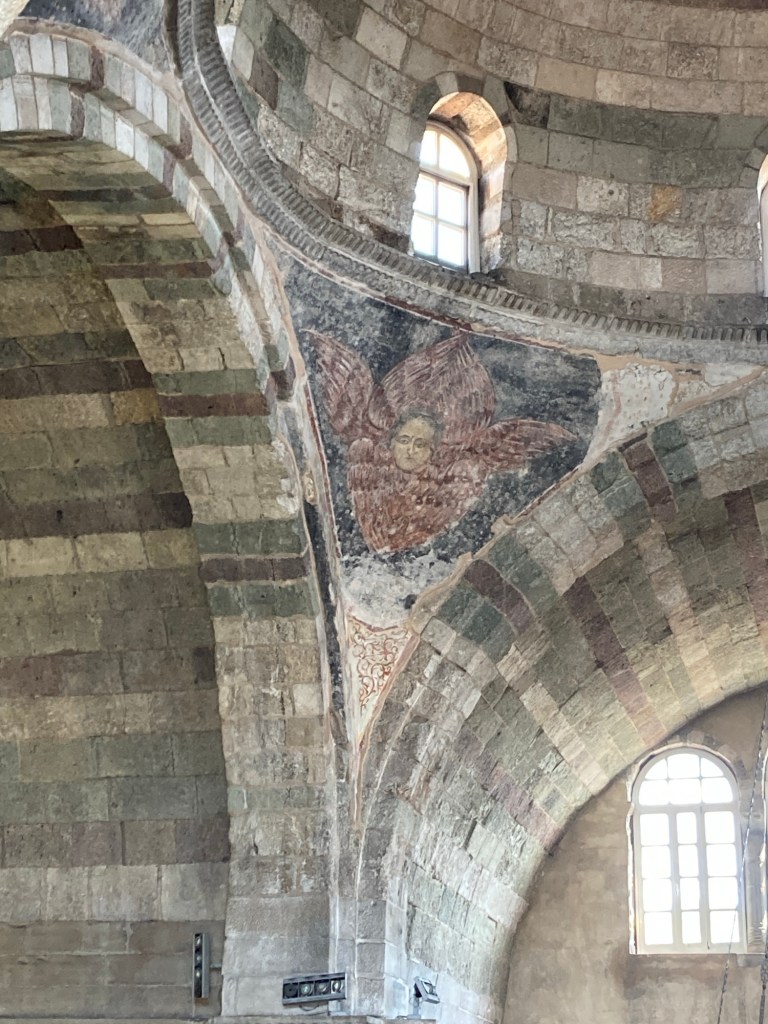
In the afternoon we drove to Parikia to see the Byzantine church of the Panagia Ekatontapiliani, where we spent an hour in wonder and wondering over the ancient architecture and marble carvings, and the way later renovations incorporated broken slabs and pieces into their also tasteful structures.
This last day provided the most challenging parking situations for Kate. In Parikia our maps app directed us to a narrow street near the church, along which she nervously and skillfully, with the aid of several more eyes among us, snugged the car against a stone wall.
And when we returned to Aliki for dinner, we ended up parked on the other side of the bay, and walked across the stony path, which gave us new views of the neighborhood we’ve spent so much time in this week.
It was another sweet and companionable meal together, and our last for this trip.
I’m standing at the tiny Paros airport right now, the next morning, typing on my tiny phone. My daughters dropped me off before taking the ferry to Athens; they will all return home soon, but my stay in Greece is not half done.
Onions spring compassion. Mulberries promote change.
Corn is a generous mother. Artichokes are modest knights.
You cannot love thy neighbor without eating your vegetables.
You can stop world wars with the kindness of a single fruit cup.
-Katerina Stoykova
This poem is for me like a series of riddles, or an exercise in analogies: How is an artichoke like a knight? And so on. A couple of them are pretty easy, but I am not savvy enough to know all the allusions here, much as I love vegetables, and fruits. But I try to love them purely, for what they are in themselves, which is: recurring miracles.
After church on Sunday I had twelve friends over for a little party. Half of them were children under ten, and all of those had been in my house before; they fell to right away playing with my dress-up clothes, dolls, and matchbox cars. At one point the squirming baby let me remove her to the armchair in the play area where we read a couple of stories together, so that in the other room her mother might drink tea with both hands.
dwarf pomegranate and helianthemum
The weather had warmed up just enough between Saturday and Sunday to make it pleasant for eating outside, and for the children to enjoy organizing the playhouse. I had spent more time cleaning that little hut in preparation than I did the real house — but I still have not sewn new curtains for its window, in these ten years since it became mine.
May is in many ways the perfect month for a garden party, because of the variety of blooms — and what a joy to have other people soaking up the beauty with me. This spring, since I “lifted the skirt” on the pomegranates, the orange helianthemums are bursting with more flowers than ever before; the wisteria is in its prime, and the bees are buzzing all over it. The snowballs on the viburnum are at their best. And we have the possibility of temperate and sunny afternoons. I always think it should be easy to host more such gatherings, but just finding a date that works for everyone takes a lot of effort; in this case I’d begun that process seven weeks ahead.
snowball bush
I’d started planning the menu, too — it needed to be items that wouldn’t need fussing over that day. One thing I made the evening before was this favorite quinoa salad that is tweakable to what one has on hand, which I found on the New York Times cooking site. I am unlocking the recipe for you, and you can access it through the link: Quinoa and Broccoli Spoon Salad.
A warning about the quantity of salad that came from one of the cooks who joked about it supposedly serving 4-6: “…it serves 4 to 6 distance swimmers during an Olympic training camp.” I used two cups of quinoa and ended up with plenty left over for my guests to take home plus more than I can eat staying here. I don’t like mustard so I left that out, and I used dried California cherries instead of cranberries, toasted walnuts instead of pecans. I like these NYT recipes because the cooks who try them share things they learned when making them according to the original instructions, or after they alter various ingredients or procedures.
figs in the fall
Few people like raw broccoli, but as I have learned and other cooks testified, the dressing in this dish quickly marinates the small pieces of broccoli and removes the unpleasant rawness, while retaining a little crispness.
In an effort to use up foods from my freezer and pantry, I made one dessert using plums from my trees that I’d put by last summer, and another dessert using figs that I had tried freezing raw for the first time. Both worked well and were heartily eaten. Plum and Cream Scone Cobbler from Smitten Kitchen I’ve made before with peaches, but this time I had enough plums to use them.
It was delicious, but I will change some things if I make it again. The scones that make the cobbler topping are just too rich, with a whole stick of butter and a cup of cream in the dough. At least, they are too rich combined with the amount of fruit called for. Maybe I would decrease the butter by half next time, and use at least 50% more fruit. (Ha! I see that last time I made it I told myself to make those very changes next time, and forgot.) I also seem to have cut my scones too large…
My guests and I didn’t only talk about books over the course of our leisurely afternoon, but many book titles popped up in our conversation, more than I even know about. A few that I can recall just from our last hour together were: The Ethics of Beauty;St. Ephrem the Syrian: Hymns On Paradise; The Hidden Rainbow; Christ the Conqueror of Hell; The Little Liar; and Orthodoxy and the Religion of the Future.
At one point I ran upstairs to get this book to show the others, my latest deep read. They all had a good laugh with me. It’s not just goofy, but is actually a very thought-provoking book! Maybe I will tell about here it sometime: How to Talk About Books You Haven’t Read. I do a lot of that already, but I’m sure there’s room for improving my skills.
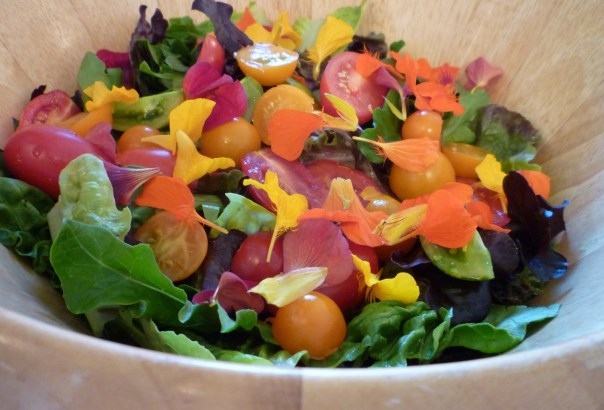
Usually when children play in the playhouse, they like to prepare salads or other halfway-pretend dishes made of all the edibles I give them permission to pick from the garden, including flowers as well as vegetables.
collard flowers
I meant to point my younger guests to my exuberantly flowering kale, parsley and who-knows-what in the planter boxes I am not cultivating right now, but I never got around to it. After everyone had gone home I checked out the back garden to see if there was the sort of happy mess I’m used to in and around the playhouse. There was no evidence that anyone had done any “cooking,” but rather a lot of setting in order, with the dish soap by the sink and a lavish bouquet completing the scene. It was symbolic of all that I had received from my guests who gave me an afternoon in spring.
Following an afternoon of foraging, an evening of cooking, and a yummy pasta dinner, I went to bed with the feeling that a hot iron was lying on top of my fingers. I wondered if I would be able to go to sleep with my hands so swollen and angry. I finally did; in the morning the pain level was at a slow burn, and it soon dissipated.
It was all from the nettles — all the fun and adventure, the delicious dinner and the extended pain. And it was worth it!
Golden Currant Bush and the Shasta River
My Forest Family had made Nettle Pasta several times in the past, but I hadn’t been around to experience any of the project, and when I’d seen the pictures I’d been a little jealous. So this time, I was glad to participate. We had to go a distance to find out if the nettles were even at the best stage for using — up the highway for a while, then down a one-lane winding road for a while, then out of the car and on foot through a drizzle. Meadowlarks and red-winged blackbirds were calling under the big and dripping sky as we continued along a gravel road that didn’t have enough gravel — till finally we came to the Shasta River. And there were the nettles in all their robust glory. And they weren’t past their prime at all; they looked perfect.
Golden Currant (photo from internet)
I had brought some gardening gloves along on my trip up, not knowing what task they might come in handy for, and I happily showed Pippin that she didn’t need to hunt for an extra pair for me. I set to work filling a couple of grocery bags with bunches of nettles cut with scissors or just pulled out of the top inch of soil. It wasn’t until we were back home that I felt the full effect of the stinging and burning; my gloves only protected me on my palms and not on the backs of my hands, where the glove was cloth. Note to self: pick nettles only with rubber or leather gloves.
Before our outing I had discussed the message of this 300-yr-old rhyme with the children:
Tender-handed stroke a nettle, And it stings you, for your pains: Grasp it like a man of mettle, And it soft as silk remains.
Scout flatly declared it false, and I in any case hadn’t planned to test the truth of the ditty. On Quora someone writes,
It means to act firmly, with resolve. The reference to the nettle relates to the fact that if you make only superficial contact with a nettle plant it will sting you. However if you grasp it firmly with an upward motion you avoid the stinging effect. (The stinging hairs grow in a slightly upward-facing direction. Grasping with a firm upward stroke tends to flatten the hairs against the stem or leaf so their ends can’t penetrate the skin and deliver their sting.) I’ve seen this done with no apparent ill effects and heard of gardeners who can clear a nettle patch bare-handed.
Urtica dioica – European Nettle
The problem I see with the kind of nettles we were dealing with, is that while you are grasping some of the nettles boldly like a man or woman of mettle, other leaves are coming in from the side against your tender hands and stinging you. That’s essentially what they did through my gloves; I wasn’t grabbing with the tops of my hands, after all.
A nettle-eating contest is held in Dorset every year, where super-mettled people compete over such (raw) foods as this European nettle (Urtica dioica) at left, shown in its seed stage. In the article about the contest they explain:
Nettle leaves sting because they are covered in tiny hollow filaments, the silica tips of which break off at the lightest touch to expose sharp points that deliver an instant shot of formic acid into the skin surface, followed by histamine, acetylcholine and serotonin.
Ouch! We took our greens home and washed them (wearing rubber gloves).
After blanching to neutralize the sting, we removed the leaves and incorporated them into an eggy pasta dough.
The noodles were delicious.
We had a pint of blanched leaves left over, which Pippin may make into soup. There were bagfuls of unused raw nettles as well, which I brought home, blanched and froze, and would like to put into soup myself. Maybe this version from the Forager Chef site: Classic Nettle Soup. Have any of you, my readers, cooked with nettles? Have you participated in a nettle-eating contest? Do you have any nettle-stinging stories to tell? I’d love to know!