Category Archives: food and cooking

Olive oil: the body.

“If the dish you are cooking doesn’t have meat, olive oil is especially needed to give body to it. Today we are making chicken with potatoes so we only need a little olive oil.”

So our teacher explained as she poured a few more generous glugs from the bottle over the raw ingredients in the pan.

We were attending a cooking class taught by a Greek woman named Stella, and in the company of eight or so other visitors to Paros, in this case all Americans. We were to learn quite a lot, not only about olive oil but about feta cheese, baklava, the mastic tree and the local farmers. It was more enjoyable than I could have imagined, because our host and instructor was so real, and obviously liked people.

She only uses oil from olives grown on Paros Island — and she used one whole liter bottle and half of a second bottle for that one meal’s dishes. Also, according to Stella, the creamiest, tastiest feta is made on Paros — and that I can believe.

We stood around a big table wearing our blue-and-white aprons, and took turns chopping, stirring, frying and tasting. We got a tour of her garden, and at last, though all that tasting had blunted our appetites, we sat down to a feast.

At some point as we were cooking Stella mentioned the herb mastic, and later while we were enjoying the food we’d prepared, I was pleased to tell our teacher that Pippin and I had seen mastic bushes on the Byzantine Road the day before. At least, that’s what our Seek app said it was, Pistacia lentiscus, and our research online seemed to agree…

Maybe it’s not mastic.

But Stella assured us that in Greece mastika (Μαστίχα) only grows on the island of Chios, though farmers are always trying to cultivate it elsewhere. We could tell she was a bit defensive at my proposing a conflicting story.

One thing Stella did confirm for me is that the best baklava is made mostly with sugar for sweetening, though she includes a very small amount honey in her recipe.

Garlic truck

In addition to the taste experiences of our class, my girls and I sampled in restaurants lots of different foods, or new presentations of familiar ones. The Greeks want very much for their guests not to miss out on any of the dishes they are proud of.

Orzo with cuttlefish ink.

Today I met up with a Greek friend I knew from my parish in California, when she lived there for several years, and she was typically eager to feed me something I might not have tried in the last two weeks. So she took me to a Cretan restaurant.

I guess I shouldn’t have been surprised that the people of Crete have their special ways with the typical ingredients of the Mediterranean.

Some of the dishes I tried were: Potatoes With Goat Butter; Fennel Pie; and Rooster Baked in Wine, Served on Cretan Pasta.

Potatoes with Goat Butter

Almost always the platters of each dish are enough to serve 2-4 people, so it’s wise to agree with one’s friends on what you all like, so you can share. But so far, my dining companions are absolutely unconcerned about there being too much food on the table. Being a proper host almost requires it.

It’s a good thing I’m doing so much walking 😀

Last day in Paros.

Yesterday morning Pippin went out early to explore up the hill from our house, and discovered a carob tree.

She took me back to see it, and later when everyone was up and sipping coffee on the terrace, she read to us about the uses of carob throughout history. Just the night before we had eaten spring rolls that incorporated “carob rusks” for a little crispiness in the wrap of greens and feta.

But the carob pods the tree produces have traditionally been used primarily for feeding livestock — Until the 1960’s, when some of us started using carob flour in bread and candy, and for medicinal uses. I still have carob powder in my pantry, though it’s been a while since I opened the jar. My daughters vaguely remembered the Captain Carob Bread I baked, that was featured in the Laurel’s Kitchen Bread Book.

We walked to the Aliki beach for a last swim and bask in the sun. The goats that live in a dry corral came close to the fence this time and let Maggie and Pippin pet them and take their pictures.

In the afternoon we drove to Parikia to see the Byzantine church of the Panagia Ekatontapiliani, where we spent an hour in wonder and wondering over the ancient architecture and marble carvings, and the way later renovations incorporated broken slabs and pieces into their also tasteful structures.

This last day provided the most challenging parking situations for Kate. In Parikia our maps app directed us to a narrow street near the church, along which she nervously and skillfully, with the aid of several more eyes among us, snugged the car against a stone wall.

And when we returned to Aliki for dinner, we ended up parked on the other side of the bay, and walked across the stony path, which gave us new views of the neighborhood we’ve spent so much time in this week.

It was another sweet and companionable meal together, and our last for this trip.

I’m standing at the tiny Paros airport right now, the next morning, typing on my tiny phone. My daughters dropped me off before taking the ferry to Athens; they will all return home soon, but my stay in Greece is not half done.

Good-bye, Beautiful Paros!

Potatoes bring world peace.

FOOD

Tomatoes bring love.
Potatoes raise consciousness.

Onions spring compassion.
Mulberries promote change.

Corn is a generous mother.
Artichokes are modest knights.

You cannot love thy neighbor
without eating your vegetables.

You can stop world wars
with the kindness of a single fruit cup.

-Katerina Stoykova

This poem is for me like a series of riddles, or an exercise in analogies: How is an artichoke like a knight? And so on. A couple of them are pretty easy, but I am not savvy enough to know all the allusions here, much as I love vegetables, and fruits. But I try to love them purely, for what they are in themselves, which is: recurring miracles.

A May afternoon with friends.

cistus

After church on Sunday I had twelve friends over for a little party. Half of them were children under ten, and all of those had been in my house before; they fell to right away playing with my dress-up clothes, dolls, and matchbox cars. At one point the squirming baby let me remove her to the armchair in the play area where we read a couple of stories together, so that in the other room her mother might drink tea with both hands.

dwarf pomegranate and helianthemum

The weather had warmed up just enough between Saturday and Sunday to make it pleasant for eating outside, and for the children to enjoy organizing the playhouse. I had spent more time cleaning that little hut in preparation than I did the real house — but I still have not sewn new curtains for its window, in these ten years since it became mine.

May is in many ways the perfect month for a garden party, because of the variety of blooms — and what a joy to have other people soaking up the beauty with me. This spring, since I “lifted the skirt” on the pomegranates, the orange helianthemums are bursting with more flowers than ever before; the wisteria is in its prime, and the bees are buzzing all over it. The snowballs on the viburnum are at their best. And we have the possibility of temperate and sunny afternoons. I always think it should be easy to host more such gatherings, but just finding a date that works for everyone takes a lot of effort; in this case I’d begun that process seven weeks ahead.

snowball bush

I’d started planning the menu, too — it needed to be items that wouldn’t need fussing over that day. One thing I made the evening before was this favorite quinoa salad that is tweakable to what one has on hand, which I found on the New York Times cooking site. I am unlocking the recipe for you, and you can access it through the link: Quinoa and Broccoli Spoon Salad.

A warning about the quantity of salad that came from one of the cooks who joked about it supposedly serving 4-6: “…it serves 4 to 6 distance swimmers during an Olympic training camp.” I used two cups of quinoa and ended up with plenty left over for my guests to take home plus more than I can eat staying here. I don’t like mustard so I left that out, and I used dried California cherries instead of cranberries, toasted walnuts instead of pecans. I like these NYT recipes because the cooks who try them share things they learned when making them according to the original instructions, or after they alter various ingredients or procedures.

figs in the fall

Few people like raw broccoli, but as I have learned and other cooks testified, the dressing in this dish quickly marinates the small pieces of broccoli and removes the unpleasant rawness, while retaining a little crispness.

In an effort to use up foods from my freezer and pantry, I made one dessert using plums from my trees that I’d put by last summer, and another dessert using figs that I had tried freezing raw for the first time. Both worked well and were heartily eaten. Plum and Cream Scone Cobbler from Smitten Kitchen I’ve made before with peaches, but this time I had enough plums to use them.

It was delicious, but I will change some things if I make it again. The scones that make the cobbler topping are just too rich, with a whole stick of butter and a cup of cream in the dough. At least, they are too rich combined with the amount of fruit called for. Maybe I would decrease the butter by half next time, and use at least 50% more fruit. (Ha! I see that last time I made it I told myself to make those very changes next time, and forgot.) I also seem to have cut my scones too large…

My guests and I didn’t only talk about books over the course of our leisurely afternoon, but many book titles popped up in our conversation, more than I even know about. A few that I can recall just from our last hour together were: The Ethics of Beauty; St. Ephrem the Syrian: Hymns On Paradise; The Hidden Rainbow; Christ the Conqueror of Hell; The Little Liar; and Orthodoxy and the Religion of the Future.

At one point I ran upstairs to get this book to show the others, my latest deep read. They all had a good laugh with me. It’s not just goofy, but is actually a very thought-provoking book! Maybe I will tell about here it sometime: How to Talk About Books You Haven’t Read. I do a lot of that already, but I’m sure there’s room for improving my skills.

Usually when children play in the playhouse, they like to prepare salads or other halfway-pretend dishes made of all the edibles I give them permission to pick from the garden, including flowers as well as vegetables.

collard flowers

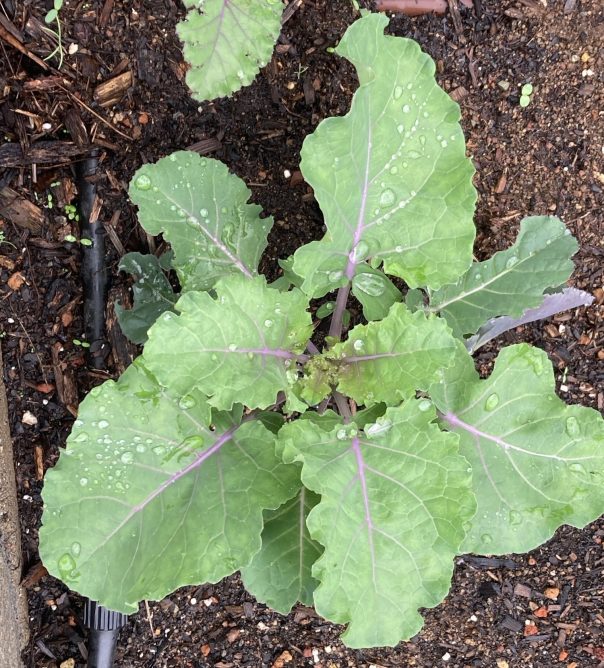
I meant to point my younger guests to my exuberantly flowering kale, parsley and who-knows-what in the planter boxes I am not cultivating right now, but I never got around to it. After everyone had gone home I checked out the back garden to see if there was the sort of happy mess I’m used to in and around the playhouse. There was no evidence that anyone had done any “cooking,” but rather a lot of setting in order, with the dish soap by the sink and a lavish bouquet completing the scene. It was symbolic of all that I had received from my guests who gave me an afternoon in spring.