Category Archives: nature

Evening explorations with grasses.

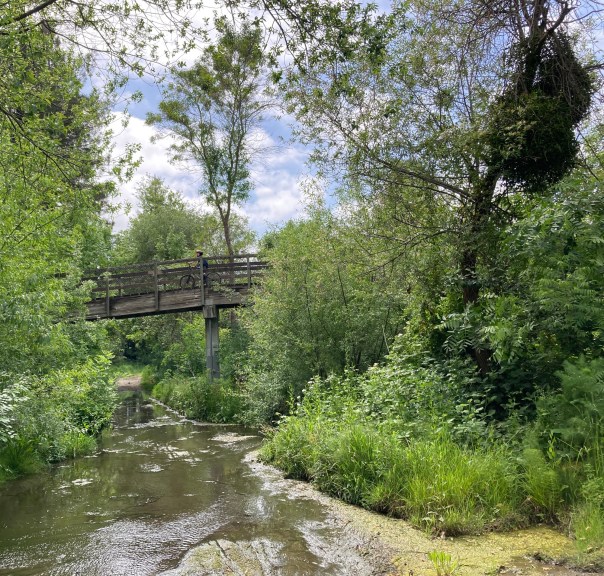
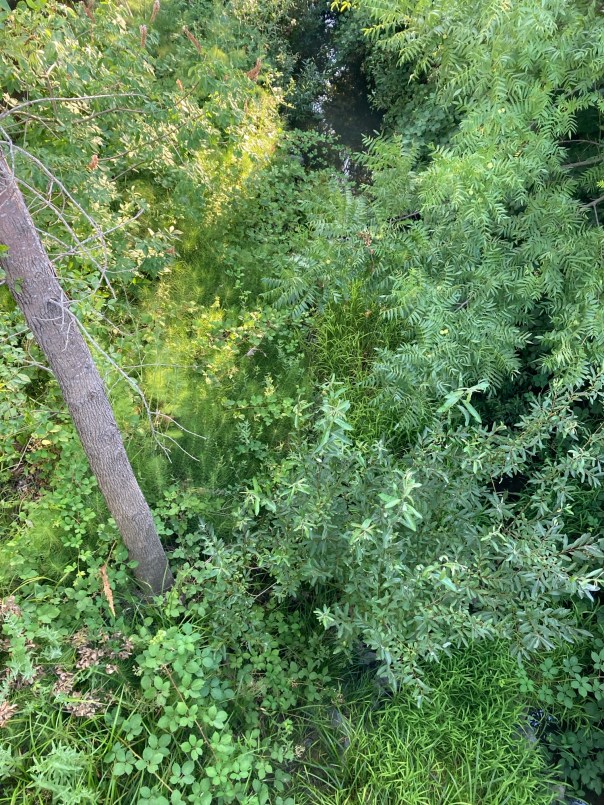
In the summer it’s relatively easy to take a walk after dinner, if I put my mind to it. The last two evenings I did manage to do my 30-minute creek path walk; for some reason it doesn’t feel like a chore at that time of day. There was plenty of light, and time to stop to look at interesting plants. But first I paused on the bridge and looked over… It’s always amazing how much plant matter grows up in springtime and early summer and fills the channel so that it’s hard to see the water down below:
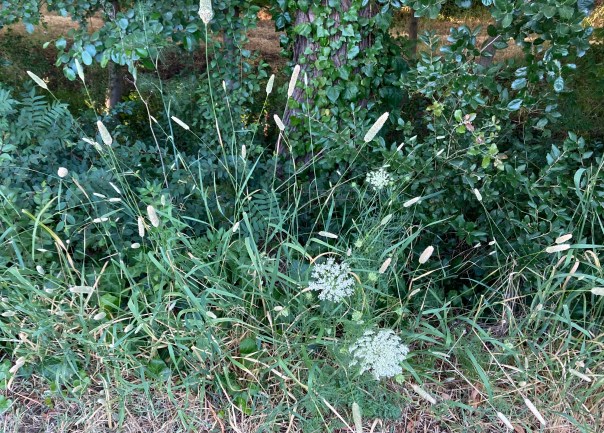
Harding Grass and Queen Anne’s Lace
Harding Grass

During my visit to Greece last month, I really enjoyed the exploratory nature of all the walking I did, in a place where so much was going on, and ancient history was confronting me around every corner. Since I returned it’s been hard to get back into walking along my old home ways, just to be walking. But this evening I did a little exploring, too, of the botanical sort, using the Seek app on my phone. Usually it can’t identify grasses, but this time it confidently told me about two of them.

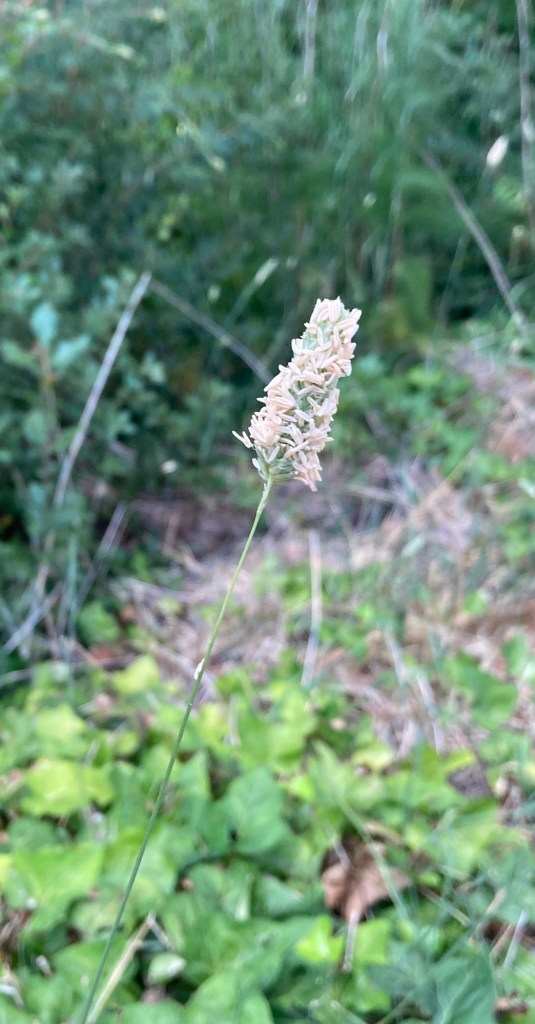
First the Harding Grass, Phalaris aquatica. You can see it blowing around the Queen Anne’s Lace in the picture above, the breeze making it very hard to get a crisp picture of the seed heads waving on their slender four-foot stalks.

Then I noticed the way the blue grass was contrasting with the same white flowers. Seek says that is Creeping Wild Rye or Leymus triticoides:
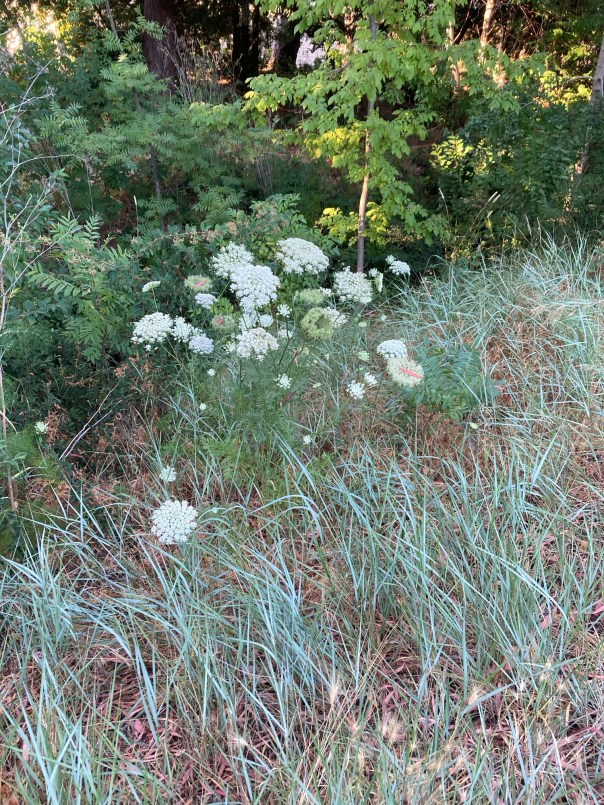
Creeping Wild Rye and Queen Anne’s Lace

I noticed lots of young black walnut trees growing on the banks of the stream, and on my way back I met a big tree growing out of the creek bed and way taller than the bridge. Surely I’d learned what it was before? But evidently not — Seek told me it’s a Box Elder, and I read later that they do like wet areas, and grow fast. Maybe it’s California Box Elder. I wonder, when the city’s maintenance crew dredges the creek this year or next, if they will take out such a big tree?
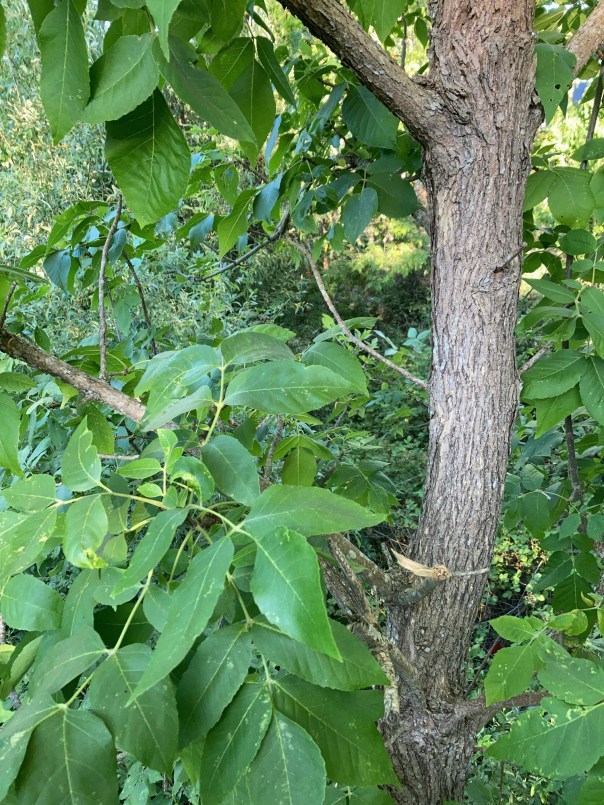
Box Elder

I meant to write about my discoveries earlier, and go to bed at a reasonable time, but I started researching small drought-tolerant trees suitable for a garden like mine. I’ll have more to tell you about why I need such a thing. For now I’m content to have become further acquainted with two plants, reaching the stage of knowing their names. I will count the Box Elder as a new tree friend, and fall asleep late, but happy.

Becoming the soil of their birth.

PEONIES

The peonies, too heavy with their beauty,
slump to the ground. I had hoped
they would live forever but ever so slowly
day by day they’re becoming the soil of their birth
with a faint tang of deliquescence around them.
Next June they’ll somehow remember to come alive again,
a little trick we have or have not learned.

-Jim Harrison

Theo van Rysselberghe, White Peonies


This walk required two pair of boots.

mallow

This evening I made it out for a walk, which turned into two walks, because of something new I saw on my usual route. I stopped at the bridge to look down at the seasonal creek that is getting low… and up at all the bushes and trees growing out of it. Every few years the city maintenance crew dredges out these waterways, but right now everything is growing lush and thick.

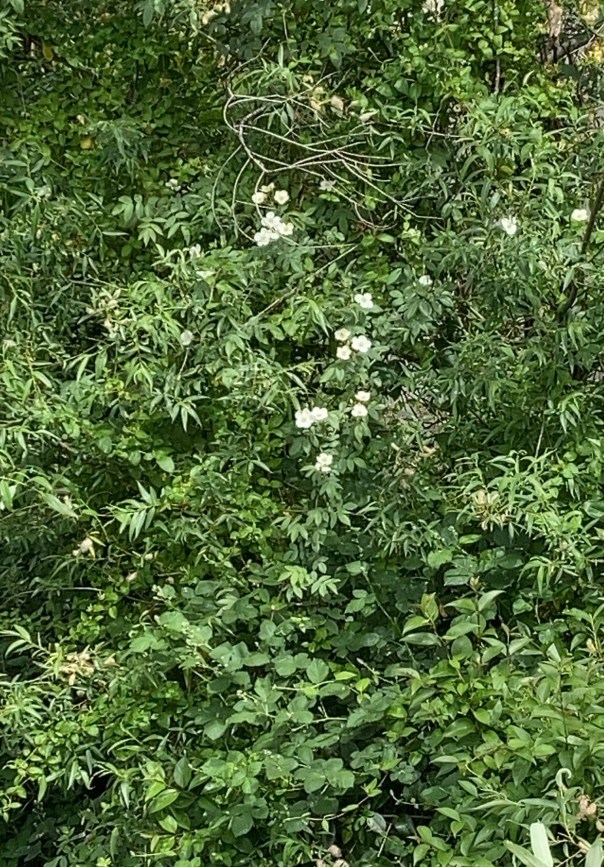
The willows are the tallest plant that grows down there, and buckeyes are numerous. What was that I saw climbing up in the tallest willow bushes? White flowers… if I only had a better camera, or even binoculars… I pointed my Seek app at the flowers and it said Lady Banks’ Rose. Even as poorly as I could make them out, that didn’t seem right.

The roses were growing in the area in the middle of the creek bed, between two creeks right where they join to become one. I thought I would try to go down closer to the water where there is a jumble of unpaved dry-season paths that some people run on with their dogs, and a few children explore. Also there is a sloping cement driveway of sorts for the maintenance vehicles, that is submerged in the winter. Two paved creekside paths also meet at the bridge. But when I got to the place where I would cross the southern stream to get to that middle area, the rocks were covered with algae, and it all seemed too muddy and messy for me to attempt while wearing my new boots.

So I came home and looked up Lady Banks Roses. They did not at all resemble what I’d seen; I guess they were too distant for Seek to make out. The bright idea occurred to me: Why not change into my old boots that I was thinking of giving away, and go back? Why not, indeed?

lemon balm

When I arrived at the crossing place again I had to squish through the mud and the algae, but with only a few steps I was over, and my old boots were mostly waterproofed and barely noticed.

watercress

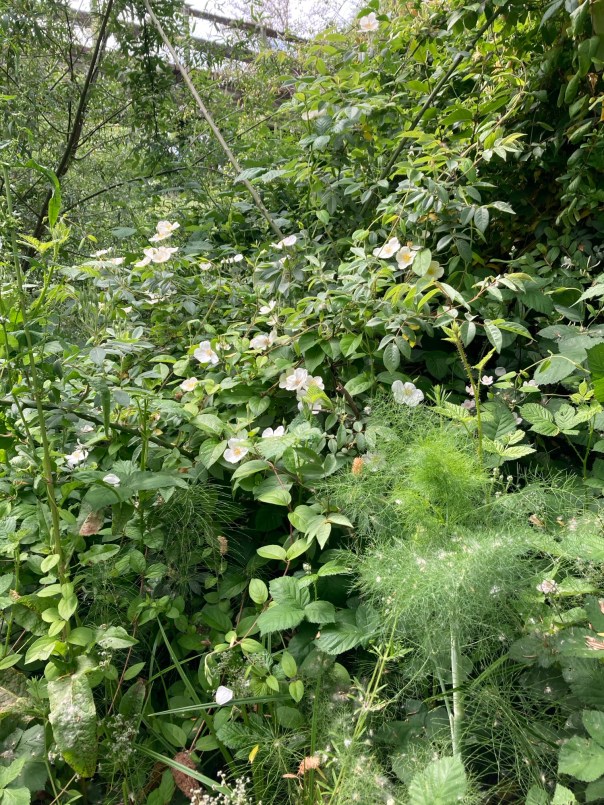
My, what a lot of plants in that mid-creek jungle! Once before I walked down there, but it was in September when everything starts drying up. The roses today were growing in the middle of the willows, honeysuckle, horsetail grass, fennel and bedstraw.

Watercress, Greater Plantain, and Bermuda Grass

Many of the plants are naturalized from backyard escapees. The Bermuda grass for sure, and the lemon balm, and the roses. Wild blackberry brambles snagged my clothes and grabbed at my hair, but I managed to feel my way with my feet along the edge of the creek that was hidden by bullrushes, right up close to the flowers I wanted to see better.

When Seek could assess the image better it identified it as Rosa multiflora or Rosa polyantha, a native of eastern Asia. It also told me I’d observed it two years ago near my daughter Pippin’s place in the farther north part of the state. These roses were to me the prettiest thing in all that jungle.

It really made my day to make this little excursion and discover who they were, and to meet as well many of their companions in the creek. I think I’ll hold on to my old boots.

The winds are soft and restless.

SIX QUATRAINS

AUTUMN
gold of amber
red of ember
brown of umber
all September

MCCOY CREEK
Over the bright shallows
now no flights of swallows.
Leaves of the sheltering willow
dangle thin and yellow.

OCTOBER
At four in the morning the west wind
moved in the leaves of the beech tree
with a long rush and patter of water,
first wave of the dark tide coming in.

SOLSTICE
On the longest night of all the year
in the forests up the hill,
the little owl spoke soft and clear
to bid the night be longer still.

THE WINDS OF MAY
are soft and restless
in their leafy garments
that rustle and sway
making every moment movement.

HAIL
The dogwood cowered under the thunder
and the lilacs burned like light itself
against the storm-black sky until the hail
whitened the grass with petals.

-Ursula K. Le Guin

Pippin Photo