Tag Archives: grass

Coastal Botanical

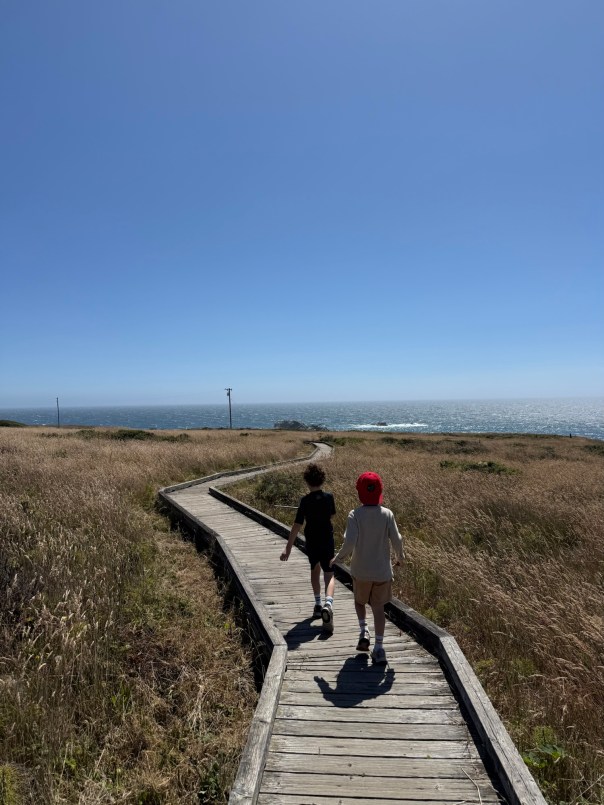
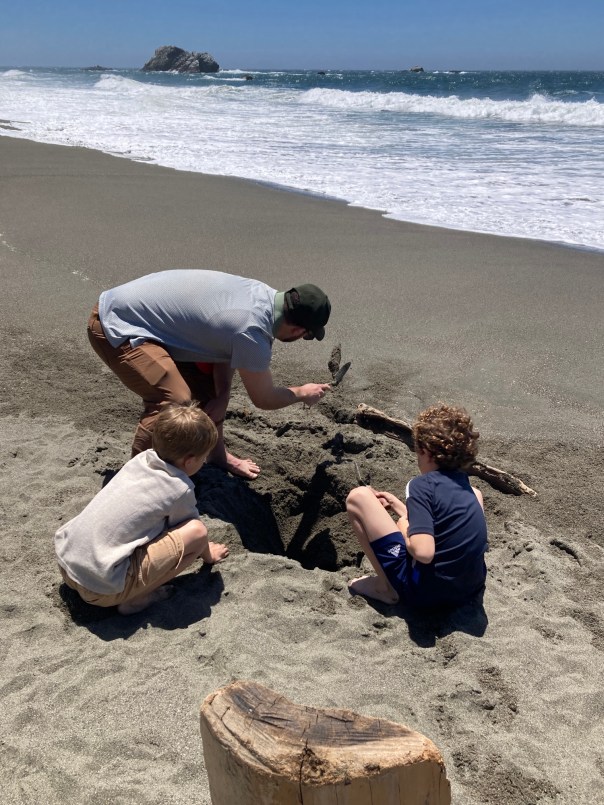
Son “Pathfinder” came from Oregon to see his sister Kate’s family, and we six packed into his truck to drive out to the coast for the day, to hike along a ridge trail and also picnic on the beach. As usual, I lagged behind half the time, making discoveries every few feet of interesting grasses and flowers, and trying to learn or remember their names.
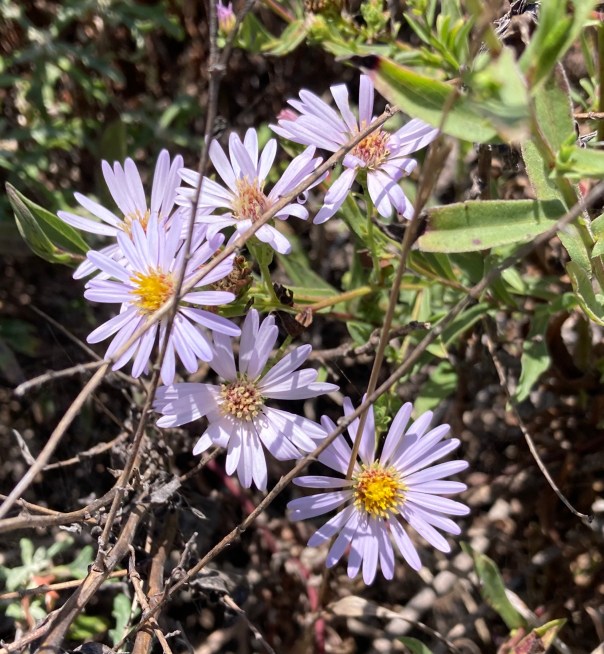
California Aster a.k.a. Pacific Coast Aster

The wind was blowing up on the bluffs, but on the beach the air was still, and Kate was able to slice cheese in her lap and pass it around to the rest of us with nary a grain of sand involved.
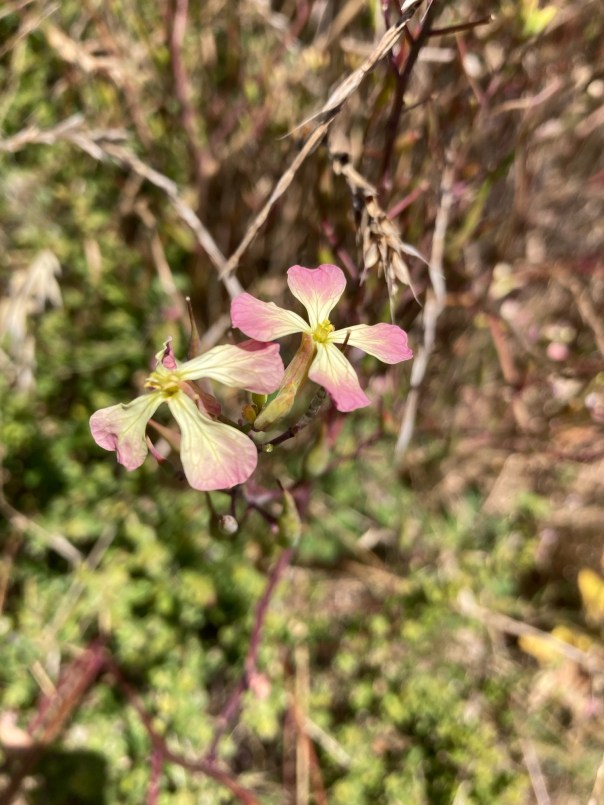
Black Mustard

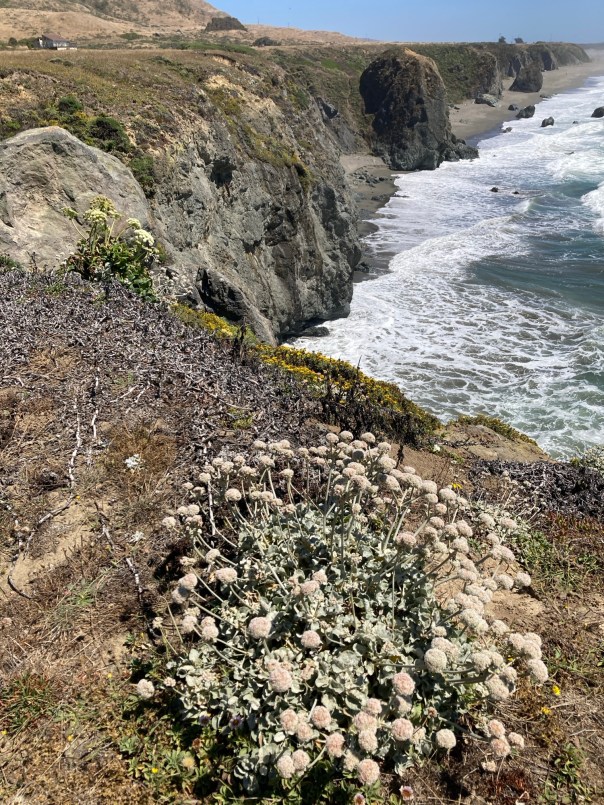
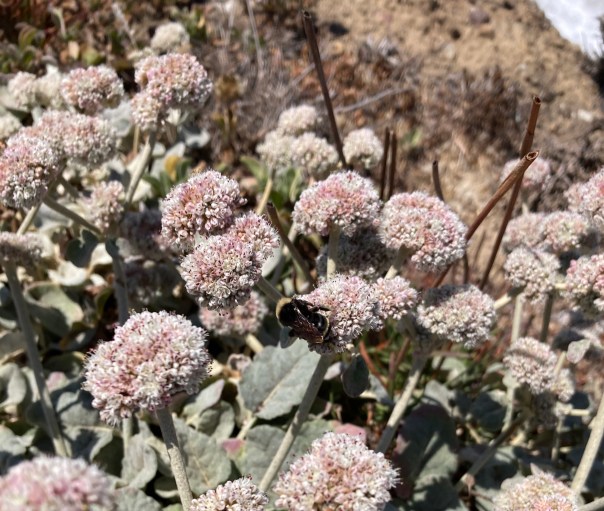
I’m showing several instances of Coastal Buckwheat, one of my favorite plants, with blooms more or less faded from the original pastel pink. It just now occurs to me that one reason I love it may be that those gray and pink colors were also featured in my grandma’s bathroom when I was a child. The bees appreciate it for their own reasons.
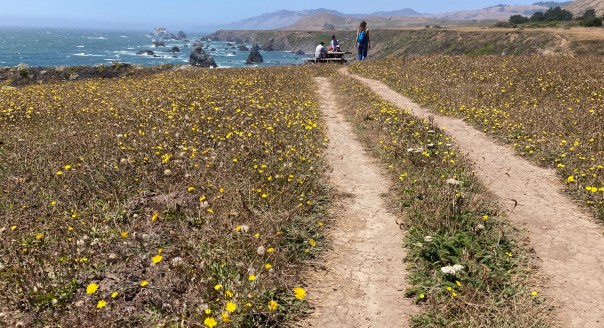
Below, a mixture of catsear and lotus combined to create a carpet of yellow:
Another contributor to the sunny tone was the Seaside Woolly Sunflower:
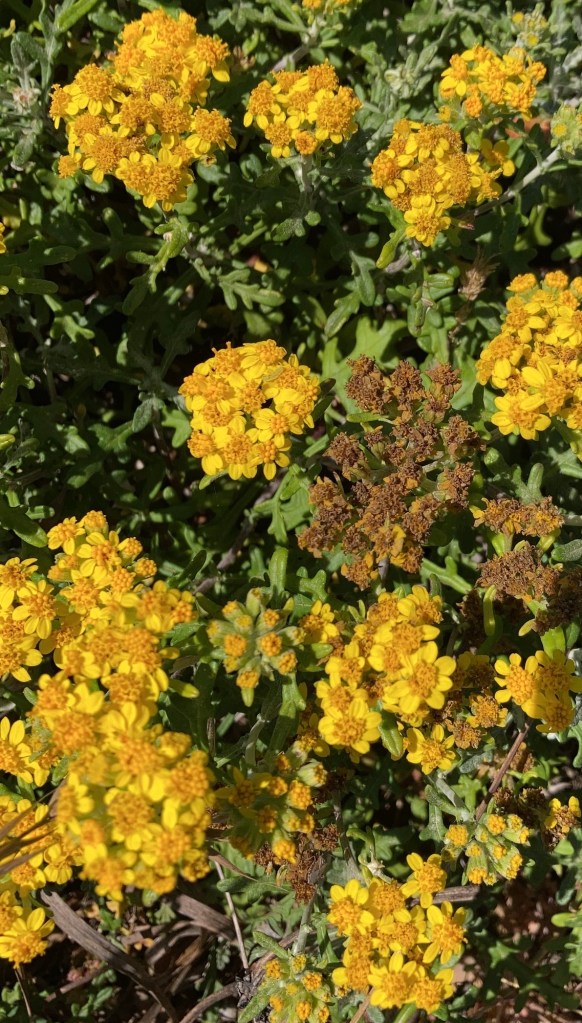
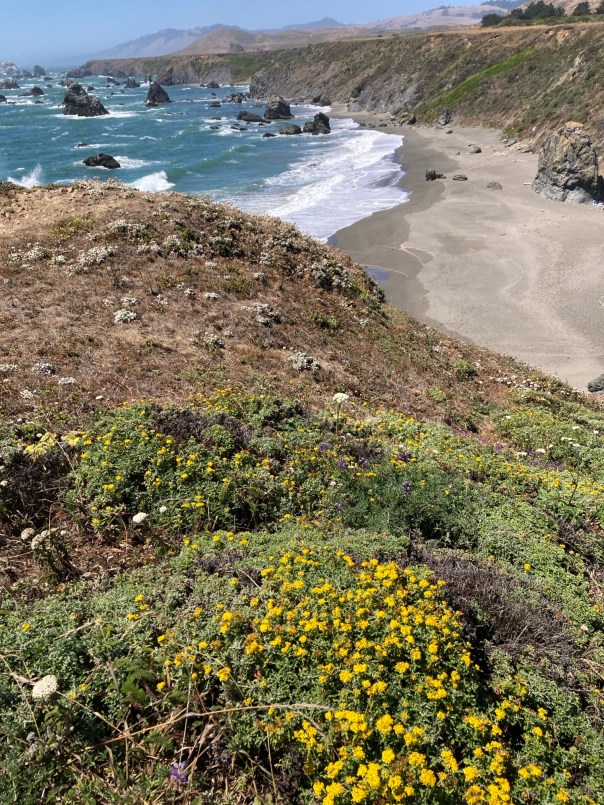
Seaside Woolly Sunflower

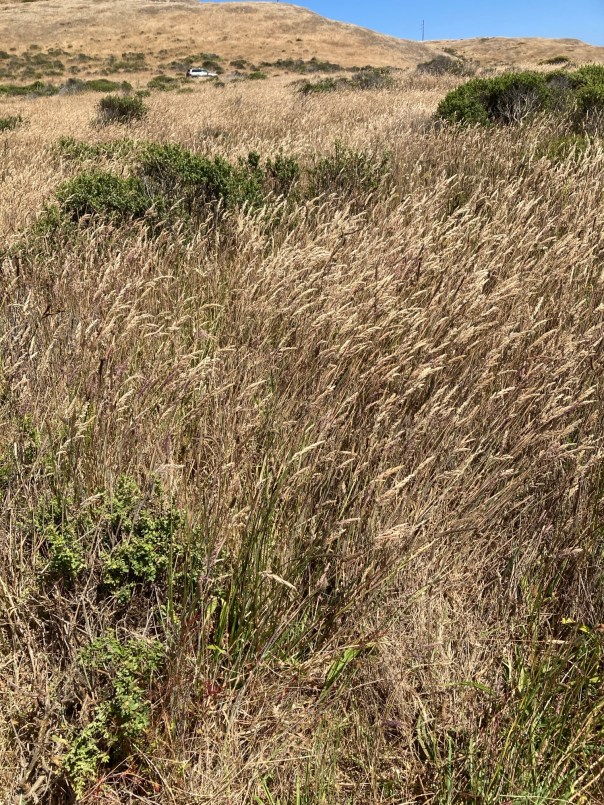
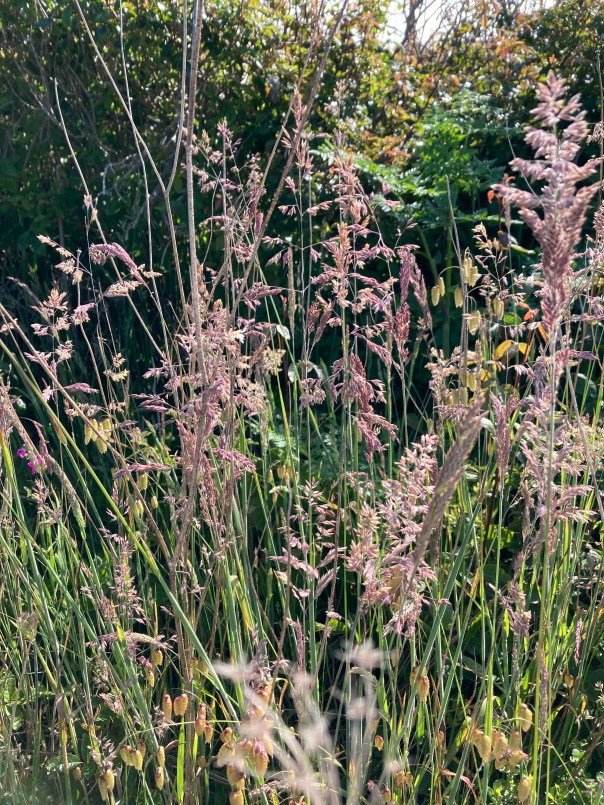
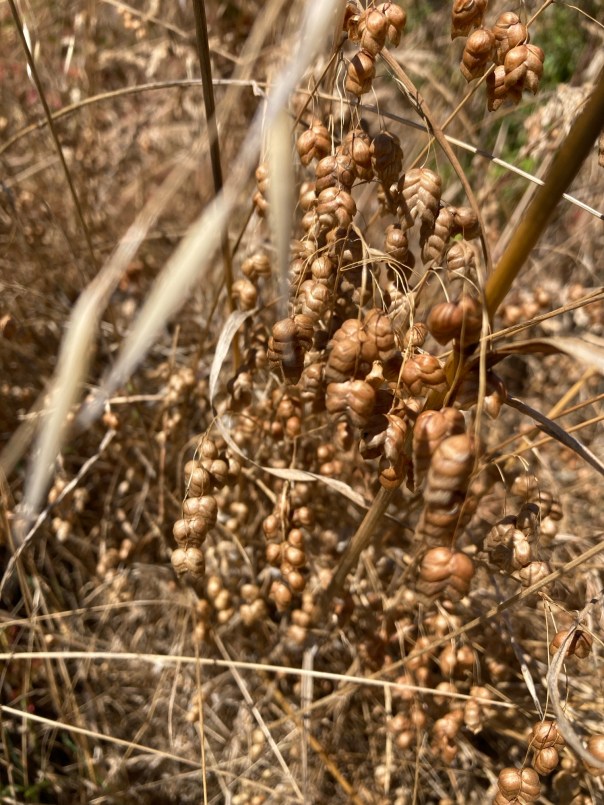
The grasses were swaying back and forth in the wind — European Marram Grass, my Seek app told me — and my favorite Rattlesnake Grass was abundant.
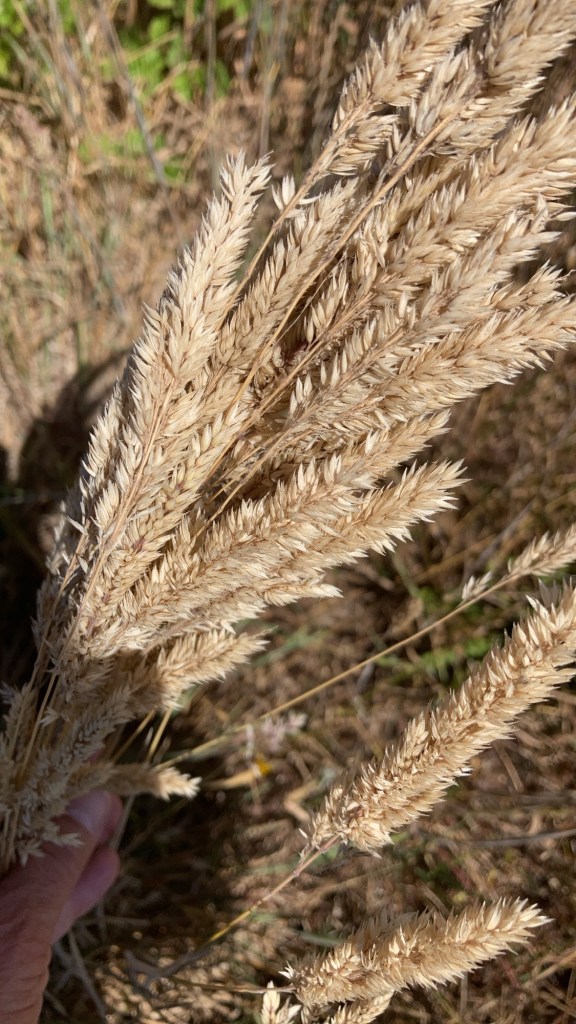
European Marram Grass
Rattlesnake Grass

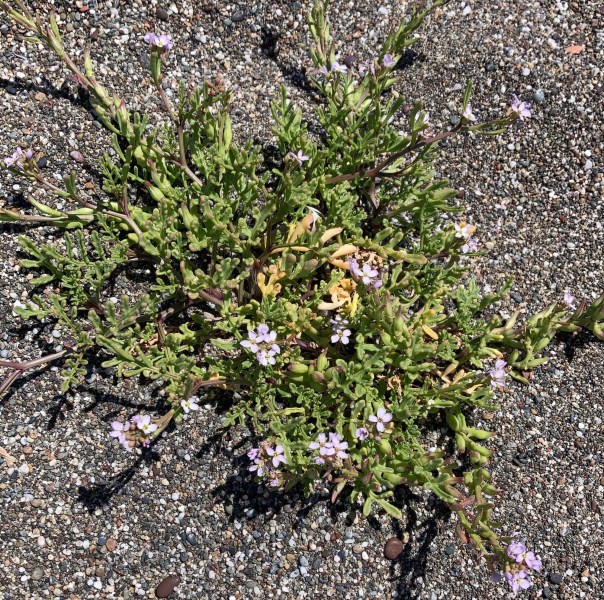
European Searocket

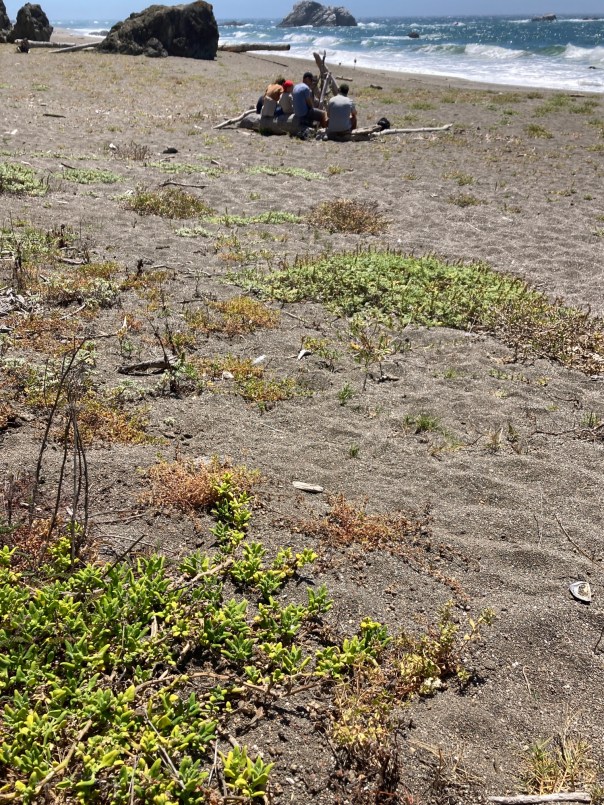
To eat our snacky lunch, we gathered around a minimalist and rickety teepee someone else had built, because there was a nice log beside it that seated five nicely. In the foreground here is Tetragonia tetragonioides, which I’ve always known as New Zealand Spinach, but the actual New Zealanders usually call it  warrigal. There’s a better-watered specimen of this plant that keeps volunteering in my backyard garden:
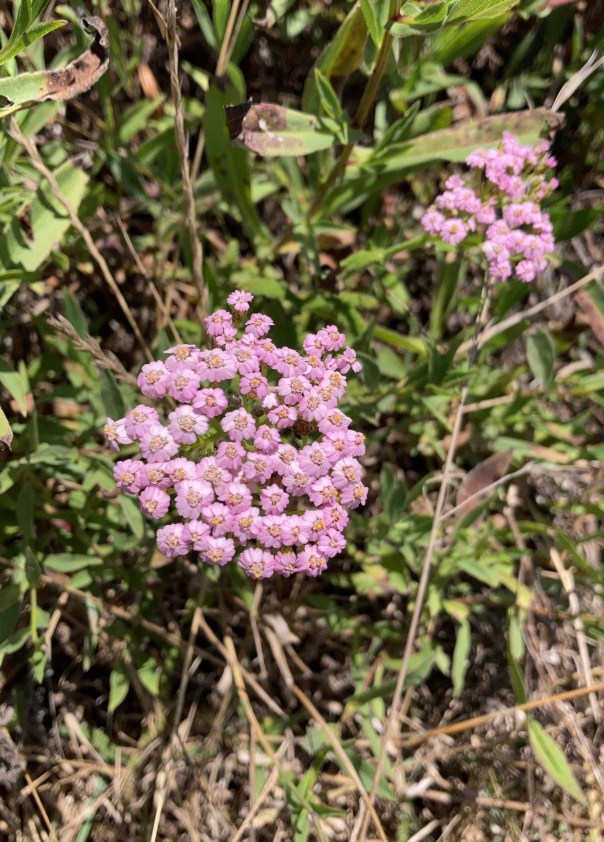
A pink sport from the usual white native yarrow.

Pathfinder patiently discussed with me ways to tell two members of the Carrot Family apart, plants that grow in a similar habitat and that I’ve repeatedly mixed up over the decades. He noticed the different leaf shape and type: Cow Parsnip has large, deeply toothed leaves:
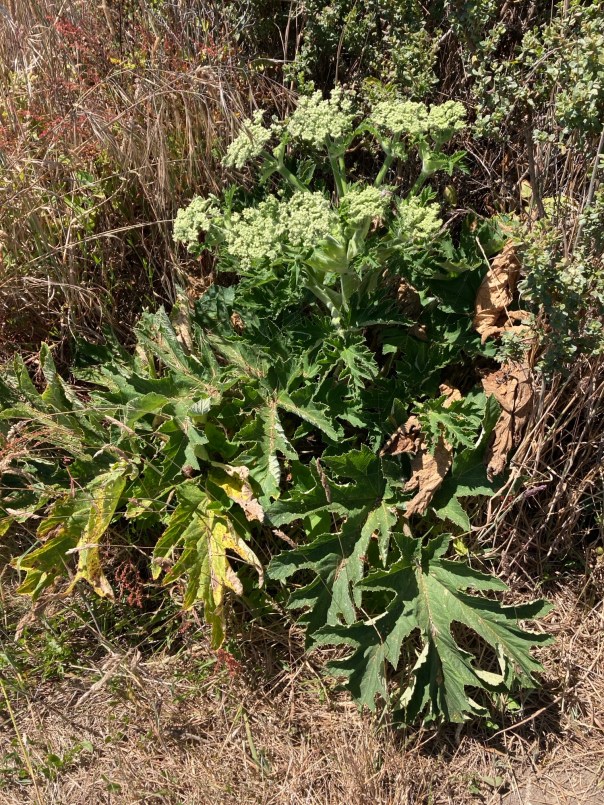
Cow Parsnip

…while Angelica — in this case Henderson’s Angelica — has pinnately compound leaves.
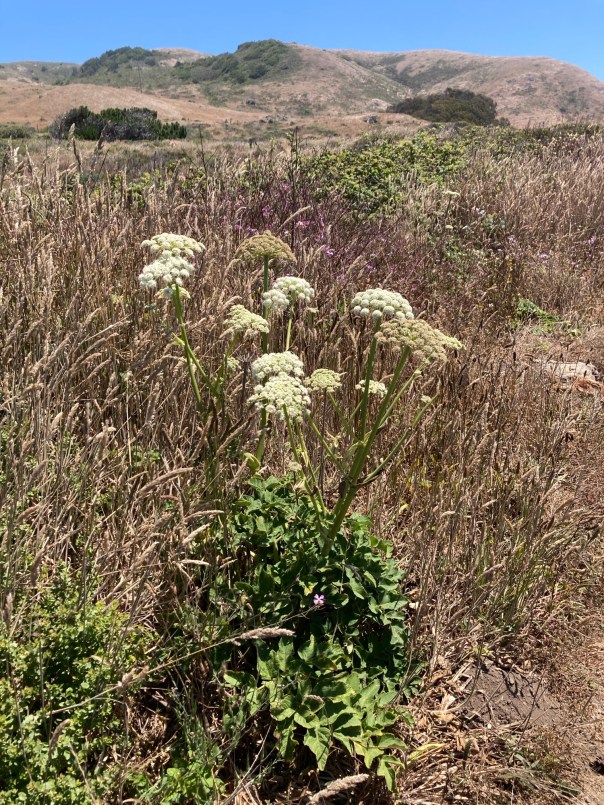
Henderson’s Angelica

Their flowers aren’t exactly the same, either, and there are other differences. Once I saw the two plants growing right next to each other; that helped, for a time. Unfortunately the Seek app that I use a lot does not have a search feature; but if it did, I would probably be even more distracted from enjoying the plants themselves. So I guess it’s just as well.
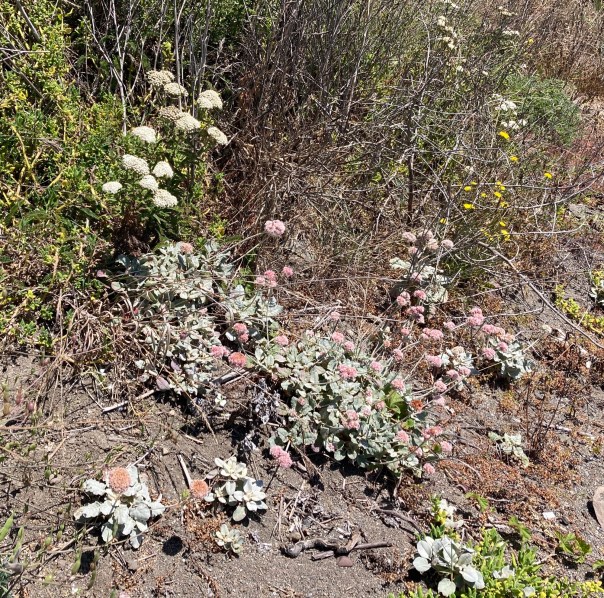
Coastal Buckwheat with yarrow and more.

It was a very satisfying outing, even if several of us did get sunburned. That was opportunity to take advantage of a backyard botanical: my Aloe Vera plant, the leaves of which we peeled on one side, revealing the gelatinous interior, which we applied to red arms and neck. Oh, so soothing.

Our whole crew slept well that night!
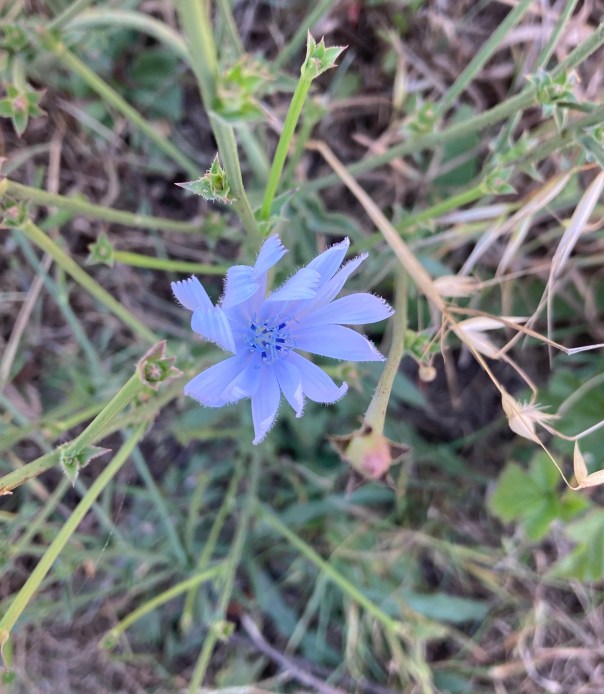
chickory

I ascend through goldenrod and grasses.

My journey to the mountains took me more than eight hours, owing to the search for a fruit stand on the way. I followed several Google leads to popular stores where I might pick up peaches and a watermelon and other items close to the farm, just before leaving California’s gloriously productive Central Valley. This project led me out of my way and brought me to destinations along county highways with nary a turnout where I could imagine a fruit stand ever having existed.

In frustration and great disappointment I resigned myself to having to buy the produce at the last good grocery store further along my way in the lower mountains. But I prayed as I headed back toward the correct route, “Maybe, Lord, you could lead me to a fruit stand that Google doesn’t know about.”

And there, “in the middle of nowhere,” south of Madera in an area called Trigo on the map, I saw the sign that read, “PEACHES APRICOTS CORN” — It was a real place, not a mirage, a tiny outpost with a nice lady who helped me load my box of treasures into the car. I’m certain that as my happiness turned into enthusiasm and then extravagance, I bought way too much for Kate’s family and me to eat — I will probably need to make a pie or soup up here to use it all.

Then, as drove off and headed up through the sandy blond, hay colored foothills, baking under the midday sun, I calmed down and fully entered the experience of the rising elevation and of leaving that everyday world behind. No need for a map, because I know the way.

After the expanse of golden hills comes the area where orchards of date palms grow, and then the miles of oak forests, after which the climb gets steeper, and the foliage denser. There are the elderberries in bloom, waving their flowers in the breeze, and huge bushes of lupines growing on the banks and reaching out with loaded purple stems.

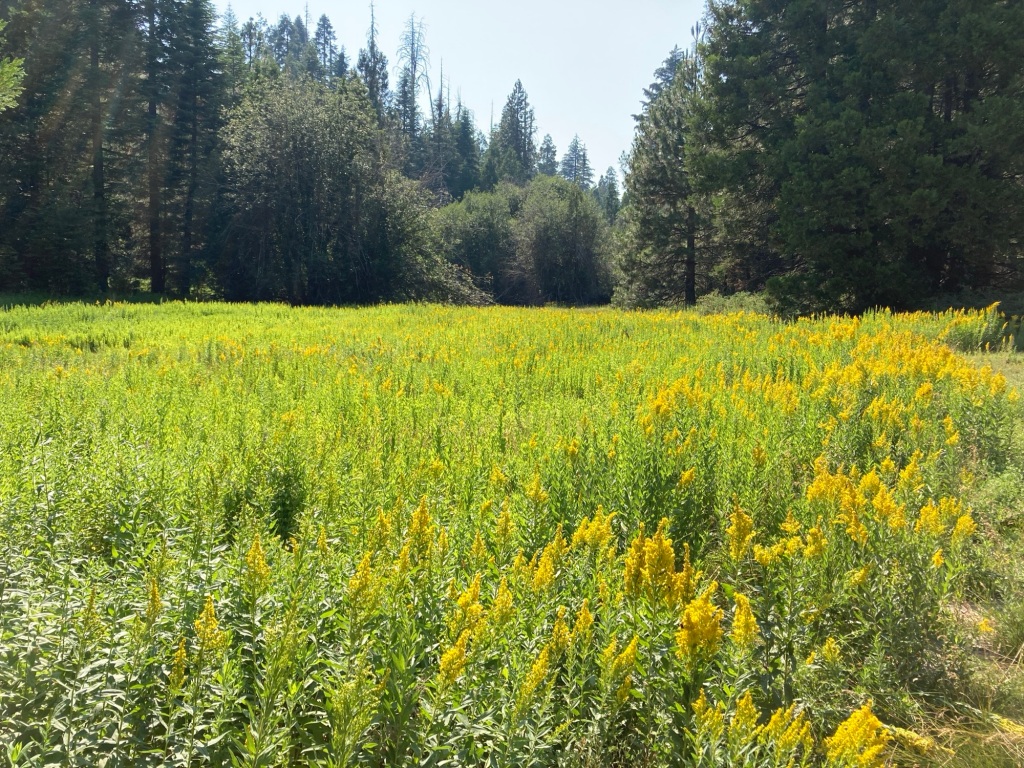
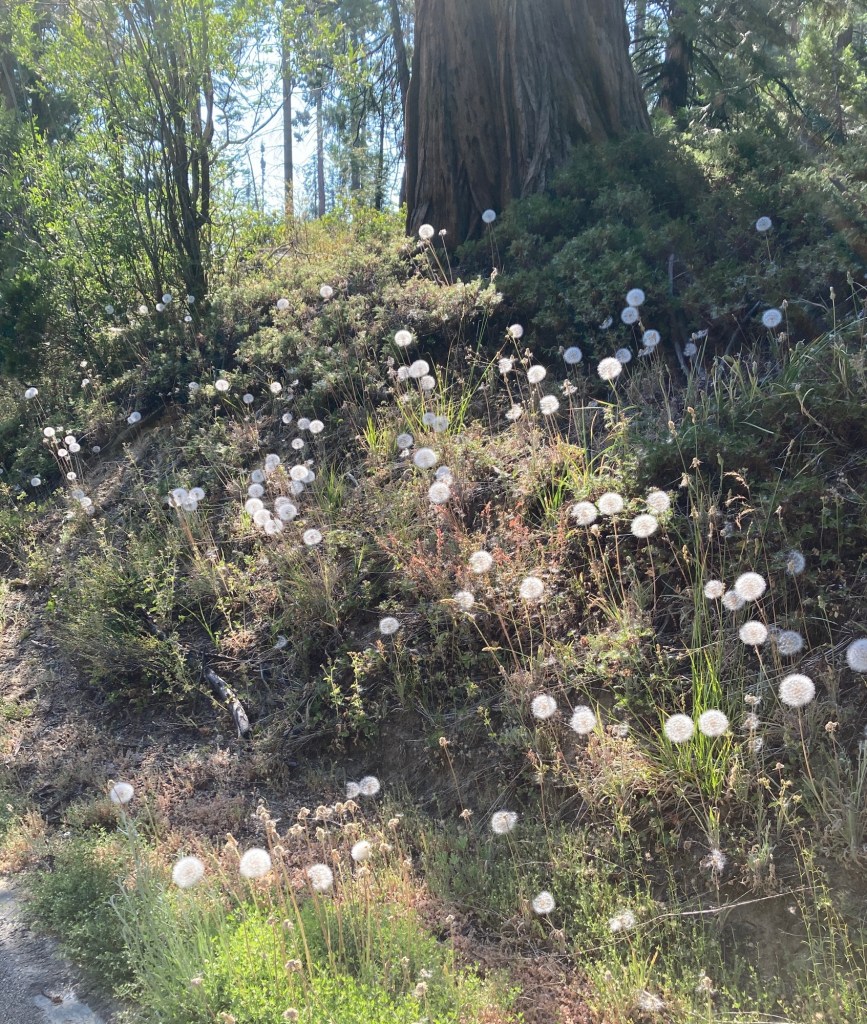
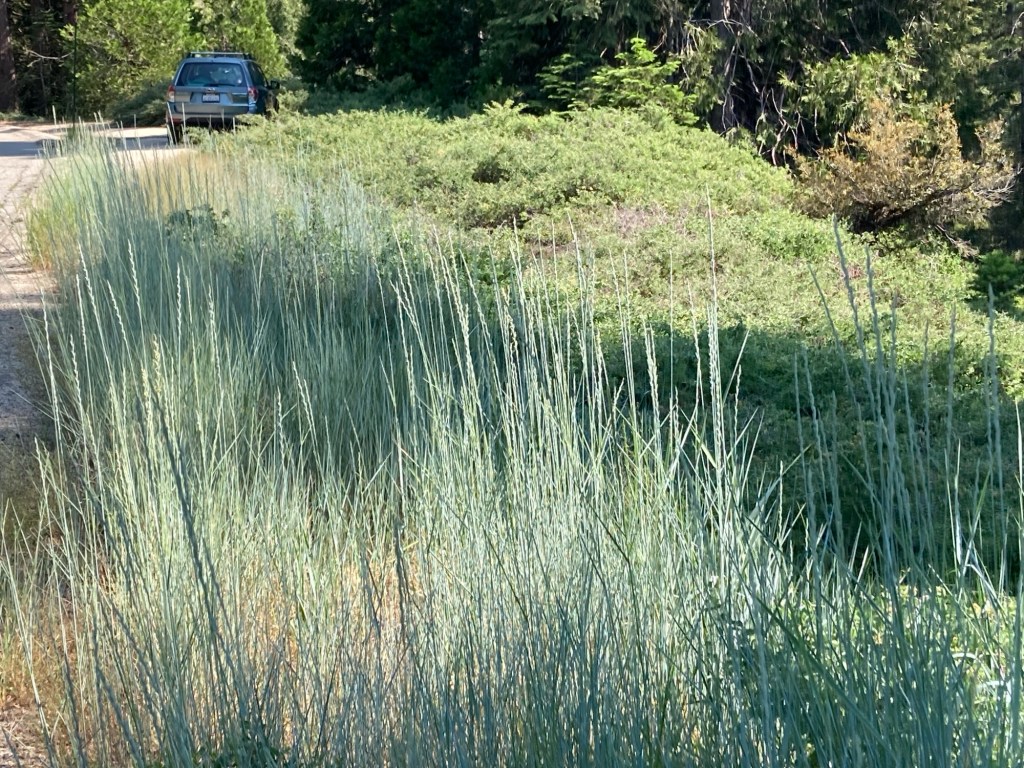
The goldenrod is spreading its gold across the meadows, and a certain elegant grass grows alongside. The Grand Mountain Dandelion is at its puffiest, and smaller puffs on the wild buckwheats refuse to pose for a photo but prefer dancing in the wind.

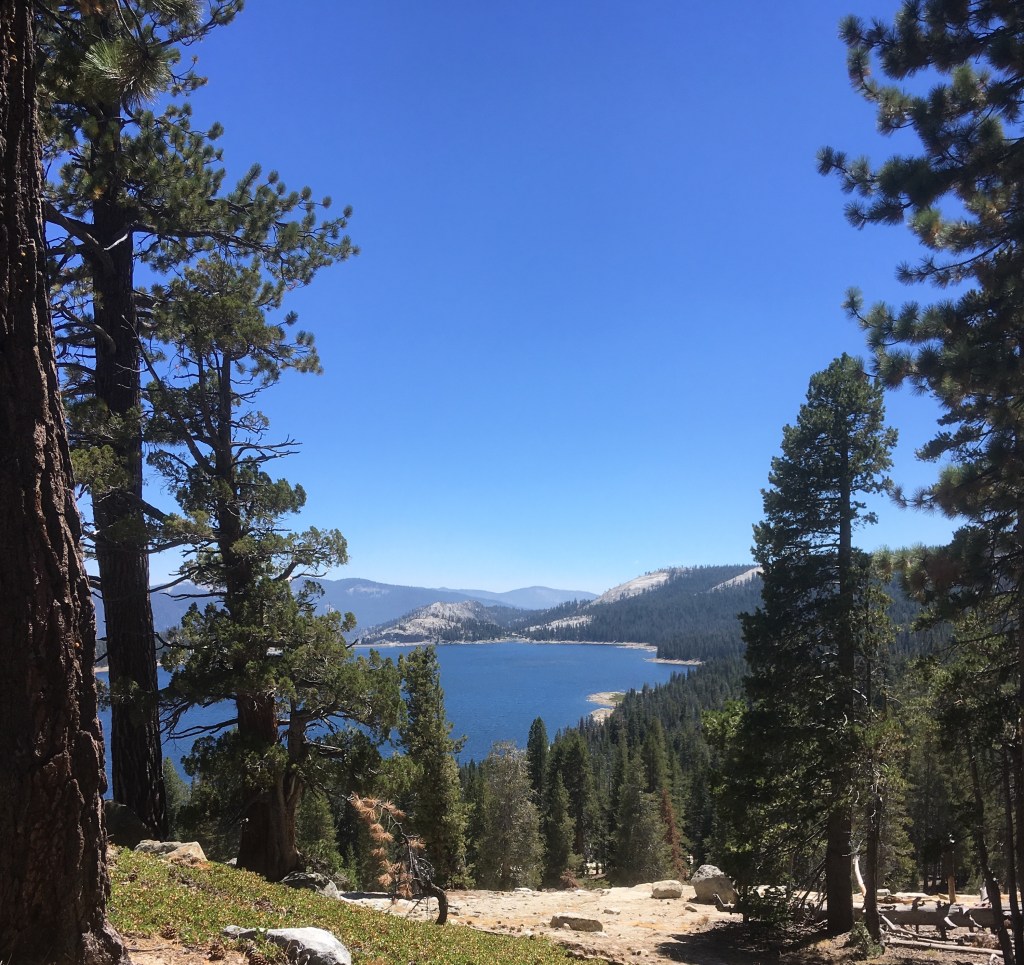
In spite of my dawdling along the way to say hello to these old friends, I made it to the lake and the cabin well before dark and was welcomed by my sister and her husband.

I slept very well, they went home this afternoon, and tomorrow the rest of my group will arrive. I’m in the High Sierra and feel on top of the world.

Evening explorations with grasses.

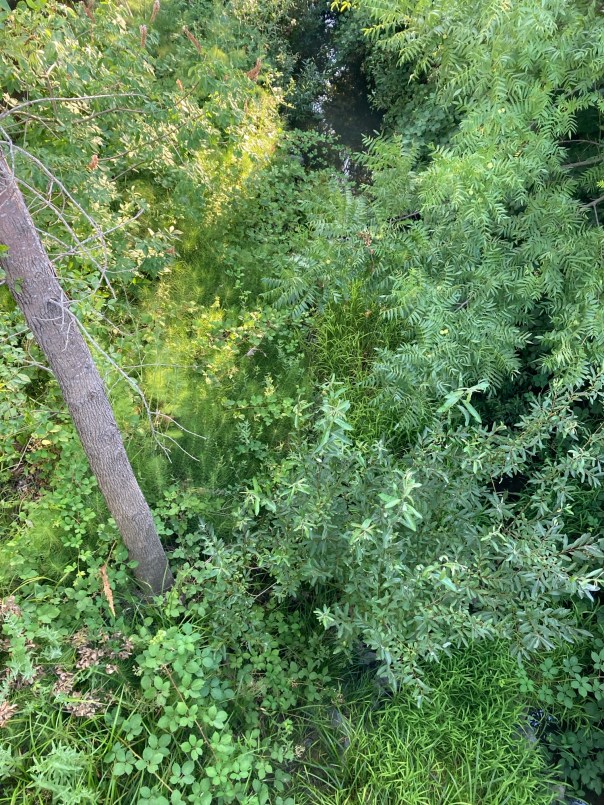
In the summer it’s relatively easy to take a walk after dinner, if I put my mind to it. The last two evenings I did manage to do my 30-minute creek path walk; for some reason it doesn’t feel like a chore at that time of day. There was plenty of light, and time to stop to look at interesting plants. But first I paused on the bridge and looked over… It’s always amazing how much plant matter grows up in springtime and early summer and fills the channel so that it’s hard to see the water down below:

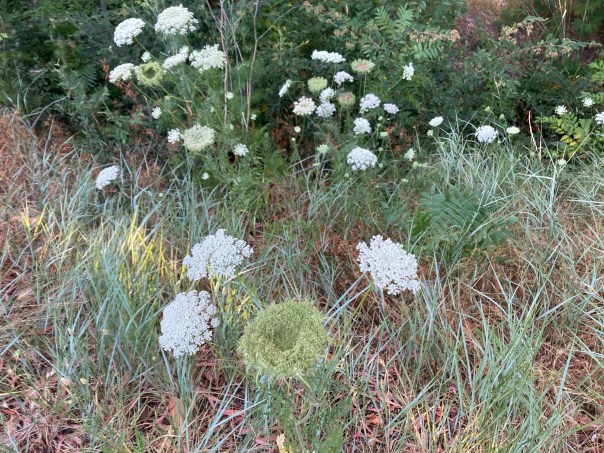
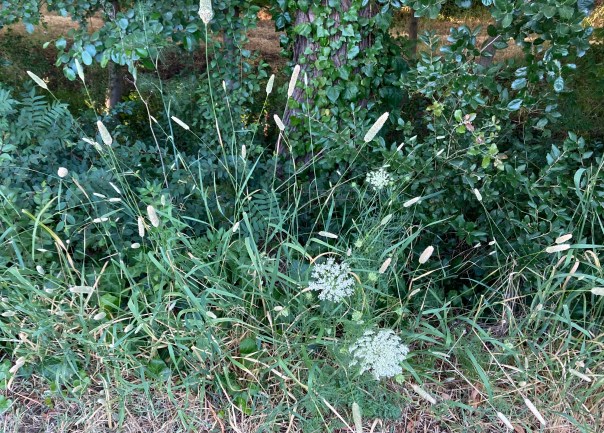
Harding Grass and Queen Anne’s Lace

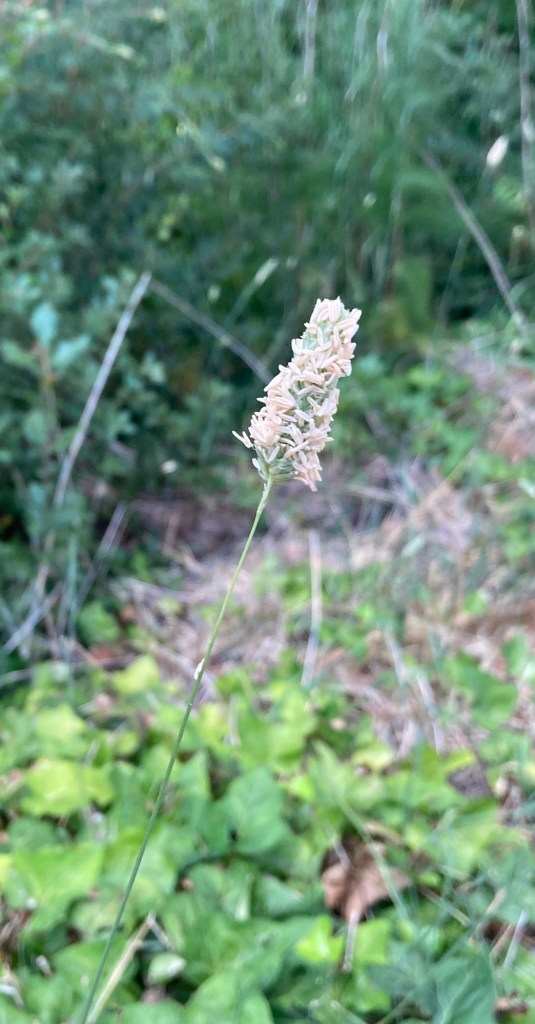
Harding Grass

During my visit to Greece last month, I really enjoyed the exploratory nature of all the walking I did, in a place where so much was going on, and ancient history was confronting me around every corner. Since I returned it’s been hard to get back into walking along my old home ways, just to be walking. But this evening I did a little exploring, too, of the botanical sort, using the Seek app on my phone. Usually it can’t identify grasses, but this time it confidently told me about two of them.

First the Harding Grass, Phalaris aquatica. You can see it blowing around the Queen Anne’s Lace in the picture above, the breeze making it very hard to get a crisp picture of the seed heads waving on their slender four-foot stalks.

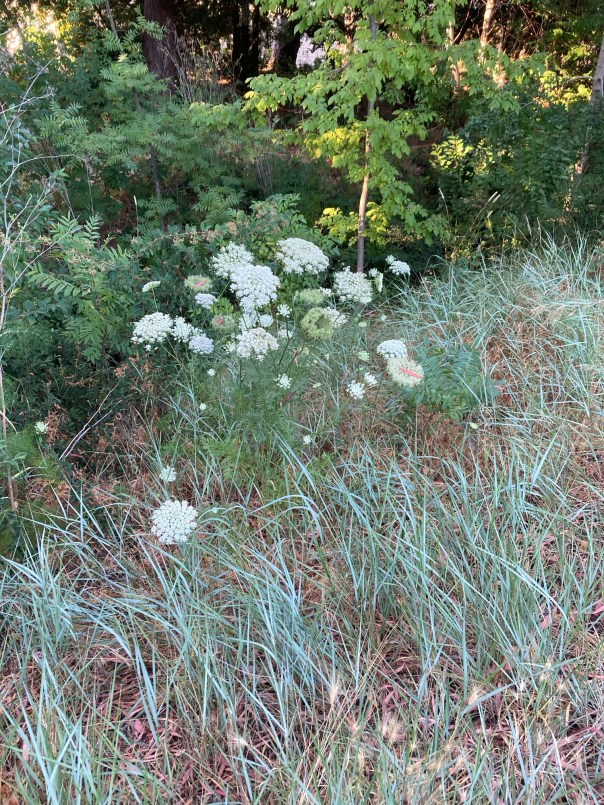
Then I noticed the way the blue grass was contrasting with the same white flowers. Seek says that is Creeping Wild Rye or Leymus triticoides:

Creeping Wild Rye and Queen Anne’s Lace

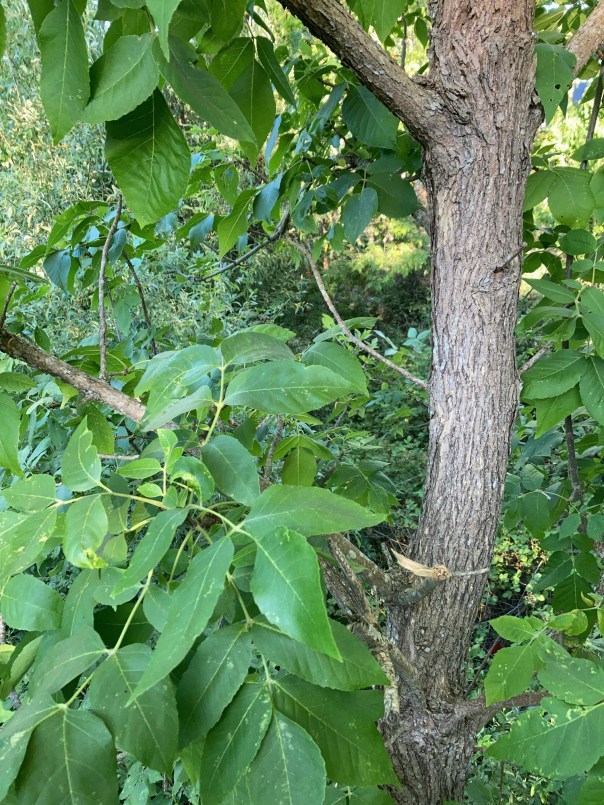
I noticed lots of young black walnut trees growing on the banks of the stream, and on my way back I met a big tree growing out of the creek bed and way taller than the bridge. Surely I’d learned what it was before? But evidently not — Seek told me it’s a Box Elder, and I read later that they do like wet areas, and grow fast. Maybe it’s California Box Elder. I wonder, when the city’s maintenance crew dredges the creek this year or next, if they will take out such a big tree?

Box Elder

I meant to write about my discoveries earlier, and go to bed at a reasonable time, but I started researching small drought-tolerant trees suitable for a garden like mine. I’ll have more to tell you about why I need such a thing. For now I’m content to have become further acquainted with two plants, reaching the stage of knowing their names. I will count the Box Elder as a new tree friend, and fall asleep late, but happy.

I study and drink grasses.

Today my friend Cindy and I drove out to the beach, a birthday outing for her. It was about 60 degrees, which was truly fine when the sun came out; there wasn’t much wind. While Cindy lay under a driftwood teepee, I took a brisk walk down the beach a ways, trying to exercise my feet in the squishy sand right where the wave has just receded.

Washed up by the surf I saw several by-the-wind Sailors, Velella velella. It’s hard not to notice their brilliant blue. I had heard a couple of months ago that people were seeing thousands of them on California beaches this year, which is unusual. This one was about two inches long.

The only stop we made for wildflower appreciation was on the way home, and it wasn’t for flowers at all, but for grass. Stands of pink grass waved in the breeze a the edge of the road; I discovered it is common velvetgrass, holcus lanatus. I think this is the first time my Seek app has been able to tell me anything about grasses; maybe it has truly been adding to its knowledge base. After all, one often does get the message that “Seek doesn’t know what this is. We are still learning!”

Recently I was offered a cup of tea at a friend’s house, and it was the most delicious drink, toasty and sweet, like nothing I’d ever tasted before. When my host came back into the room I asked her, and she said it was an infusion of wild oats — she had gathered them from nearby fields, and dried them. She showed me her stash, which she keeps in a big pretzel jar:

Just now I read more about this plant, a native perennial called California Wild Oat Grass, Danthonia californica. I was surprised to learn that it is recommended for growing domestically: “In home yard use, this grass gives a lowland meadow look or grows well in a rock garden.”

I don’t think my garden has the meadow look that would provide context for this native grass, but it is nice to think that other people might take advantage of its good features, and maybe drink its flowers, as I did. For now, my own interest lies almost entirely in trying to learn about more of the many grasses that live in northern California. I’ll be sure to let you know if I do.

California Wild Oat Grass – Internet photo