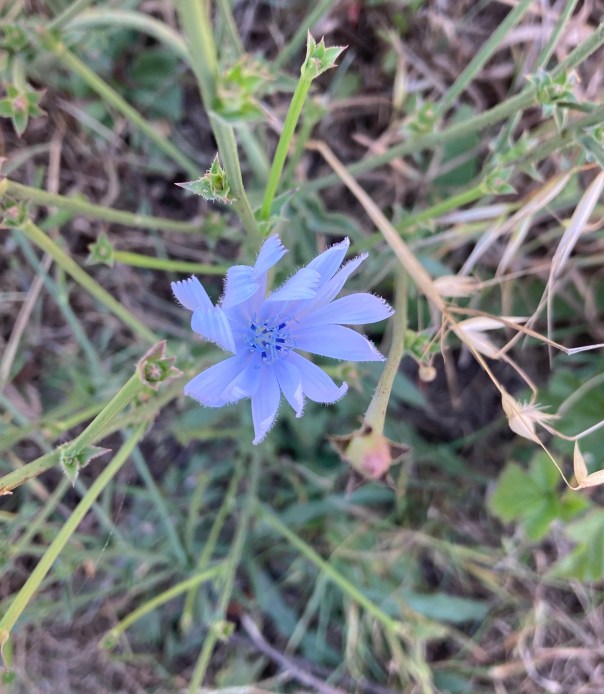
Son “Pathfinder” came from Oregon to see his sister Kate’s family, and we six packed into his truck to drive out to the coast for the day, to hike along a ridge trail and also picnic on the beach. As usual, I lagged behind half the time, making discoveries every few feet of interesting grasses and flowers, and trying to learn or remember their names.
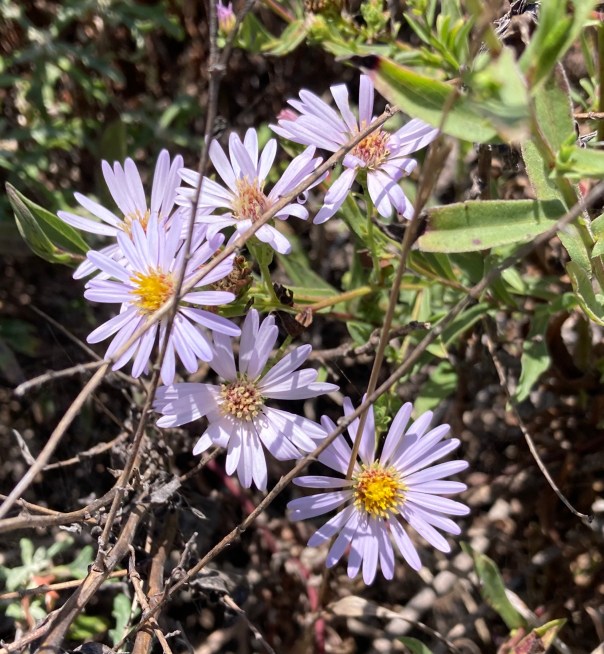
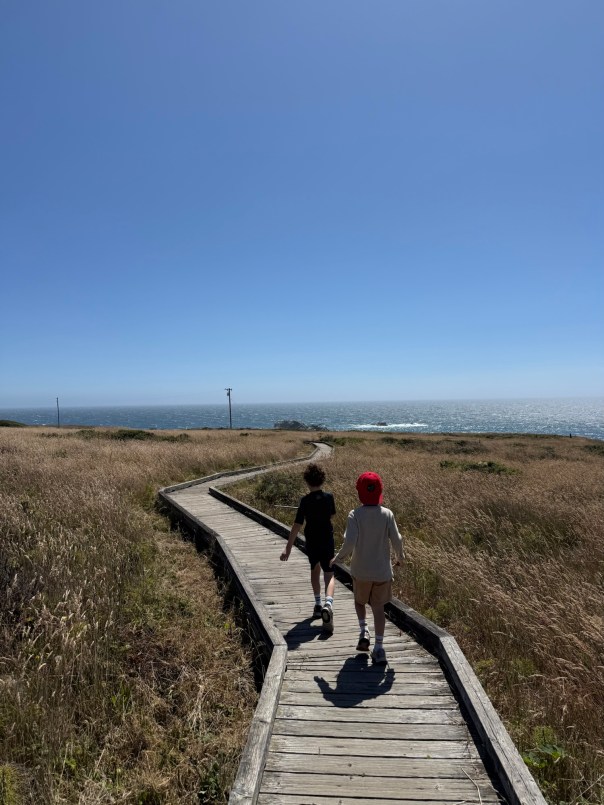
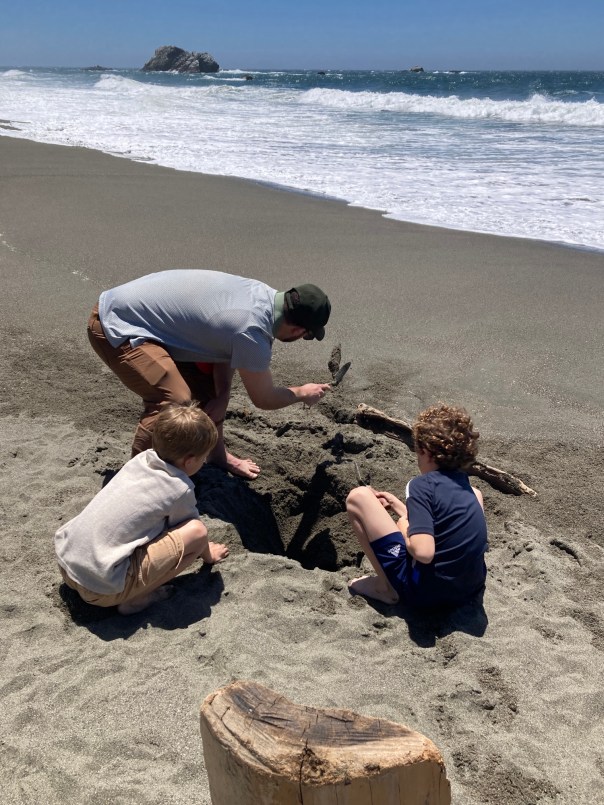
The wind was blowing up on the bluffs, but on the beach the air was still, and Kate was able to slice cheese in her lap and pass it around to the rest of us with nary a grain of sand involved.
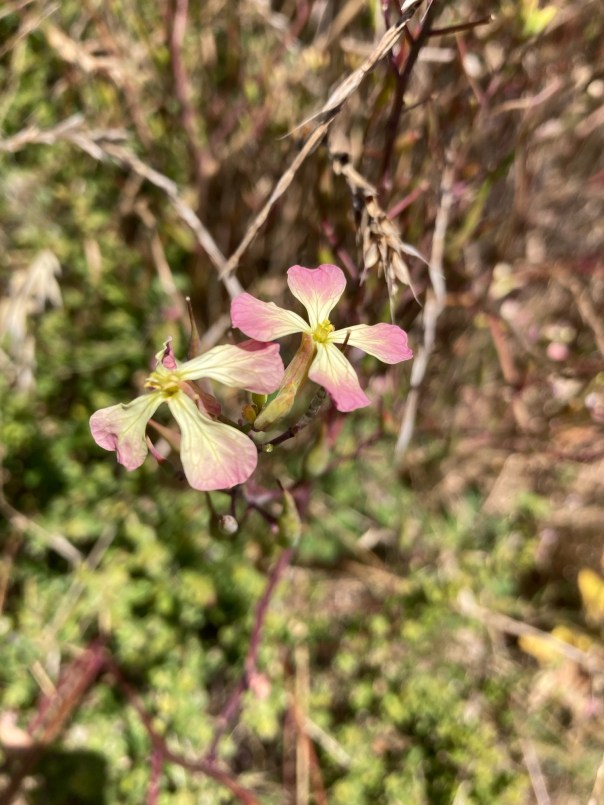
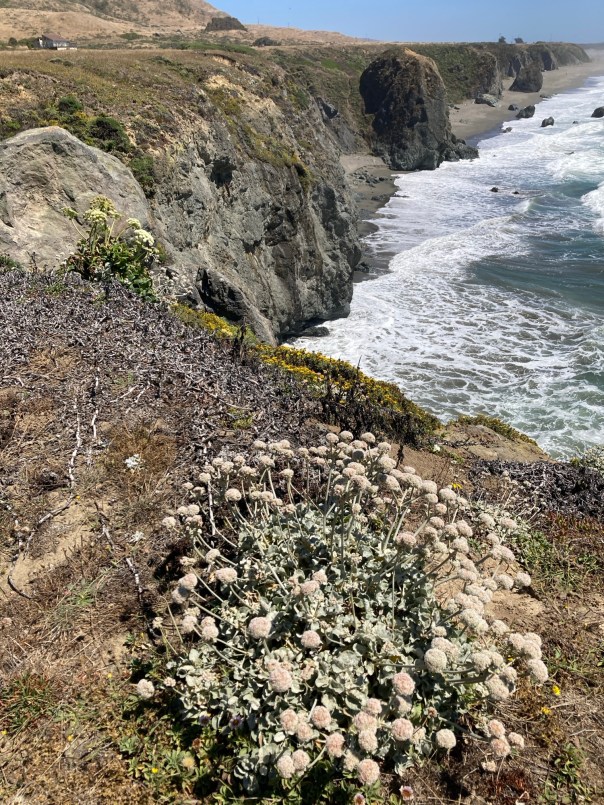
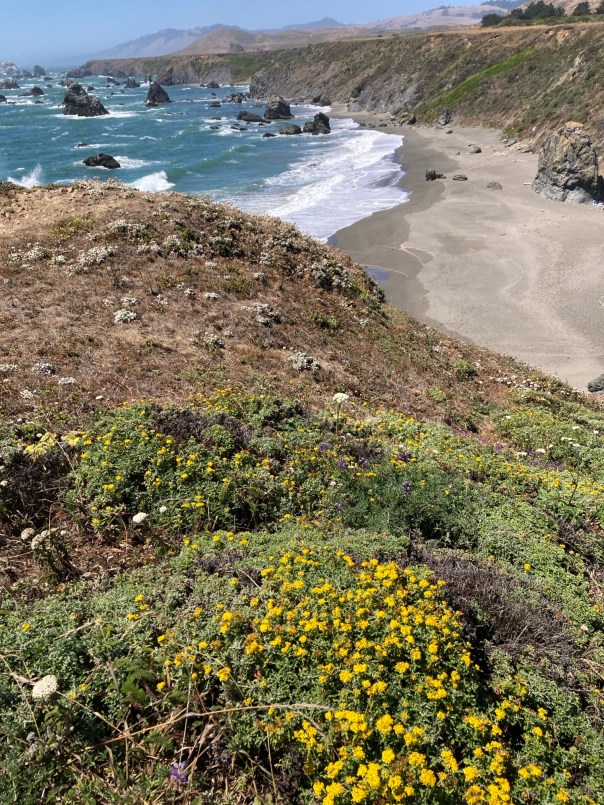
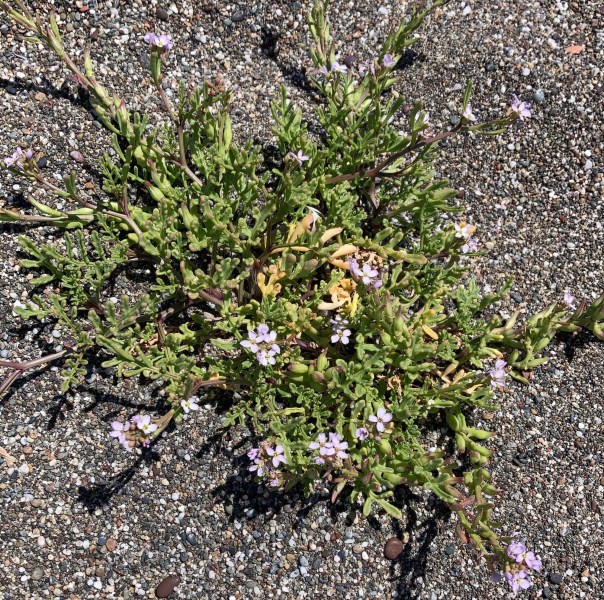
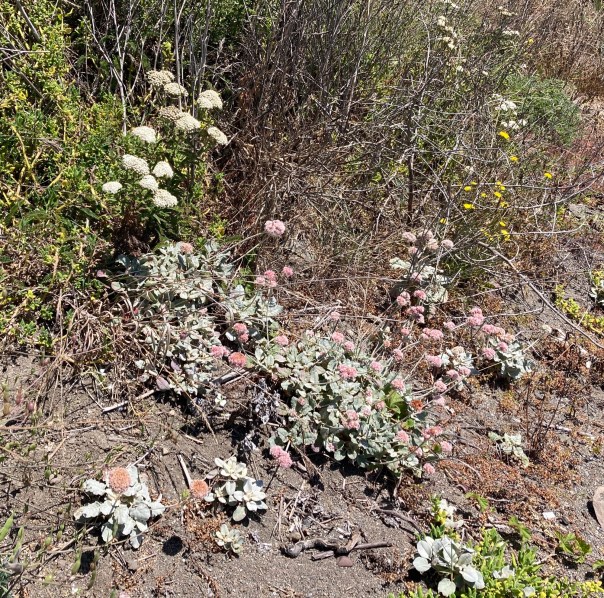
I’m showing several instances of Coastal Buckwheat, one of my favorite plants, with blooms more or less faded from the original pastel pink. It just now occurs to me that one reason I love it may be that those gray and pink colors were also featured in my grandma’s bathroom when I was a child. The bees appreciate it for their own reasons.
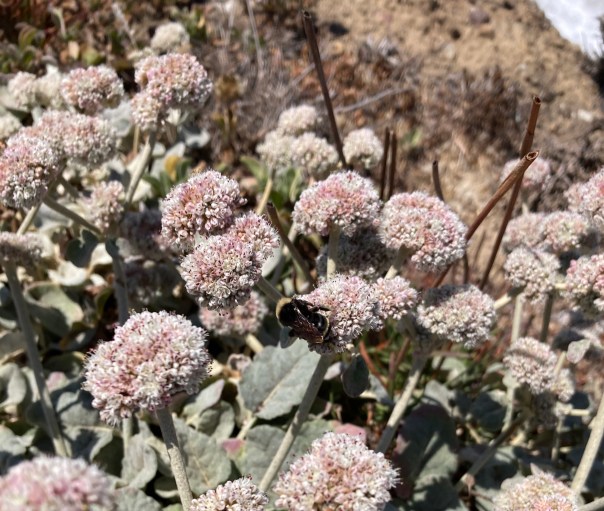
Below, a mixture of catsear and lotus combined to create a carpet of yellow:
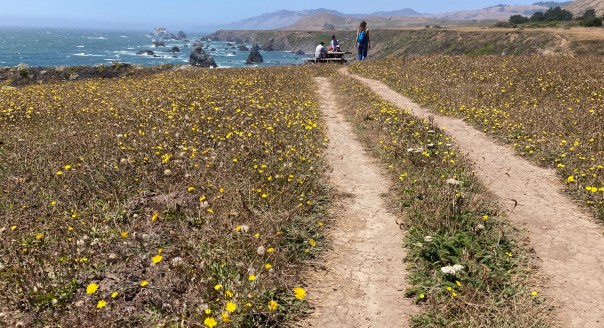
Another contributor to the sunny tone was the Seaside Woolly Sunflower:
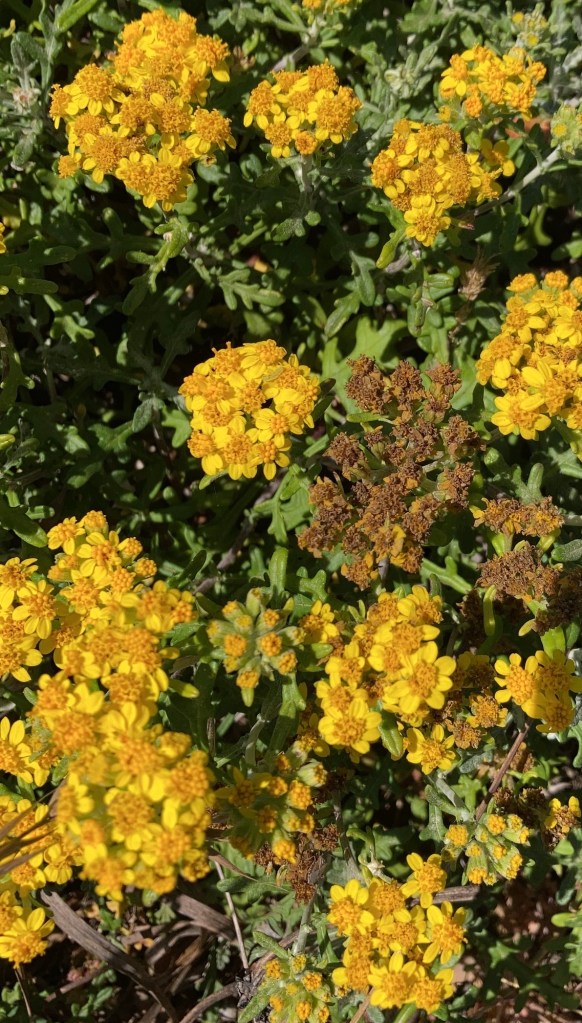
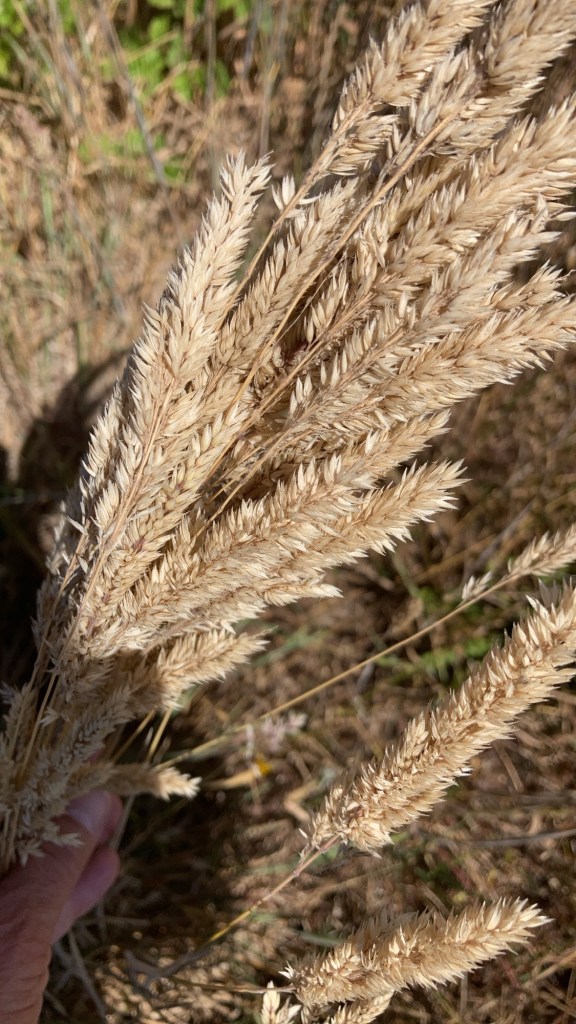
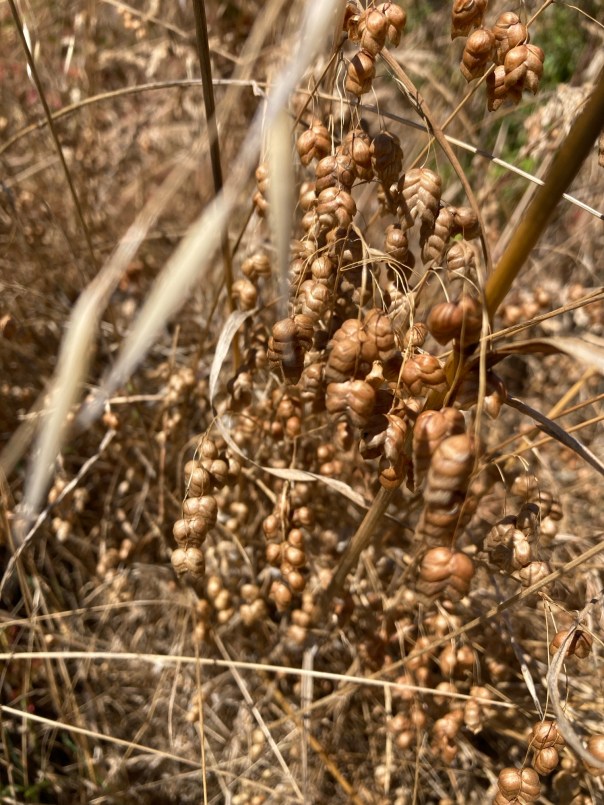
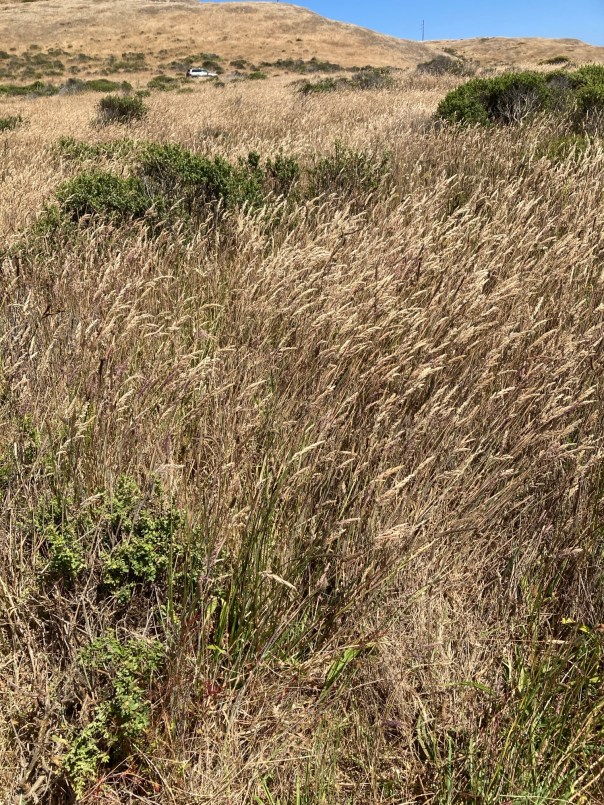
The grasses were swaying back and forth in the wind — European Marram Grass, my Seek app told me — and my favorite Rattlesnake Grass was abundant.
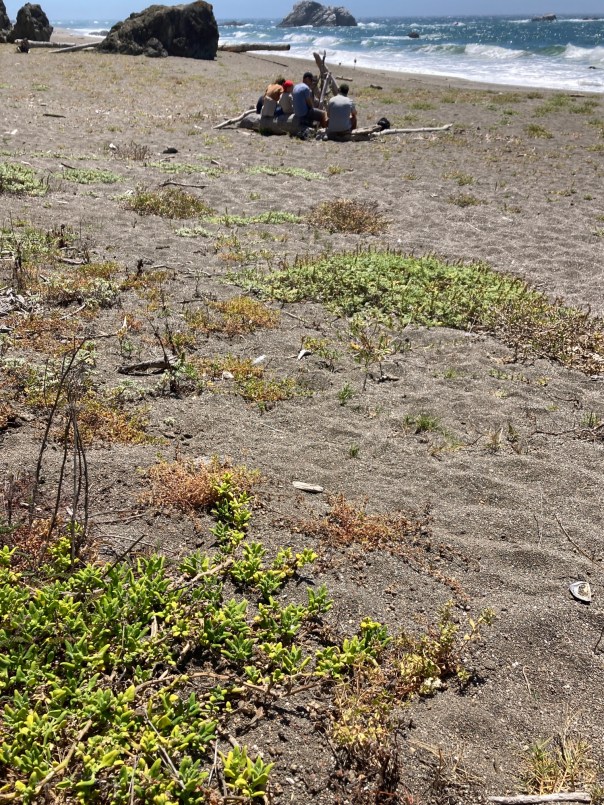
To eat our snacky lunch, we gathered around a minimalist and rickety teepee someone else had built, because there was a nice log beside it that seated five nicely. In the foreground here is Tetragonia tetragonioides, which I’ve always known as New Zealand Spinach, but the actual New Zealanders usually call it warrigal. There’s a better-watered specimen of this plant that keeps volunteering in my backyard garden:
Pathfinder patiently discussed with me ways to tell two members of the Carrot Family apart, plants that grow in a similar habitat and that I’ve repeatedly mixed up over the decades. He noticed the different leaf shape and type: Cow Parsnip has large, deeply toothed leaves:
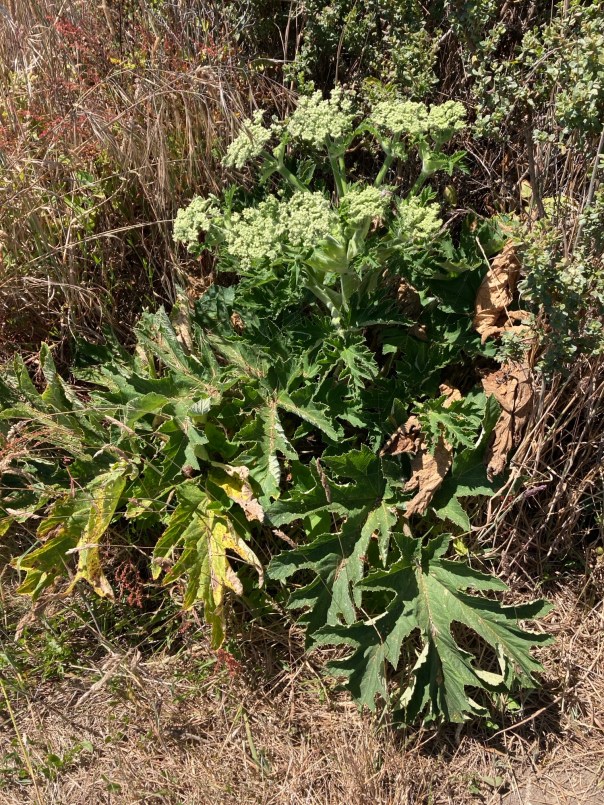
…while Angelica — in this case Henderson’s Angelica — has pinnately compound leaves.
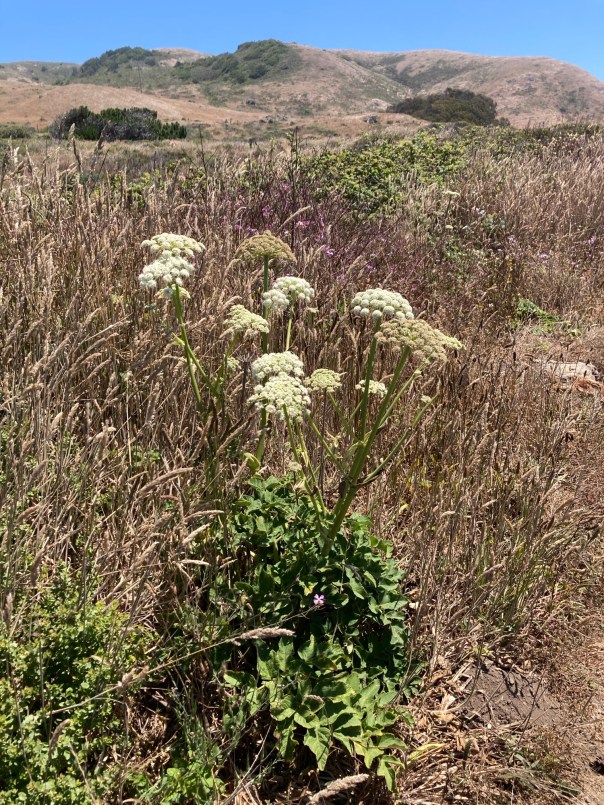
Their flowers aren’t exactly the same, either, and there are other differences. Once I saw the two plants growing right next to each other; that helped, for a time. Unfortunately the Seek app that I use a lot does not have a search feature; but if it did, I would probably be even more distracted from enjoying the plants themselves. So I guess it’s just as well.
It was a very satisfying outing, even if several of us did get sunburned. That was opportunity to take advantage of a backyard botanical: my Aloe Vera plant, the leaves of which we peeled on one side, revealing the gelatinous interior, which we applied to red arms and neck. Oh, so soothing.
Our whole crew slept well that night!