Tag Archives: olive trees

That relaxed feeling.

Our days continue with the lovely relaxed feeling that comes from being just the right temperature and humidity. It’s dry here, but not harshly so.
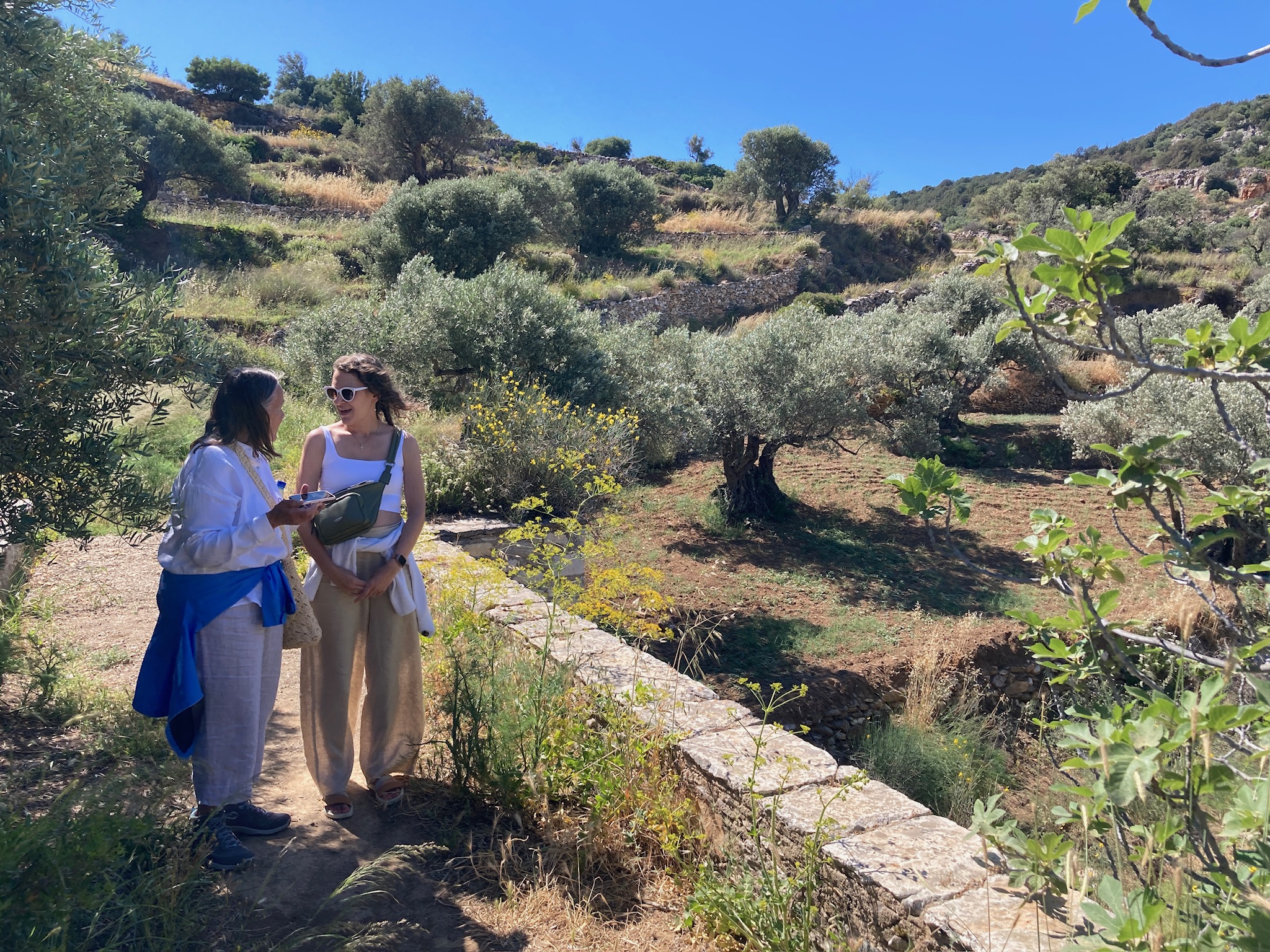
The sun is bright, but not too bright, and the air seems constantly re-freshed by the winds, though evidently perception is not the full reality:

Our first morning here we wondered about the red dust on the car and the stone terraces. In the town many people were washing down their outdoor spaces though it had recently rained.

“It’s raining dust from Africa,” our host told us. Soon we heard from others, “It happens every May, the red dust from Chad blowing north.” Who knew?

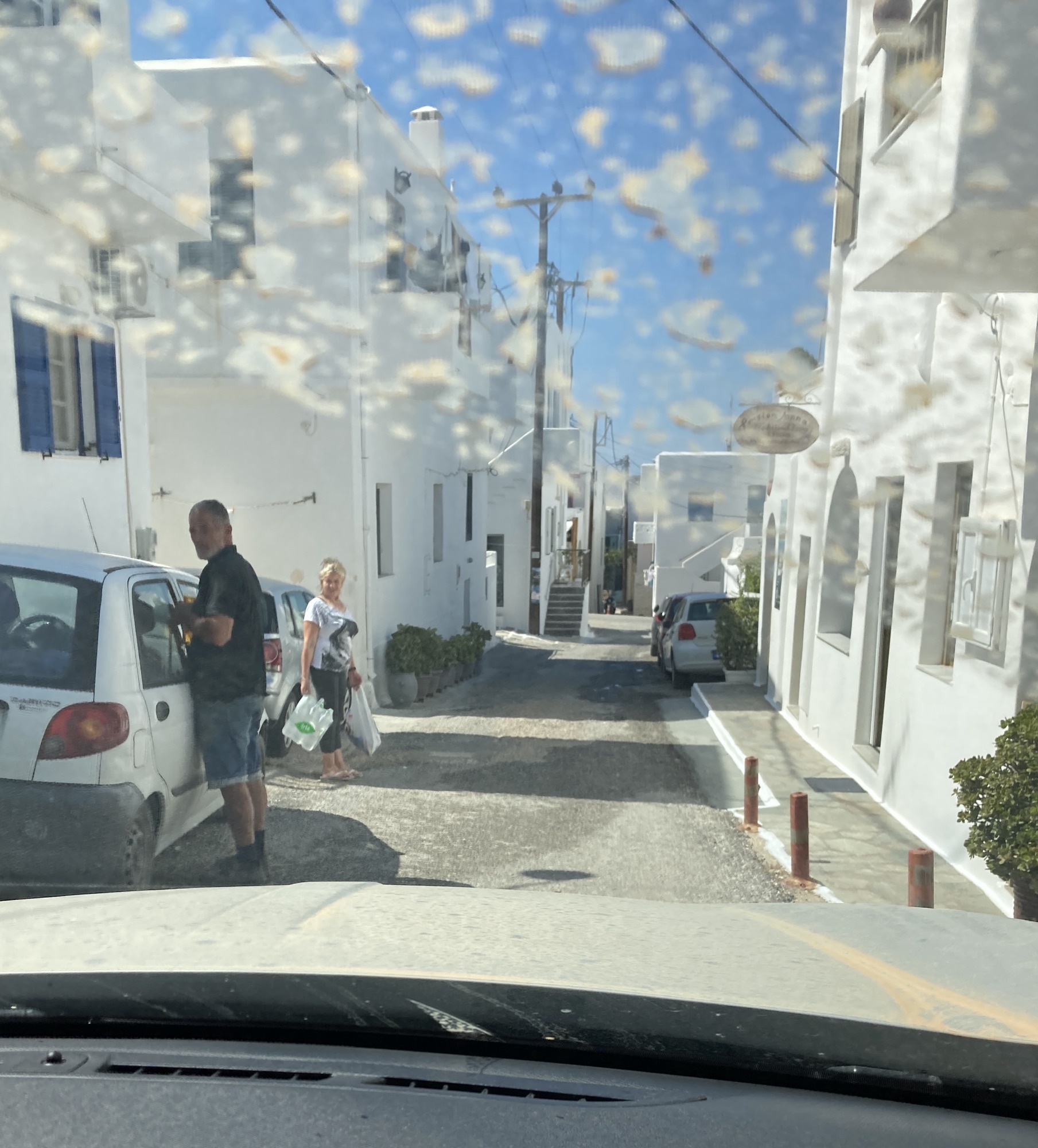
In the picture below, that I took when Kate was navigating the twists and turns of the narrow village streets, you can see the dust on the windshield, but it’s not red, so maybe we are at the end of the African dust season, and the air is now carrying the paler local dust.
One day we swam at the closest beach, Aliki. It wasn’t crowded at all. Some Greek boys were very boyishly playing with a ball in and out of the water and providing good entertainment, especially for Pippin who was catching Greek words and phrases in their shouts; she became much more comfortable with the language than I after our months of Duolingo lessons.
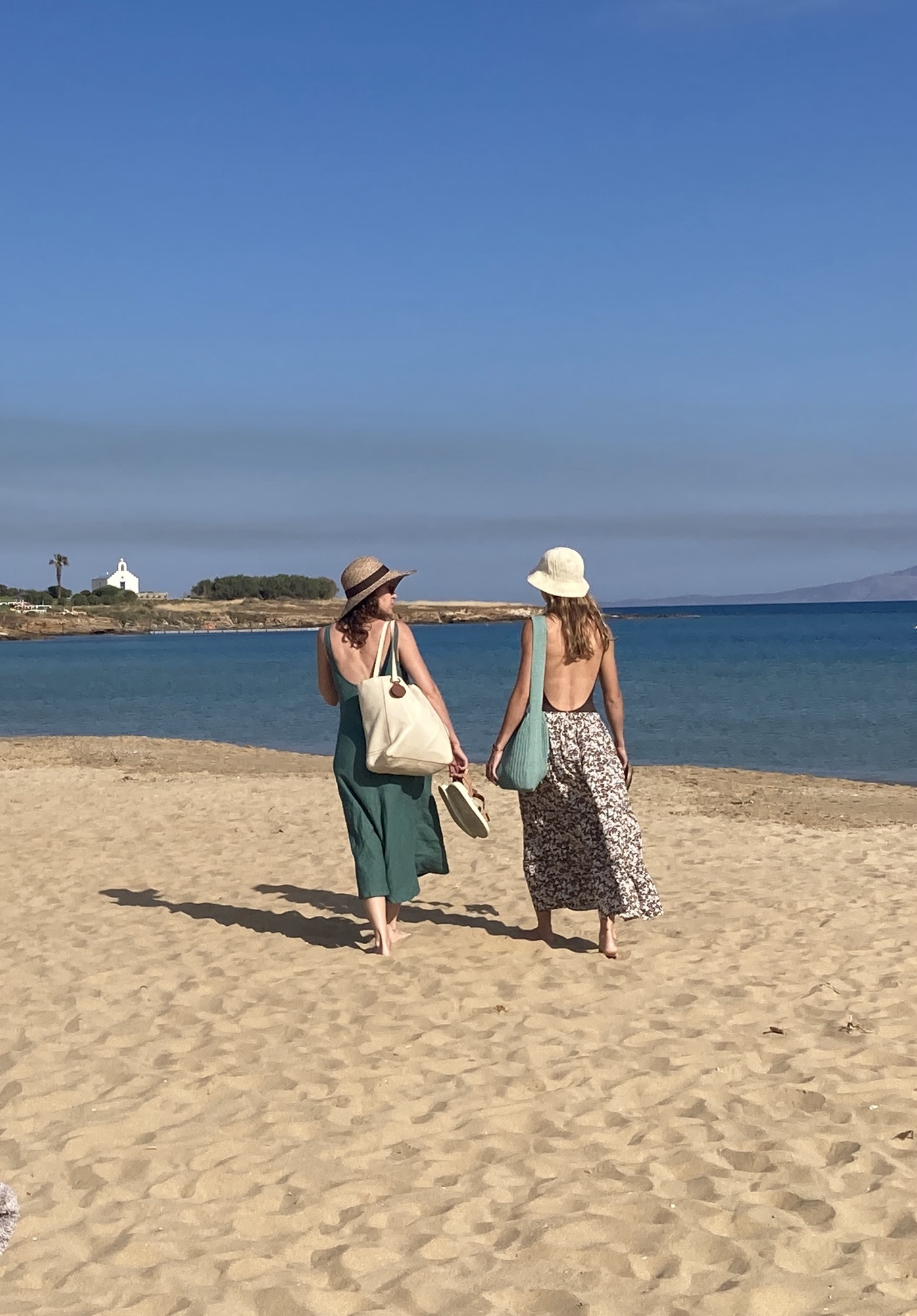
Kate and Maggie on Golden Beach

After I walked out through the waves up to my waist, it still took me a few minutes to finish what I had started months ago, when I told my daughters how much I was looking forward to swimming in the ocean.

I knew it wouldn’t be as perfect as the other times I’d been in the Aegean, on the Turkish coast so long ago, but without a doubt it would be much warmer than any of our northern California beaches whose currents flow direct from Alaska.

Once I did dive in, it didn’t seem too cold at all, and I swam as lazily as one can, for (what I perceived to be) a long time. That felt so good. I hadn’t swum in the ocean at all since Maui, thirteen years ago.

Another day we went to Golden Beach, in the evening, and I don’t think any of us swam, but three of us brought the others drinks from the bar, and we sat and told stories from the last years or from our childhoods and anytime in between.
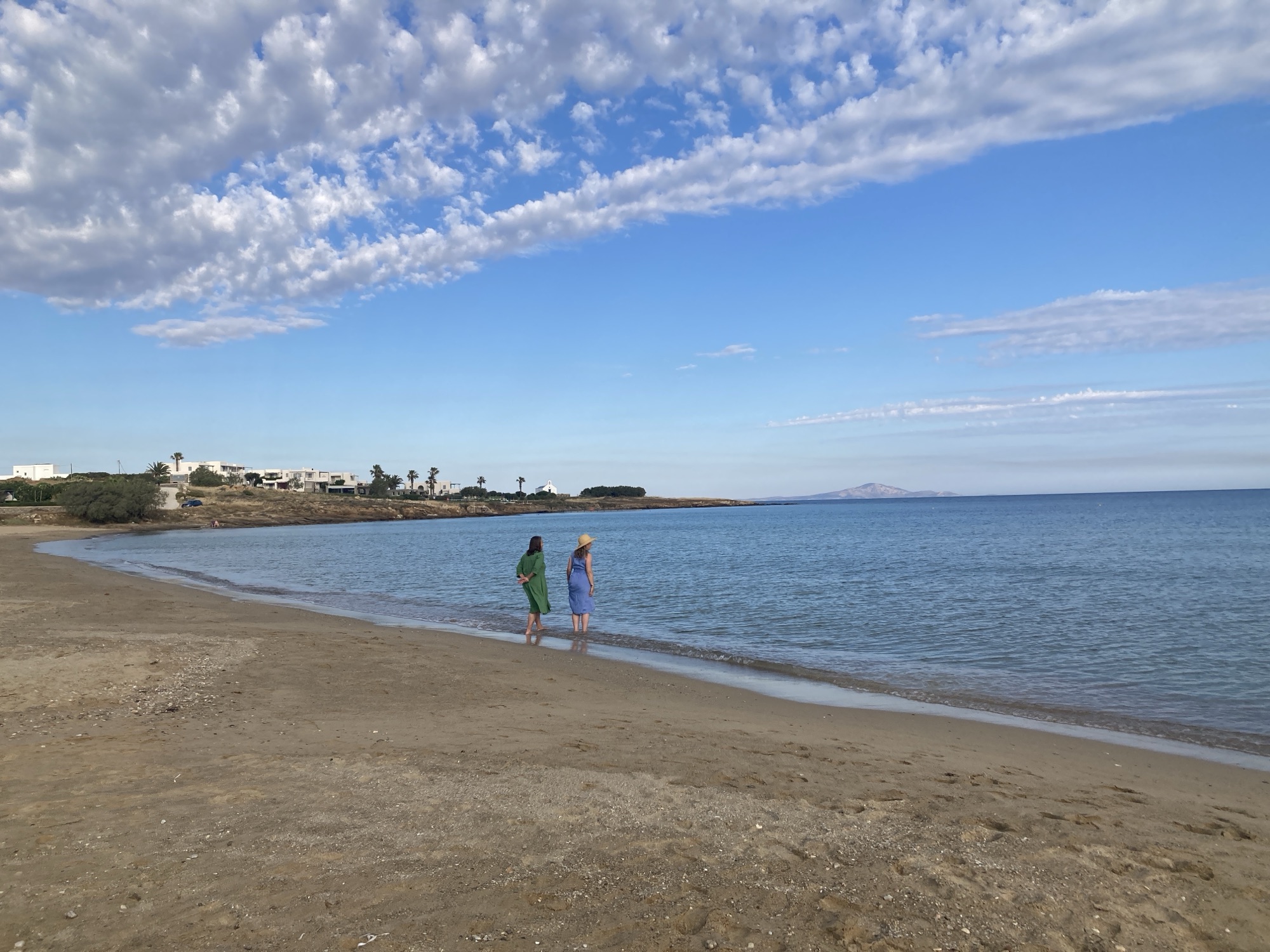
Pippin and I walked slowly along the shore looking at the smooth and many colored stones, and chose our favorites.

I have a lot of favorites. One daughter asked if I were going to take sand for my collection at home, and I realized I had forgotten to bring along a bag or bottle for that. In my purse I found a pill pouch with a few Tylenol tablets in it, so I dumped those in another place temporarily and scooped a tablespoon or so of golden sand into the tiny bag.

When we returned that evening after a long day on the other side of the island, we realized we were fresh out of drinking water. Our hosts simply stated on the website, “The tap water is not drinkable.” I had drunk a pint of it before I heard that, and thought it tasted good, but we have been buying water in quart bottles from the grocery store across from the beach.
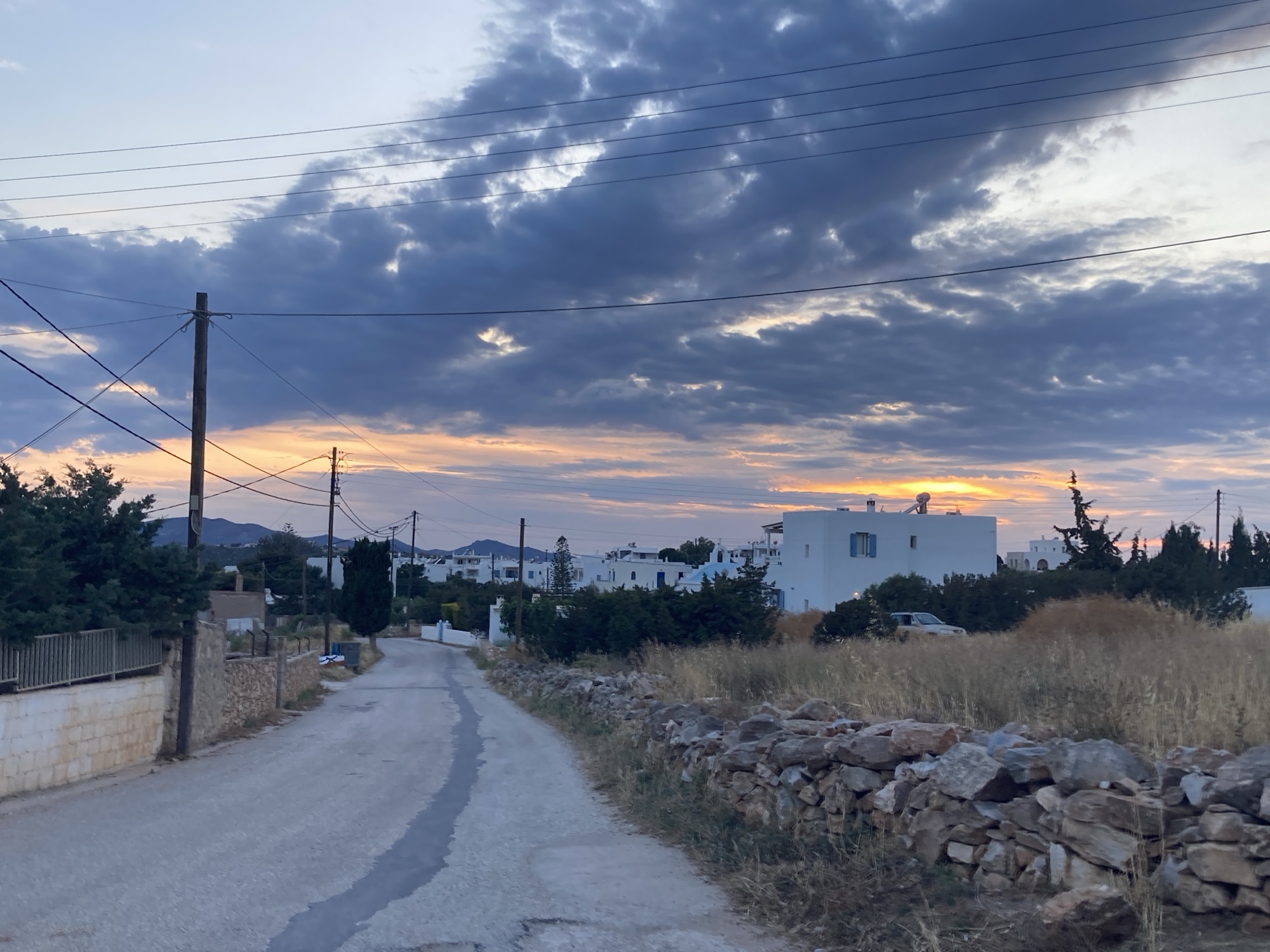
Pippin wanted to walk down there to buy more water, and I went with her. It’s about a ten minute walk, and was very pleasant in the fading light, with the village sounds changed from the daytime. People were walking their dogs, and it seemed to be the hour for dogs to bark.

The doves that fill the airwaves with their constant urgent cooing had not stopped, but fewer people were on the beach, and the beachside restaurant tables were quiet.
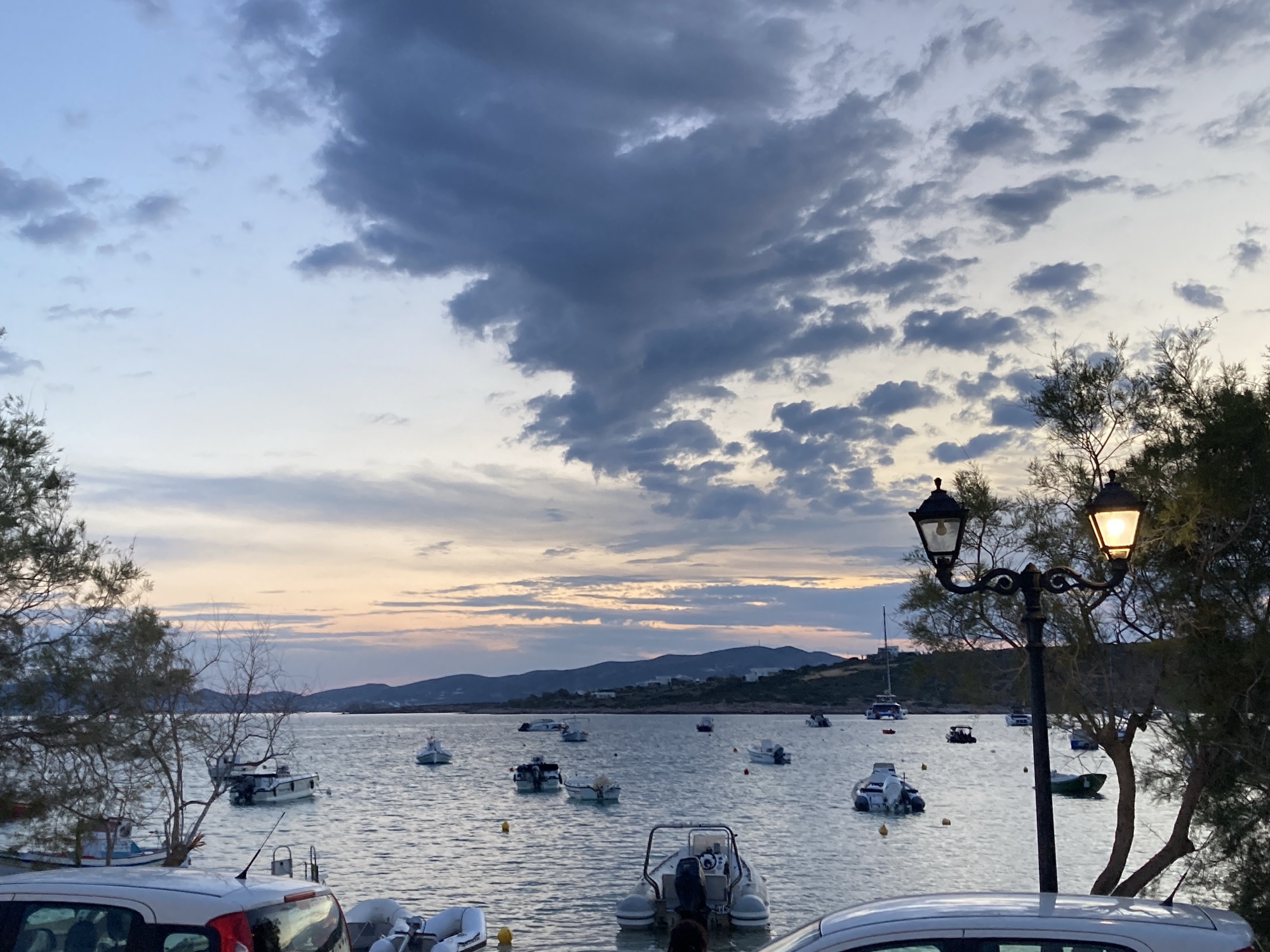
We browsed the store a bit and in addition to water bought linden tea and rice cakes flavored with oregano. I would not have bought them if I hadn’t learned this week that Maggie likes rice cakes. That makes two of us.

For today our group split up, three going to the nearby island of Antiparos and two of us staying here for a Home Day. I washed some laundry — it dries in a flash on the rack outside — and wrote a postcard; Maggie swam in the pool. I’m lying on a day bed on the terrace that overlooks an olive grove with the ocean just beyond:
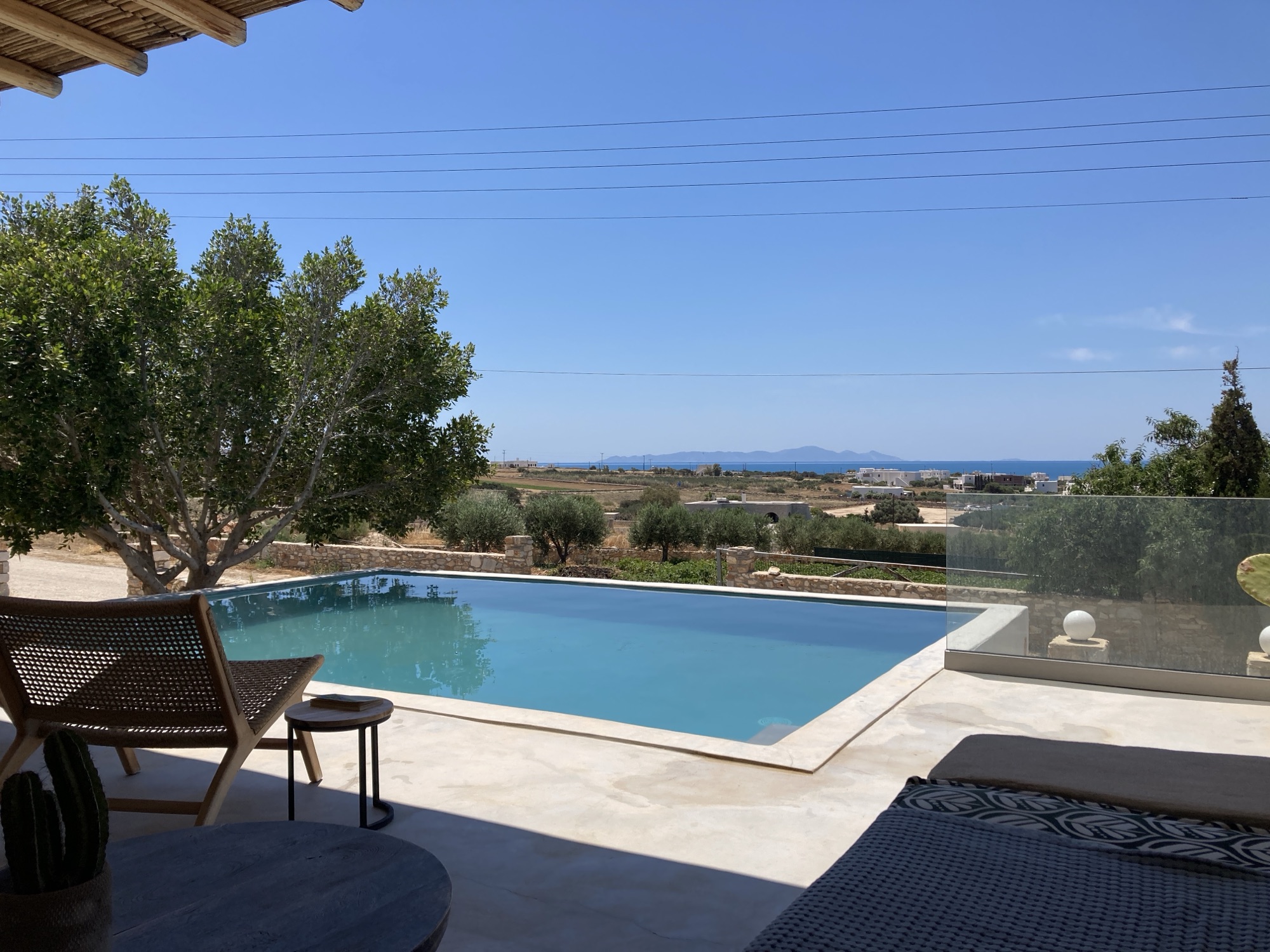
The owner of the villa was here earlier skimming the pool, and when I came out he was in the middle of telling Maggie that at her age she should be going into Naoussa to enjoy the night life. She was reading a book, and he said only two in ten Greeks ever read a book. He doesn’t favor the quiet life such as Maggie and I were having this morning, and prefers to be busy with “business.”

But as he was leaving he said he regretted building several such villas as we are staying in, it is too much work keeping up with the hospitality and maintenance on all of them.

He also said he comes from Crete, but it is too big, he likes Paros much better, and it is a better life than Naxos, too. I’m thankful he built this house we are staying in, because it’s the best.
Thorny and Byzantine

In Lefkes

The skies had cleared and the wind was still blowing when we set off for the high country of Paros, on our first whole day here. In the village of Prodromos signs for Public Parking led us to a dirt lot, and the bus stop a short walk from there, where we hoped to catch a bus up to the town of Lefkes.

We could make out from the roadside sign, conveniently right outside a bakery, that our bus would not arrive for another hour and a half, so we did a little shopping —yes, including of pastries — and found a taverna where we could have an unfortunately quick lunch in the meantime.

The only other people in the restaurant were five older Greek men in a traditional and more relaxed midday gathering, for whom the five of us chatting and laughing over our menus clearly provided an interesting diversion; they couldn’t stop watching us. We petted the cat while waiting for our orders, and kept an eye on the time so we wouldn’t miss the one bus that we needed.

At every restaurant in Greece so far we’ve found that restaurant wait staff are reluctant to bring the check, which applies a gentle pressure to linger, and enjoy to the max the great food and ambiance. We felt ourselves to be rude and unappreciative of the chance to experience a village taverna complete with cat, and old men gossiping over their coffee.

We even had to leave an entire kebab untouched, but I stuffed the extra bread in my shoulder bag to take along, with breakfast toast in mind.

After a quick bus ride up to Lefkes, we strolled through the town, always heading gently downhill, on the Byzantine Trail, a thousand year old road that is by modern standards a path between Lefkes and Prodromos. The huge 19th century Agia Triada church that was built of local marble we found closed; reportedly services are held morning and evening every day.

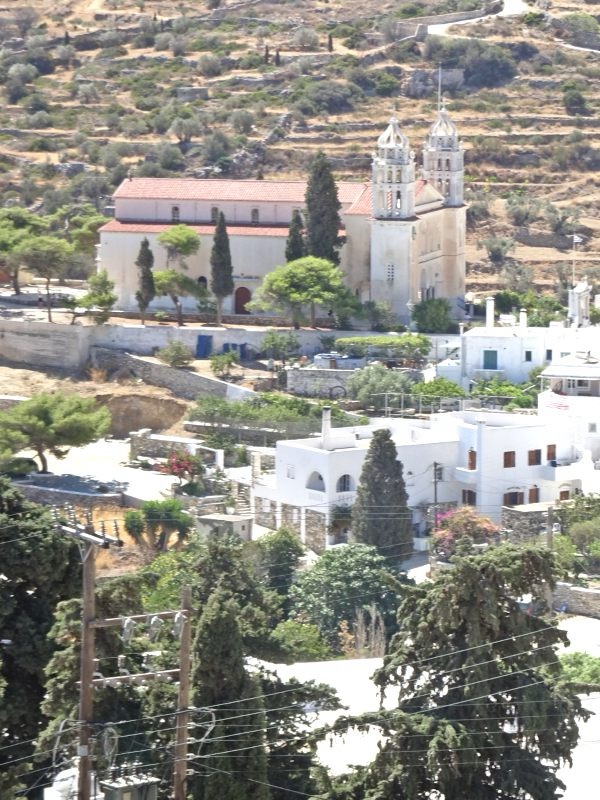
Lefkes, Internet photo

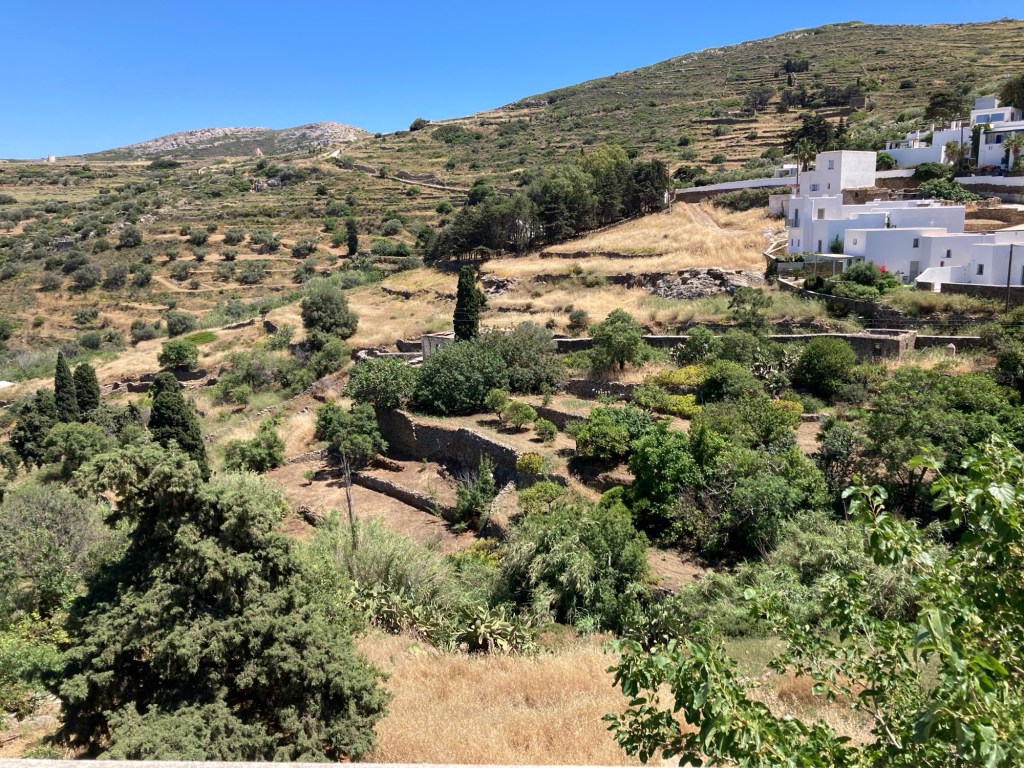
The trail soon left the town and wound on down the hill, with views on all sides of ancient terraces built of stones pulled from the earth that is rich with them, and naturally poor from the stoniness. A few of the thousands of plots are evidently being used again, though tourism has supplanted agriculture in the island economy.

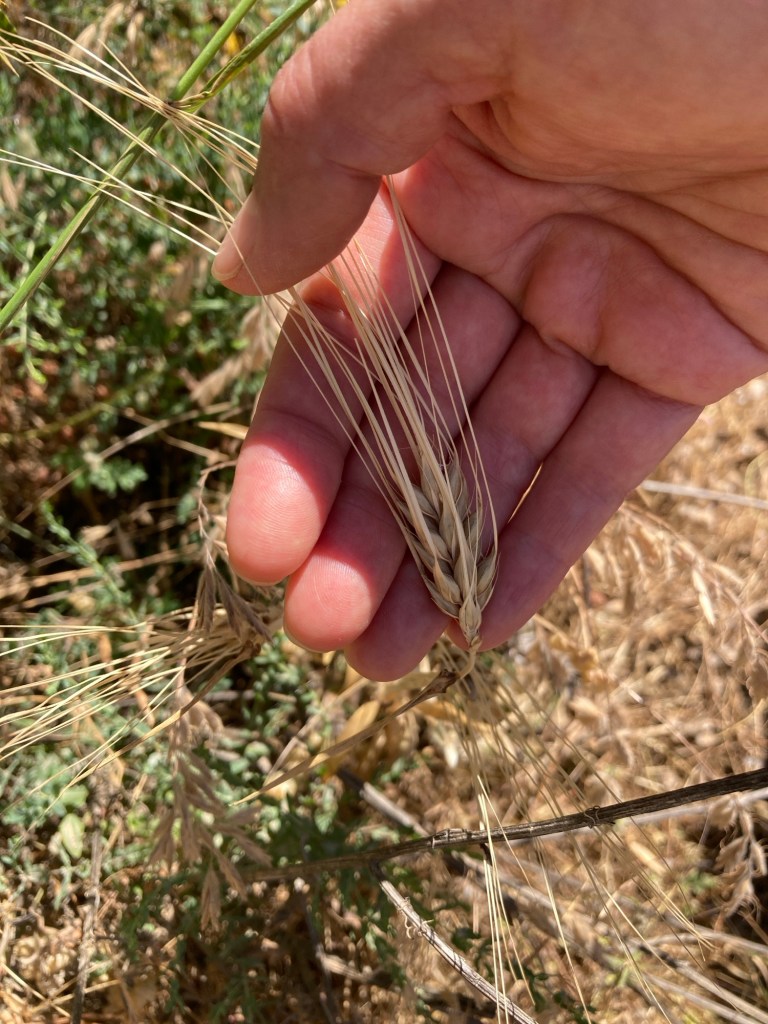
Barley

It is easy to imagine the farmers in the old days growing fava beans and keeping goats on those terraces. We did pass one old man keeping watch over his goats that very afternoon.

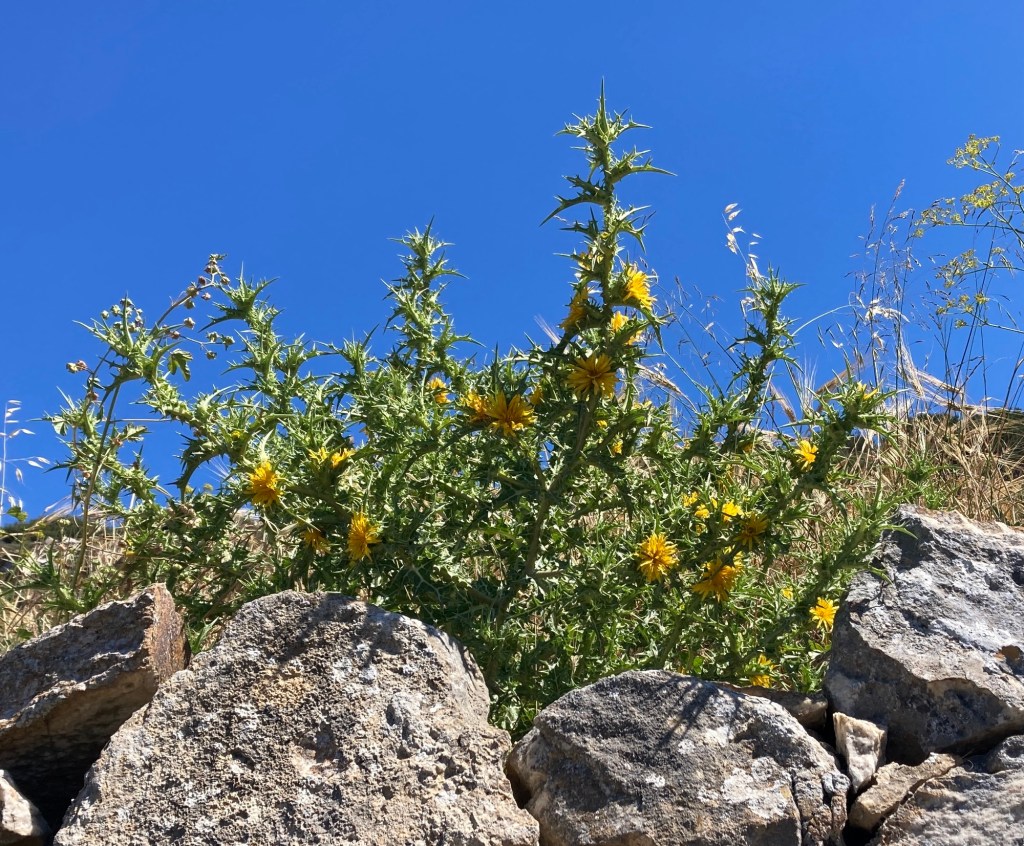
Pippin and I kept lagging behind the others to investigate all the strange or familiar plants along the path, which included at least a dozen species of prickly types.

Common Golden Thistle

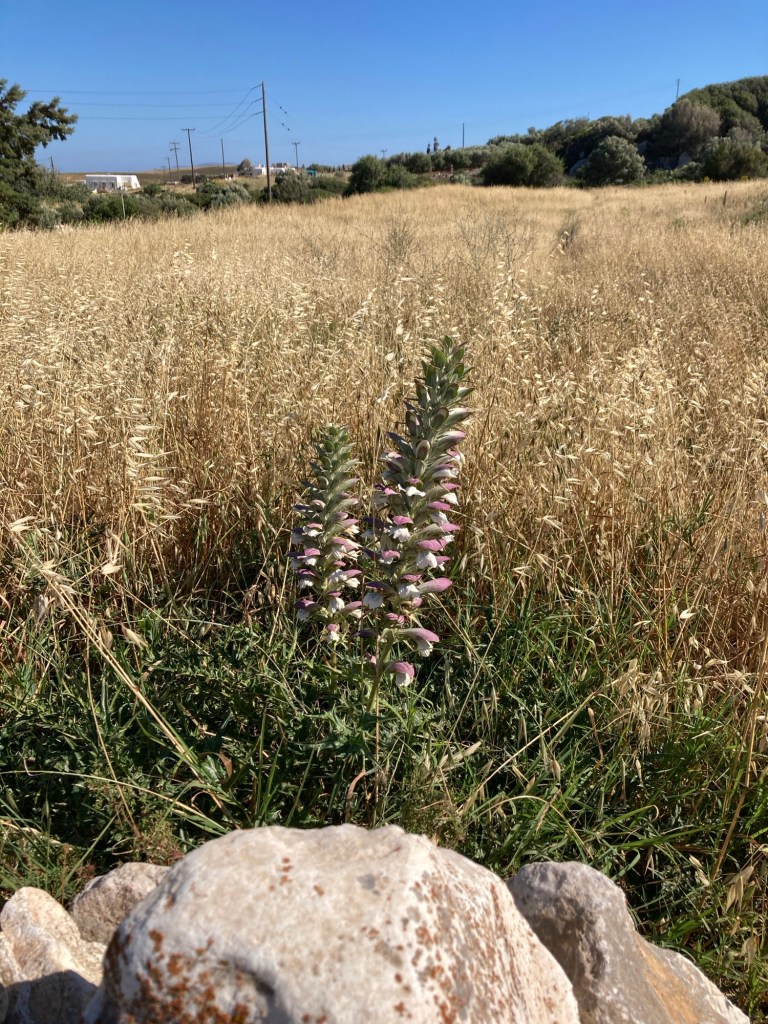
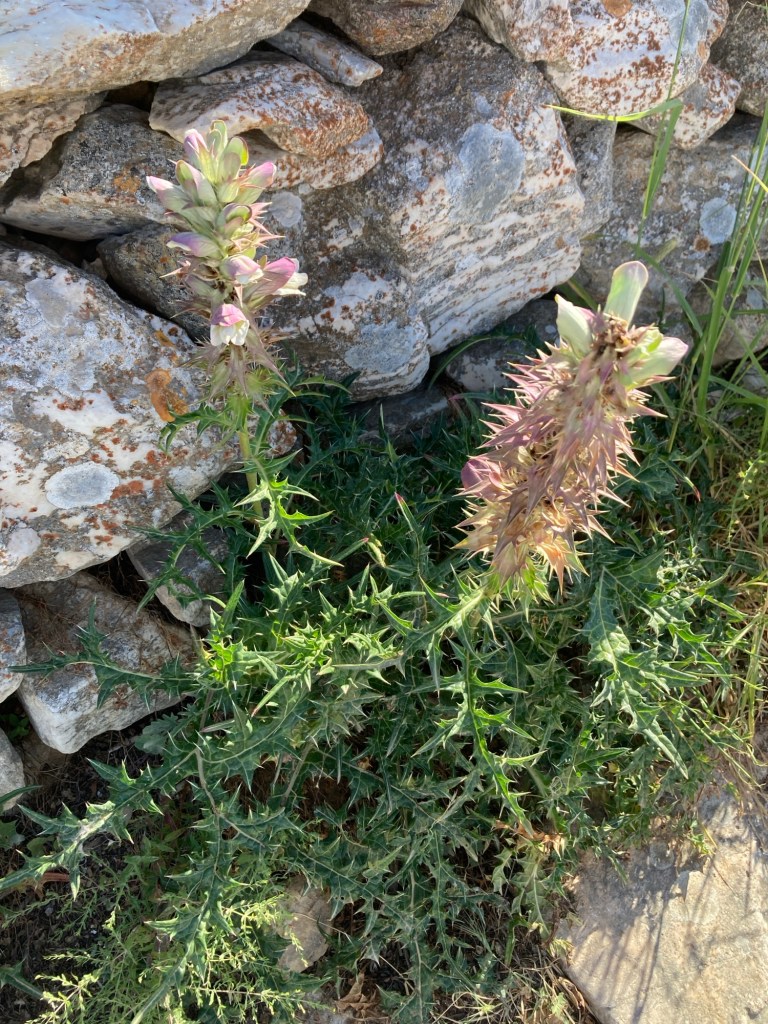
There was even a beautiful but thorny type of acanthus, which it took me a few sightings in different stages of its flowering to recognize as being related to the majestic version in its glory right now, back home in my garden.

Acanthus

I was so happy to be wearing my new hiking boots that kept me comfortable and mostly steady on the road that was sometimes dirt, sometimes roughly rocky and uneven, and often paved with wide and flat marble that had been polished smooth over the centuries.

Phoenician Juniper

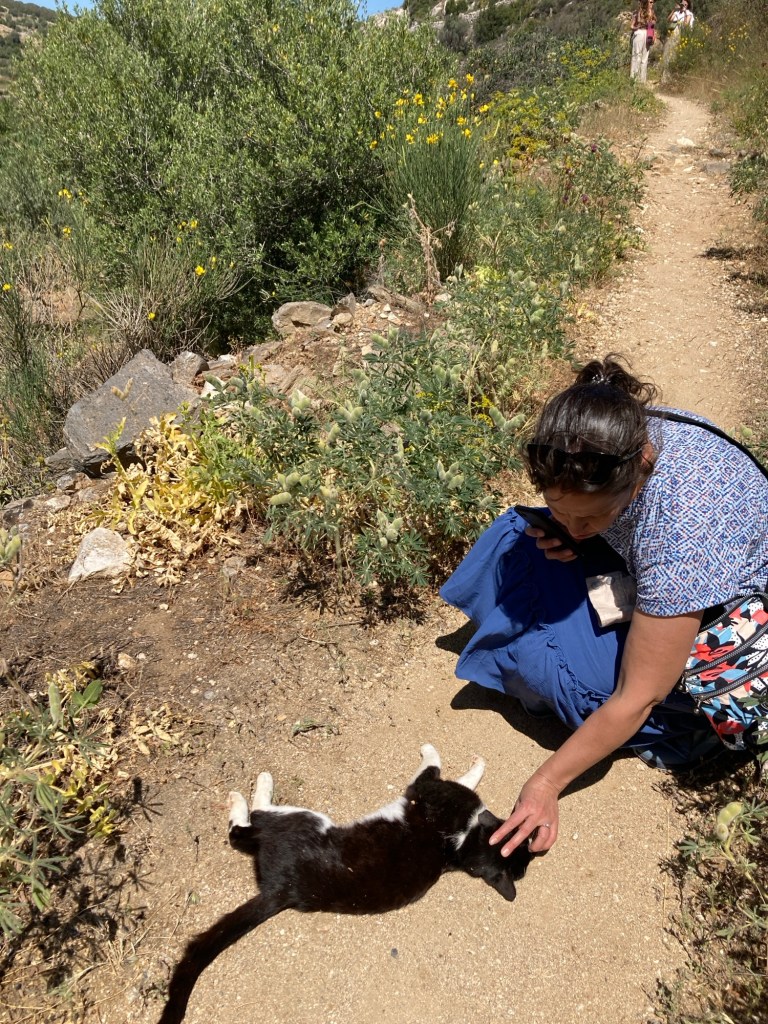
The ubiquitous cats greeted us on the Byzantine Road, begging attention, which at least a couple of us were happy to give.

I was in my element, under the warm sun, so many interesting plants to see, with my favorite botanist partner and in the company of other family favorites, getting good exercise among terraced hills — it all was so healthy and alive that I could forgive the wind that tangled my hair, and the thistles that grabbed at my legs.

Yellow Spine Thistle

I hadn’t known ahead of time just how much of a nature walk this trail was going to be, and I couldn’t get over my good fortune at being the recipient of this blessing, accomplished through the labors of my girls, from Kate who was willing to drive to Maggie who buys us pastries.

Eventually our walking trail brought us back to our car in Prodromos, and we returned to our house across the island. At the end of the day we had walked more than five miles, and we all slept very well that night under Aegean skies.

The languid skipper sets an example.

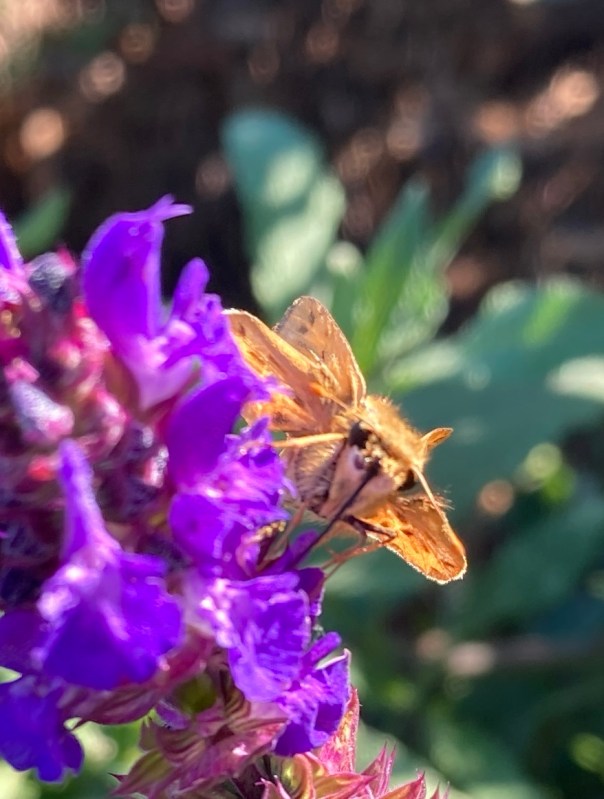
When I was pruning the salvia in front, this skipper was languidly sipping from the same. You can see its proboscis going right down in. The creature was definitely not feeling skippy… I wonder if skippers die in winter? Did it lay eggs somewhere already?

So much is going on in the garden. These irises really should have been divided again — but, already? I’m afraid they will have to wait until next year.


I ended up with so much lemon verbena — what wealth! This is a very nostalgic herb to me, because of when I was in Turkey riding non-air-conditioned buses across Anatolia, and first experienced its delicious scent, though I didn’t know what it was. The bus attendant would walk up and down the aisles every hour or so with a big bottle of something like cologne, and if you held your hands cupped he would sprinkle a tablespoon or so into them. I followed the example of others and quickly splashed it on my face and neck for refreshment. Later, when I returned home, I brought an empty bottle with me and kept it for many years, just so I could take a whiff from time to time.
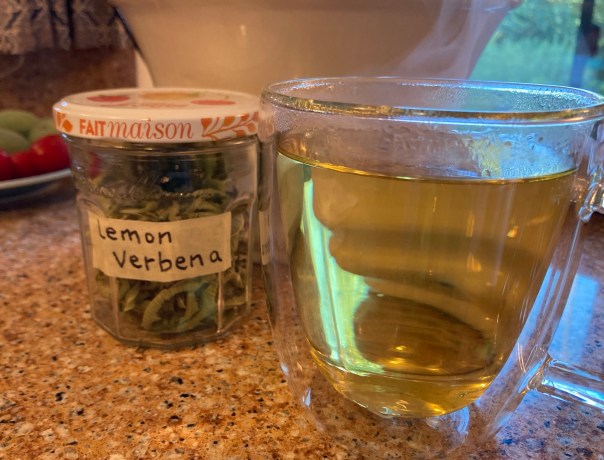
It was decades before I matched that scent to the lemon verbena plant. I mentioned in the summer how I had made lemon verbena paste, and last week I made lemon verbena simple syrup, trying to use a lot of the leaves before they fall off when the bush goes dormant. Now I wish I had just dried them. Making tea is the obvious thing, but for some reason I never did, though I had dried a few leaves last year and they were sitting on the counter. Last week I made a pot of tea with them and loved it. It’s wonderful just “plain.”

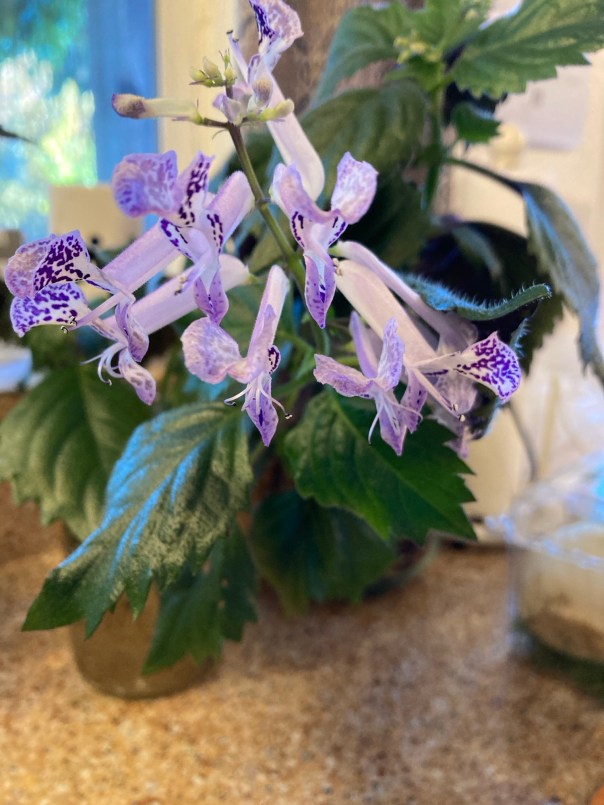
A few months ago my neighbor Kim broke a big stem off a plant on her patio and handed it to me. “Stick this in the ground,” she suggested. Instead, I cut the stem into three parts and put them in water, wherre I noticed they had made a lot of roots pretty quickly. One day I spied this huge flower cluster at the back of the jar by the window. Kim says this is a Plectranthus ecklonii, and her plant never gets blooms like that. I don’t know what I will do with it, but I found out that it is not terribly frost tender.

Plectranthus ecklonii


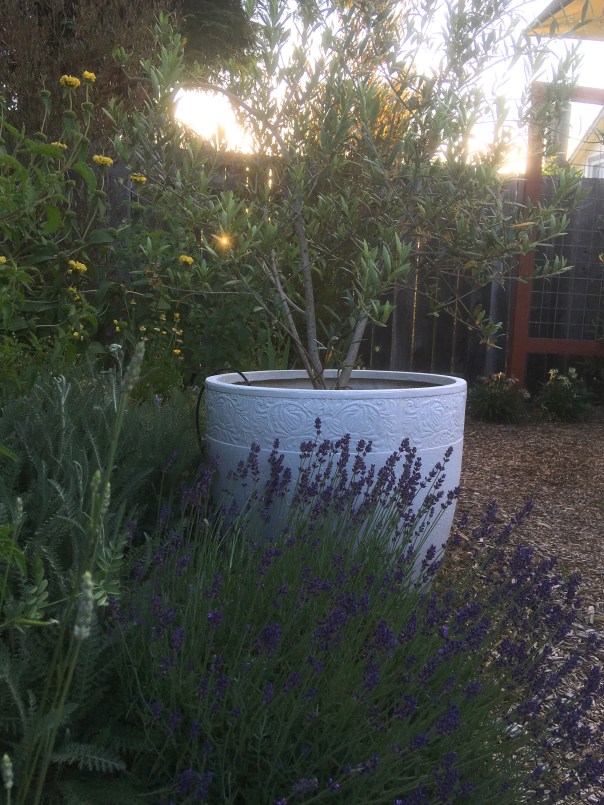
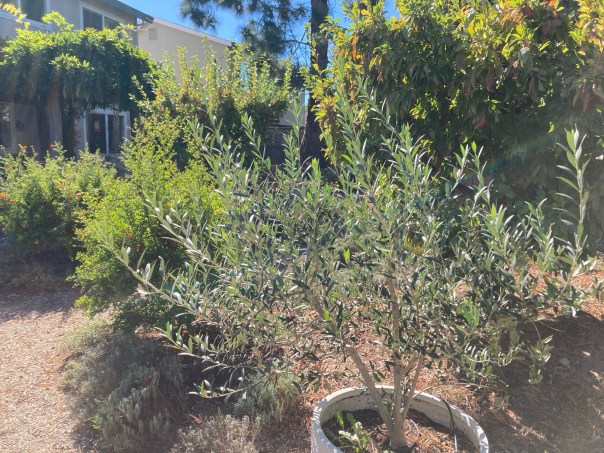
The olive that I repotted with great effort is looking healthy again. I guess my pruning wasn’t too bad, either. I do enjoy pruning, but I’m glad I don’t have to do all of it, or get on ladders anymore for that task. I can just prune the smaller bushes and leave the big ones for my helper.

Recently I did prune all four dwarf pomegranates, in advance of their dormant pruning that will happen later, because my new landscaper consultant told me I should “lift their skirts.” Ahem… is that common parlance in the gardening world? I had never heard the term, but I knew what he meant.

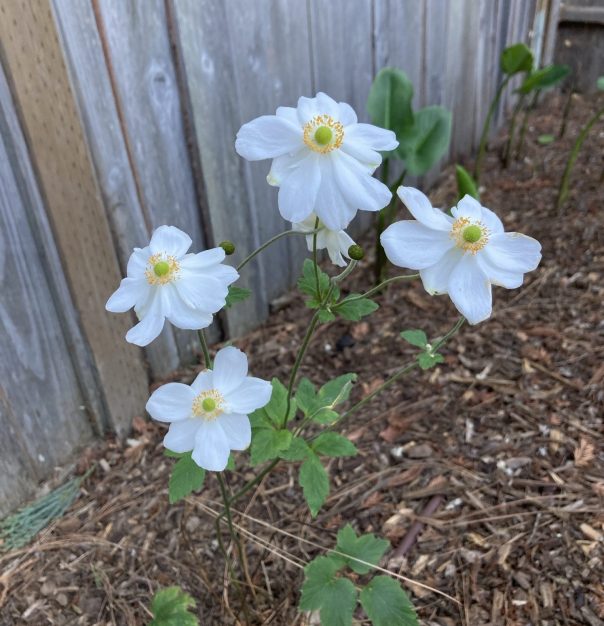
I am thrilled that my Japanese anemones (below) are putting on their best show ever, though they still are not robust — I gave the four of them extra water this year, and they have been getting more sun since the pine tree was thinned. If I feed them a little maybe they will do even better next year.

I have lots more to do before I will feel prepared for winter, but that skipper put me in touch with the reality that I, too, am slowing down. Most likely I won’t get “everything” done. And I guess that will have to be okay!

The olive gets refreshed.

September 2016

Back in 2016 I removed my two olive trees from their pots, trimmed their roots, and installed them in larger, matching white (and lightweight) fiberglass pots. I seem to have never written about the process here or posted photos; I wish I had, because I couldn’t remember the specifics, and had to consult YouTube when yesterday I decided to tackle the root-trimming job again.

Olive Junior, June 2020

The landscape designer who advised me back then not to plant an olive tree in the ground, because it would grow out of scale and become overbearing in my little garden, suggested I keep the ones I already had and just put them in larger containers; she added that I would need to trim the roots every couple of years to keep them healthy in the confined space.

That was eight years ago this month, and one of the trees by its yellowing leaves has been signalling me that my procrastinating was costing it its health. The task had become more daunting with every year added to my age. Those pots may be easy to move around when they are empty, but with all that moist dirt and biomass in them, I could barely tip one over on to a tarp.

When I did, I found a couple dozen salamanders of all sizes under there. They weren’t happy to feel the sun on their cool and moist bodies, and they writhed and slithered away into the mulch.

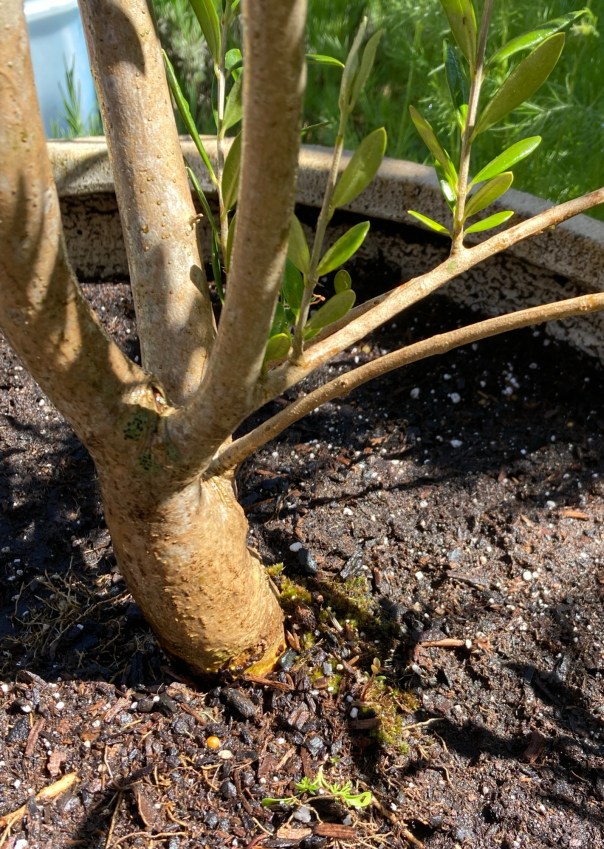
Getting the root ball out of the pot was the hardest part of the whole job. My back didn’t suffer any lasting effects, but my arm muscles are complaining. We were stuck in the situation pictured above no matter how I yanked and rolled things around; I really could have used a helper (with long arms) at this point just to pull on the pot while I pulled on the tree. But inch by slow inch — and it was finally out.

After I loosened the snarled roots, and shook off the old soil, it dawned on me that I didn’t have enough new soil to replace it, so I covered the root ball against the sun and took a half hour to go to the store for a few bags of potting soil.

Olive Senior, May 2020

After trimming the roots I put the pot back in place and leveled it using two flat stones from the mountains, then put the tree back in, with the new dirt, and a little fruit tree food. I trimmed the branches a bit, too. I think this tree, whom I’ll call “Olive Junior,” will be happier now.

What about the other one? It seems pretty healthy, so I’m putting off dealing with it for now. The two trees have different history. Olive Senior was given to me as a birthday present by my son “Pathfinder” and his family more than ten years ago. I kept it in a roomy pot but didn’t water it very much; its form was lacking but it didn’t occur to me to try to improve on it.

A few years later I saw little olive saplings at the grocery store half-off, that is, $7.50. They were very healthy and more shapely than my olive tree, and I brought one home. I began to shape Olive Senior with my pruners. When it came time to put them in matching pots, O.S.’s roots weren’t crowded in the pot and there wasn’t much to trim off. Olive Junior’s roots were extensive and needed a lot of trimming, even though it was much younger. So… I’m guessing each is still following its pattern, and I can wait a bit, and tackle Olive Senior with a little more forethought, and with a helper.

It’s a great blessing to own not just one, but two olive trees, even if I do have to give them the bonsai treatment. They like the Mediterranean climate. I will close my olive report with this Bible verse that I took many years ago as a poem-prayer expressing my heart’s vision:

But as for me,
I am like a fruitful olive tree
in the house of the Lord;
I have hoped in the mercy of God
for ever, and unto the ages of ages.

Psalm 51:8