 This year in my parish the birthday of St. John the Baptist, June 24th, falls on Holy Spirit Day, and our youth are also heading off to church camp, so I wasn’t paying close enough attention. Ideally I’d have shared about it last night, on St. John’s Eve, because this year that is the day that has captured my imagination.
Father Malcolm Guite has written more than one sonnet for the celebration of St. John’s Day, the birth of St. John the Baptist. Here is one of them, prefaced by his notes on the feast:
“Now, with the summer solstice, we have come to midsummer and the traditional Church festival for this beautiful, long-lit solstice season is the Feast of St. John the Baptist, which falls on June 24th, which was midsummer day in the old Roman Calendar. Luke tells us that John the Baptist was born about 6 months before Jesus, so this feast falls half way through the year, 6 months before Christmas!
“The tradition of keeping St. John’s Eve with the lighting of Bonfires and Beacons is very ancient, almost certainly pre-Christian, but in my view it is very fitting that it has become part of a Christian festivity. Christ keeps and fulfills all that was best in the old pagan forshadowings of his coming and this Midsummer festival of light is no exception. John was sent as a witness to the light that was coming into the world, and John wanted to point to that light, not stand in its way, hence his beautiful saying ‘He must increase and I must diminish’, a good watchword for all of those who are, as the prayer book calls us, the ‘ministers and stewards of his mysteries’.”

ST. JOHN’S EVE
Midsummer night, and bonfires on the hill
Burn for the man who makes way for the Light:
‘He must increase and I diminish still,
Until his sun illuminates my night.’
So John the Baptist pioneers our path,
Unfolds the essence of the life of prayer,
Unlatches the last doorway into faith,
And makes one inner space an everywhere.
Least of the new and greatest of the old,
Orpheus on the threshold with his lyre,
He sets himself aside, and cries “Behold
The One who stands amongst you comes with fire!”
So keep his fires burning through this night,
Beacons and gateways for the child of light.
-Malcolm Guite
To hear Fr Guite read his sonnet: Go here.

I just now figured out from this Wikipedia entry the source of the word bonfire:
“In England, the earliest reference to this custom occurs in the 13th century AD, in the Liber Memorandum of the parish church at Barnwell in the Nene Valley, which stated that parish youth would gather on the day to light fires, sing songs and play games. A Christian monk of Lilleshall Abbey, in the same century, wrote:
“‘In the worship of St John, men waken at even, and maken three manner of fires: one is clean bones and no wood, and is called a bonfire; another is of clean wood and no bones, and is called a wakefire, for men sitteth and wake by it; the third is made of bones and wood, and is called St John’s Fire.'”
The summer solstice always marks in my mind the beginning of summer, so I’m out of sync with the ancients who called it Midsummer…. even though the other end of the year does seem like Midwinter. Where I am, the heat is just now escalating, and definitely not at its peak, and for that reason I think my personal date for Midsummer would be sometime in July or August. When I get that certain feeling, I’ll let you know what date I choose.

Only recently did I learn about St. John’s Eve celebrations at all. [Update: see the video link from Lisa in the comments below, for much more history of the day.] Some online Christian friends in England and Ireland gathered around bonfires last night — while I in California was still at church celebrating Pentecost. I doubt I will ever be able to join such festivities over there… maybe I should try to rouse interest in planning a West Coast Midsummer Fest for 2025. Does that sound fun to you? And do you feel that where you are, it is truly Midsummer — or Midwinter?

(If you enjoy the sonnets from Malcolm Guite, remember that most of them have been published in his several collections. The one here can be found in Sounding the Seasons, his cycle of seventy sonnets for the Church Year.)
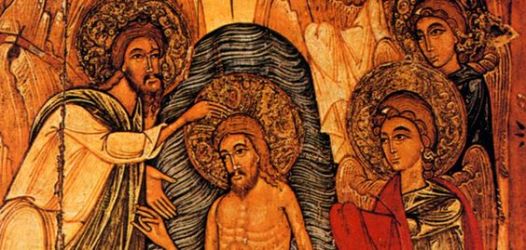
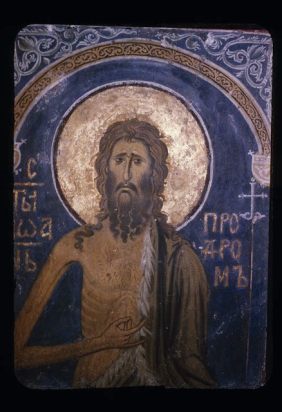 “Through the prayers offered beforehand, the child was filled with the Holy Spirit. Saint John prepared himself in the wilds of the desert for his great service by a strict life, by fasting, prayer and sympathy for the fate of God’s people.
 Gladsome Lights