 A couple of grandchildren, Ivy and Jamie, were with me for ten days, which we all agreed felt luxurious. We walked a lot! To the grocery store twice, to the bridge over the creek almost every evening, to the fairy houses and to the library more than once.
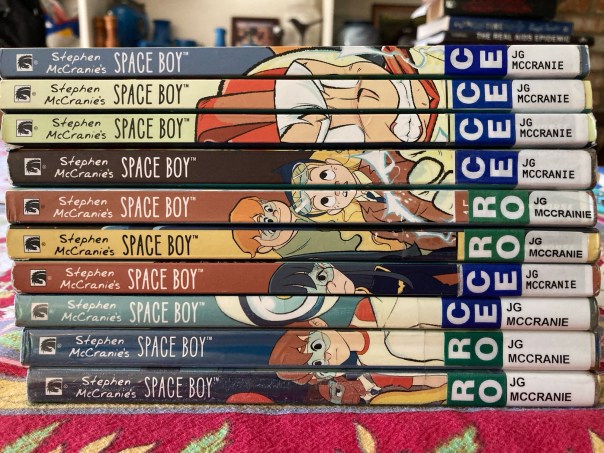
We made four visits to two library branches in the first five days, during which the children stocked up on their favorite authors and titles that are not available in their more rural area of northern California. Armloads were brought into the house to read in bed early and late, and at various other times throughout the day. Space Boy graphic novels, The Ranger’s Apprentice series, Nathan Hale’s Hazardous Tales, and a Godzilla encyclopedia were among the stacks.
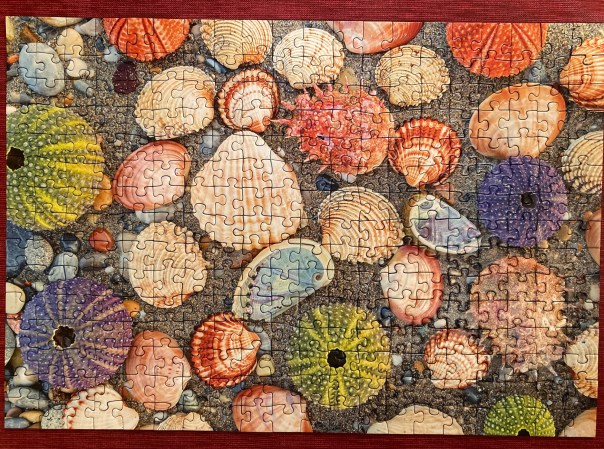
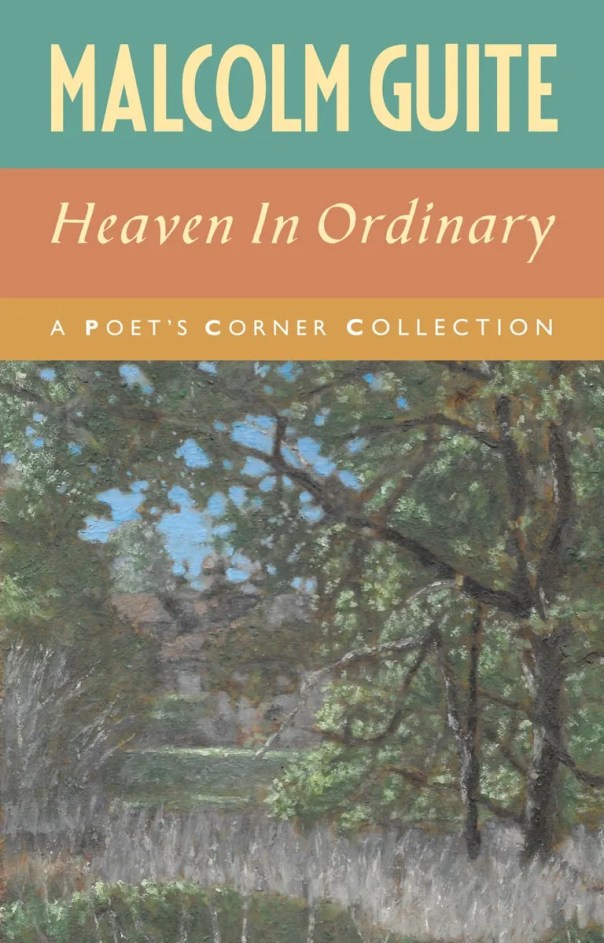
We also read together: from The Little Bookroom by Eleanor Farjeon — it seems we always must do that one; Malcolm Guite’s new Galahad and the Grail; and we listened to all of Johnny Tremain while doing jigzaw puzzles or riding in the car.
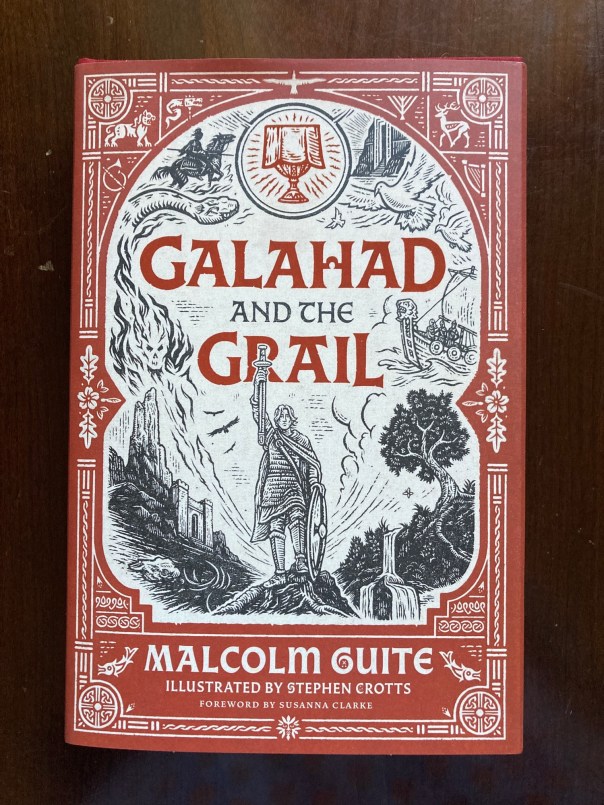
I have to say a little about Galahad, which I had been waiting to read until I had someone to read with, as it’s a long poem best read aloud. The children were happy to join me; they are very familiar with the Arthur stories and liked hearing this telling of it. Here’s one random stave’s opening page:
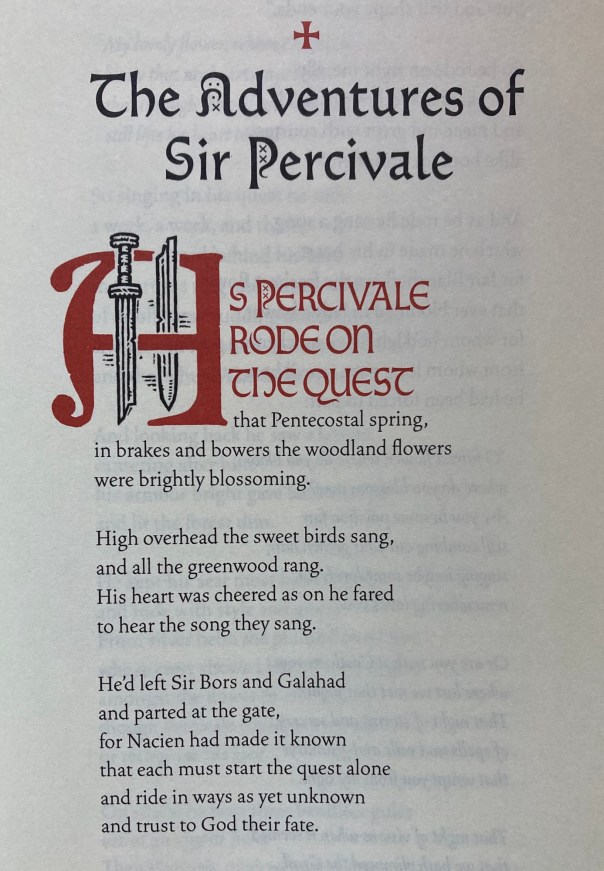
It is gorgeous to look at, to feel, and to hear. It is bound in such a way that when I laid it down face up for a few minutes, the pages were relaxed and I didn’t lose my place. We 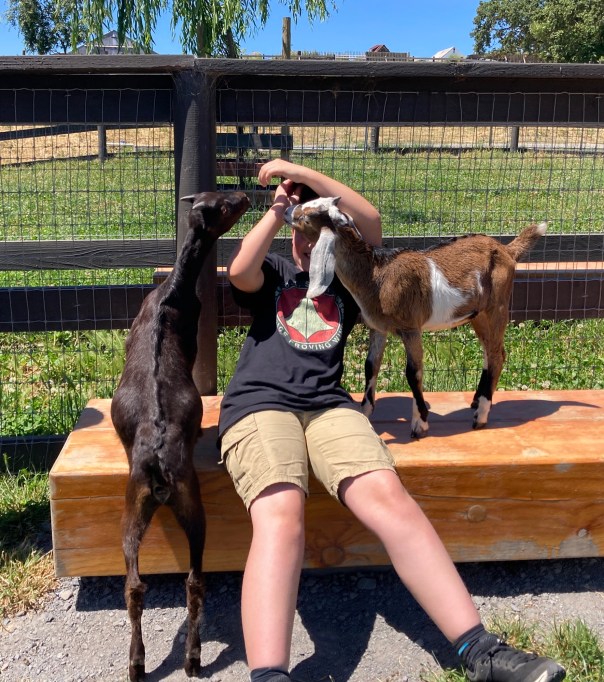 read three or four staves, which was a good start for me. I will continue to read aloud now, though no one but me will listen.
One day the children and I got an informal tour of a farm animal sanctuary that a friend of mine operates. The guide had to leave us alone in the “Kiddergarten” for a while, which was the highlight of our visit there. The kids were darling and so friendly. That day was a joy for every one of us.
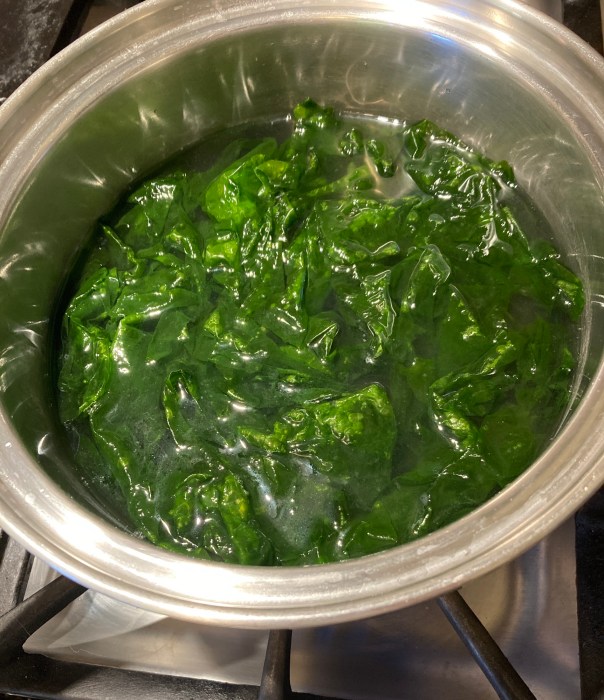
Another day we drove out to the coast and soaked up the sun for several hours. We brought home quite a bit of sand, and some of this bright green kelp, which I washed six times and then cooked into soup.
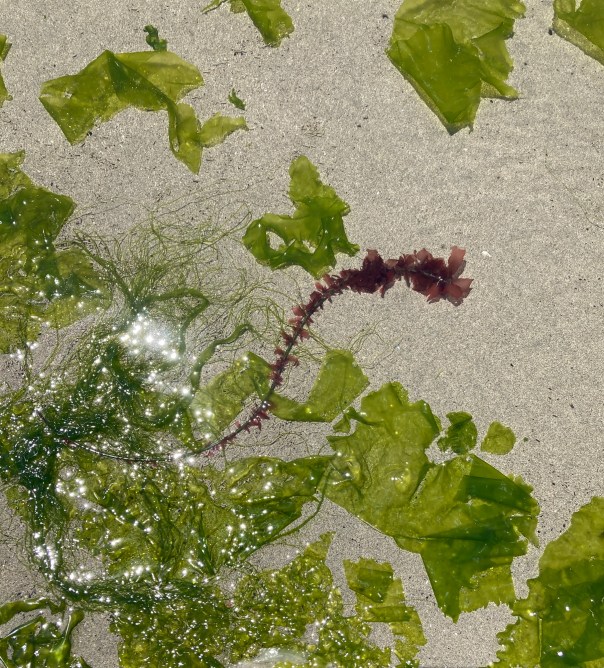
Both of the children slurped that up eagerly, and I finished the last of it today.
I wanted to check out the stretch along the creek where we discovered installations of fairy houses, gnomes and mushrooms several years ago, and to see if anything had survived the intervening winter storms and high water. So we took the bike path farther than usual, and found one of my near neighbors whom I never see, adding a few new items that very minute.
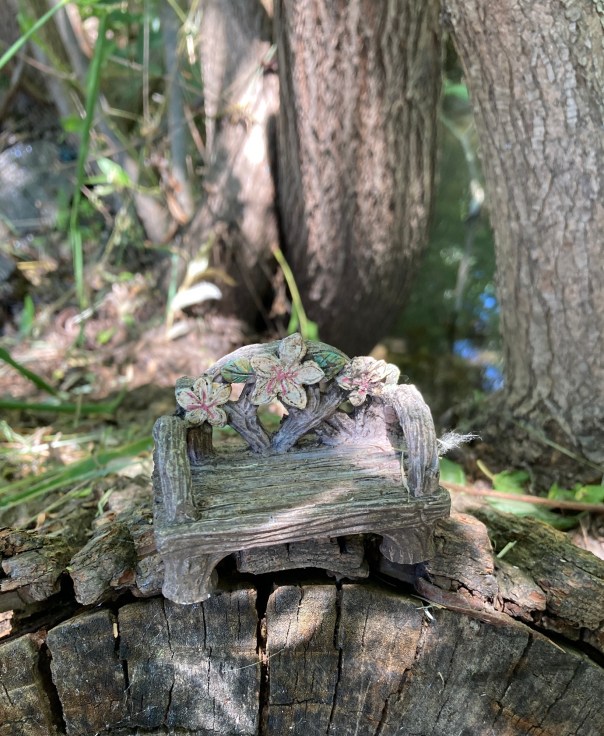
After the neighbor departed, Ivy found a place she could get across the creek to do various repair work and rearranging of gnomes and houses that had fallen over. Most of the fairies were pretty weather worn, but several new and bright mushrooms and gnomes had been added to the landscape.
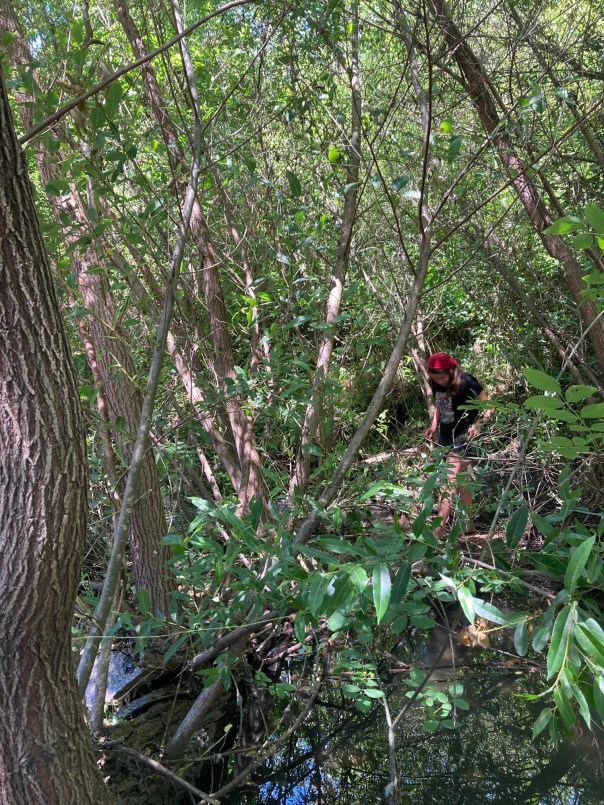
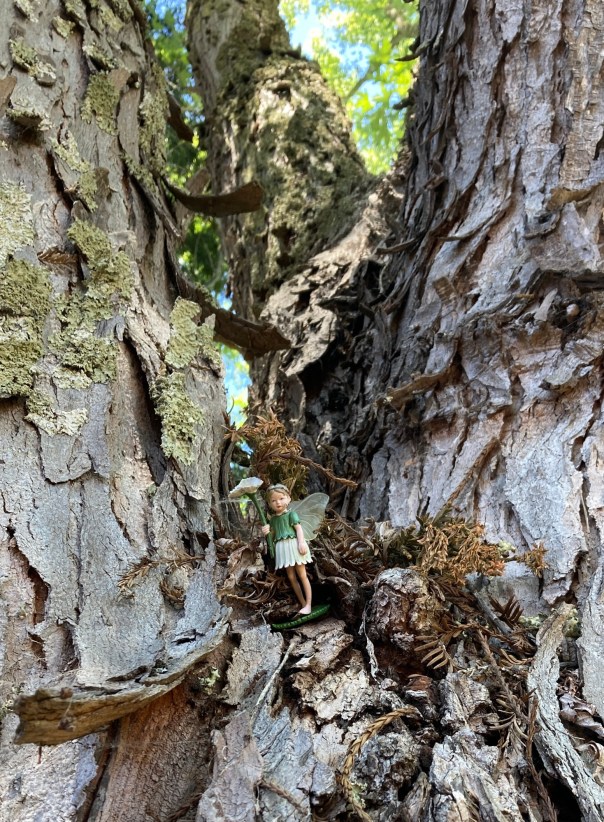
Ivy was frustrated by not being able to do more. We tried to imagine how some of the fairies had been hung high above the creek; a ladder must have been involved, and dedicated, visionary artists. I wished for some pruning shears to open up the space for better viewing, and Ivy resolved to make a sign for the area; she accomplished that last night after sawing an old board from the garage to size. Today we went back and she very cleverly hung the sign.
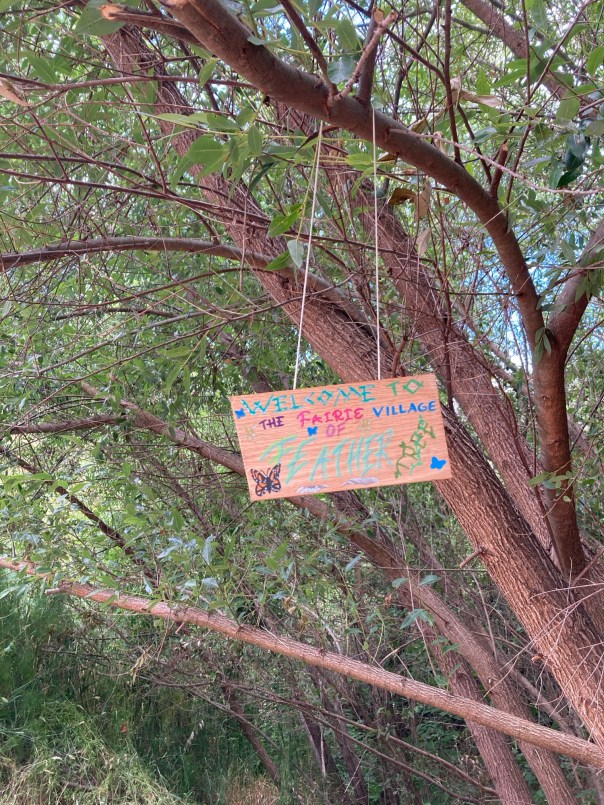
It reads, “Welcome to the Fairie Village of Feather Tree.” Feather Tree refers to a couple of trees nearby into whose bark dozens of bird feathers had been inserted, which I failed to take a picture of.
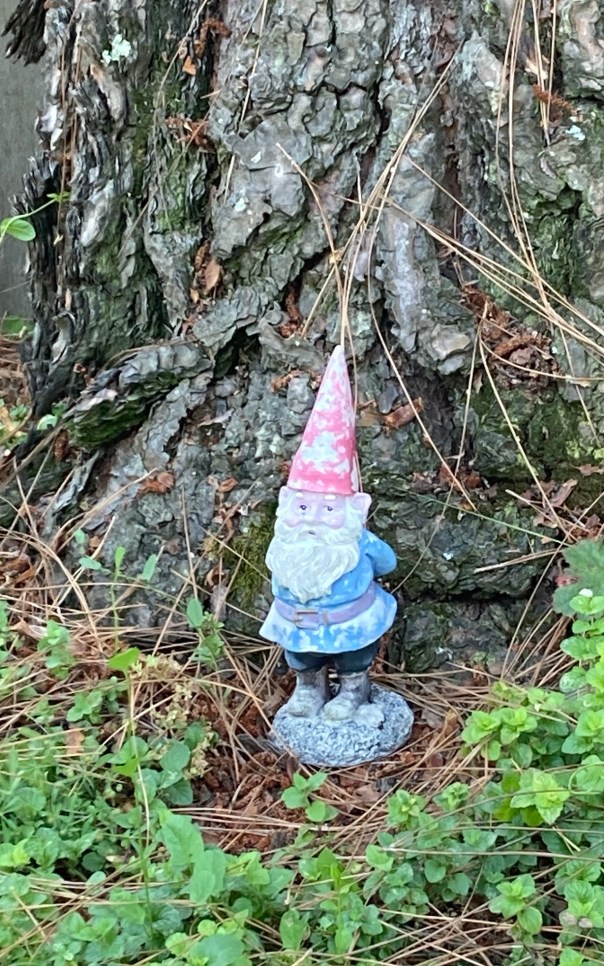
When we got home I looked for my own garden gnome and found him in the playhouse. He is also weatherbeaten and faded, so Ivy took him home to give him a fresh coat of paint.
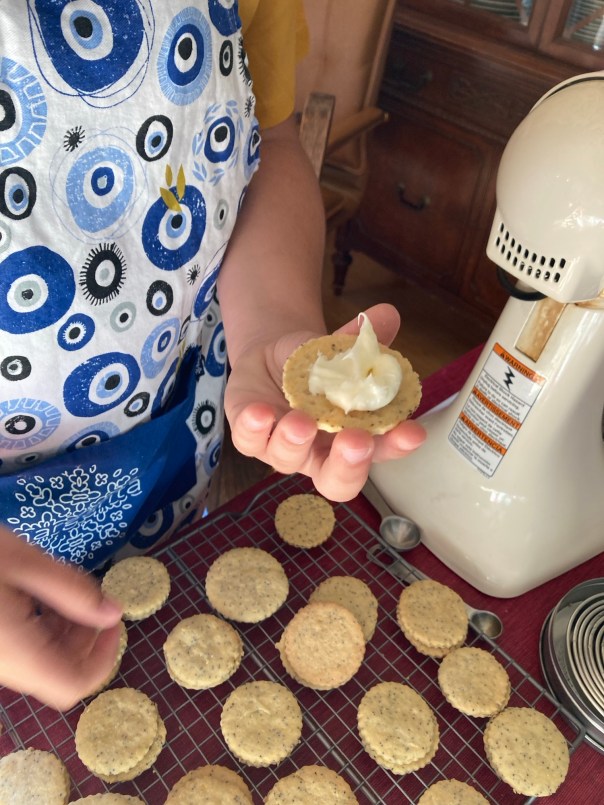
Yesterday was our last full day together. Jamie was already at his other grandma’s house, when Ivy and I decided to make cookies. We baked and assembled the Lemon-Poppyseed Sandwich Cookies I have made at Christmastime more than once. With two of us working at it, they were so easy. We finished just after dinnertime and took plates of them next door and across the street to four of my neighbors.
It has been a great week! I kept thinking I would post about our doings midway, but evidently there was not enough mental focus for that. Now the house is back to normal, with only one person reading early and late. I’ll be re-grouping and organizing my mental resources, and getting ready for the next visit from family, in only about three weeks. The summer has surely begun on a note of happiness.
 suppose I would say that anyone with lighter emotions who hasn’t experienced any pain is in danger of sentiment. I trust them about as much as I trust a Thomas Kincaid painting. You know, there’s a term Tolkien coined, eucatastrophe. Eu, meaning good, so a good catastrophe, but it still has the word catastrophe in it. In some sense, the eucatastrophe at the end of the Lord of the Rings is trustworthy because we’ve been with these characters to the very edge of the crack of doom. That’s why I trust the resurrection because the church doesn’t backpedal on Good Friday.”