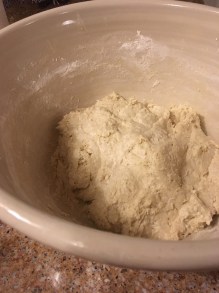
 This time around I made a rather plain sourdough, which turned out to be even plainer than I wanted. It was all unbleached wheat flour, no seeds or rye or anything exciting. I made a smaller batch that would produce two medium loaves, and originally hoped to get it done in two or three days instead of what’s been happening lately, where my sourdough sponge waits in the cold garage day after day till I can finally be home for a day to finish it.
But it took four days this time. Here’s how it went:
Thursday evening: Mixed the flour, water and starter in a bowl and left it covered on kitchen counter.
 Friday: Moved the bowl to the cold garage.
Saturday evening: added yeast, oil, salt and flour.
Sunday: Nothing
Monday morning: Used a little flour to form two loaves, 1# 12 oz. each. Put them in loaf pans into a slightly warmed oven.
Monday morning: The power went out.
Monday all day: The loaves continued to rise slowly and I was assuming we’d have electricity in time to bake them. Nope, that was not to be the case.
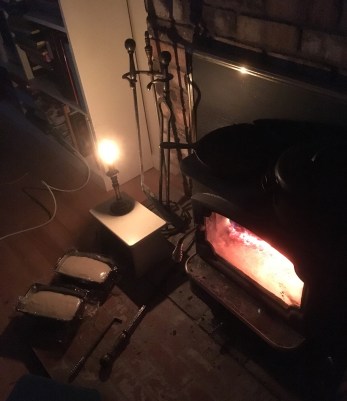
 Monday evening: I had got a fire going in the wood stove, and began to realize that I’d need to bake the bread using that heat somehow. At first I thought I might put the pans right on the coals, but Mrs. Bread (haha, you would imagine she’d have good advice!) made me realize that it would be too much direct heat for aluminum pans. So I heated the cast iron Dutch oven on the narrow shelf of the stove for a half hour and sort of poured the two proofed loaves into it, and put the lid back on.
I baked it about an hour, which I think was more than necessary. I wasn’t used to a loaf with all white flour, and in the light from the flashlight it looked greenish. Having no heat from above, it didn’t brown much on the top. While the bread baked I fried eggs for my dinner in a cast iron skillet on the other side of the stove.
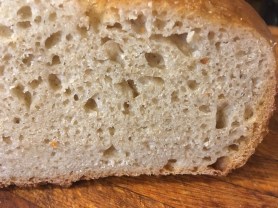 As soon as the bread was out of the pot, I had to try a slice. Oh, it has the nicest crumb, so “custardy” as they say, and the skin is crispy! Actually, the bottom was burnt, but easily sliced off. The sourness is perfect. But – as soon as I took a bite, I realized that I had not put in the salt!! Aaargh. So, in addition to being baked in an old-fashioned way, it has a rather old-fashioned flavor. I read once that our colonial foremothers who baked bread every day made a plain loaf that would seem terribly bland to our taste, with little to no oil, sugar, or salt. At least mine is tangy. 🙂
 From G.K. Chesterton:
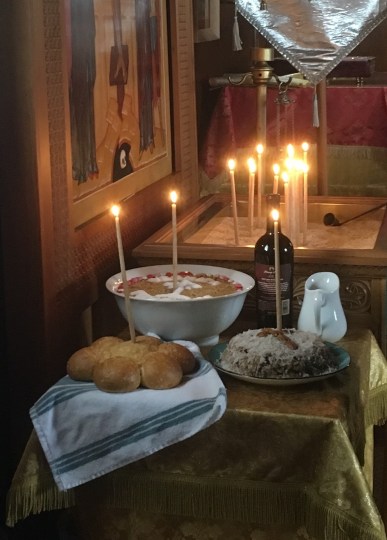 ble to attend Liturgy this morning, and many things contributed to my great joy in participating. Saturday morning is not an “easy” day to make it to church, and I probably could count on one hand the number of these memorial Saturdays that I have attended over the years. They are celebrated often during Lent, and other dates on the church calendar.
 Gladsome Lights