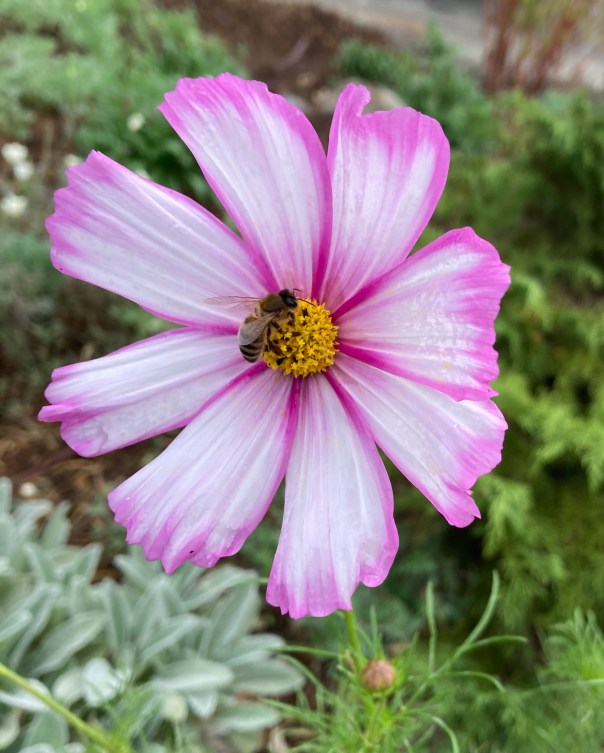
So many little tasks need doing before setting off on a journey. Of course there is the packing of supplies to use while I’m away, but there is also the making ready of Home. It needs quite a bit of tidying up, just to show the homemaker that she does love this place. Being extra nice to the garden by deadheading and cleaning up also does a lot to ease my sore heart, because it dreads saying good-bye once again.
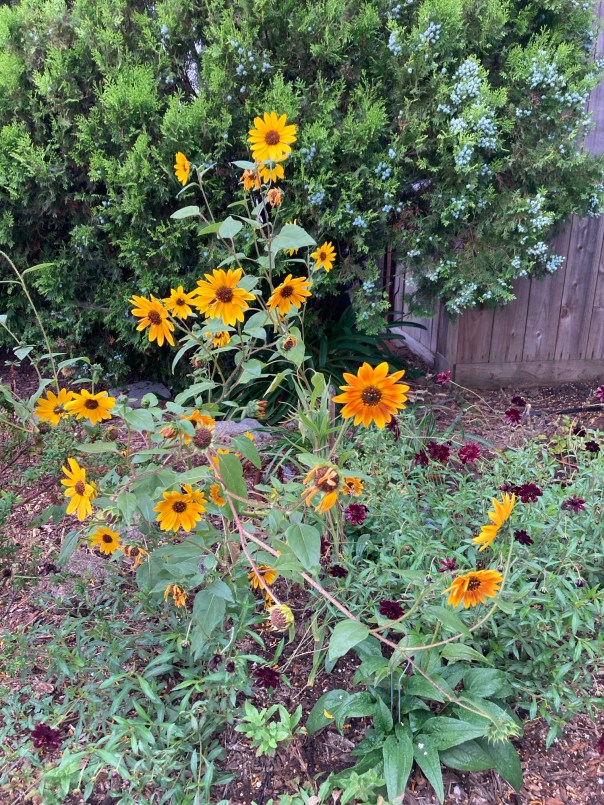
And I’m in the middle of my biggest garden project ever, that is, the biggest I’ve ever taken on by myself. Ten areas of the garden will have been changed in different ways, when I’m finished. That sounds like it is almost everything, but it’s not. I won’t be finished for a few more weeks, mostly because October and November are better months for planting perennials around here, but also because I plain ran out of time this month.
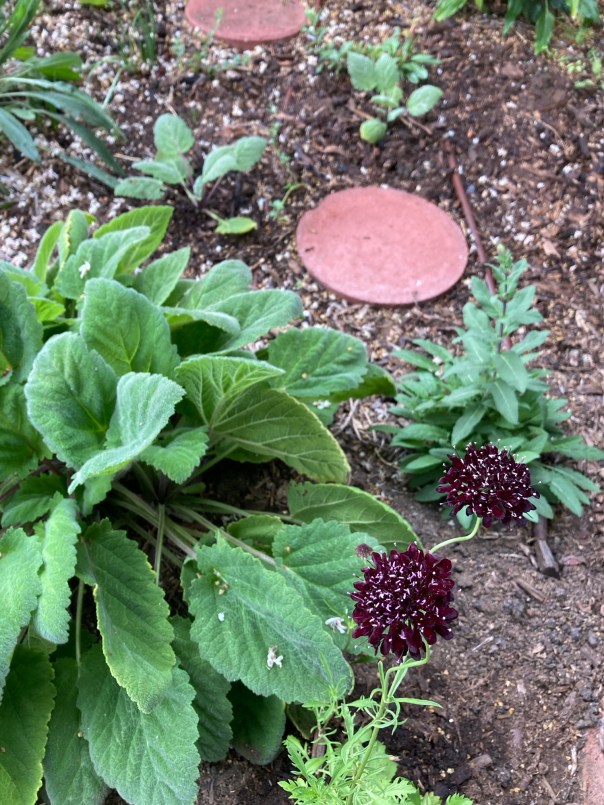
Last fall I planted three clary sage plants, which are biennials and will bloom next June. I hope I can remember to start a few every fall so that I can keep them coming. Below you can see one of the older ones in the foreground, next to the pincushion flower I planted last week, and in the background two of the younger clary sages I was able to get from a local nursery recently.
As three big conifers to the south of me, including my own Canary Island Pine, keep growing taller, the amount of “full sun” in the back garden has been shrinking. It was a case of bit by bit, and then all at once. All at once I realized why the purple coneflower barely blooms, and even the recently planted Mexican Evening Primrose is not happy.
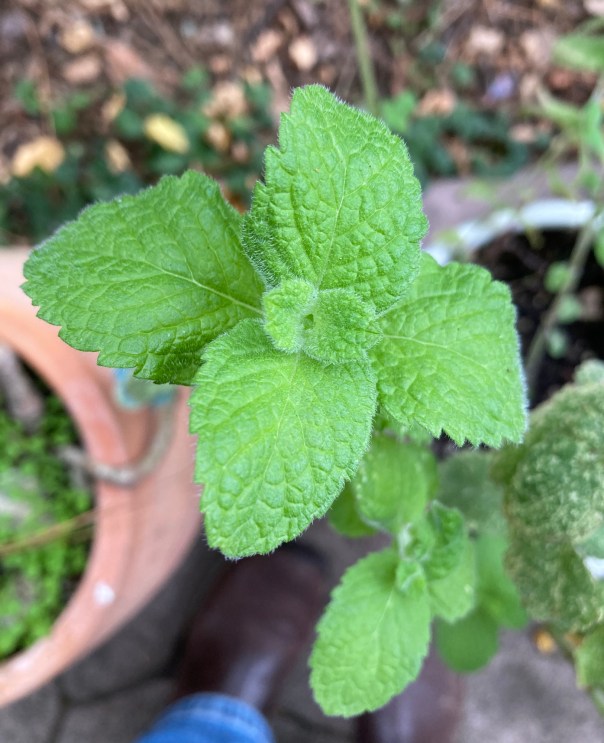
Also there is the problem of the unpleasing design, or lack of design, from the last landscaper, of the area near my front door. I’m unwilling to live with it, so it’s taken hours and hours of thinking and thinking and reading on the Pacific Horticulture site, researching and shopping for plants, imagining how they will look if I put them here or there. I’m moving several plants installed last year to better places.
When I get new gallons or 4″ pots on site, I arrange them still in the pots where I think they work, and then I think better of it, and carry them elsewhere. To the front yard — No, the back yard — how will it look alongside this other plant that can take part shade? Weird? Probably… Oh well, they will have to get along. It can be exhausting being so unsystematic.

I’m excited to have my very own Naked Buckwheats — this is a California native that I often see in the mountains. My daughter Pippin has them growing wild around her place. And now me!
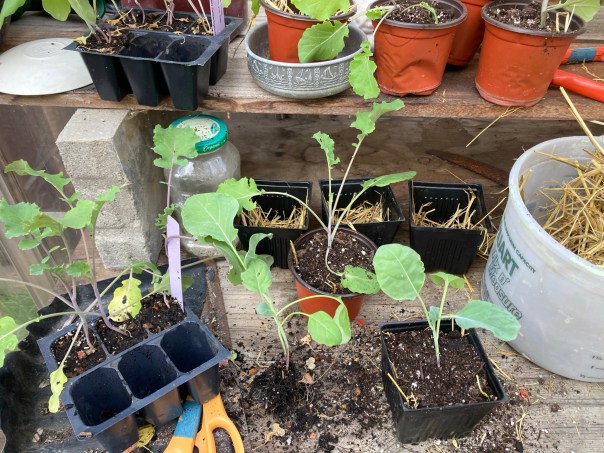
I decided to grow annual vegetables in the front garden near the perennial asparagus, because they will be sure to get enough sun there; but I need to add more soil first. I should have waited to buy the kalettes and Chinese Broccoli until that bed was ready, but I didn’t, and they were in little six packs, so I spent an hour transferring them to larger pots so they won’t get rootbound while they’re waiting.
I have cut down the asparagus a few times, first because of the aphids, and then so that I could rake away all the mulch and add more soil, and new mulch. But spears keep coming up, and looking ferny lovely:
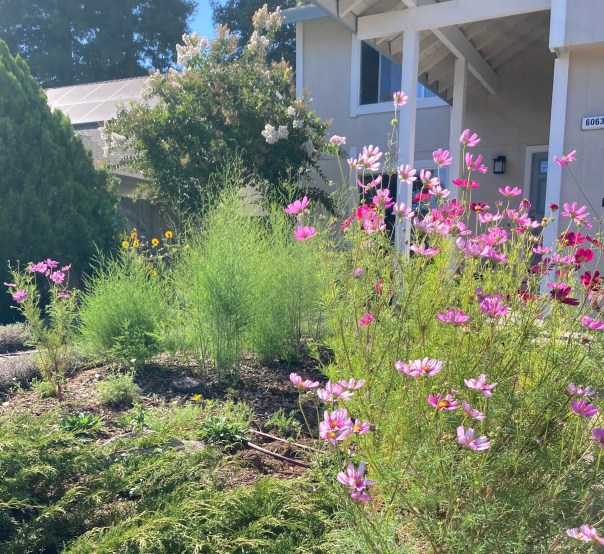
When I cut them, I throw away the fronds or chop them up for the worms, but there are always several that haven’t become fronds yet, and that are the right size for eating. I accumulated enough to roast a panful this afternoon.

 And I made a batch of Jammy Eggs to have for snacks on the journey.
It’s to Wisconsin I am going, because my granddaughter Miss Maggie is getting married! It was barely over a year ago that her brother’s wedding took me to that state, and now back I go. It will be a very happy time, and I will be over my leavinghomesickness before you know it.
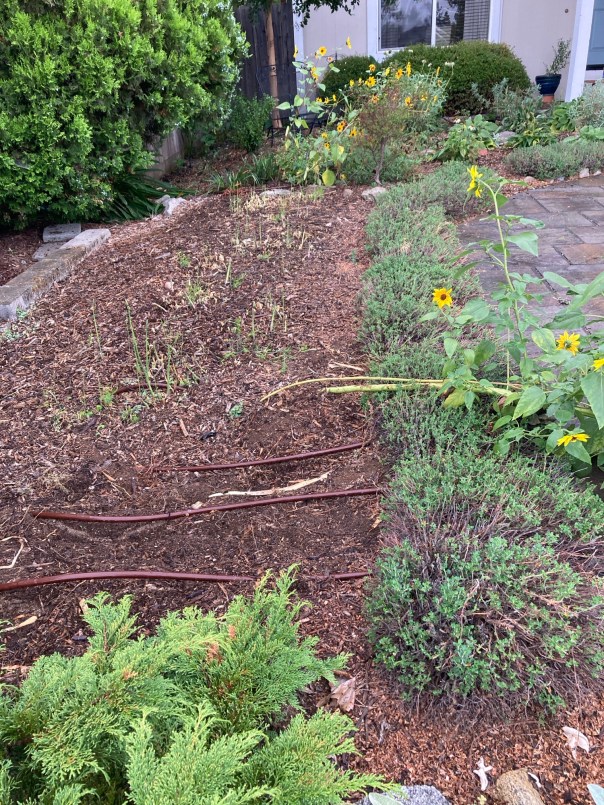
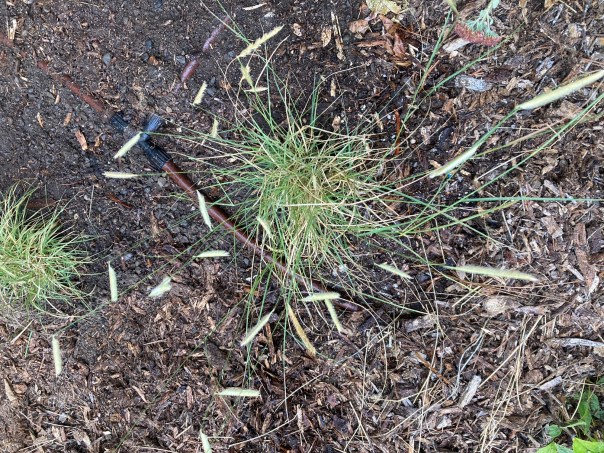
It started raining this afternoon. Early autumn rains are just the best. I can leave the windows and doors open and breathe the rain, and hear it pitter patter. The drops began to fall when I was still in the middle of planting my Bouteloua gracilis, or blue grama grass (“Blonde Ambition”), and after I cleaned up my tools I still had to put out all the trash cans, plus an extra green bin a neighbor is letting me use. Four neighbors, two on either side of me, are always letting me use extra space in their green waste bins for my overflow.
Do you find that when you are getting ready for a trip, not only do you have the packing for the actual trip, and the everyday housework and cooking that has nothing to do with the trip, but also extra, surprise things that come up that take some of your precious time? I realized last week that I needed to lay in some firewood, and that took a whole day to deal with. I got a half cord and stacked it almost entirely by myself. In the course of that my neighbor Eric lent me his wheelbarrow and offered to repair my wheelbarrow. He noticed in going through my gate that it didn’t latch behind him, so I spent an hour figuring out how to adjust that latch. I don’t want the gate to fail to close when I’m away, if he should come for the wheelbarrow.

And what do you know, I also got inconvenient visitors this week — ants! They have been mostly crawling around on my computer table and keyboard — and my hands — so I am going to cut this shorter than it might have been, stopping at long instead of longer, and I’ll hope to check in from Wisconsin soon. But I still don’t have a tablet or anything larger than my little phone to work on, so I don’t know…
Happy Autumn Days to you all.




 Gladsome Lights