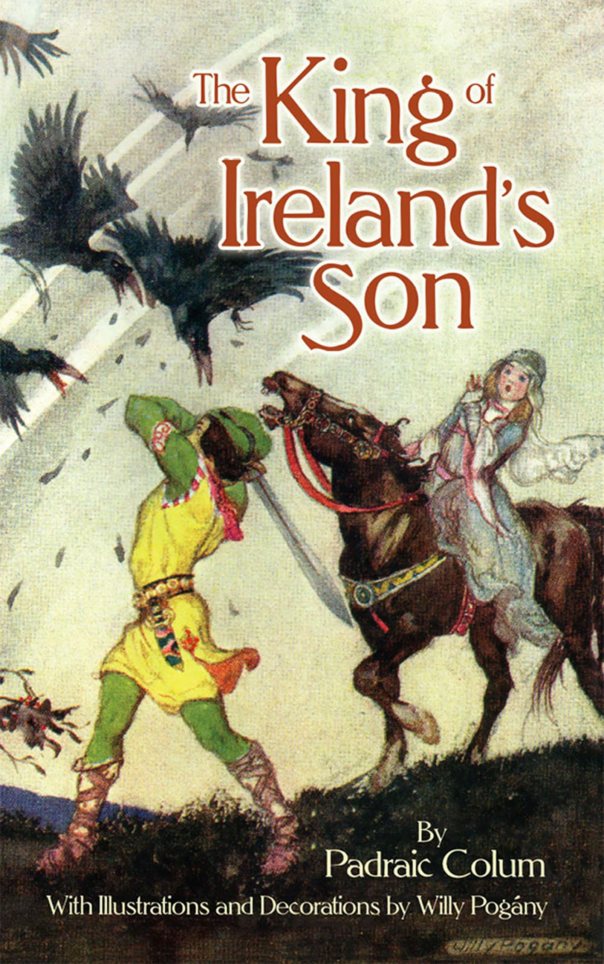
 As I was listening to Gerard Doyle narrate The King of Ireland’s Son, I kept imagining children listening to their parents read the stories, and that made them even more delightful. Several reviews from parents who did read them aloud, and even the ones who didn’t care for the book themselves, admitted that the children loved them. Many adults said that they’d heard the stories as children and read them on their own when they grew up, often multiple times. This was the case with my dear friend from whom I heard about this book a couple of years ago.
First I listened to the Audible version in bits and pieces, many parts several times over, because I would get distracted or fall asleep and have to backtrack. Though I was captivated by the Irish storytelling style of Gerard Doyle, listening was not the best way for me, not primarily an auditory learner, to keep the characters and their adventures straight. Finally, desperate to make sense of everything, I completed the print edition.
Now, I am still at a loss for how to articulate what charms me so much about Colum’s accomplishment, so I looked to other readers who might do it for me. One reader who enjoyed it many times, as a child and as an adult, wrote, “I am stunned at the beauty of Colum’s language and at his handling of plot. There is a story within a story within a story, with smaller tales that reflect on the main ones and often involve the same characters…. And the stories themselves often have an eerie beauty and an undercurrent of sadness. But there’s lots of humor, too, [The King of Cats is hilarious. -GJ] and lots of adventure, and, among the characters, girls as well as boys get to show spunk and initiative.”
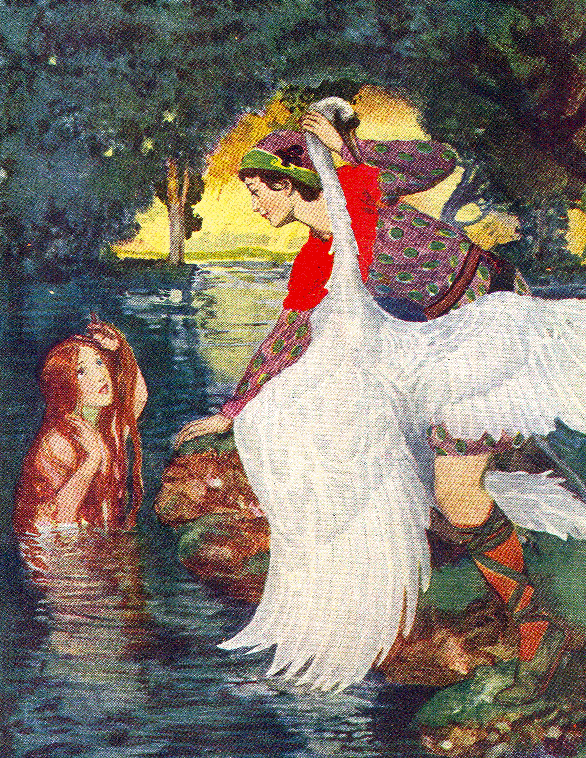
Then the King of Ireland’s Son
mounted his horse and rode away—
His hound at his heel,
His hawk on his wrist;
A brave steed to carry him whither he list
And the green ground under him.
Another reviewer explains how “…what initially appear to be seven different stories actually blend together to become tales-within-tales. The primary tale is a coming-of-age story of the quests of the youngest son of the King of Ireland. During the course of the quest, the king’s son and others in the primary tale relate stories of their own. Characters from these 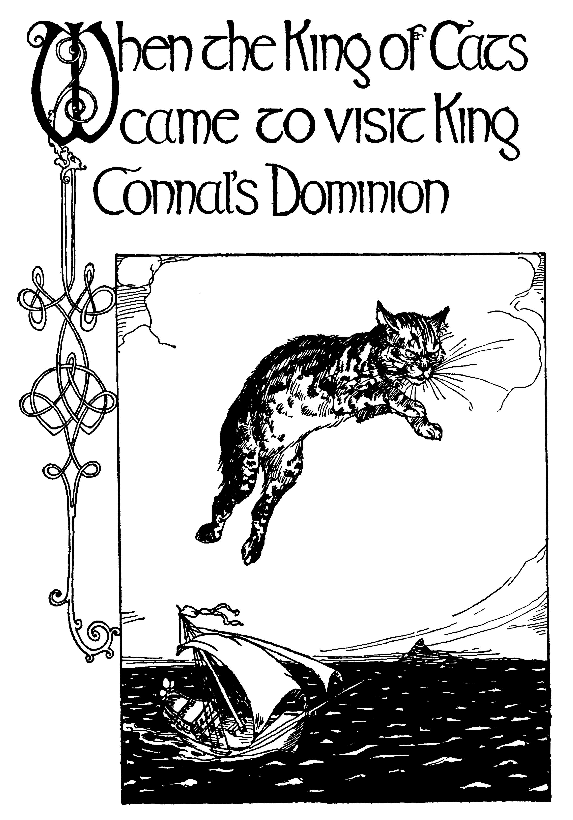 secondary tales then appear later in the primary tale. The end result is a rich and complex tapestry of interconnecting histories and experiences as each character grows and finds out more about him- or herself. It soon becomes clear that for the central characters, learning the stories themselves becomes the goal of their quest.”
A little background on Colum and the book:
“Although the book was written in America in the years before 1916, Colum was a close friend and colleague of some of those who led the Easter Rising. The King of Ireland’s Son was the ultimate calling-up of Irish mythology and legend, and… made many happy hours for children curled up before glowing turf fires to read by the light of Tilley lamps in the long winter evenings of the new Ireland.”
“Asked how to say his name, he told The Literary Digest the last name was the same as the word column. ‘In my first name, the first a has the sound of au. The ordinary pronunciation in Irish is pau’drig.'” (Wikipedia)
Are some of you, my blogging reading friends, familiar with The King of Ireland’s Son? Please tell me about your experience of it. I’m hoping to find a child to read it to very soon!