Category Archives: poetry

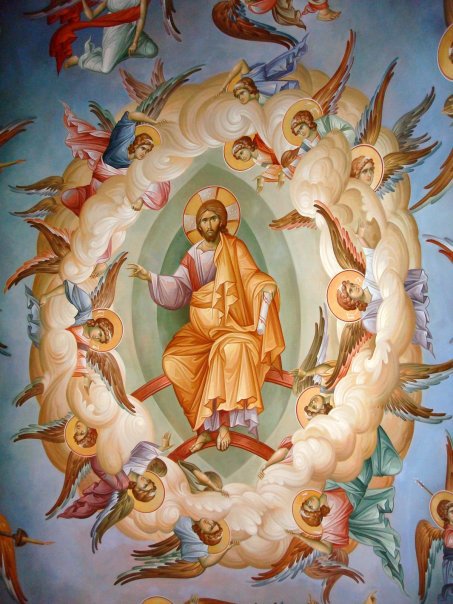
St. Hilary of Poitiers


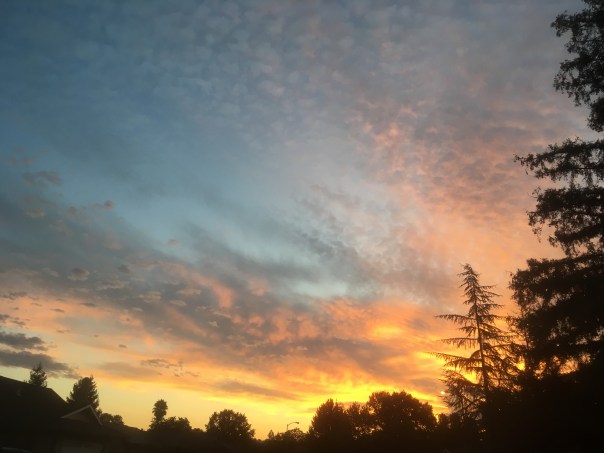
A SONG OF DAWN

From  heaven has fled the starry night,
And startled sleep has taken flight;
The rosy morn, uprising, spills
Her crystal light o’er vales and hills.

Soon as the earliest ray we see,
Our souls are lifted, Lord, to thee;
Dear God, to thee, our prayers we bring;
To thee rejoicing hymns we sing.

Lord, be our hearts and hopes renewed
In light and love and gratitude,
So may our deeds, illumed by thee,
Worthy thy love and glory be.

We praise thee, Lord, forevermore;
Thee, with the Son our souls adore,
And with the Spirit, three in one,
Reigning while endless ages run.

-St. Hilary of Poitiers (310 – c. 367)
Translated by Daniel Joseph Donahoe

St. Hilary, Bishop of Poitiers in France, is known by some as the Athanasius of the West, for his defense of Nicene theology. This was before St. Ambrose became Bishop of Milan and rose to similar prominence and more fame. He wrote on many topics, including theosis, as below:

We shall be promoted to a glory conformable to that of Him Who became Man for us, being renewed unto the knowledge of God, and created again in the image of the Creator, as the Apostle says, Having put off the old man with his doings, and put on the new man, which is being renewed unto the knowledge of God, after the image of Him that created him. (Col. 3:9-10) Thus is man made the perfect image of God. For, being conformed to the glory of the body of God, he is exalted to the image of the Creator, after the pattern assigned to the first man. Leaving sin and the old man behind, he is made a new man unto the knowledge of God, and arrives at the perfection of his constitution, since through the knowledge of his God he becomes the perfect image of God. Through godliness he is promoted to immortality, through immortality he shall live forever as the image of his Creator. (On the Trinity 11.49)

You can read more about St. Hilary here.
He is remembered in the East and in the West on January 13.
Betting crust and crumb.

ECCLESIASTES 11:1

We must cast our bread
Upon the waters
 as the

Ancient preacher said,

Trusting that it may
Amply be restored to us
After many a day.

That old metaphor,
Drawn from rice farming on the
River’s flooded shore,

Helps us to believe
That it’s no great sin to give,
Hoping to receive.

Therefore I shall throw
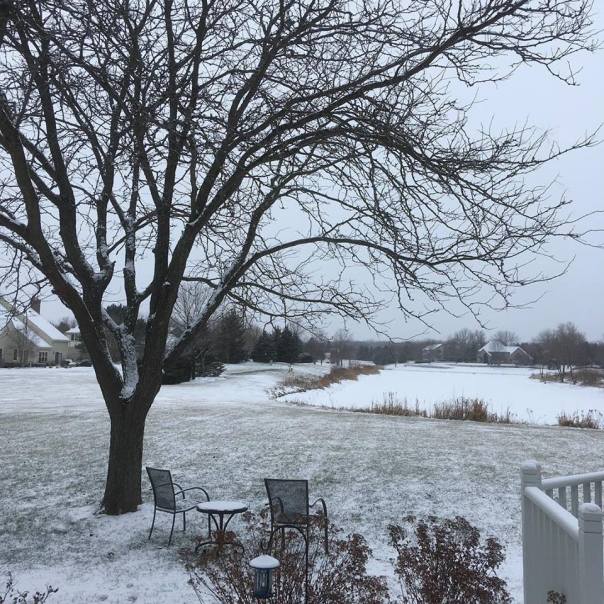
Broken bread, this sullen day,
Out across the snow,

Betting crust and crumb
That birds will gather, and that
One more spring will come.

-Richard Wilbur

At Pearl’s in Wisconsin.

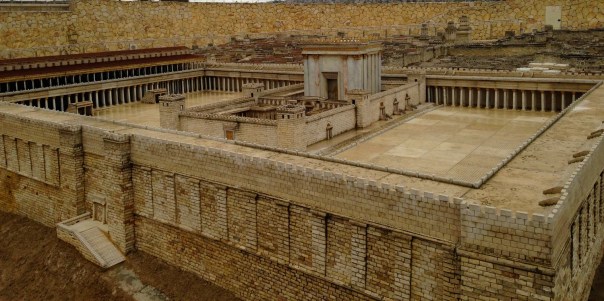
And every stone shall cry.

Model of the Second Temple at the time of Christ.

Anthony Esolen features this poem by Richard Wilbur on his site Word & Song; here is a clip from his introduction:

“Wilbur takes his inspiration from the words of Jesus, when he was entering Jerusalem at the beginning of that fateful and sacred week, and the people hailed him, laying palm branches before him and crying out, ‘Blessed be the king who comes in the name of the Lord!’ Then the Pharisees appealed to Jesus, asking him to make the people be quiet, but Jesus said, ‘I tell you, if these should hold their peace, the stones would immediately cry out.’ And we may remember, too, that when the disciples tried to play the tour guide with Jesus, remarking upon the grandeur of the Temple and its precincts, Jesus, who loved the Temple dearly from when he was a boy, said that there would soon come a time when not one stone would be left upon a stone.”

A CHRISTMAS HYMN

A stable lamp is lighted
Whose glow shall wake the sky;
The stars shall bend their voices,
And every stone shall cry.
And every stone shall cry,
And straw like gold shall shine;
A barn shall harbor heaven,
A stall become a shrine.

This child through David’s city
Shall ride in triumph by;
The palm shall strew its branches,
And every stone shall cry.
And every stone shall cry,
Though heavy, dull, and dumb,
And lie within the roadway
To pave his kingdom come.

Yet he shall be forsaken,
And yielded up to die;
The sky shall groan and darken,
And every stone shall cry.
And every stone shall cry
For stony hearts of men:
God’s blood upon the spearhead,
God’s love refused again.

But now, as at the ending,
The low is lifted high;
The stars shall bend their voices,
And every stone shall cry.
And every stone shall cry
In praises of the child
By whose descent among us
The worlds are reconciled.

-Richard Wilbur

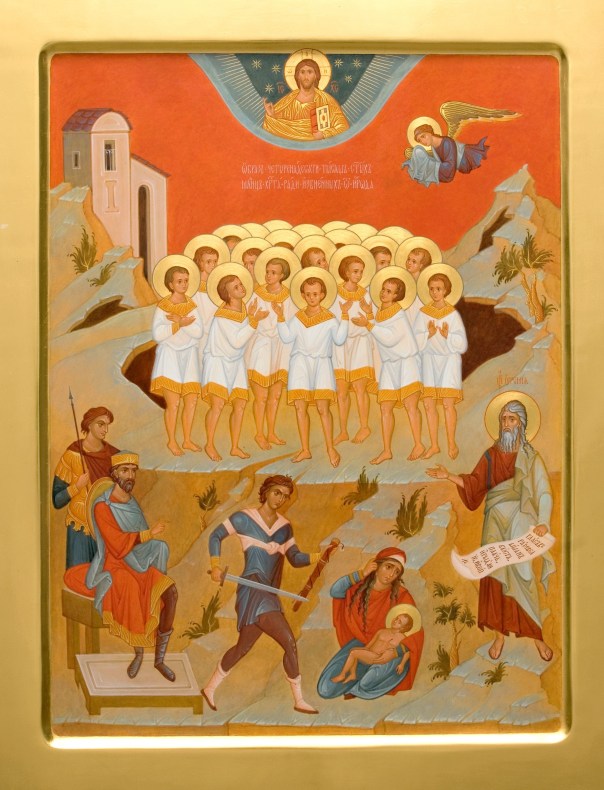
Born into this world.

“What Herod did then, is still being done by so many present day Herods. This scarred and wounded world is the world into which Jesus was born, the world he came to save, and amongst those brought by his blood through the grave and gate of death and into the bliss of Heaven are those children of Bethlehem who died for his name without ever knowing him.”

So Malcolm Guite introduces his poem on the occasion of the commemoration of the Holy Innocents, the Hebrew children of whom Herod ordered the massacre, in an attempt to do away with a perceived challenger to his power. This poem is found in Guite’s anthology, Waiting on the Word.

REFUGEE

We think of him as safe beneath the steeple,
Or cosy in a crib beside the font,
But he is with a million displaced people
On the long road of weariness and want.
For even as we sing our final carol
His family is up and on that road,
Fleeing the wrath of someone else’s quarrel,
Glancing behind and shouldering their load.
Whilst Herod rages still from his dark tower
Christ clings to Mary, fingers tightly curled,
The lambs are slaughtered by the men of power,
And death squads spread their curse across the world.
But every Herod dies, and comes alone
To stand before the Lamb upon the throne.

-Malcolm Guite

You can read the whole post and hear Fr. Guite reading his poem here: “The Holy Innocents (Refugee)”