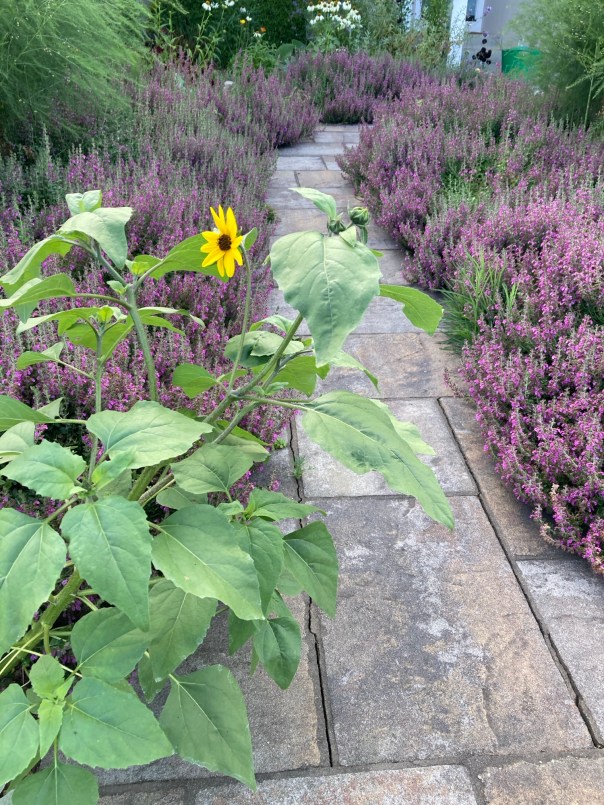
I doubt anyone would label me a “poor old widow,” but I can relate to many things in this little poem. It’s given me a brand new idea, too, of sewing in my garden. Today would be fine day for that…
A WIDOW’S WEEDS
A poor old Widow in her weeds Sowed her garden with wild-flower seeds; Not too shallow, and not too deep, And down came April — drip — drip — drip. Up shone May, like gold, and soon Green as an arbour grew leafy June. And now all summer she sits and sews Where willow herb, comfrey, bugloss blows, Teasle and tansy, meadowsweet, Campion, toadflax, and rough hawksbit; Brown bee orchis, and Peals of Bells; Clover, burnet, and thyme she smells; Like Oberon’s meadows her garden is Drowsy from dawn till dusk with bees. Weeps she never, but sometimes sighs, And peeps at her garden with bright brown eyes; And all she has is all she needs —- A poor old Widow in her weeds.
Thou fair-haired angel of the evening, Now, whilst the sun rests on the mountains, light Thy bright torch of love; thy radiant crown Put on, and smile upon our evening bed! Smile on our loves, and, while thou drawest the Blue curtains of the sky, scatter thy silver dew On every flower that shuts its sweet eyes In timely sleep. Let thy west wind sleep on The lake; speak silence with thy glimmering eyes, And wash the dusk with silver. Soon, full soon, Dost thou withdraw; then the wolf rages wide, And the lion glares through the dun forest. The fleeces of our flocks are covered with Thy sacred dew; protect with them with thine influence.
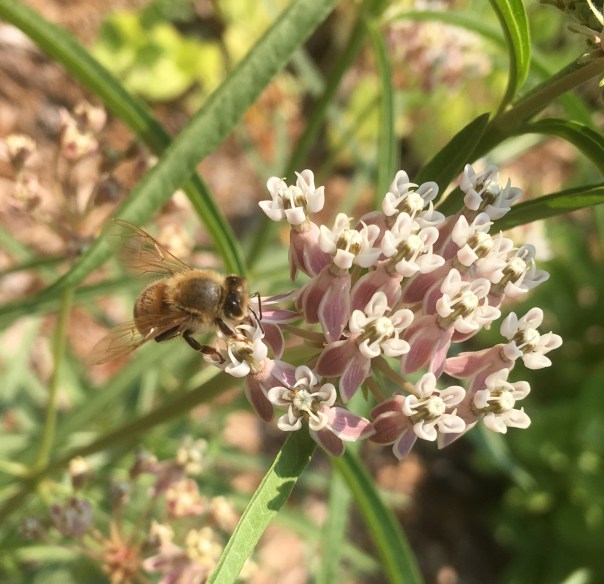
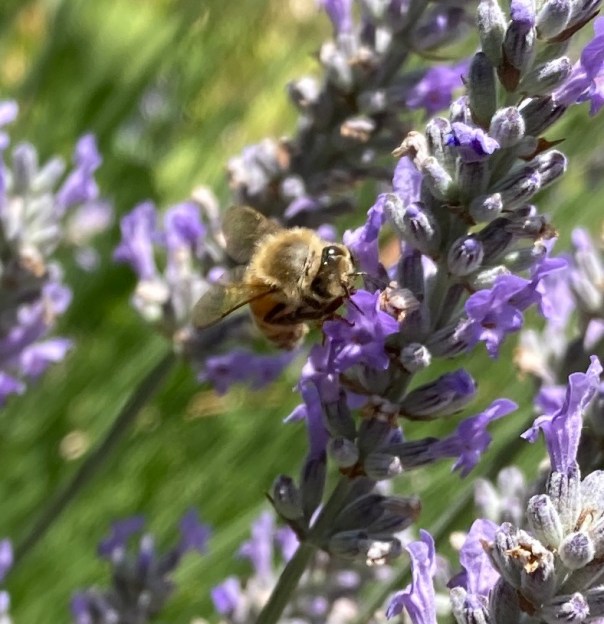
This afternoon the sun came out, but my house was cold, so I took my lunch into the garden and sat in the sunshine, on the edge of the planter box. A few inches away several plants were draping their heavy, flowery stems over the brick area between my seat and the fig tree: Milkweed, salvia, borage, oregano, and lavender were all tucked in close together. The bees were loving it. Carpenter bees, honeybees, some little bees I didn’t recognize. It’s very sweet to be able to take a few steps out my back door and find myself in a world where a thousand tiny creatures are flying about and feasting.
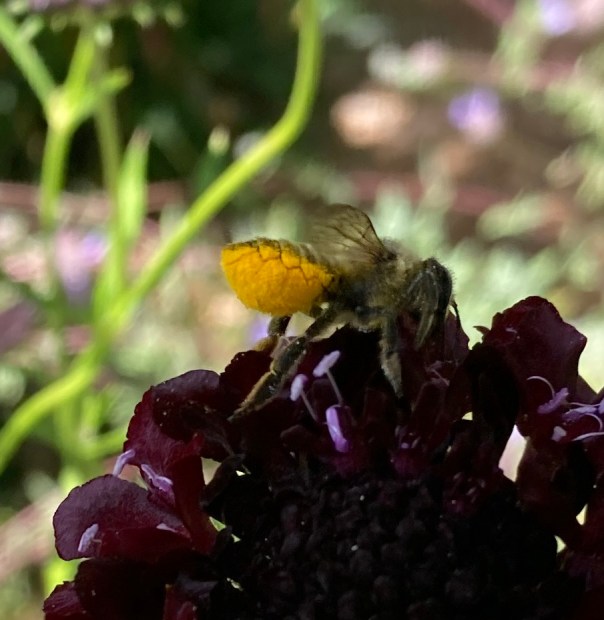
My hands were occupied, I couldn’t take pictures of them, and that was nice for a change. I did take pictures on other days so I am sharing those here. The two just above are from the front garden, where the pincushion flowers are a bit hit. Leafcutter is new to me. While she was buzzing around and I first caught glimpses of all that yellow, I thought maybe it was pollen. But no, it’s not on her legs, it’s her own body that’s so bright. [But YES, shoreacres explains in a comment below, while it’s not on her legs, it is indeed pollen!]
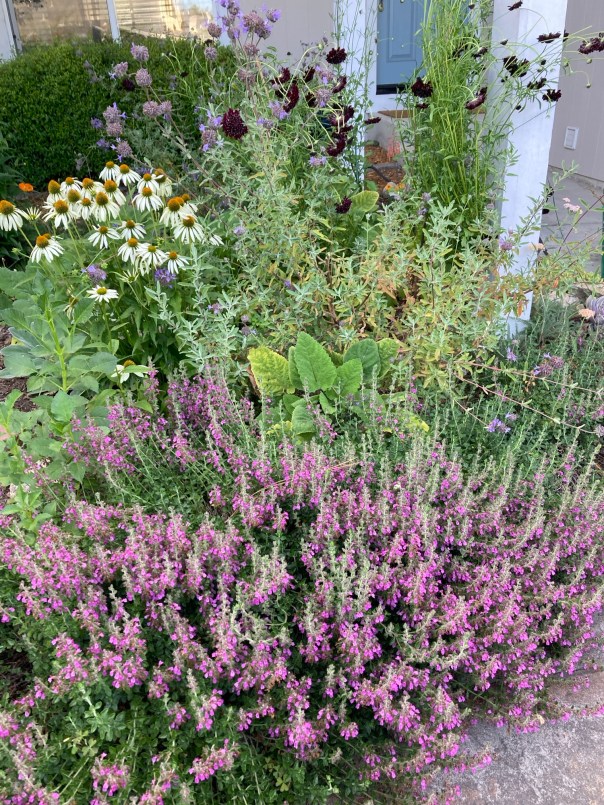
Yes, the pollinators love all these flowers, too: the white echinacea, germander, and salvia clevelandii. I took the picture above just after I propped up the pincushion flowers that grew to 6 feet, looking for the sun. I hadn’t realized that that area is now Part Shade, because of the crape myrtle. I’ll have to move the pincushions in the fall; it’s quite a jumble in there with the flowers in back shorter than the ones in front. I’m in no hurry to do it as long as the bees are so happy.
My first draft of this post was just the poem and painting below,
but then my own bees got added to Emily’s.
It’s all we have.
IT’S ALL I HAVE TO BRING TODAY
It’s all I have to bring today — This, and my heart beside — This, and my heart, and all the fields — And all the meadows wide — Be sure you count — should I forget Some one the sum could tell — This, and my heart, and all the Bees Which in the Clover dwell.