Category Archives: time
I wished one could live slowly.
 “The day was so delightful that I wished one could live slowly as one can play music slowly…. It was warm as high summer, and bars of sunshine lay honey-coloured across the floor, the air above them shimmering with motes; and bees droned about a purple branch of viburnum in a vase on the mantelpiece. We four girls were bathed in a sense of leisure we had never enjoyed before and were never to enjoy again, for we were going to leave school at the end of term, and we had passed all the examinations which were to give us the run of the adult world. We were as happy as escaped prisoners, for we had all hated being children.”
-Rebecca West, from the first page of This Real Night
It could be new.
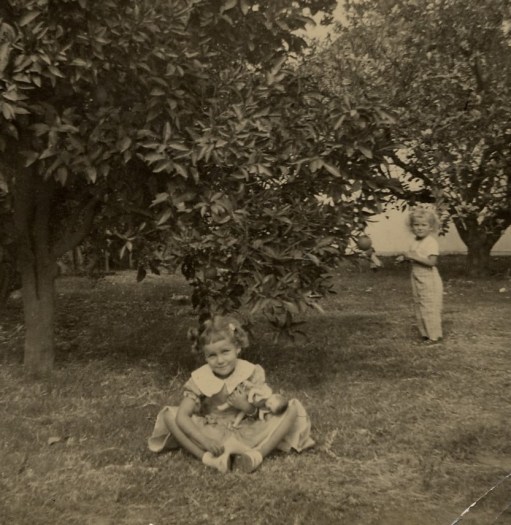
Elizabeth Jennings was younger than I am now when she wrote the poem below, which includes lines about “not fitting in,” and about being old and unnoticed. But the finish, “At last you can be…” is so promising, and expresses what I want to be learning.
Have you seen the meme of the month, as we see the 2020’s drawing near? (Mostly young) people are posting photos of themselves from the beginning of the decade to compare with others more recent, sometimes with an assessment of, or a thanksgiving for, what has happened in their lives in those ten years. Izzy’s photos were the most striking, because ten years ago she was still a chubby pre-teen, and her Now photo shows an adult holding my great-granddaughter; Izzy is a blossoming and lovely wife and mother.
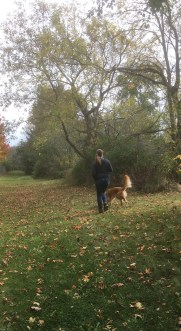 My daughter Pearl’s thankful husband posted pictures of her, from 1999, 2009, and this year, and they are stunning to me, as they not only show how she has become more beautiful with every decade, but hint that her beauty flows from some of that liberty that this poem explores, and it shines out from her countenance as peace and joy.
From my vantage point, on the outside I seem to have changed little in ten years, and God only knows what has happened on the inside; it’s not for me to assess. I am astonished most mornings at His mercy and grace in giving me one more day of strength to engage with my struggles, and to love His creation, including the humans.
I’m sure the title of this poem carries multiple meanings — related also to what is communicated in the last lines, where “to include them all” might mean two things: First, to be all the things that the young and old can’t have, to have in your person and consciousness the blessings and wisdom of all the ages that you ever have been; and also, to include all of those who for various reasons ignore or scowl at you. To hold them in your love, and in your prayers.
Happy Thanksgiving!
ACCEPTED
You are no longer young,
Nor are you very old.
There are homes where those belong.
You know you do not fit
When you observe the cold
Stares of those who sit
In bath-chairs or the park
(A stick, then, at their side)
Or find yourself in the dark
And see the lovers who,
In love and in their stride,
Don’t even notice you.
This is a time to begin
Your life. It could be new.
The sheer not fitting in
With the old who envy you
And the young who want to win,
Not knowing false from true,
Means you have liberty
Denied to their extremes.
At last now you can be
What the old cannot recall
And the young long for in dreams,
Yet still include them all.
-Elizabeth Jennings
No radiation escapes to us.
When Les Murray died, some obituaries made reference to him “vanishing into the future.” This poem contains the source of that phrase, and makes me think of kairos, or “eternal time,” and the Kingdom of God, which is always a stretch of the mind, because our relationship to this time that we swim in is so mysterious.
I appreciate Murray’s exploration of the subject, which humbles me with the reminder of all that we don’t know, and the foolishness of getting caught up in our “projections.” I am comforted by the last lines bringing us back to Christ, and us together with Him, in the “future,” which, if we could see with the eyes of faith, is also Now. He not only “told us that evil would come,” but He said, “Lo, I am with you always, even to the end of the world.”
Fr. Stephen Freeman writes about time, history, and the Kingdom in “What’s With the Kingdom of God?” and in “Mystery as Reality,” asking, “…if the Kingdom of God is already complete and we are already able to participate in it and we await the day of its full manifestation, then what is the place of history and the events associated with our salvation that have occurred in space and time?”
I’ll leave the broader questions for now and hope that after all that rambling you can still enjoy this more focused poem for itself. The reference to yarrow stalks in the poem is in regard to their use in reading the I Ching.
THE FUTURE
There is nothing about it. Much science fiction is set there
but it is not about it. Prophecy is not about it.
It sways no yarrow stalks. And crystal is a mirror.
Even the man we nailed on a tree for a lookout
said little about it; he told us evil would come.
We see, by convention, a small living distance into it
but even that’s a projection. And all our projections
fail to curve where it curves.
It is the black hole
out of which no radiation escapes to us.
The commonplace and magnificent roads of our lives
go on some way through cityscape and landscape
or steeply sloping, or scree, into that sheer fall
where everything will be that we have ever sent there,
compacted, spinning – except perhaps us, to see it.
It is said we see the start.
But, from here, there’s a blindness.
The side-heaped chasm that will swallow all our present
blinds us to the normal sun that may be imagined
in their ordinary day. A day to which all our portraits,
ideals, revolutions, denim and dishabille
are quaintly heartrending. To see those people is impossible,
to greet them, mawkish. Nonetheless, I begin:
‘When I was alive –’
and I am turned around
to find myself looking at a cheerful picnic party,
the women decently legless, in muslin and gloves,
the men in beards and weskits, with the long
cheroots and duck trousers of the better sort,
relaxing on a stone verandah. Ceylon, or Sydney.
And as I look, I know they are utterly gone,
each one on his day, with pillow, small bottles, mist,
with all the futures they dreamed or dealt in, going
down to that engulfment everything approaches;
with the man on the tree, they have vanished into the Future.
-Les Murray
 Gladsome Lights