
It is a joy to have sunny days in which to work in the garden that is heading into its quieter winter months. This is the season for harvesting and cleaning up, often at the same time.
I don’t know if there is any good solution to the overcrowding of the Fig Tree Corner of my garden. There are no plants that I am willing to remove, so I guess I’ll have to just try cutting them back a little harder this winter.

Only the pomegranate bush is a little prickly, when I try to push in next to it to reach a fig. The salvia on the left I just push aside, when I stoop down to enter under the tree’s canopy and then stand up again as straight as I can to reach the fruit up high in the center… or not reach it, which is often the case. The hopbushes (dodonaea) between the tree and the fence don’t actually have a lot of width to trim back. There is the olive in a pot, lavenders, yarrow, and lithodora almost completely hidden under the tree for most of the year.

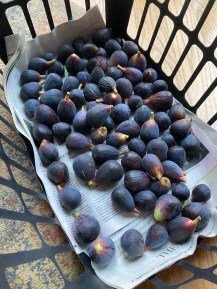 Birds have been eating many of the figs this summer. They take a big hunk out of one the moment it is beginning to be ripe, and then the wasps come along and gorge on the sweet flesh for a few days, before it is left abandoned in shreds, still hanging.
I was introduced by a mutual friend to a fellow gardener who lives on three acres not too far from me. Rosemary had more figs than she could use this year, so I went to her house and we picked side by side for a half hour; I brought home slightly more fruit than she kept to share with friends that very morning. Her figs were a more standard variety than my dwarf Black Jack type, maybe a Mission or Brown Turkey. They were awfully sweet and tasty, with more concentrated figgyness than mine typically have. I dehydrated most of them.
 Yesterday I stood on the edges of my planter boxes to harvest the Painted Lady runner beans and cut down the thick vines that have hardened to sticks. It’s tricky to pull the long stems back over the fence from behind my neighbor’s woodpile, where I know he won’t be making use of the attached bean pods.
While I was standing up there, I got a fresh view down under the zinnias, and saw that I had three beets ready to pick. I didn’t even remember that any were growing there, next to the eggplant where the pumpkin vine had been encroaching. But when I harvested the pumpkins, the beets were exposed. Also an eggplant that had been partly eaten… but when I cut off that part, half of it was intact and lovely.
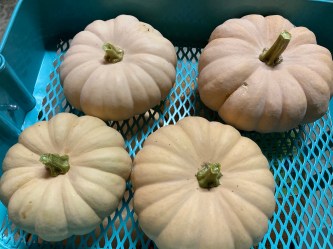
Four little pumpkins got ripe, and there is one more that might possibly. These are the ones I grew from seed collected from a decorative pumpkin last year, because it turned out to be the sweetest of all I had roasted. I’ll let you know if these prove anything like that tasty.


I’ve been trying to get calendulas to thrive in my garden again, the way they seemed so effortlessly to do in ages past. I think back then they received more water and sunshine; this year they are finally, happily blooming in the planter boxes, after taller (shading) plants have been removed, and I got the watering schedule corrected: those boxes were getting less than half the amount of drip irrigation they needed.
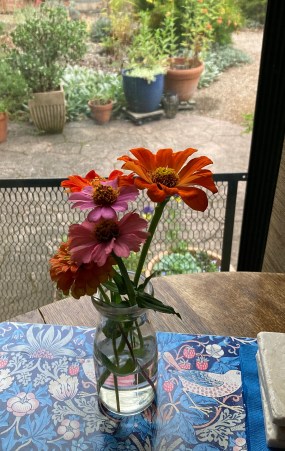
Most of my garden is pretty dry, with minimal irrigation, so anytime I have a plant that needs more than that I put it in the boxes. Right now most of the space is given to zinnias, the last sturdy stars of summer.




 Gladsome Lights