 My worries about September being too cool did not come to pass. We even had a sort of heat wave for two days, and one night when the temperature did not drop below the mid-60’s. As soon as the sun set that evening, we opened the windows and started running the fans. It was cooler the next night, back to our usual marine air, and being able to leave the windows open night and day, and even to let the sun shine in.
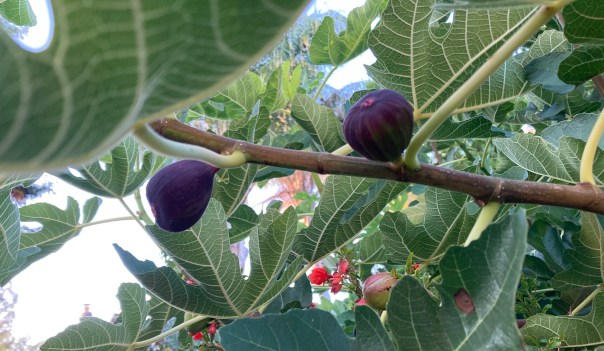
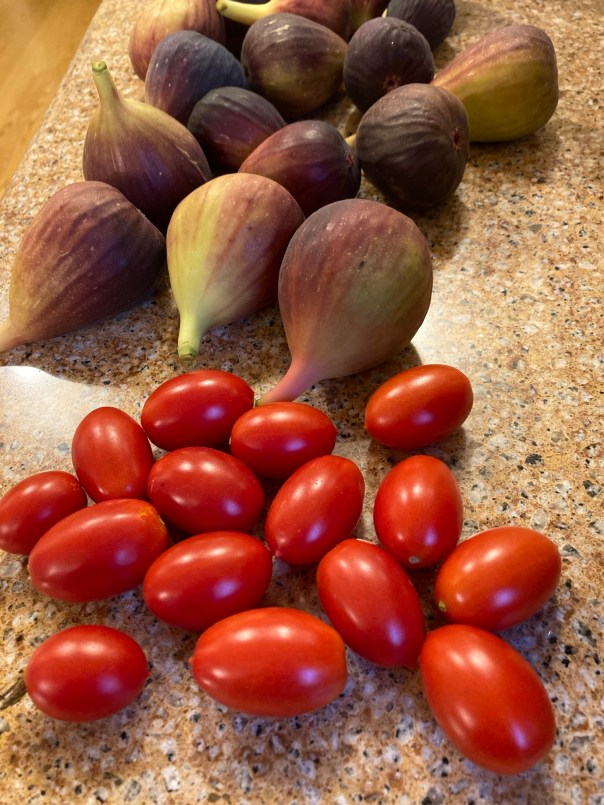
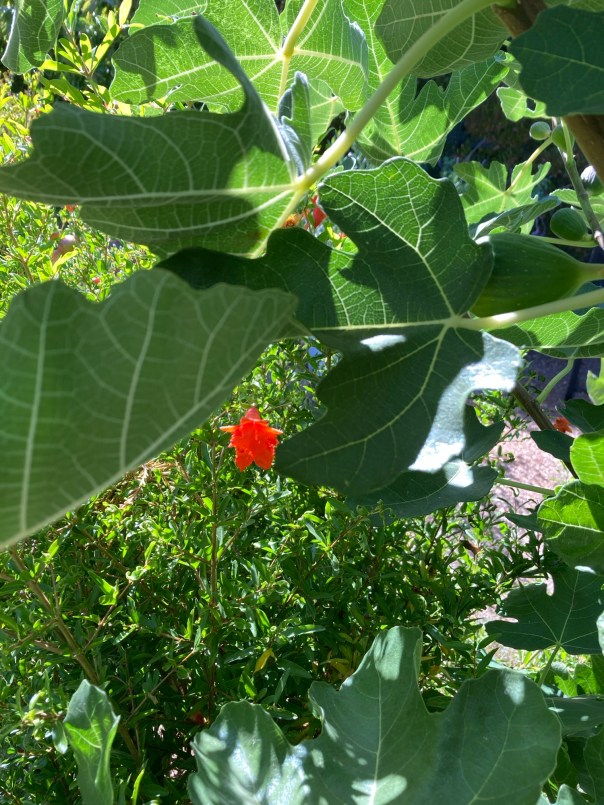
It’s warm enough to ripen figs, and we have eaten a few, but something is not right with my tree. Most of the figs turn purple before they get any size, and fall off when they are still small and hard. The ground is littered with them. I have spent a lot of time trying to figure out what the problem is, but I still don’t know.
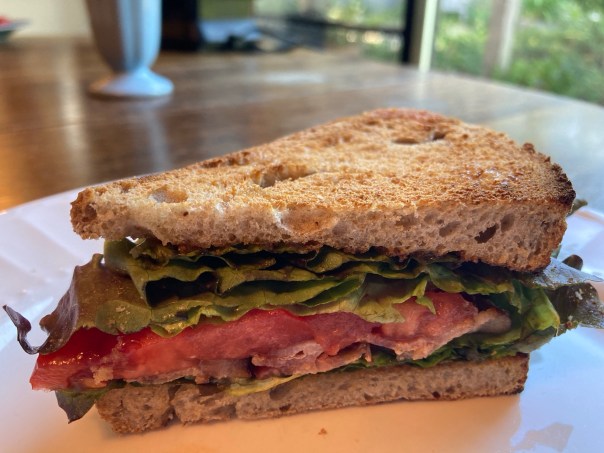
At least, this year I’m happy about the tomatoes. It’s not often anymore that I have home-grown, vine-ripened “love apples” here, other than cherry tomatoes. I suppose one could make a BLT with those, but it never occurred to me. This summer I have Early Girls, and I wanted to make at least one sandwich using slices of them, lettuce and bacon. I accomplished that goal, and it was well worth the trouble.
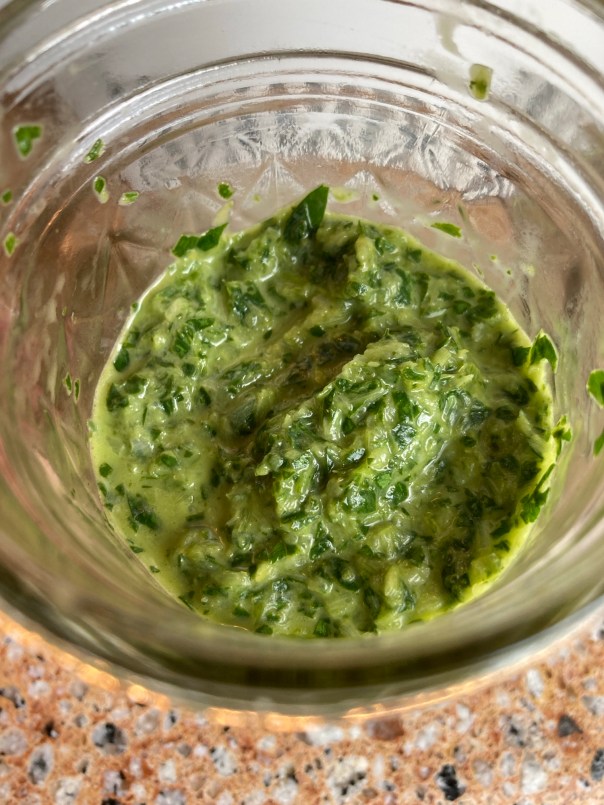 And I used a few stems of the abundant tarragon to make the wonderful Tarragon Salsa Verde:
- leaves from 1 small bunch fresh parsley (approx. 20g / 1 cup)
- leaves from fresh tarragon (approx. 5g / 1/4 cup)
- 1 spring onion including green part (roughly chopped)
- zest of 1 lemon and juice of 1/2 lemon
- 1 teaspoon sea salt flakes or 1/2 teaspoon pouring salt
- 6 tablespoons olive oil
Mix all in a food processor and use as a dip, a spread for bread or on baked chicken, or eggs. It’s just wonderful. I even froze a little batch one time and used it later.
It comes to mind just now, that this salsa would probably make a nice addition to a BLT… I might try that before the tomatoes and tarragon have become a memory.
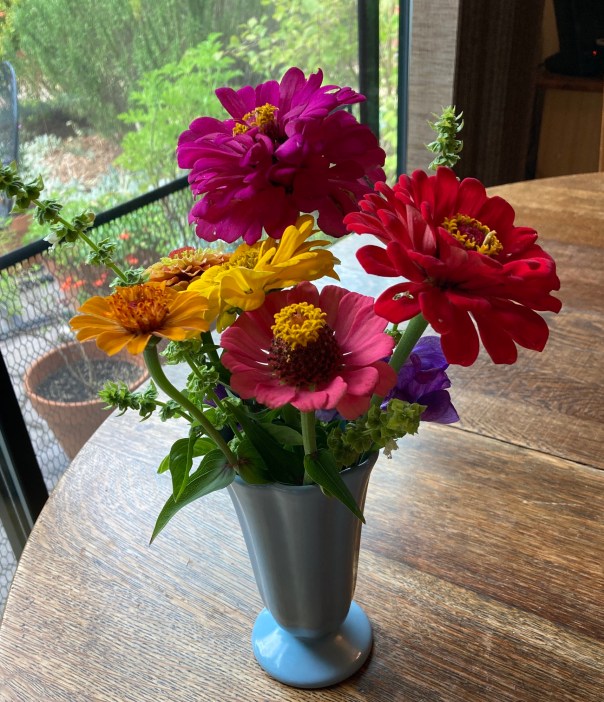
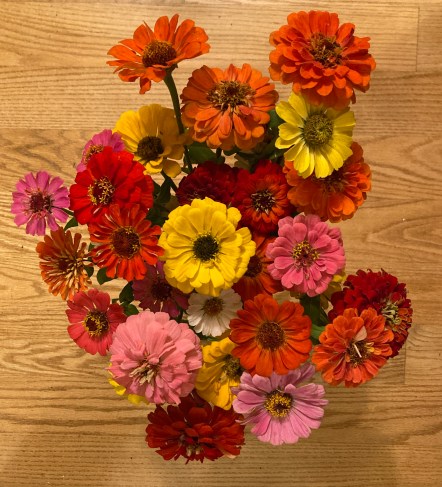
It wasn’t until last week that I got around to bringing flowers into the house, a bouquet of zinnias, with sweet peas and basil. This year I seem to be content to just stare out at the garden, or wander the paths doing little things, and procrastinating on this year’s Fall Reorganizing. Living where the winters are mild makes it possible — and often beneficial — to put off planting or transplanting until October. But extending the season has its down side; I hope next year I won’t have to do any of this moving-plants-around kind of work — but that’s what I’ve said for three years now.
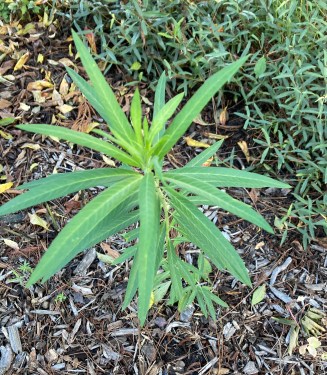
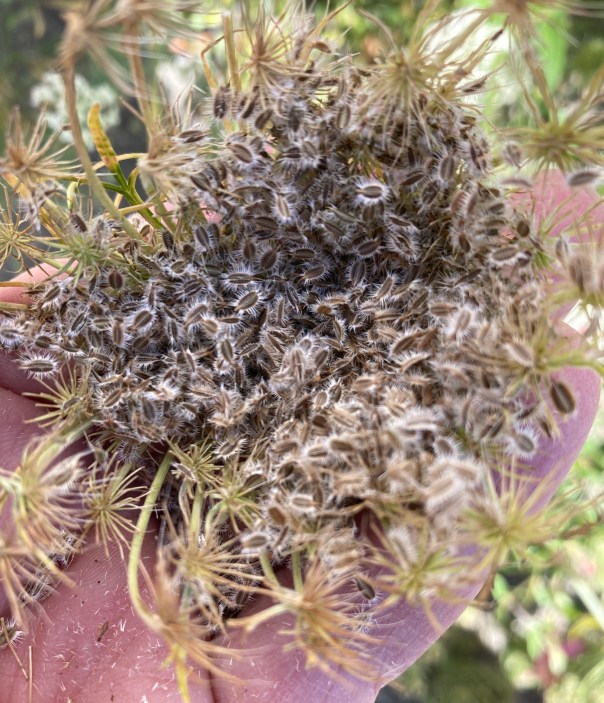
I opened up one dried flower of the Queen Anne’s Lace that had self-sowed next to my driveway, and sprinkled the seeds among the Mexican Evening Primrose that grow in that arid corner. The latter needs a least a little water in the summer, and is always overrun by weeds. The Queen Anne’s Lace grows vigorously all over the place without any summer water. Maybe it will thrive, and crowd out a few of the less beautiful weeds.
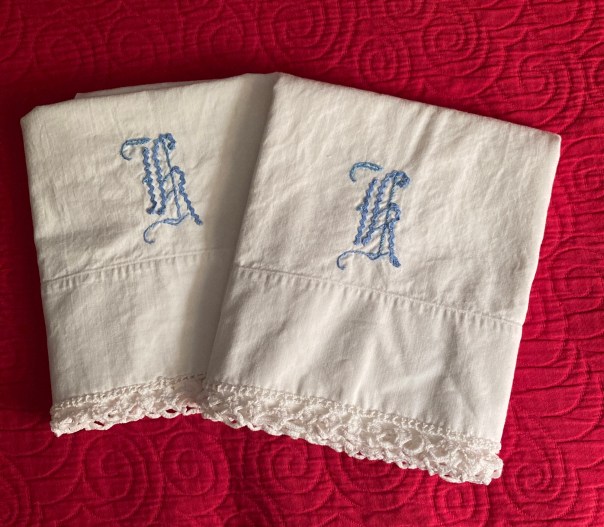
On one of those hot days I did loads of laundry, and used the clothesline. The overflowing basket of items that needed special treatment in the sink is now empty! These two pillowcases that are a hundred years old are fresh and clean. I inherited them from my husband’s aunts or grandmother, and they were a little yellow in places. Now I will start using them. I’m not certain about the monogram… I think it might be FLK? If it is, I don’t know which relative that could be.
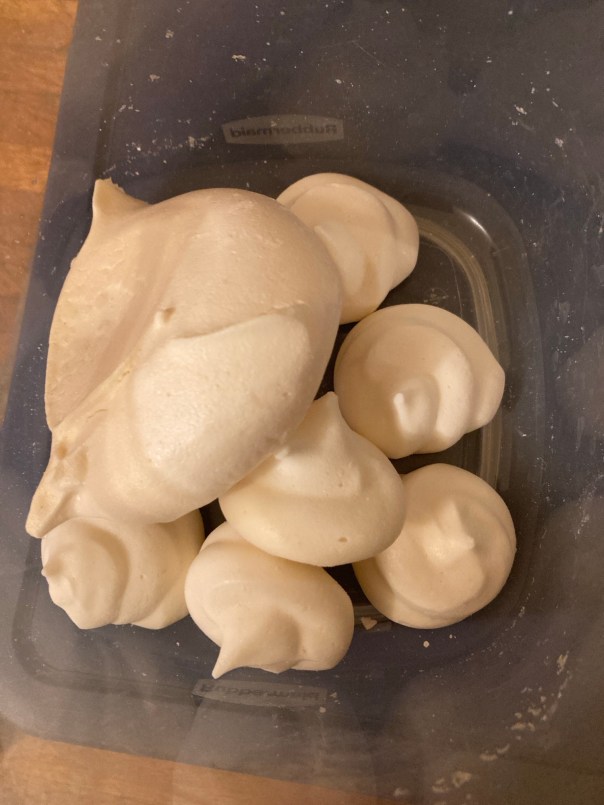
Now that Bea is living here, my kitchen is getting more use; it’s really fun to have a girl around who likes cooking and produces things for me to taste. Recently she made meringues from aquafaba! I knew that liquid from canned garbanzo beans was a versatile ingredient, but I had no idea it could substitute for egg whites in this way. She used aquafaba, sugar, and vanilla. When I was first eating the cookie, I didn’t realize it wasn’t a regular meringue, because she had made them after I went to bed. They were very nice.
Flowers, cookies, tomatoes and figs — September so far is warm and sweet.



 I took my root beer popsicle outside — the way we often require children to do — and wandered around the garden. On the earth and becoming part of it I spied three plums that must have fallen sometime since the day I thought I had picked the last of them. That makes — ta da!! — a total of 52 plums this summer, way, way more than ever before. It may have something to do with the copper dormant spray I applied last winter. The foliage has been looking healthy ever since it leafed out.

 I have to write it down. It would take even more time if I were to write a letter to the grandchildren about it, so they will have to wait, too.
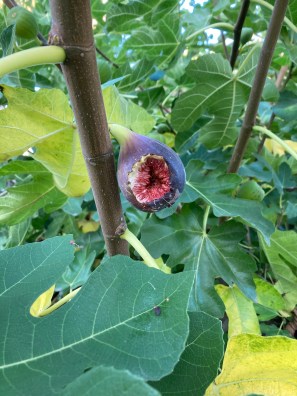 But I have color. My purples are, or should be, my figs. I think this year’s crop is going to be a big loss, because of the relatively cool summer. Yesterday I saw this single fruit ripening. This morning, a meddlesome crow had tasted it and also found it not ready.