Category Archives: water

Thirsty in January

In the Orthodox Church we have been celebrating the glorious Feast of Theophany, remembering the baptism of Christ and all that happened when the Son took on our humanity.

Every year when this commemoration comes around I find myself maxed-out with meaning, because who can fathom it, what God has done for us? and I usually try to meditate on something to do with the symbolism of water as the basic element of Creation. It’s so tactile and material, and when my mind is overwhelmed I can simply stand in church and receive the joyous sprinkling and be happy.

This year a more particular aspect of our sacramental life was the focus of my thoughts. As Christ was baptized, so have I been baptized, and as the scripture and hymn tell me, “As many as have been baptized into Christ have put on Christ.”

After we’ve had a few days of trying to improve ourselves by means of resolutions of will, the Church gives us again the solution to our emptiness and weakness, and it comes in Theophany hymns such as this:

“The voice of the Lord upon the waters cries aloud saying: “Come ye all, and receive the Spirit of Wisdom, the Spirit of understanding, the Spirit of the Fear of God, from Christ who is made manifest.”

And this:

Ho, everyone that thirsteth, come ye to the waters,
Ye that have no money, come ye buy and eat.

And:

Instead of the thorn shall come up the cypress tree,
And instead of the brier shall come up the myrtle tree.

All of this sounds so much more vital and thrilling and real than my paltry goals for 2014. If I would only live each day renewing the God-breath of my baptism, remembering that I have put on Christ….

But Christ Himself, when he came out of the waters of baptism, went into the wilderness to be tempted for 40 days. I am tempted and begin to fall as soon as I walk out of the church. All I can do is pray to be more resolute to pray more, which I think will work better than resolving to pray more, and it gets to the point faster. Lord, give me that Water of Life that You are.

The Neighboring Sea

For a few years of my life I lived a few blocks from the beach near Santa Barbara, California, but my world was so full of other kinds of excitement in those days that I gave very little thought to my neighboring kingdom. It pains me at this stage of life to think what I missed by not spending more time at the ocean’s edge or at least gazing from the cliffs.

I’m reminded of that experience when reading Anne Porter’s description in this poem. In the wee hours she is “remembering” what must have been as near in the daytime, just at the end of the street. It’s from her collection Living Things, which was given to me at Christmas. My husband read this poem first and shared it with me only this morning. Devils-apron is a type of kelp.

THE NEIGHBORING SEA

At three in the morning the village is all in silence
But the silence is afloat on the roar of the sea
And all the streets are bathed in the roar of the sea
The waves are at their labors
Cresting and flooding all along the shore
Tumbling and spinning the kelp and the devils-apron
Threshing to meal the morsels and crumbs of stone
And the light seashells with their storm-blue linings.

This is the time of day when I remember
That down at the end of the street there is an ocean
A Nation of fishes and whales
A sky-colored country stretching from here to Spain
A liquid kingdom dragged about by the moon.

-Anne Porter

Ke’anae Peninsula, Maui

Oregon – Sand, Waves, and the Carrot Family

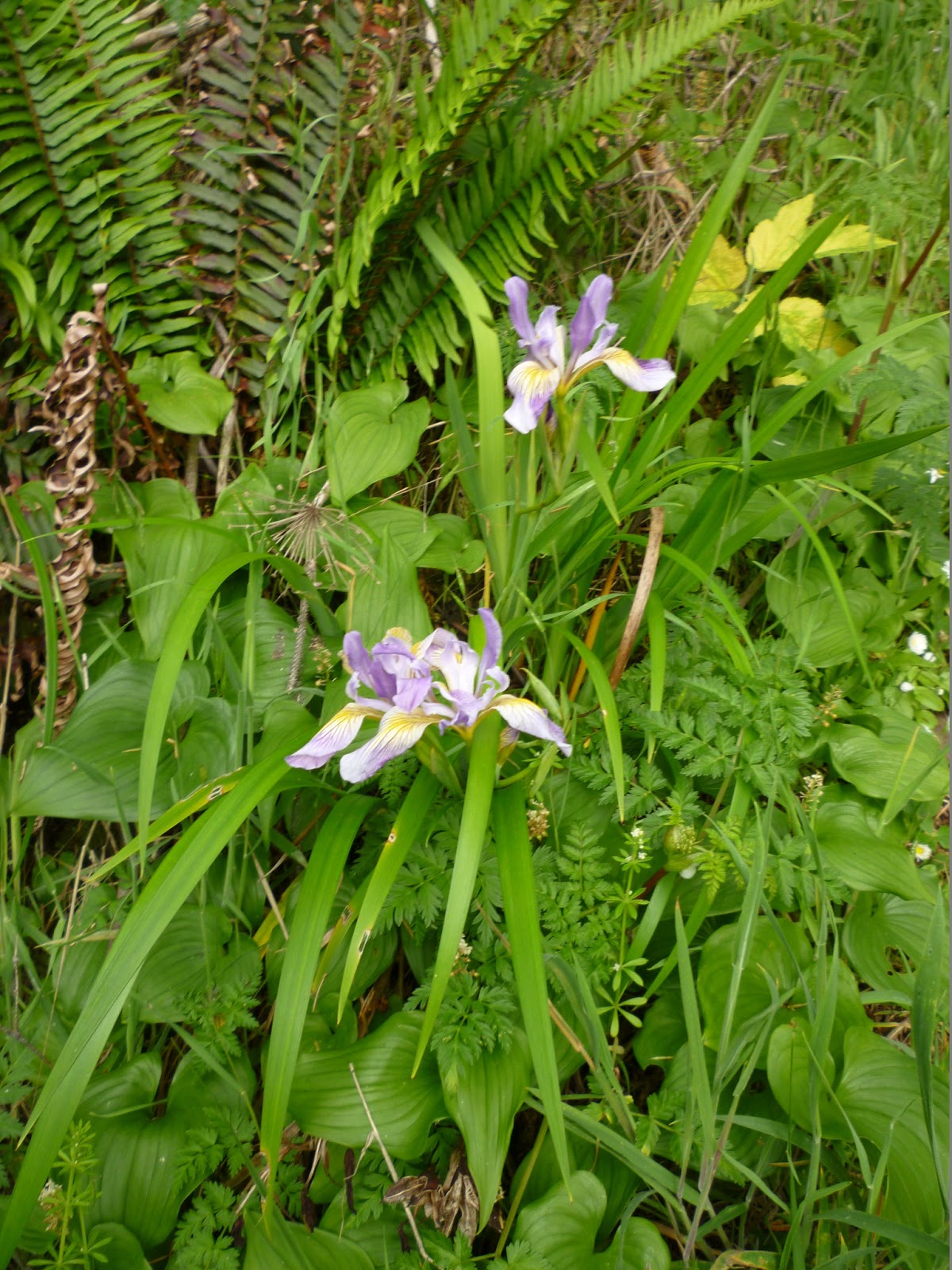
wild iris

From southern Oregon we headed northwest to the coast. This trip involved lots of driving, of which I did a fair amount, and that kept my nose out of a book and my eyes on the scenery. I tried to memorize the components of the lush countryside, forests thick with every kind of tree, bordered by wide bands of blackberry hedges in bloom. The Deer Brush (mentioned in my last post) in white and blue made big pastel splashes, and I’m sorry to say that a species of noxious weed, Scotch Broom, was rampant here, making gaudy yellow blotches on the hillsides in quantities I’d never seen before. I now do believe what they say: Broom is taking over.

Cow parsnip bloomed everywhere, too. It wasn’t until we got to the coast and walked down to the shore that I noticed what seemed to be two types of cow parsnip. I had to wait until we got to Pippin’s house a few days later to read in her wildflower books and get the two cousins straight. They are both in the Apiaceae family, also known as the carrot or parsley family. The one on the left below is the more familiar-to-me Cow Parsnip, Heracleum maximum (named after the god Hercules) and on the right is Angelica lucida, known as Sea Watch or Seacoast Angelica. That one doesn’t grow so much inland.

Cow Parsnip and Seacoast Angelica


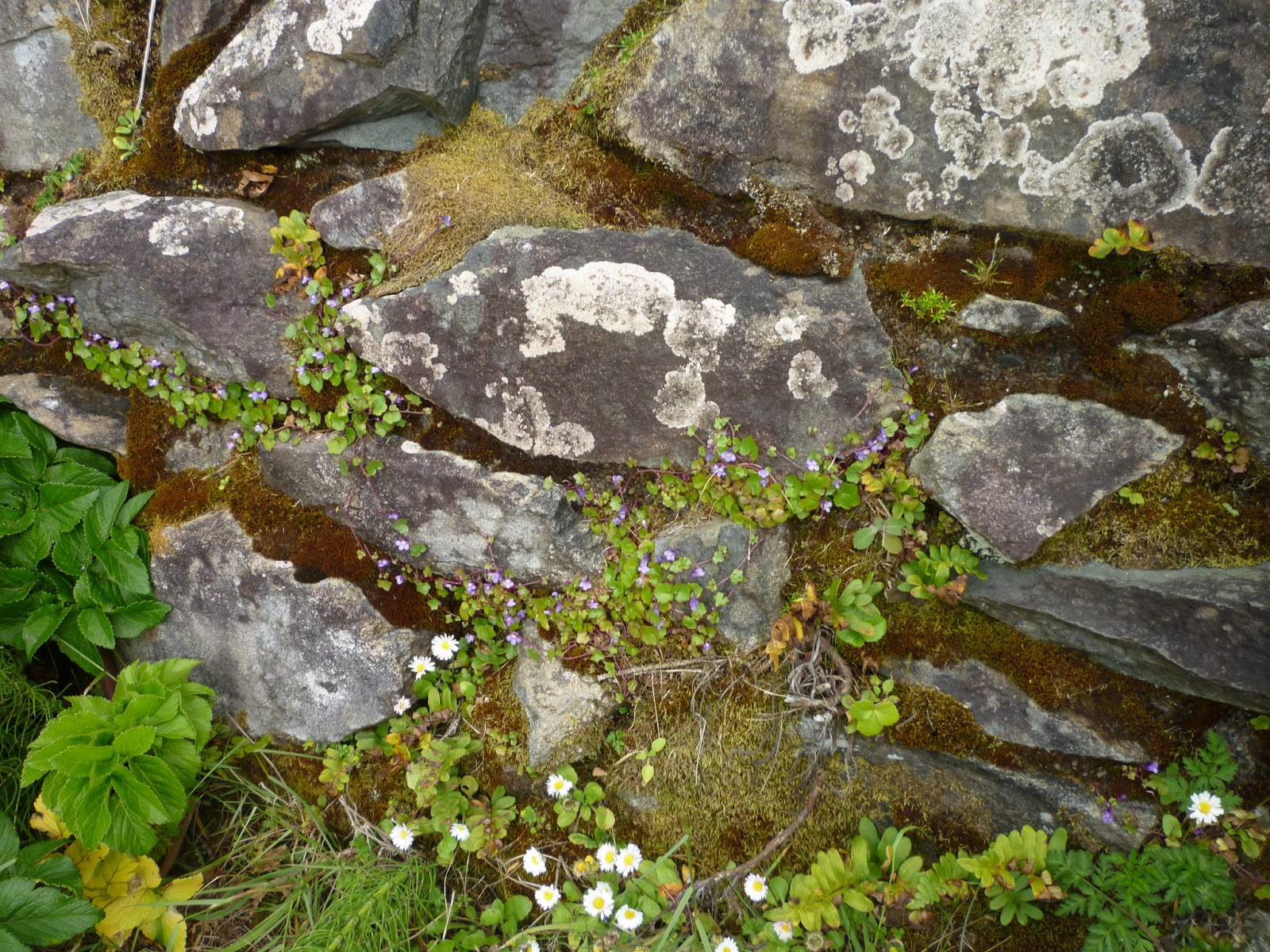
Wish I could identify the viney blue flower that grew nearby, in the middle of the photo at right, but I’ve already spent a fruitless hour trying. Anyone?

enlargement of the unknown flower above

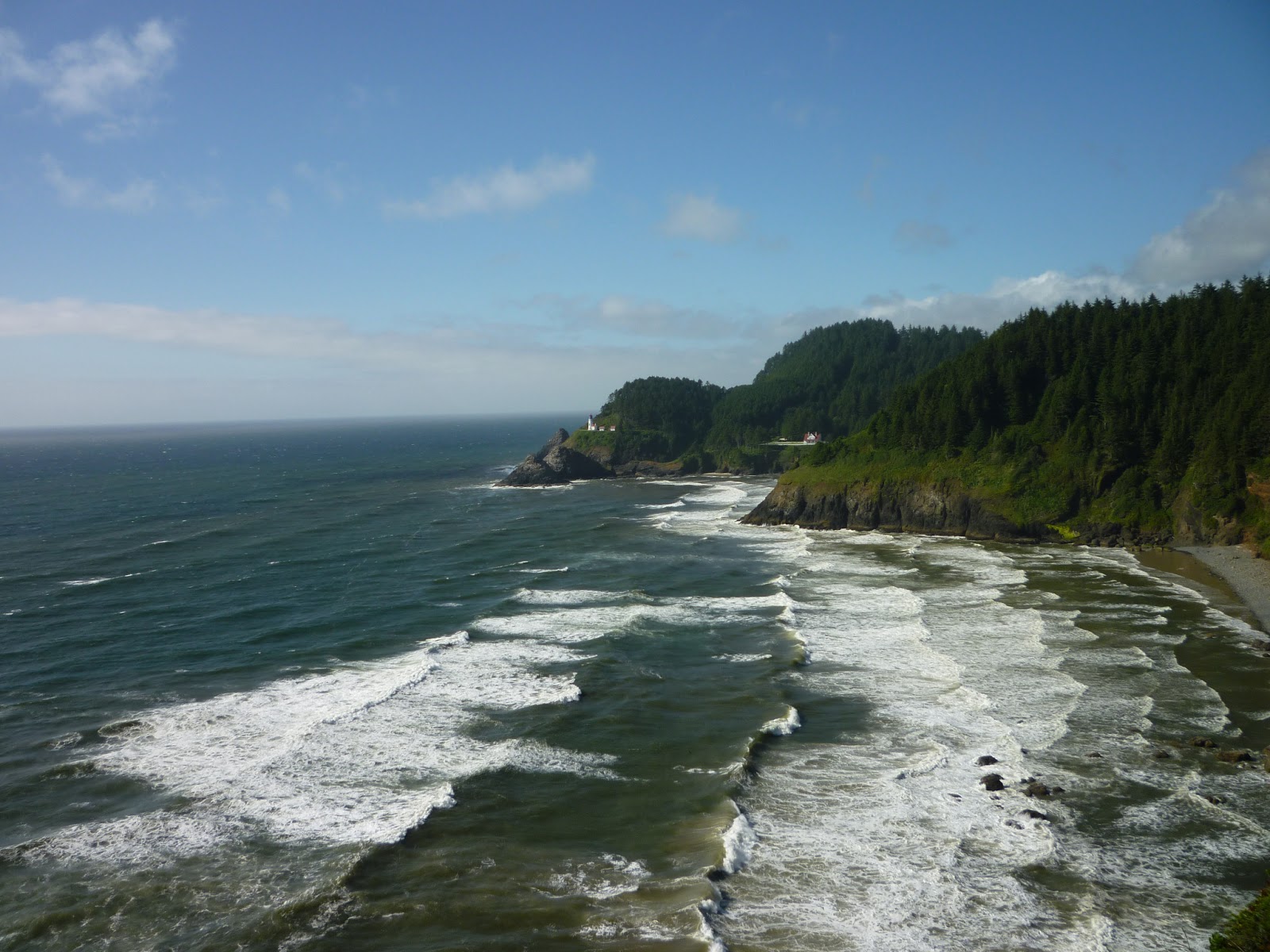
Heceta Head Lighthouse in the distance

Our first night on the coast was spent in Yachats, where our room looked out on this scene. That made the long drive worth every mile – nothing like going to sleep to the sound of ocean breakers.

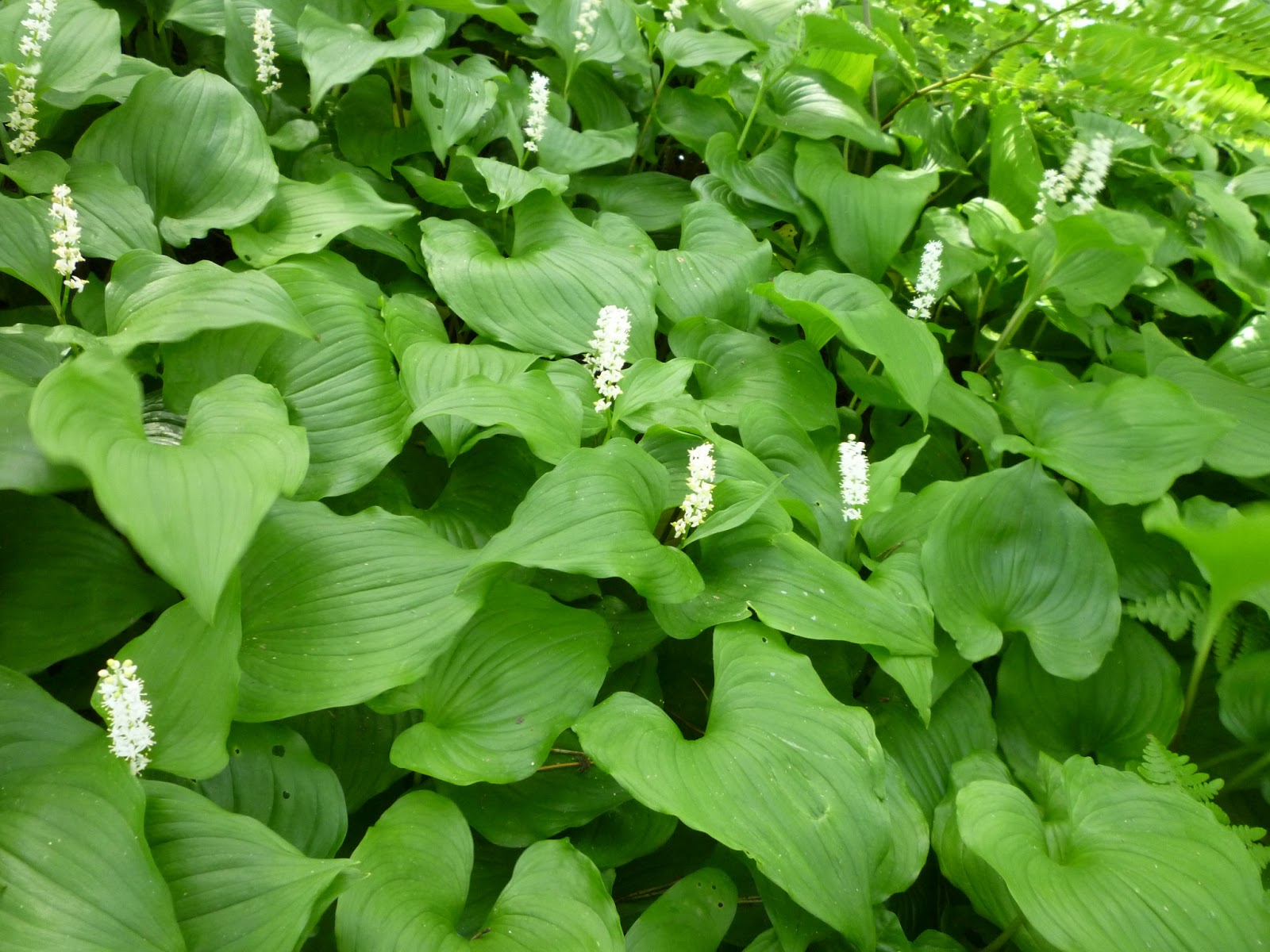
One more plant was new to me, and I eventually found it in an Oregon wildflower guide: Maianthemum dilatum, common name False Lily of the Valley or May Lily or Two-leaved Solomon’s Seal (below).

Maianthemum dilatum

Wherever we drove or walked, big rhododendrons met us around every corner, covered with big pink or red or white blooms. Purple vetch and foxgloves, long-stemmed white daisies blowing at the roadsides, and even giant blue lupines added to the visual feast.

We did stop at the famous Oregon dunes on our way up the coast, miles of broad and high sand dunes you can get lost in. I left my shoes in the car and trudged up a tall sand hill, the wind blowing my pink flowered skirt all over. Deep sand is the most cushiony thing you could desire to hold you up, so after pausing a minute at the top to look all around, I galloped down again, feeling young and strong.

Maui Diary 9 – Bamboo Forest

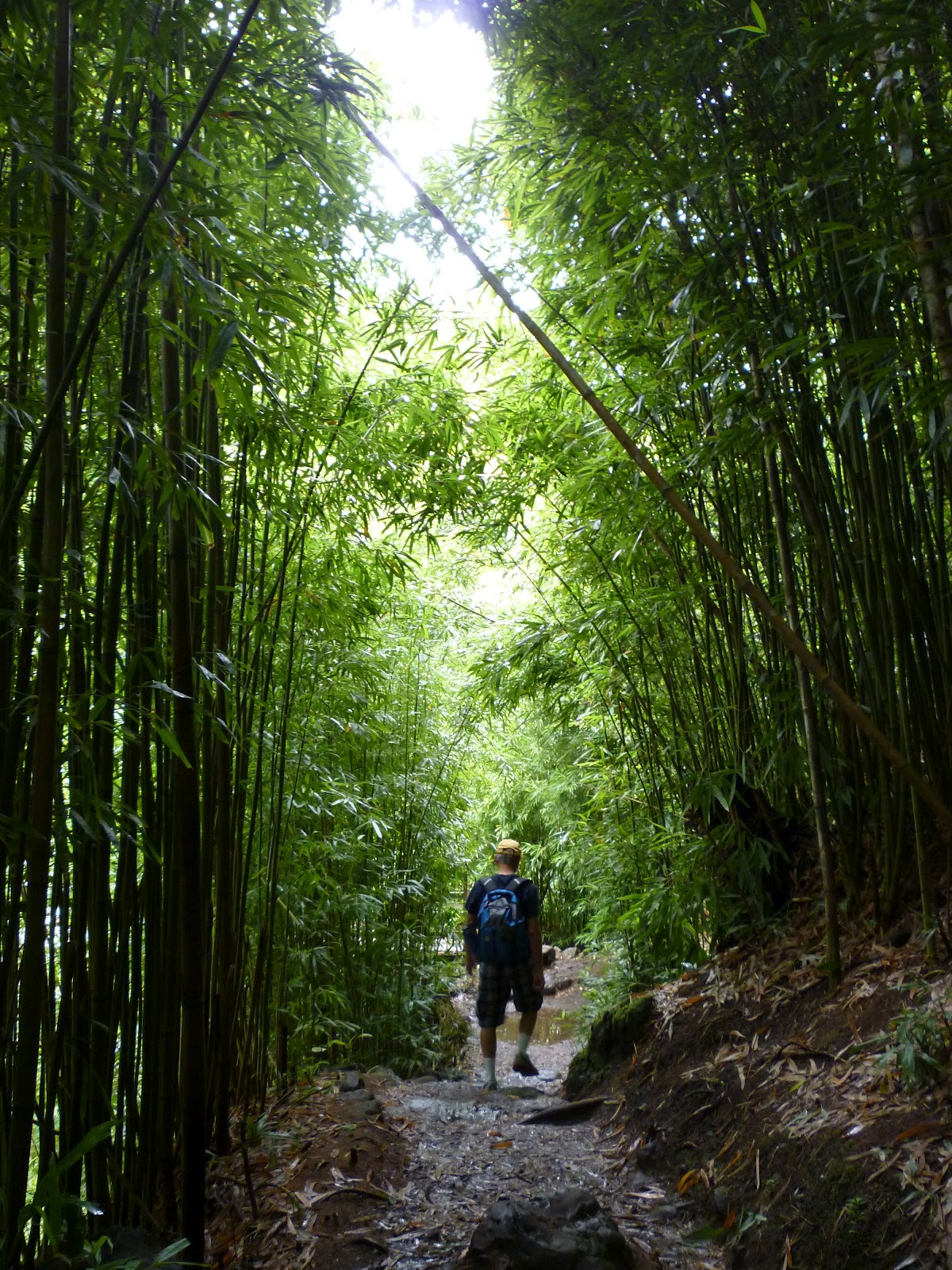
I hadn’t read up on the hike to Waimoku Falls, so until we entered the middle stretch of the trail I was unaware that a bamboo forest was even in my future. Just after we passed the giant banyan tree we started to notice the bamboo; at first the growth was not too imposing, and sunlight shined through.
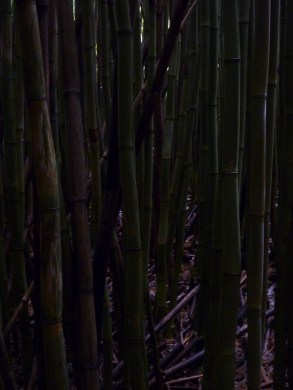
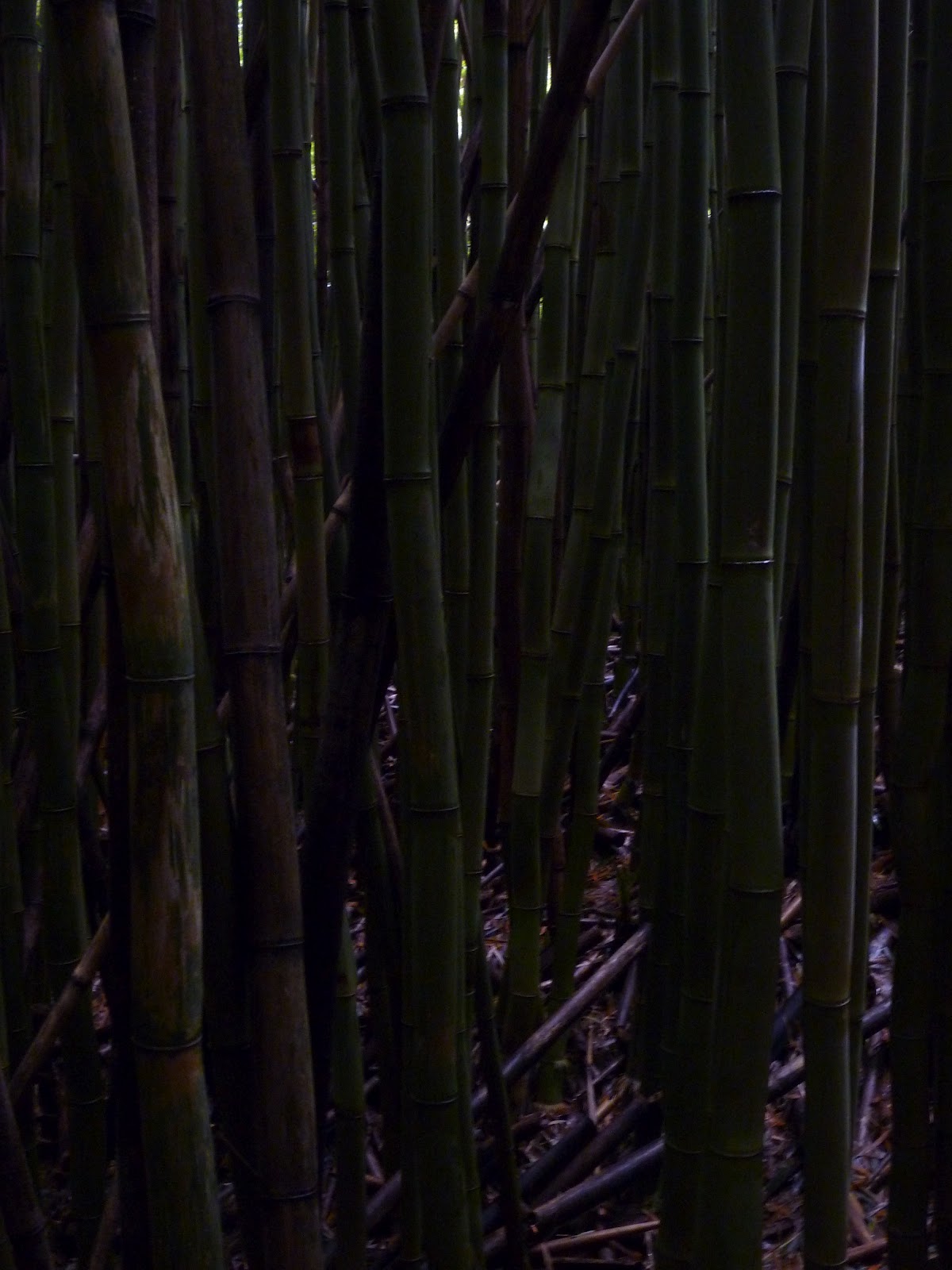
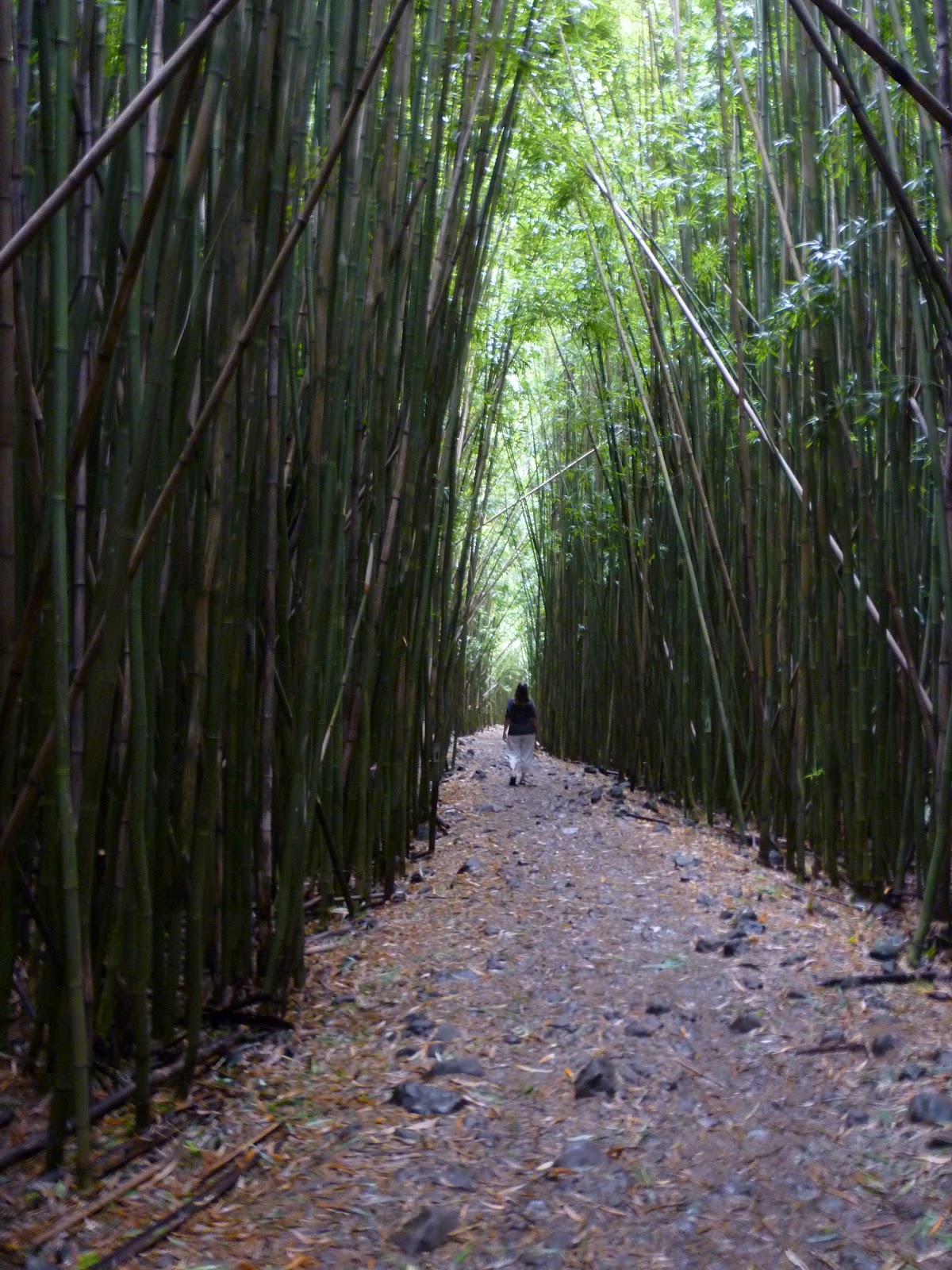
The green walls became thicker and higher as we walked on, and the individual stalks larger in diameter, blocking out the light.

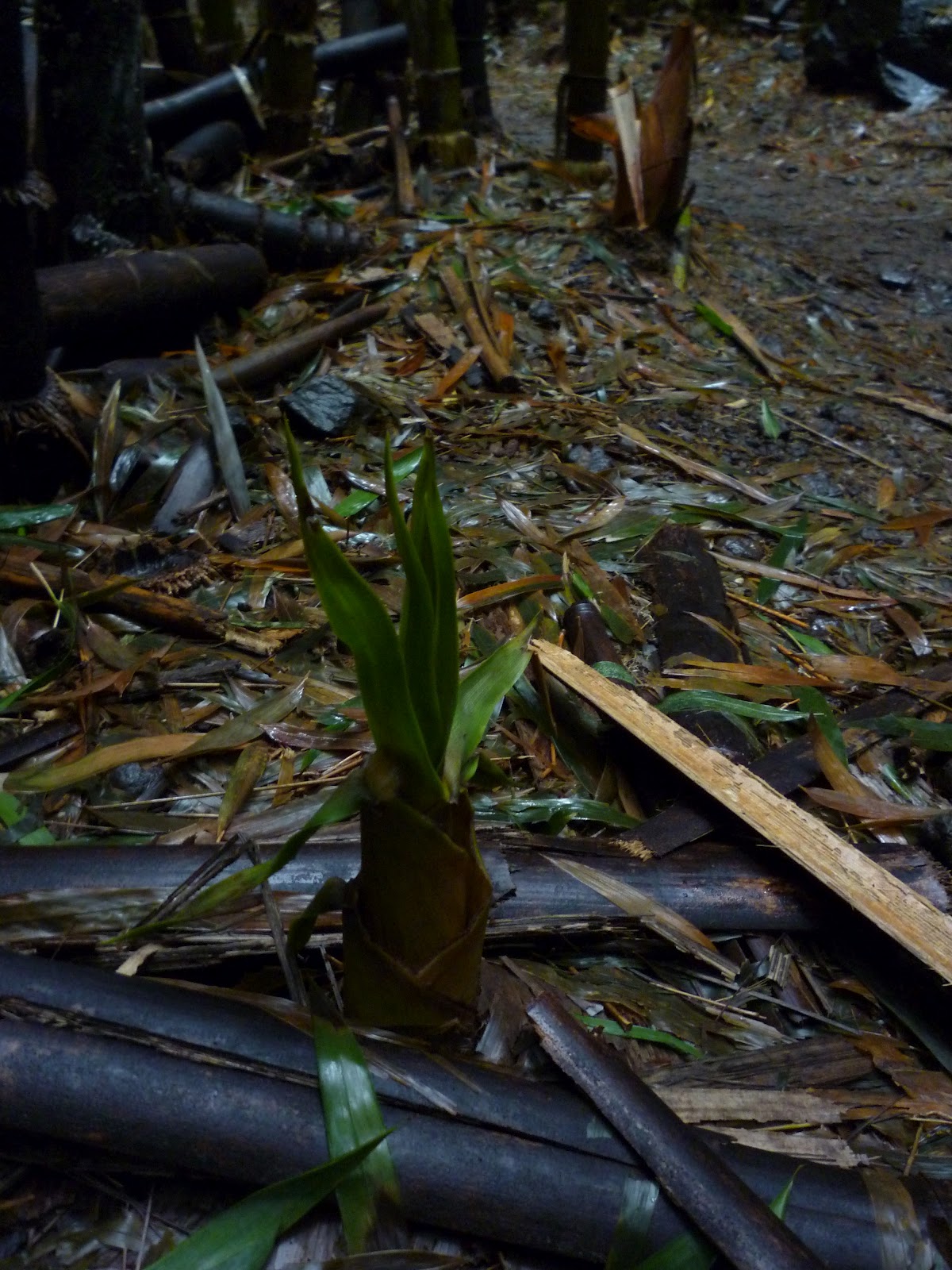
Depending on the soil and climate, the species of bamboo and the age of the rhizome clump, the stems of this grass can be narrow or wide, but they always emerge from the ground at their full thickness.
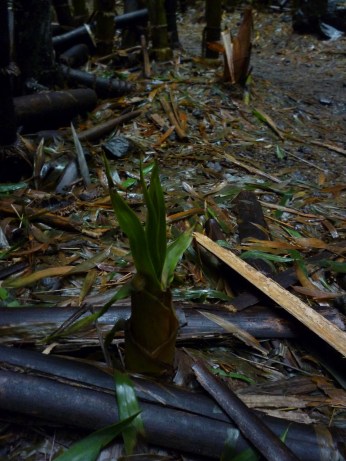
The growing season is only three or four months long, at the end of which the the stalks have reached their full height, and begin to harden. In five to eight years they decay from fungal and mold growth and die.

The darkest and dankest part of the trail was also the smelliest. Being more of a monoculture than the rain forest of the Pacific Northwest, it had nothing like the delicious aroma I drank in when visiting there. I tried hard to make a place in the olfactory regions of my brain where I could enjoy the aroma of rotting bamboo in deep layers, but I finally gave up. Because I didn’t like that odor, I also didn’t care about finding descriptors.

Signs along the trail told me it wasn’t a true monoculture. Not even counting the small and microscopic plants that were probably growing somewhere, an occasional red-orange flower on the ground revealed that an African Tulip Tree was blooming prodigiously up closer to the sky where I couldn’t see.

When I saw a knobby tree trunk beside the trail, the contrast was such a relief I spent quite a while trying to capture it.

And as we neared the falls, the canopy opened up enough again to reveal a wealth of other tropical plants.

The trail we hiked was in the southern area of Haleakala National Park, a large territory that also includes the summit of Haleakala Volcano, where we had visited at sunrise just a few days previous. Two fingers of parkland extend to the ocean on the south of Maui, and we were climbing within one of those fingers.

When we arrived at the 400′ high Waimoku Falls my powers of concentration were challenged. I think that it’s because waterfalls are constantly moving that they are impossible to focus on in the manner that my slow mind prefers. I get restless.

So I looked around and found an African tulip blossom that had worked itself into a streamside niche and a picture reminiscent of Andy Goldsworthy. It held its position long enough for me to think about it and become attached to it. So glad to have a camera.

Then we walked back through the bamboo, feeling as though we were on another planet. We wouldn’t have been surprised if a giant panda had dropped down on the path ahead. But soon we’d come to the end of our strange tunnel and within an hour I was at the wheel of the car guiding it along the loop that would wind back to our home base.