 From the ascent with our Savior through Holy Week, through the Crucifixion, to the peak of Paschal joy – from there the only direction for the emotions is down. The sun went away right after the high holy days, also, and the thermometer dropped as fast as our mood.
But we came to the second Tuesday after Pascha nevertheless, the day when I always love to go to one cemetery after another with my snowball (viburnum) flower petals and sing “Christ is risen” along with varying numbers of other Orthodox who keep this tradition around here. And today I thought I might just go to the first one on the route, where my husband is buried. It was another cloudy and cold morning, and for reasons I probably don’t even know the half of, I just wanted to stay in bed.
 One reason I came after all was that this year, finally, we were invited in writing, in the bulletin or in an email or both, to bring a picnic and to eat together at the third cemetery when we had completed our rounds of the graves and prayers. I had planned what I would cook this morning and bring, and I didn’t want to miss being able to hang around the cemetery longer. (Is there an “afterglow” among the graves? Oh, yes!) Though I did wonder, “Why this year, for a picnic? This is not picnic weather!!” I looked at the forecast and they did say the sun might come out by noon…. Please, Lord!
It’s pathetic how long I argued with the day and with myself. I got up late, but in time to cook sausages and load a basket with bread and butter. In the garden I cut a bagful of snowballs and remembered to bring in some fresh little flowers for the icon that essentially shows the Incarnation of the One who has destroyed death by death. I was humming the resurrectional verses about that as I went about my work, and all these activities showed me that I was indeed alive, and not  even half crippled.
Last week I read Earthly Possessions by Anne Tyler, which a friend had recommended and lent to me. You might say it’s about half-crippled, dysfunctional and alienated people. It reminded me of Flannery O’Connor except that the characters weren’t real or strange enough to convey their lostness. On the other hand, there was no hope of their finding or being found by God. Descriptions of scenes or people always included details of ugliness or brokenness, but never beauty on any level, outer or inner.
I thought a lot about the novel at the cemeteries today. The narrator Charlotte would have found lots of tackiness to describe, had she been with us. The old parts of the cemeteries are not kept up. I found pictures just now that I had taken of these resting places in the past, including the most neglected one, where Nina is buried.
Five years ago she sat in her wheelchair at the concrete curb that surrounds the graves of her husband and son while we were singing. Now her dear body has been in the ground next to them for three years, and the plastic flowers hanging on her makeshift grave marker have lost all their beauty. Some artificial flowers are truly lovely, but please! If you decorate a grave with them, don’t 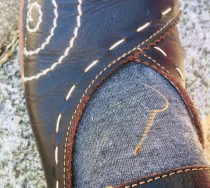 expect them to live forever.
When I was on my way to the third cemetery, the sun came out!
Below is another scene from five years ago: the rockrose at Father D’s grave in its glory. He founded a monastery in our town, and the nuns who live there always like to visit this spot in particular. Now the bush is quite dead, and I wonder if anyone will replace it….

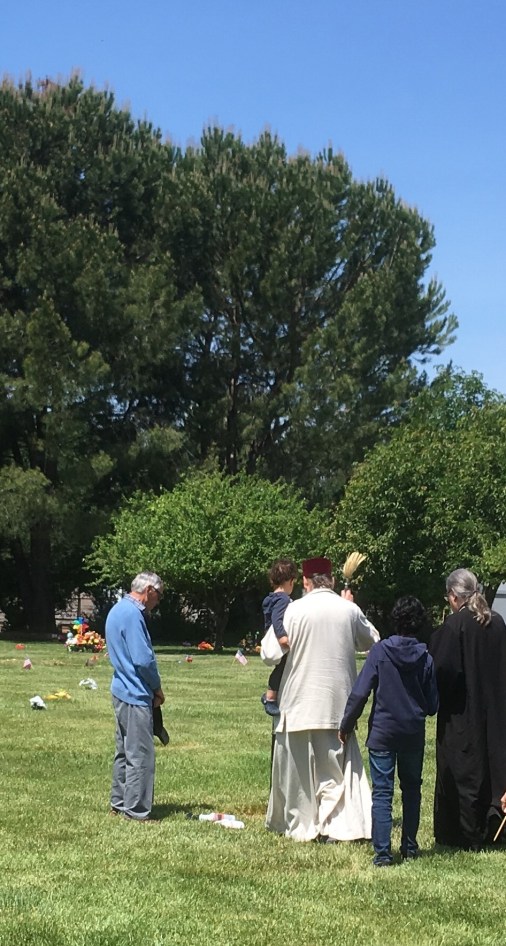
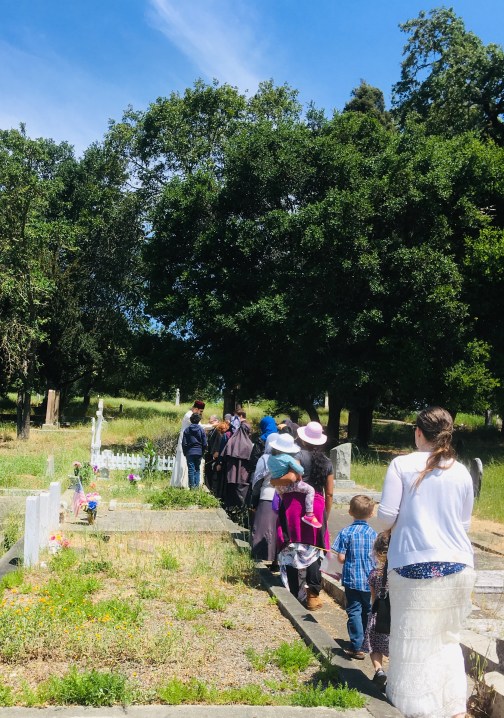
 I saw many things that Tyler’s Charlotte would not have told you about: poppies, and beautiful children, and elderly people who came hobbling with their walkers and canes and patience to sing to the departed, those we know are included in that company of whom we are told, in St. Paul’s first letter to the Thessalonians:
“But I would not have you to be ignorant, brethren, concerning them which are asleep, that ye sorrow not, even as others which have no hope. For if we believe that Jesus died and rose again, even so them also which sleep in Jesus will God bring with him.


“For this we say unto you by the word of the Lord, that we which are alive and remain unto the coming of the Lord shall not prevent them which are asleep. For the Lord himself shall descend from heaven with a shout, with the voice of the archangel, and with the trump of God: and the dead in Christ shall rise first: Then we which are alive and remain shall be caught up together with them in the clouds, to meet the Lord in the air: and so shall we ever be with the Lord. Wherefore comfort one another with these words.”
 What a mystery! We know so little about those who have passed from this life. We entrust them to God, and we don’t stop loving them… I shared my bag of blossoms with the children in our group, some of whom are newly baptized and had never been to a cemetery before. I told them it was okay to scatter the petals on any of the graves; we may not know the souls who sleep there, but we can still honor them.
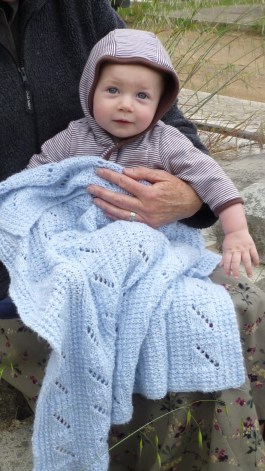
The little guy on the left is five years older than when I took this picture on a Radonitsa in the past, and today he was one of the children who helped toss white petals and red eggshells on the graves. Those decorations look very pretty together, by the way.
We enjoyed our picnic. I remembered the butter but forgot my loaf of bread on the kitchen counter. Several people had contributed to the feast that it turned out to be. It seems likely that from now on we will keep this tradition, and I will plan to bring chairs or a waterproof picnic cloth so more people can sit around longer. But our priest and deacon didn’t linger; they were headed to two more cemeteries!

I came home via the paint store, where I picked up several color swatches to help me with my remodeling. My inadequacy in the realms of color and design  is probably one of the things getting me down lately. The man at the store said that if I bring in a flooring sample they can tell me what paint colors look good with it. That was very encouraging, but I still brought home a few paint colors to help me at the flooring store. Don’t worry – I know all of these don’t go together!
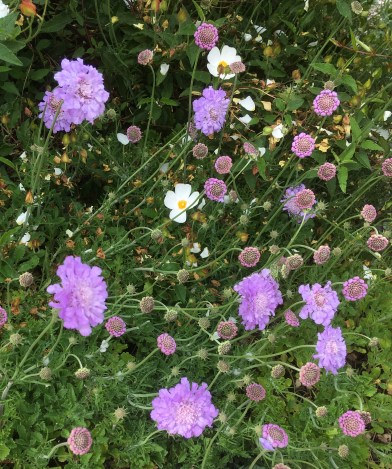
It’s easier for me in the garden; there, if the tones clash, you can remove a plant much more easily than repainting a whole room. My husband used to claim that all the colors of flowers look good with all the other colors. I don’t agree, so I guess I am not entirely lacking in color confidence.
Two of the blues that I like are called World Peace and Sacrifice. (Seems like that could be the beginning of a poem.) I don’t understand how it is that one of them supposedly complements the rust color named Copper Creek but the other one doesn’t. That’s just one of the things I’ll ask the nice man at the Kelly-Moore store next week.
When I finally came home I saw an article in my blog feed: “Ninety Percent of Orthodoxy is Just Showing Up.” That was very timely for me; I realized that blessing the graves required me showing up there at the cemetery. My mood didn’t matter at all, and I’m sure it would not have improved by not going. But tomorrow my plan is to stay home and do only homey things. I won’t argue with myself about that!
 Father Stephen Freeman by his writing has been helping us for a long time, to understand how shame motivates our behavior, both good and bad. There is both healthy shame, which we are “hardwired” with, and toxic shame, which often has unhealthy ramifications down through the generations.
 Gladsome Lights