Tag Archives: Les Murray

Death is a change, but not an end.

AT UNIVERSITY

Puritans reckoned the cadavers
in Anatomy were drunks off the street;
idealists said they were benefactors
who had willed their bodies to science,
but the averted manila-colored
people on the tables had pinned-back
graves excavated in them
around which they lay scattered in the end
as if exhumed from themselves.

-Les Murray

This month marks ten years since my husband’s departing from his earthly life, which leads me to meditate again on this topic. And today is one of the Memorial Saturdays we Orthodox have during Lent:

“Saturday is the day which the Church has set aside for the commemoration of faithful Orthodox Christians departed this life in the hope of resurrection to eternal life. Since the Divine Liturgy cannot be served on weekdays during Great Lent, the second, third, and fourth Saturdays of the Fast are appointed as Soul Saturdays when the departed are remembered at Liturgy.” (OCA)
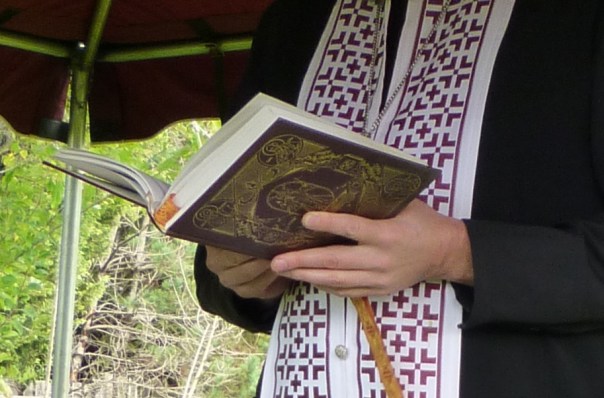
Les Murray’s poem recognizes something about human beings that our modern consciousness rarely grasps: the unity that exists between soul and body, and the brutality of violating the physical aspect of a fellow human.

Father John Whiteford writes that sometimes,

“…you will hear people say that the deceased is not in the coffin but with Christ, for example. However, if a person dies in Christ, their souls will be with Christ, but until the general resurrection, their body remains a part of them that will one day be reunited with their souls (though their body will be transformed) — and as such, the soul apart from the body is not the whole person (2 Corinthians 5:1-5). 

If you are interested to know more about the Orthodox perspective on end-of-life issues, you might check out the Ancient Faith podcast “A Christian Ending” from Deacon Mark Barna, who has also co-authored a book by that title. Episodes of the podcast include: “Understanding Death,” “Cremation,” and “Preparing the Body for Burial,” and about a dozen more.

My late husband’s casket in our house.

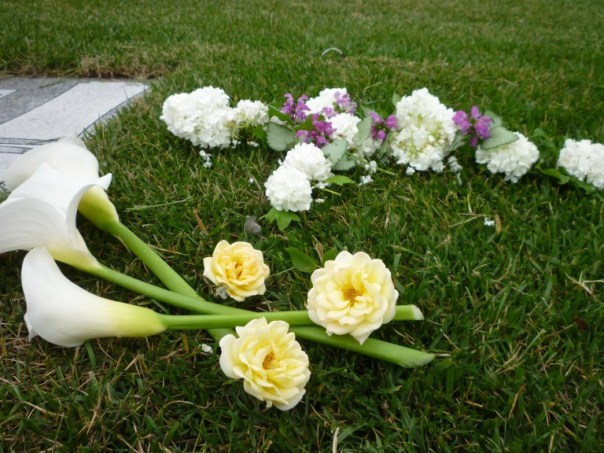
In the wholeness of Orthodox vision and practice, “…death is a change, but not an end. That which we see, the body, remains important and worthy of honor. A funeral, the service of remembrance, is a sacramental gathering in the presence of God. The body is honored, even venerated. The life of remembrance, eternal remembrance, begins.”

-Father Stephen Freeman, “A Secular Death”
Heads rocking and tick-tocking.

My Kate is arriving by airliner tonight with her family, and I am imagining the little boys with their out-of-sync bodies debarking at a time when they would normally be in their beds asleep. This poem captures some of the sensory confusion of the experience of flying. (‘Kliegs’ are powerful arc lamps used in film lighting.)

TOUCHDOWN

The great airliner has been filled
all night with a huge sibilance
which would rhyme with FORTH
but now it banks, lets sunrise
in in freak lemon Kliegs,
onto swift cement, and throws out
its hurricane of air anchors.
Soon we’ll all be standing
encumbered and forbidding in the aisles
till the heads of those farthest forward
start rocking side to side, leaving,
and that will spread back:
we’ll all start swaying along as
people do on planks but not on streets,
our heads tick-tocking with times
that are wrong everywhere.

-Les Murray


It rests their big eyes.

Cotswold cows by Pippin, 2005

Les Murray wrote a poem with 18 stanzas, but I am sharing only a third of them here. It is a rambling catalogue of summer gardening memories, and after this first portion my mind balks at following his wandering; I want to rest here in the shade, where I can be philosophic and civilized. The thing the poet wants to cultivate under the glaring sun Down Under is not any kind of vegetable or flower, but the shade itself.

I wish I could trade some of my own backyard shade for his extra sunshine, but how do you measure that kind of stuff? What I have to trade might not add up to much in total mass of shade… I’m guessing enough for a couple of rogueing cows.

(From) ROOMS of the SKETCH GARDEN

Women made the gardens, in my world,
cottage style full-sun fanfares
netting-fenced, of tablecloth colours.

Shade is what I first tried to grow
one fence in from jealous pasture,
shade, which cattle rogueing into

or let into, could devour
and not hurt much. Shelter from glare
it rests their big eyes, and rests in them.

A graphite-toned background of air
it features red, focusses yellow.
Blue diffusing through it rings the firebell.

Shade makes colours loom and be thoughtful.
It has the afterlife atmosphere
but also the philosophic stone cool.

It is both day and night civilized,
the colour of reading, the tone
of inside, and of inside the mind.

-Les Murray


The chimes of neverwhere.

THE CHIMES OF NEVERWHERE

How many times did the Church prevent war?
Who knows? Those wars did not occur.

The neither state of Neverwhere
is hard to place as near or far
since all things that didn’t take place are there
and things that have lost the place they took:

Herr Hitler’s buildings, King James’ cigar,
the happiness of Armenia,
the Abelard children, the Manchus’ return
are there with the Pictish Grammar Book.

The girl who returned your dazzled look
and the mornings you might have woke to her
are your waterbed in Neverwhere.
There shine the dukes of Australia

and all the great poems that never were
quite written, and every balked invention.
There too are the Third AIF and its war
in which I and boys my age were killed

more pointlessly with each passing year,
but there too half the works of sainthood are,
the enslavements, tortures, rapes, despair
deflected by them from the actual

to rain on the human-sacrifice drum
which millions never have to hear
beating for them in Neverwhere.

-Les Murray

I discovered an earlier version of the poem online which speaks overtly of the Devil and of Christ’s love, but this is the one the poet chose to include in Selected Poems.