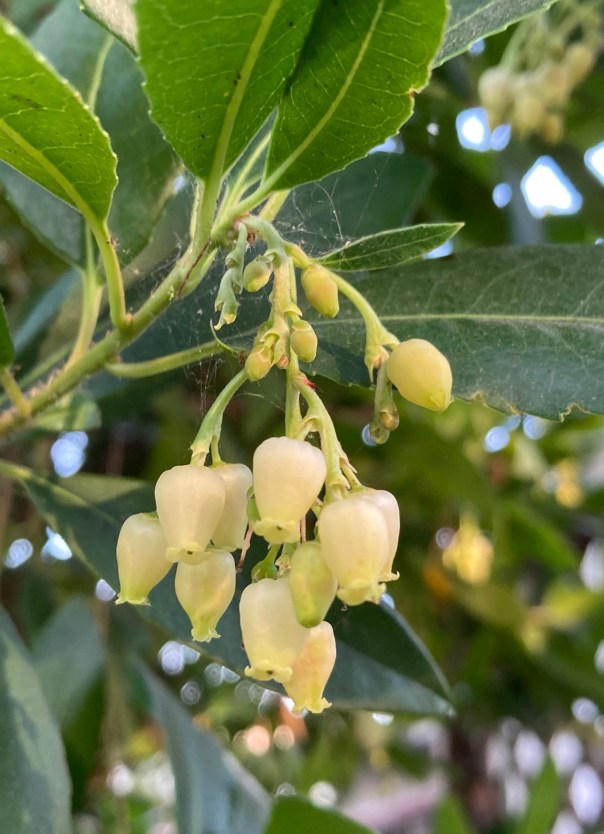
The American Labor Day holiday is on the very first day of September this year. This prompts me to pay closer attention at the outset, because that’s also the first day of the liturgical year for Orthodox  Christians. I’ve been supremely blessed by various aspects and events of the day…
First, it’s quite warm, which is too hot for some people, but I guess it’s in my blood, to want to be enveloped by air that is not much colder than my body temperature. (Of course I don’t feel the same way about it when the humidity is approaching that of my blood.) No marine breeze has come against me for a couple of days; even at night, when the temperature eventually drops to the usual mid-50’s, evidently it lingers in those lower registers more briefly. It is sweet, to feel fully relaxed, without sweaters or quilts. This kind of day is why I love September so much.
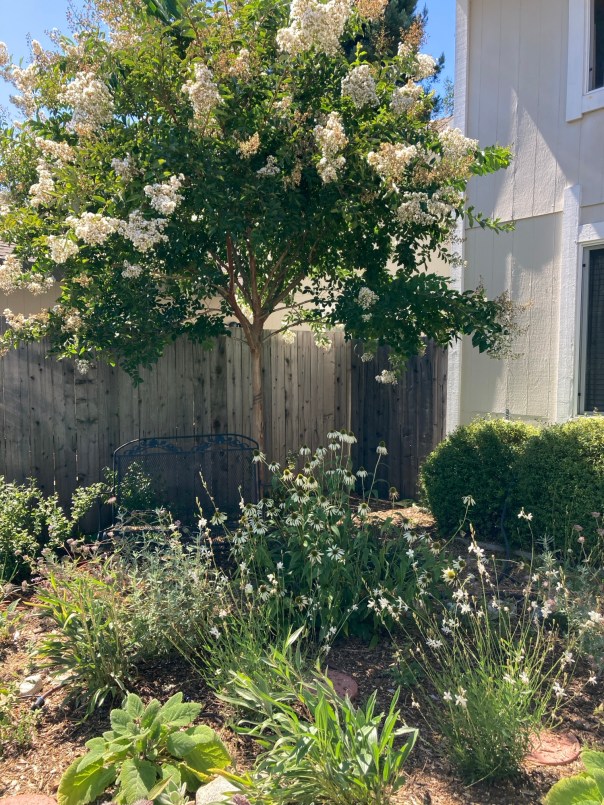
 My sometimes helper Alejandro wanted to come and work this morning, so he could do family things later on. He probably would have come at sunrise if I’d let him, but he was willing to come a little later, and he cleaned up and trimmed the most parched and spent things around the place. That lifted my already floating spirits a few feet higher.
I pruned the lemon tree a bit, and removed numerous pine needles and spider webs from it, then texted with my brother about what might be causing some fruit to be deformed. He helped me figure out that it is citrus bud mites. I don’t know, if anything, what I will do about this. Maybe some insecticidal soap…
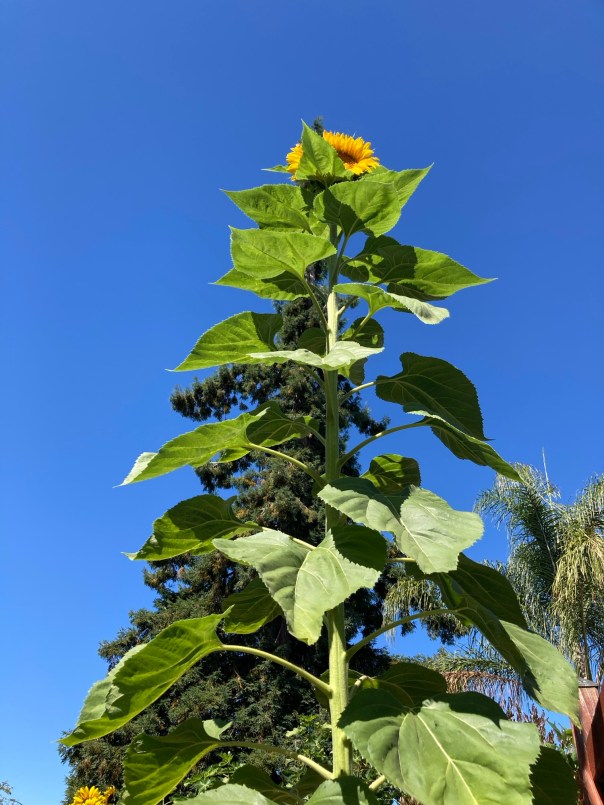
I admired the tallest sunflower I have ever grown.
I dusted one bench, and sat on another
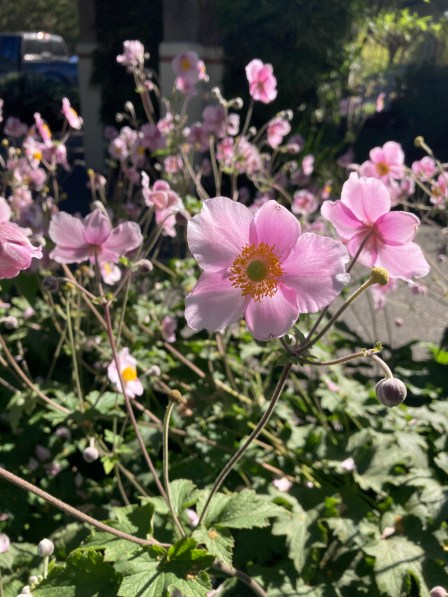
to admire my favorite echinacea flowers.
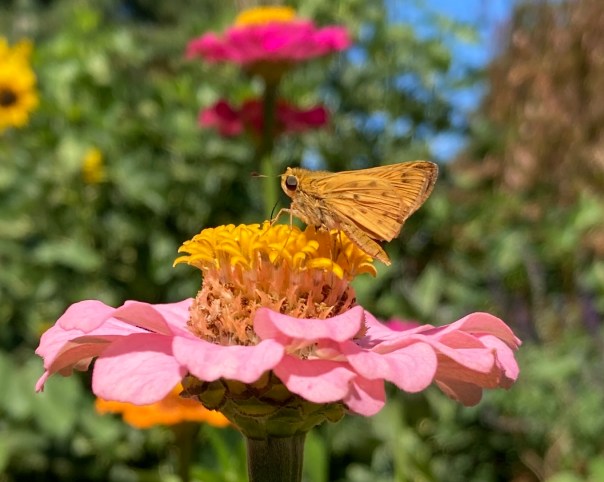
I watched the skippers on the zinnias,
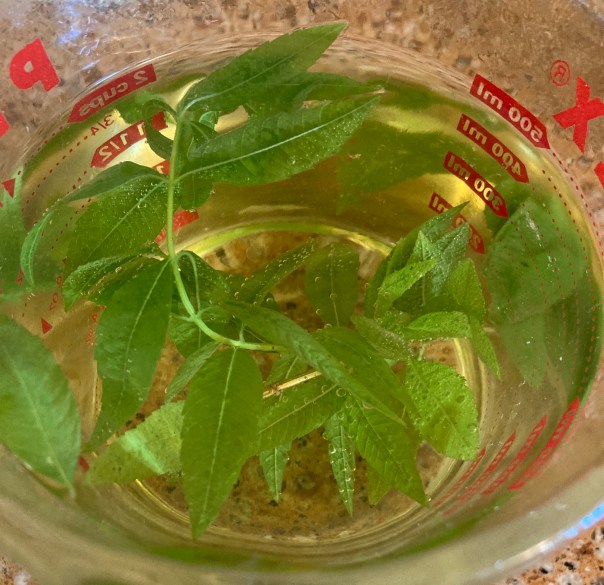
and tidied up the apple mint and the lemon verbena.
I made tea with the trimmings of the verbena.
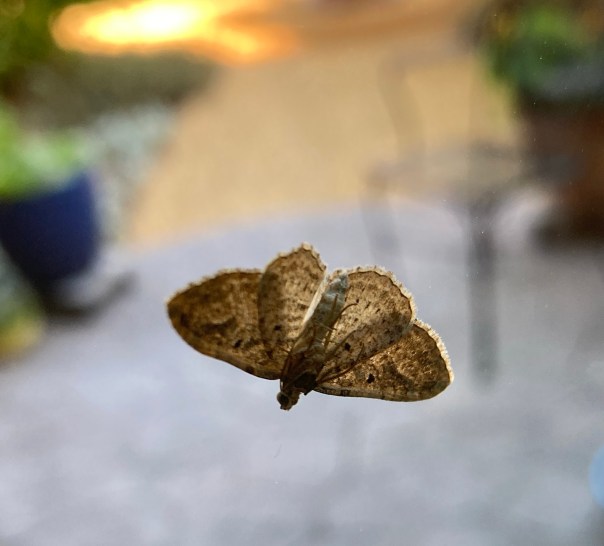
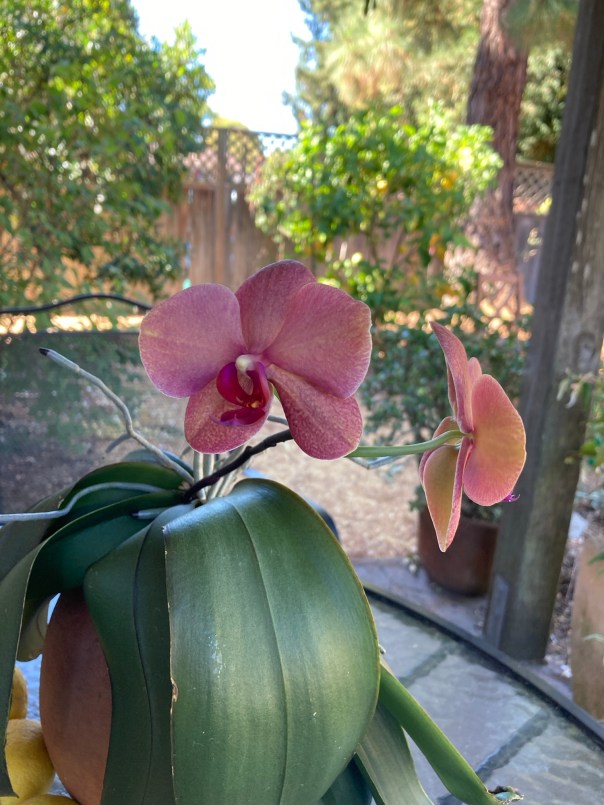
From time to time I consider tossing out the orchids that have come to me over the years, all but one of which has never bloomed again. But a friend told me that I should give them the kind of nourishment they like, food that is designed specifically for orchids. She said there are different orchid fertilizers depending on the species of orchid, and whether it is in the bloom period or not. I bought just one type so far; that is a start! My plants have been outdoors for the summer, in the shade, where I remember to water them more often, and they seem to be generally very happy, even if only the one is blooming. Today I will start being a less lazy orchid farmer.
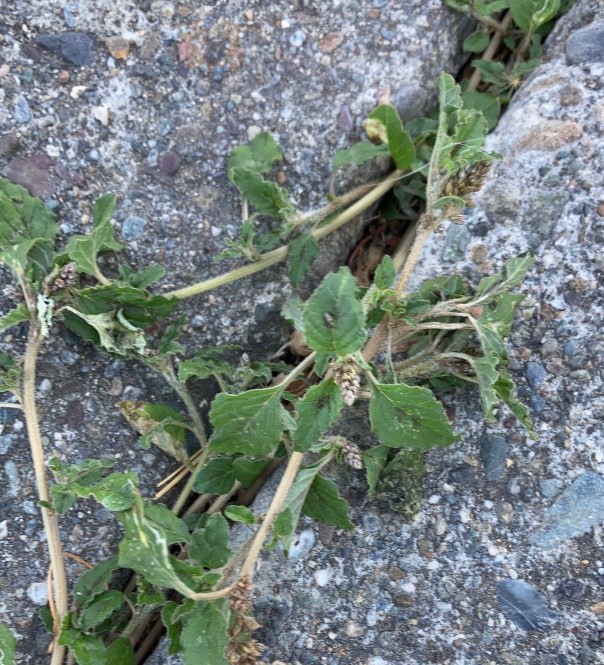
I really would like to grow amaranth in my garden, but I keep forgetting to try again. The one time I planted seeds, they did come up, but I think they were shaded by zinnias or other vegetables and never thrived. Maybe next year. In the meantime, I discovered that a type of amaranth has self-sown in the cracks of my driveway.
Is gardening labor, or is it work? Many people have weighed in on the difference in meaning between the two words, and after a brief perusal of their ideas it seems to me the discussion gets too complex for a day like today, when I am relaxing while working. I know working is the word I much prefer, unless I am talking about the births of my children.

I find a short quote about the words labor and work is not too taxing to think about on this non-laborious day:
“[Hannah] Arendt points to how language itself has always put a consistent break between them: “ponein and ergazesthai” in Greek, “laborare and facere” in Latin, “travailler and ouvrer” in French, “arbeiten and werken” in German, labor and work in English.” -Front Porch Republic
In any case, I’m sure I will continue to do both, through September and onward, and I will try, I will even work, to be thankful for all of it, whatever God gives me strength to do.
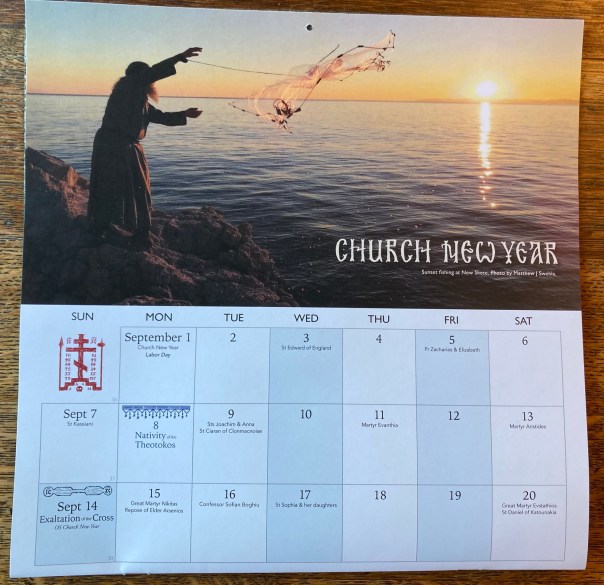
 It’s New Year’s Day according to our liturgical calendar, and special prayers for God’s blessing were included in our service this morning. What better time could there be for thinking about progress… or would devolution and even defeat be more realistic? I happened to read this passage today (I didn’t hear it in church) and just realized how it is connected, sort of. From a letter written by the Apostle Paul to his coworker Timothy:
 Father Stephen Freeman has written over the years about how this passage is in agreement with what J.R.R. Tolkien wrote in a letter many centuries later:




 Gladsome Lights