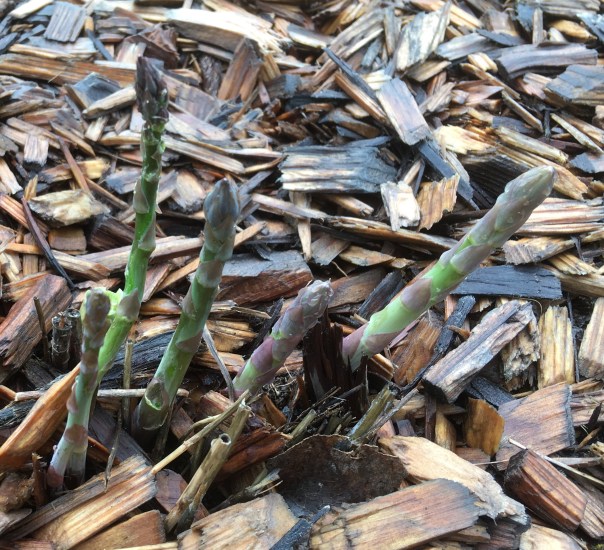
A picture from my garden in springtime:
It seems I never wrote last summer about how I had to prune my asparagus early. I didn’t have time, because of how that project consumed me. The same phenomenon is forcing me to do it again this year: an infestation of aphids in the thick jungle of fronds. Last week I saw a few ladybugs on the plants, and thought, Oh, no, I bet it’s happening again. I looked more closely, but the invasion wasn’t obviously imminent.
Then today, as I was trimming the irises, I noticed that some of their leaves had the sticky “honeydew” sign of aphids. That’s exactly what I was doing last year when, as today, I looked up at the asparagus fronds bouncing off my head — Why oh why hadn’t I worn a hat? — and saw the shiny mess everywhere. I had taken a lot of pictures last year (including two I’m posting now), but never got around to sharing anything of that experience; there were immensely more pleasant things to tell about.
Searching online, I did not discover any tricks to prevent this happening every year, though I did learn that much of California is so mild that aphids are a problem with many crops; there are aphids specific to many plants, a fact I didn’t know before. Maybe I have the European Asparagus Aphids.
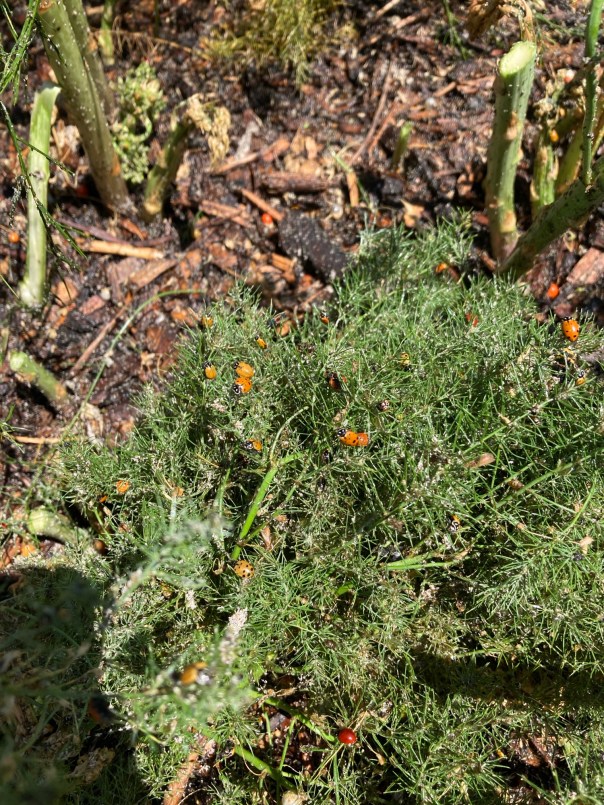
A single adult ladybug can eat up to 50 aphids per day, and the ones that arrived in my garden this month have feasted well, but they can’t keep up. One is supposed to wait to prune asparagus after cold weather makes the fronds turn brown, so that they have as long as possible to carry on photosynthesis. But if aphids are destroying them anyway, not much is lost by doing it early.
Jacques the Gardener in San Diego shows in his video how he had the same problem I do, in his much smaller plot, and his reasoning about having to cut down the plants months before the usual time helped me to feel better about doing the same. Last year there were so many mild-weather months remaining after I removed the decimated fronds, a whole new crop of them sprouted, which I knew would start over the process of turning the fall sunshine into food for the crowns. Eventually they had to be cut off also. My spring crop following all that was pretty good this year, but it’s possible that a continued aphid plague will weaken the plants.

Today, I only cut off a few of the stalks, to clear the way for me to finish cleaning up the irises. In the process aphids and aphid carcasses drifted down on my hair and clothes. In the next couple of months I’m dividing and replanting the irises and changing things around in that area, so I think after cutting all the asparagus to the ground I’ll take the mulch off the whole space as well and start with fresh everything. I hope that might reduce next year’s aphid population a little.
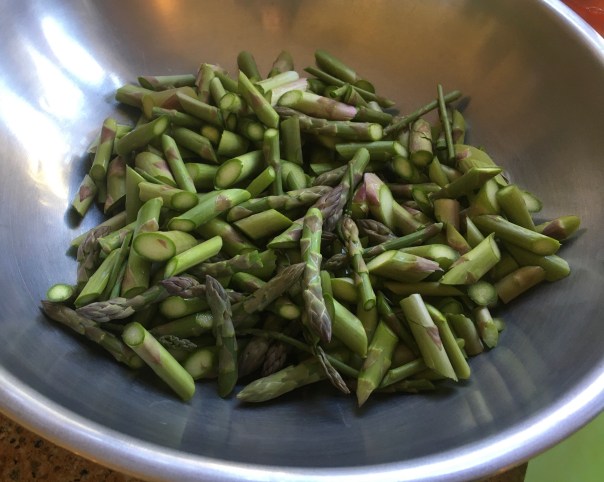
In the meantime, I will close with a more positive visual reminder of why I do all this work:
 Gladsome Lights
What a lot of ladybugs (we call them ladybirds :)) in your asparagus! I seldom find any in my garden. Enjoy eating your asparagus though!
LikeLiked by 1 person
I’m sorry you’re dealing with aphids! They’re especially frustrating. I see the damage they’ve done to the milkweed plants all around our area and wonder what the monarchs are eating.
LikeLiked by 1 person
Your asparagus looks delicious! A patch of asparagus is all I have left in our old veggie garden. Sometimes I remember to snap off a few in the spring. Sorry about your aphids!
LikeLiked by 1 person
Asparagus is such an enduring crop, in spite of pests, that I can reasonably hope to have more of it again next spring. I guess it’s a little confusing to post about it right now, off-season, but in a garden every perennial plant is in some stage of its growth and bears attending to.
LikeLike
I don’t often see aphids, but when I do, they’re feasting on milkweeds — and in the couple of not-so-good photos I have of them, the aphids are being feasted on by ladybugs! There are some lovely plants, like the yarrow Achillea millefolium, that are in the asparagus family and native to your state. I wonder if planting something from the same family could tempt your aphids away from your beloved asparagus.
LikeLiked by 1 person
That’s an interesting idea about the yarrow — in my garden I always have several types of Achillea millefolium, both native and hybridized. I’ve never seen aphids on any of them, even the ones that are right next to the infested asparagus. I guess the insects prefer the juicier members of the family!
LikeLiked by 1 person
That’s really unfortunate having to have all that sticky mess to cope with. We had a row of beans that got infested and had to be pulled out before any beans were big enough to use. Strangely, I only had to spray the roses once and they usually have aphids. (I spray them with water and dish soap).
LikeLiked by 1 person