Orthodox Christian, widowed in 2015; mother, grandmother. Love to read, garden, cook, write letters and a hundred other home-making activities.
View all posts by GretchenJoanna →
I couldn’t find my old Sunset Magazine recipe for (Filipino) chicken adobo, so I researched online and discovered that quite a bit of controversy persists over the proper method and proportion of ingredients. It seems to depend on what region of the Philippines you or your mother came from, whether you will use equal portions of soy sauce and vinegar, or will include tomatoes — and more variables than that. Cooking is folk art, isn’t it?
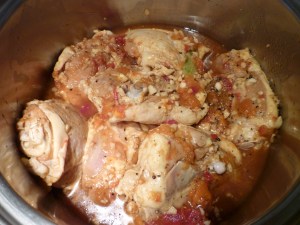
chicken thighs after marinating 18 hrs
Eventually I settled on this recipe from The Splendid Table, created by two women who don’t appear to be Filipinas themselves, but I liked that they authoritatively state: “One of the cooking techniques that sets Filipino adobo apart is that you brown the meat after it is cooked, not before. That aroma of a browning, marinade-saturated chicken can drive you crazy.” Theirs was the only version I found that included this instruction. By the way, in Spain when they talk about adobo they refer more generally to a marinade, and not to this particular dish.
reducing the marinade for sauce
Even I tweaked the recipe a bit. I used a little less vinegar and more soy sauce, and I fried the onions separately and threw them on the rice at the end.
However you adjust your ingredients — and unless your mother insists that you make it her way, you should feel a great deal of freedom to experiment — the essential flavors that make adobo are vinegar, soy sauce, black pepper, bay leaf, and garlic. Pork and beef liver are commonly used instead of or in combination with chicken. This version called for 10 large cloves of garlic, and mine were actually gigantic.
The whole dish was quite piquant and delectable; I was glad that I did saute the chicken at the end because the skins got nice and crispy-tasty. I served white rice to soak up some of that garlicky sauce, and a vegetable, and we feasted.
Just hours after my last post, my prayer for rain, showers did fall on us. I knew that there had been a weatherman’s chance of that in addition to our hope. P.G., as the Irish say, Please God, there will be a dampening in those places that need it most, to retard the incendiary possibilities!
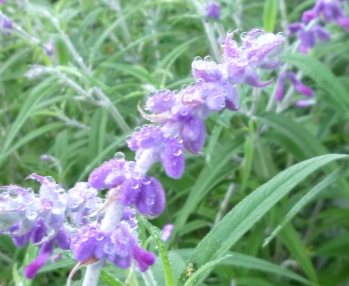
When I drew the blinds this morning, a hummingbird was feeding at the Mexican Bush Sage, but when I went to get my camera he must have gone home and got the message that it’s too wet right now for that, because he never would come back. But he will, and a passel of relations with him, because they love this sage.
I’ve been wanting to take a picture of our bush that is humongous this summer. It only came into full bloom within the last week or so, but it will keep going until Christmas and beyond. It’s a plant whose stems must be cut to the ground every winter, and then this happens! Without being irrigated, I might say. Not long ago I included it here in a list of drought-tolerant plants.
So thankful for a rainy day, even if it doesn’t register on the rain gauge. A friend is bringing Indian food for lunch today – and doesn’t that sound perfect?
I’m reading Tuck Everlasting again. Tonight I was grabbed by this paragraph about late summer that could be describing our neighborhood, and much of California and the West:
The pastures, fields, and scrubby groves they crossed were vigorous with bees, and crickets leapt before them as if each step released a spring and flung them up like pebbles. But everything else was motionless, dry as biscuit, on the brink of burning, hoarding final reservoirs of sap, trying to hold out till the rain returned, and Queen Anne’s lace lay dusty on the surface of the meadows like foam on a painted sea.
As you can read and see in the news, in many places we have passed over the brink, with more fires than I can keep track of engulfing towns and forests. We are hoarding hope like sap and holding up our prayers till the rain returns.