 A couple of friends asked me last fall if I were reading about India in preparation for traveling here, and I had to admit that I wasn’t. I’ve always been like this, before school field trips or grownup camping trips, unable to focus in an academic way on a future and therefore theoretical event with its vast possibilities. It seems to me to be putting the answers ahead of the questions that I haven’t yet been stimulated to ask; the likelihood is high that I would have wasted my time reading material that would turn out to be irrelevant to my personal experience.
I did try a little. First I started in on Midnight’s Children by Salmon Rushdie, but I couldn’t get interested. And through Great Courses I listened to a professor of Indian history lecture tediously for some hours, until I couldn’t bear him any longer. Just before my trip, I began to listen to Michael Wood’s The Story of India, and he was very engaging and promising.
But once I arrived and had several days’ worth of experiences under my belt, I started reading lots of articles online, and delving into the many books on the subject of India that are in this house. I’m sure I won’t finish reading any of them, but they have all contributed to my understanding and made my stay here richer. I’ll share somewhat random quotes from a few of them in my list below.
Reimagining India: Unlocking the Potential of Asia’s Next Superpower edited by McKinsey & Company This collection of essays by dozens of writers, mostly Indian, ranges from hard-core economic and trade issues to a discussion of how India became the world leader in the game of cricket. I will probably refer to some of the articles in future posts.
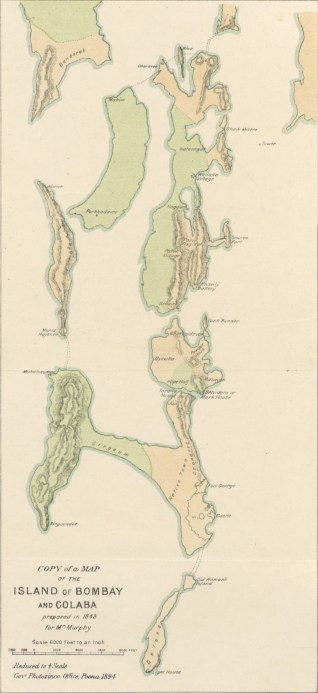
Eyewitness Travel: India “Consisting of seven swampy islands when the Portuguese acquired it in 1534, Bombay (from the Portuguese Bom Bahia or ‘Good Bay’) came to the British Crown in 1661 as part of the dowry of Catherine of Braganza when she married Charles II. Finding little use for the islands, the British leased them to the East India Company, which quickly realized their potential as an excellent natural harbour in the Arabian Sea. The rise of Bombay began in the late 1600’s, when the company relocated its headquarters here. By the 18th century, Bombay had become the major city and shipbuilding yard on the western coast, and by the 19th century, land reclamations had joined the islands into the narrow promontory that it is today.”
Culture Shock! India by Gitanjali Kolanad c. 1994 “You may meet with the invitation to ‘drop by anytime.’ In E.M. Forster’s A Passage to India, Mrs. Moore meets with a situation where she tries to pin down a specific time with a Mrs. Bhattacharya, who is gracious but vague. In the end Mrs. Moore settles with her on the coming Thursday, only to find that the Bhattacharyas are leaving for Calcutta the following morning.
“Mrs. Moore is bewildered by the exchange, but one Indian friend to whom I told the story understood the situation perfectly. She said, ‘The guest is blessing you, doing you a great honor by visiting you. How can you be so rude as to try to restrict them to a certain time?'”
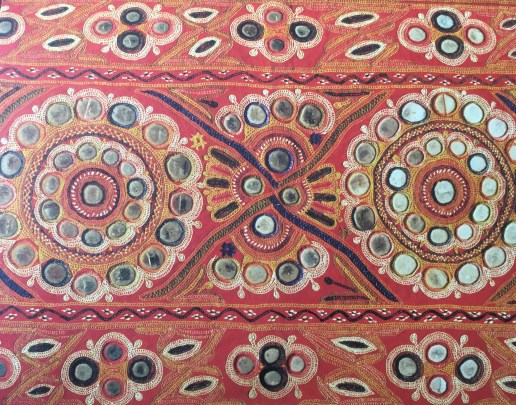
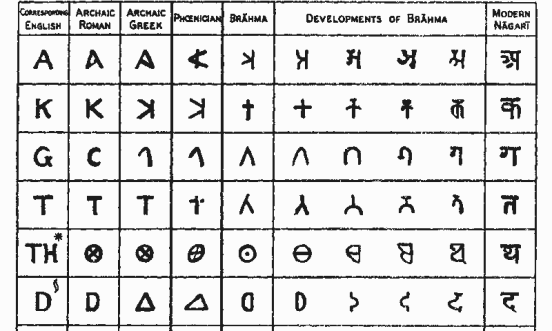
The Story of India by Michael Wood (frontispiece above) Quoting Sir William Jones: “‘The Sanskrit language, whatever be its antiquity, is of a wonderful structure; more perfect than the Greek, more copious than the Latin, and more exquisitely refined than either, yet bearing on both of them a stronger affinity, both in the roots of verbs, and in the forms of grammar, than could possibly have been produced by accident; so strong indeed, that no philosopher could examine them all three without believing them to have sprung from some common source, which, perhaps, no longer exists.'”
“The question is very complex, but there is one thing on which all competent linguists agree: Jones was right — the languages are connected; and the time depth of the ‘family tree’ of the Indo-European languages precludes the idea of India as the place of origin. The Sanskrit language must have originated outside India. But how far back? And from where? Was it brought by invaders or travelers, by elites or mass migration?
“This is now one of the hottest arguments in modern India, where the battle over history that began under the British in the nineteenth century is now at the heart of politics and education because it bears on central questions of identity.”
 India: The Cultural Companion by Richard Waterston This book focuses on the history and tradition of India’s many indigenous religions.
“[It is] common to read in Hindu texts of attempts to ‘cheat’ or ‘vanquish’ time. A verse from the Mahabharata advises that ‘time “cooks” all beings’ and ‘destroys all creatures;’ when everything else sleeps ‘time is awake, time is hard to overcome.'”…. “The present age (Kali Yuga) is the last in the cycle and marks the point at which spiritual intelligence and morality have reached their lowest ebb.”
“The most striking aspect of Jain karma is that it is perceived as a material entity, like a subtle dust that clogs the soul, binding it to the body. Many lifetimes are required to rid the soul of karmic dust and so liberate it.”
Indian Nationalism: A History by Jim Masselos I enjoyed this book for its thorough overview of the people and events by which the first stirrings of the will to independence multiplied in various places around the subcontinent and overcame the many differences of culture and religion to become a unified force strong enough to oust the British.

Indian Breads by G. Padma Vijay This was a Christmas present from Kate and Tom. How  did they know I would love the Indian flatbreads of which there are enough varieties to fill a book? Just last night we ate garlic or lassoon paratha, one of many paratha recipes that are joined by instructions for naan, chapattis, rotis and many breads you’ve probably never heard of even if you love to eat Indian food. The smoke alarm always goes off here when Kareena makes her wonderful chapattis, so when I go home I may have to limit my experiments to days of open windows.
Flowers of India by Helmut Wolf A board book on this subject is just about my speed. I found it in a fancy shop that sells children’s clothes, and I will put it in my suitcase as one concrete item among all the intangible smidgens of knowledge I have collected from books.



 Gladsome Lights