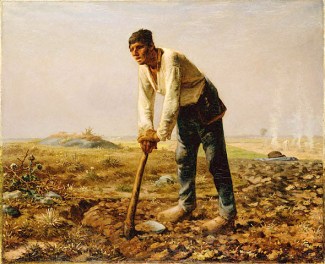
The author of The Worm Forgives the Plough finds that hoeing is a fairly pleasurable sort of farm work, writing of it, “I have never since had a combination of similar qualities for softening the blows of monotony.” And yet…
This job, and the previous ones, brought me up against one of the fallacies concerning agricultural work held by the citizen of our mean cities. It is supposed that ‘on the land’ you have ‘time to think’, and that conditions are such that the mind can indulge quietly in wise expansive meditations in the open air. Certainly the place to think is the open air. But not during work.
To be able to think consecutively about anything you must concentrate, and there are few jobs on the land that you can do so automatically as to be free to really think. Perhaps hoeing should be one of these. For a short time it is. Then the body interferes with the mind. The back begins to ache. You become physically preoccupied. You become tired. And then the mind, instead of being able to concentrate upon something consecutively, indulges either in fatuous daydreams or nurses petty grievances or dwells upon the worst traits of one’s least pleasant friends.
At such times I have often been appalled at my mind and wondered if others could have such rotten ones. And if a Great Idea does descend, well, I stop working to take it in, and rest on my hoe, and look across the land (as a matter of fact, I don’t: I carefully gaze on the ground in case anyone is looking — for he who gazes towards the earth presents a less agriculturally reprehensible spectacle than he who looks toward heaven).
–John Stewart Collis in The Worm Forgives the Plough
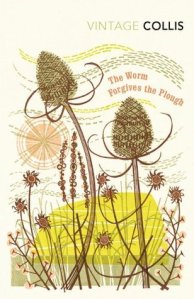 asked to work in Britain’s Land Army. “Since it was clear to me that I would be given some home job for which I should be entirely unfitted, I asked to be excused in favor of agriculture.”
 Gladsome Lights