Tag Archives: milkweed

My tree is stressed and so am I.

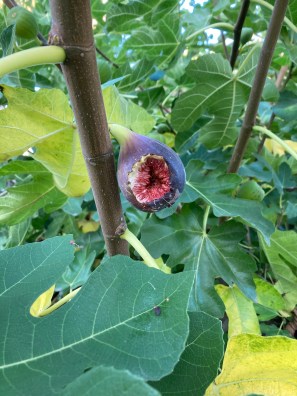
The fig tree towering over my garden is loaded with fruit — but wait, what is wrong here? The figs are turning purple while they are still very small; they stay hard, they stay small, and they fall on the ground. You can see in the photo below how they don’t have enough water content to droop at all, and the sign of a ripening fig is that it droops more and more on its stem until it is hanging quite limp and juicy and sweet. I am distressed about the situation, but from what I’m reading the tree has been stressed. And I think I know why.

My wonderful new landscaper who turned out to be not so wonderful, adjusted my irrigation settings several weeks ago, and since then I’ve been concerned about a few plants that don’t look happy. When I checked the control box it appeared that everything was horribly mixed up, but I didn’t trust myself to understand it, so I had my neighbor down to look at the setup, and between us we got it straightened out.
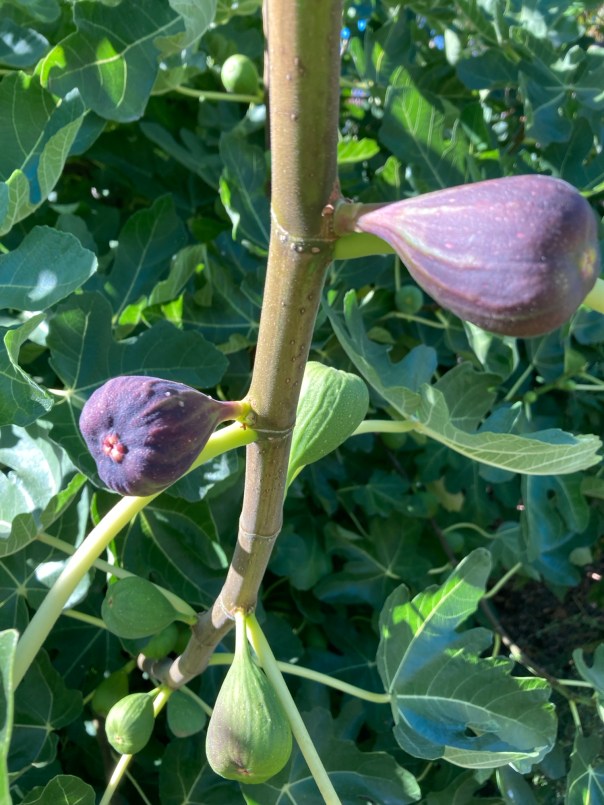
In the meantime the poor tree was very thirsty. Evidently when this happens the tree itself doesn’t show signs of stress, but it neglects the fruit ripening process. I have followed advice online to remove the smallest fruits at the ends of the branches, farthest from the tree; many of these were only 1-2 centimeters in diameter and probably would not have ripened before the frost anyway. Removing them lets the tree pour more energy into the larger fruit, and I hope at least some of them will ripen. I gave the tree a deep watering with the hose, too.

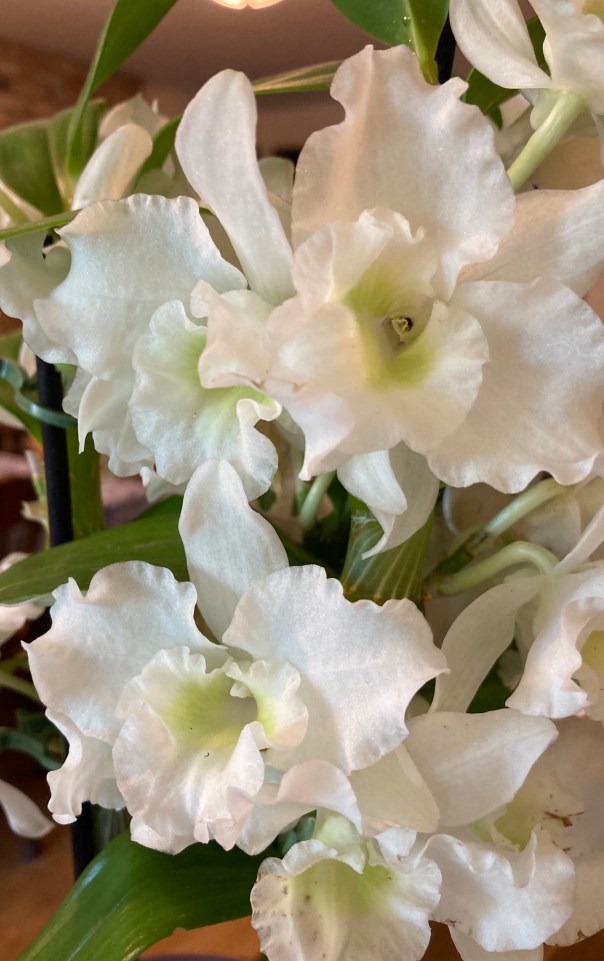
My newest orchid.

We’ve been having nice warm weather for a week or so, but at this moment it is raining. This afternoon the sun was shining and I had a young family for lunch. The children played in the garden and the playhouse, arranging salads on the little plastic plates. They’d collected snippets of parsley, mints, cherry tomatoes, rosemary, lavender, and even kale, and to top it off, asked me to cut up a lemon for them to squeeze over. They liked their salads better before the addition of lemon.

I showed them this bird’s nest that I found in the fig tree. It doesn’t look as though any baby birds hatched in it. It is very clean, and a unique building project. I see familiar materials from close by: cast-off garden twine (two types), needles from the Canary Island Pine, long Bermuda grass stems, and even dried nigella flowers. The strangest element, and not something I’ve seen outside here, is steel wool, forming the center of the bottom.

At least half the garden is in transition and upheaval right now; I will soon have all of the irises out and will amend the soil in several places before I put those back, or install the many new plants I have, or transplant old ones to an environment with more suitable amounts of sun.

milkweed

The tarragon has flowers! That was a surprise; it’s evidently a bigger plant than I can make use of anymore. It will go dormant soon…
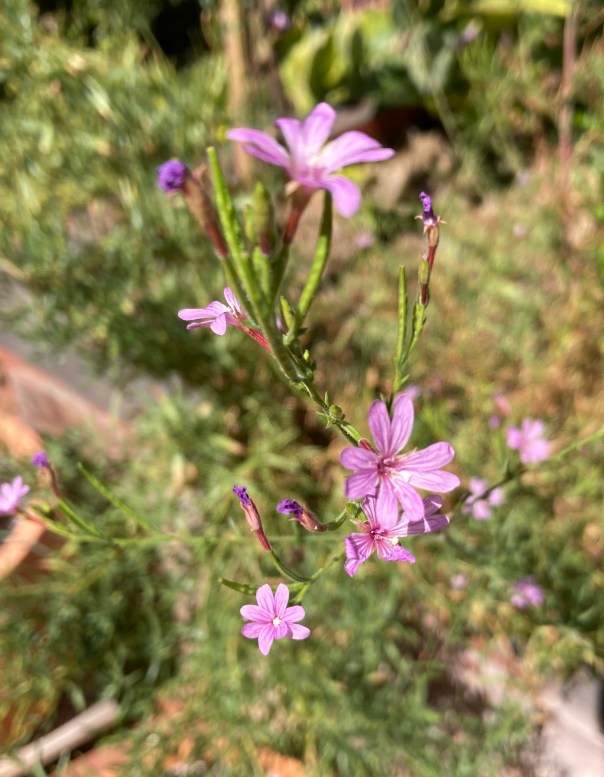
Tarragon flowers

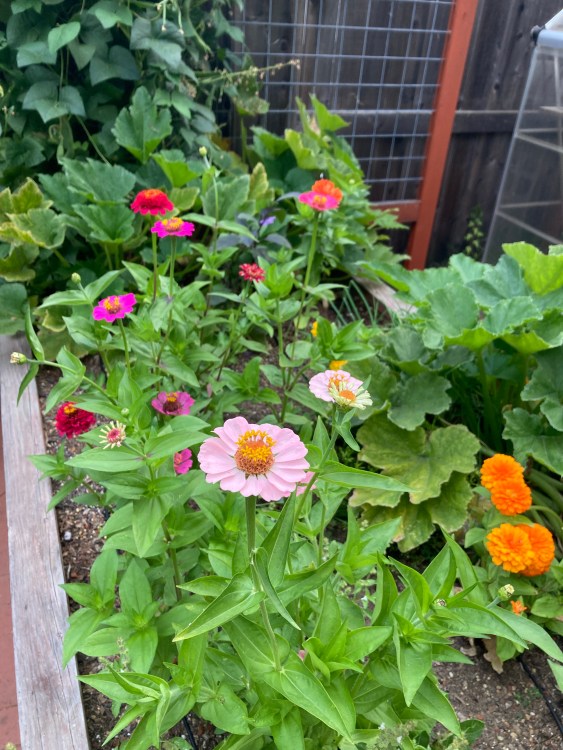
I finally took the time to cut zinnias and bring bouquets into the house, for the sake of my lunch guests. They are like much of my backyard garden now, not getting as much sun as they used to, and they are leggy — but plenty productive. Yesterday I was able to spend quite a while, in the 90-degree heat, tidying up all over the place, so I feel better about the stuff that remains undone. And there are still twelve days left of September ❤

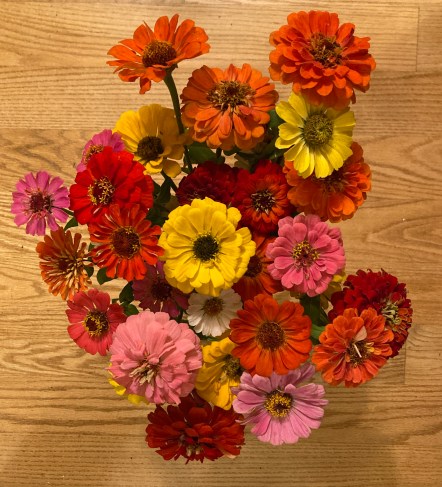
My favorite kind of autumn day.

I am too busy to write here, but I guess the dishes, the laundry, the sweeping and the paperwork will have to wait a little longer, because I am so in love with this November day, I have to write it down. It would take even more time if I were to write a letter to the grandchildren about it, so they will have to wait, too.
The sky and the clouds! It must be that rain in October and November make for a splendid season, and not just because of the lovely damp-but-mild feeling of the air. As I understand, the rain somehow makes the leaf colors brighter. I drove past a vineyard last week that surprised me so — the colors of the leaves were not just the usual red and yellow and orange, but wide-ranging in deep purples and pinks as well. In my garden the pomegranates have not started turning, and the snowball bush barely.

But I have color. My purples are, or should be, my figs. I think this year’s crop is going to be a big loss, because of the relatively cool summer. Yesterday I saw this single fruit ripening. This morning, a meddlesome crow had tasted it and also found it not ready.
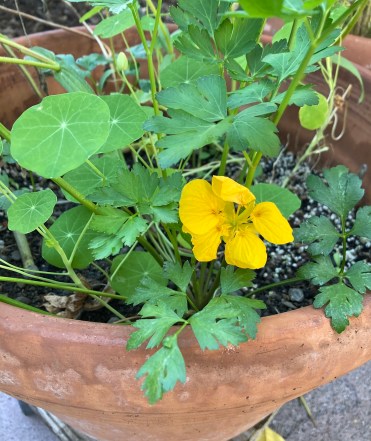
A nasturtium is blooming, and the tithonia still going pretty strong. Yesterday I picked more zinnias, again, to replace those that were turning brown in this vase where I’ve been able to just renew the bouquet in part every few days. But this week may truly be the end, unless the rainy weather keeps the frost off. That would be okay with me.

Yesterday evening was when our neighborhood trash cans are set out at the curb to be emptied the next morning. I wanted to cut enough plant material to fill my yard waste bin, so I worked on cutting the asparagus fronds that are turning gold. I had no sooner begun but gentle raindrops began falling on my head, carrying on another autumn tradition.

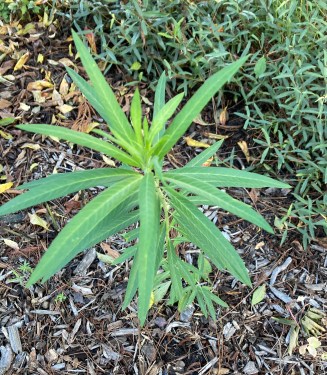
The milkweed I cut to the ground last month, as it had been wasted by aphids as is its usual late summer fate, has sent up a new and fresh shoot, green and tender and untouched by any hardship. It won’t last long, but in the meantime it cheers my heart and makes food for next summer’s valiant show.

As long as this mild weather continues, I can put off another task of my housework: carrying wood, building fires and dealing with all the mess around the stove. But as soon as that becomes necessary again, I’ll have one more activity that makes me happy. For today, I am happy with my breadmaking, washing dishes, and wandering around the autumn garden.

The wind blew pine needles down.

Our weather here in my northern California county was slightly strange the last couple of days, I think because of being near to the path of the tropical storm Hilary. We had lots of clouds, and it felt like a storm was coming, but no show. I worked in the garden this afternoon and at one point felt the slightest mistiness in the atmosphere. The heat hung on last night longer than usual, but today was cooler; tomorrow is predicted to be back in the 80’s.

What happened at my place, though, was wind! So much, that the wind chimes were making a racket, and when I went out after lunch, the whole southern end of my back garden was covered by a blanket of pine needles, from the Canary Island Pine that towers above that area.

I spent quite a while dragging a trash can around and gathering up armfuls of the needles, picking them off the manzanita bush, the heuchera, lavender, everything. I didn’t get half of them yet.

Last week the lavender got pruned, and the garden generally was looking pretty tidy, until today. On the north side, now that the zinnias are blooming and greens are growing tall, the planter boxes are filling in.

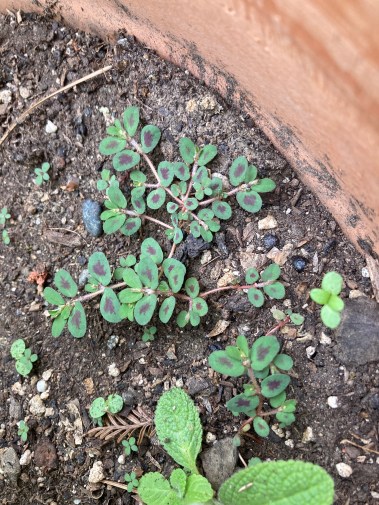
Spurge is growing throughout those boxes, but it’s easy to pull out. It doesn’t look like it would take much water from the other plants, though.

And the Narrow-Leaf Milkweed is blessedly free of aphids so far. I adore its flowers. Every year, so far, these plants are decimated by aphids before they go into dormancy, but the next spring they always come back bigger and stronger than ever.

Last year I tried planting three new species of milkweed, and none of them was successful. The year of the Monarchs, I had a beautiful Tropical Milkweed plant, the leaves of which the caterpillars didn’t care for. I wasn’t surprised when it didn’t survive the winter. That makes a total of six types I have planted in the last several years. The two native Californian species have always thrived, so I think I will give up being milkweed-greedy and not try any others again. I don’t know where I’d plant them anyway! And it’s pretty wonderful to have milkweed at all. ❤

Feasting all over.

We are celebrating one of our parish feast days, and I was blessed to be at Vigil tonight. The hymns and readings for the feast are the same every year, but the arrangements and singers and various aspects change, so that every service is both comforting in its familiar traditions and beautifully unique.
At a festal vigil the Five Loaves are blessed and broken for us to eat, to sustain us during what can be a long service; and we receive anointing with holy oil as another way to participate bodily. The Vigil service includes parts of the Vespers and Matins services and is the first part of the feast, which concludes in the morning.

The caterpillars on my milkweed plants are partaking of a different sort of food.  They have been traveling among all the different species of Asclepias, including the new plants just set out. Though there are fewer of them now, it’s good to see their survival instincts operating.

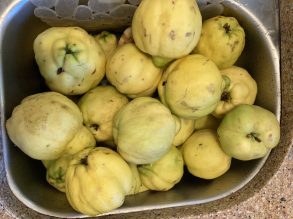
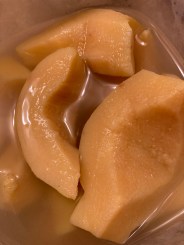
The day that I set off for Pippin’s place last week, I received a quantity of quinces by way of a friend of a friend, which anonymous friend drove several miles from another town to drop them off at church, so that I could pick them up on my way north. They sat in the back of my car for those several days, and this week I processed them. They turned out to be very wormy, but they were so big and numerous that after quite a lot of trimming and slicing, I ended up with a few quarts. I poached them with lemon, sugar and a cinnamon stick. I froze most of them but have been enjoying one quart right away.


In the past I have mostly baked them, and that was much easier. I love quince and am sad that so few people have trees anymore. I have put out queries some years to search out whether anyone knows of unwanted quinces I could take; this batch came to me completely out of the blue, unasked for.

Divine Liturgy for the feast will be in the morning, the celebration of the Eucharist. That will make it feel like Sunday, but it’s Saturday…. and besides feasting, I’ll be gardening — and resting, because I’ve been running around a lot!

I leave you with one of the readings from this evening’s service, which refers to a hearty feast of wisdom:

PROVERBS 9:1-11

Wisdom has built her house,
she has hewn out her seven pillars,
she has slaughtered her meat, she has mixed her wine,
she has also furnished her table.
She has sent out her maidens,
she cries out from the highest places of the city,
“Whoever is simple, let him turn in here!”
As for him who lacks understanding, she says to him,
“Come, eat of my bread and drink of the wine I have mixed.
Forsake foolishness and live,
and go in the way of understanding.
He who corrects a scoffer gets shame for himself,
and he who rebukes a wicked man only harms himself.
Do not correct a scoffer, lest he hate you;
give instruction to a wise man,
and he will be still wiser;
teach a just man, and he will increase in learning.
The fear of the Lord is the beginning of wisdom,
and the knowledge of the Holy One is understanding.
For by me your days will be multiplied,
and years of life will be added to you.”