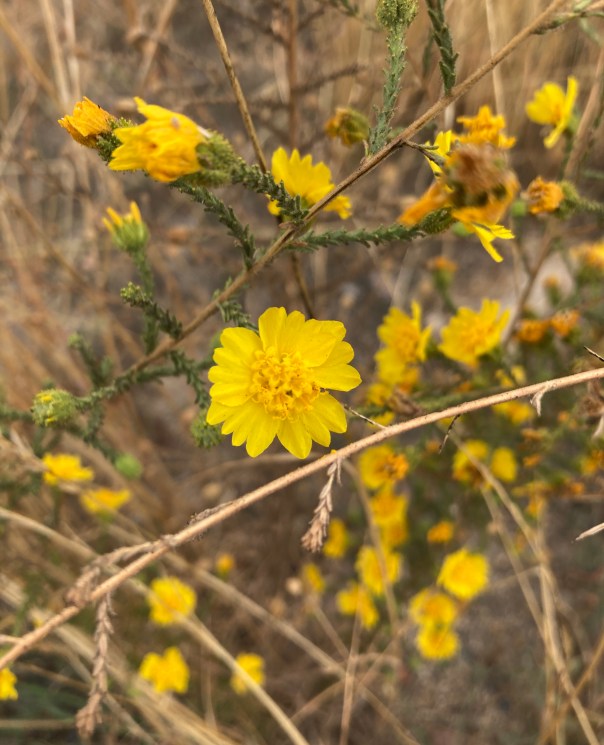
The man who mows the ditch between the strips of interstate found it worthwhile to leave us patches of wild sunflowers every several miles. Even at eighty-per-hour you can’t miss ’em: sunny thumbprints pressed against the paper bag browns of late September. I will never thank him.
And I will never thank the nun I saw watering her brittle yard with a hose—in full garb! That strange religious habit of the celibate salt of this dearth. Doesn’t she know October is coming and November is coming and December comes only to steal and kill and destroy? She knows life, life abundantly.
(I’m reposting this from five years ago. Every September, many, many people still find the poem below on my blog. This fall, for the first time, I am pleased to say I have acquired a purple aster to enjoy for the next couple of months, and have installed it by the front door.)
Only a few years ago did I discover this poem. Being short and packed with autumnal images, it is perfect for a busy time of year, when you don’t want to let the equinox pass unnoticed, but you are canning tomatoes or drying figs or just taking all the walks you can in the crisp air. If you don’t pay attention to the calendar or the TV, you might miss the day.
For months and years I’ve been trying off and on to confirm that its author is Edwina Hume Fallis. New things show up on Internet searches all the time, and today I have seen enough sites that are confident about attributing it to her that I will accept it. Two months ago I couldn’t find two postings of the poem where her name was even spelled right. Most places it is shared as by “Anonymous.”
In the city of Denver, Colorado, Edwina Hume Fallis is especially famous, for her teaching and writing, a toy shop she owned, and her book When Denver and I Were Young. (I did recently contact the Denver public library to see if they had a copy of the poem below in their collection about her; they did not.) She and her sister made toys to use as props in telling stories to kindergarten students, and she did write over 100 poems; maybe this one was in an anthology that is now out of print. Many women bloggers seem to have memorized it in elementary school.
I wonder if any of my readers in the Southern Hemisphere knows of a similar poem that applies to the opposite seasons down there?
SEPTEMBER
A road like brown ribbon, A sky that is blue A forest of green with that sky peeping through. Asters deep purple, A grasshopper’s call – Today, it is Summer Tomorrow is Fall!
-Edwina Hume Fallis
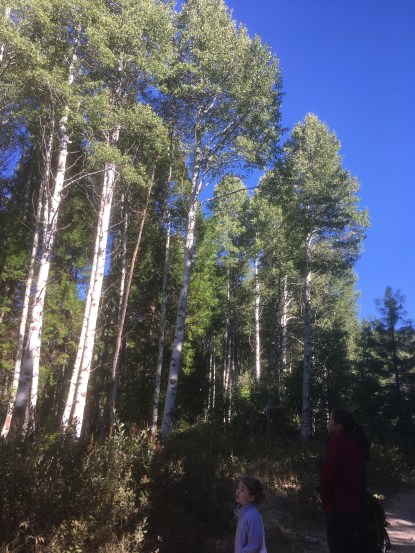
At Pippin’s in 2017, waiting for the aspens to turn.
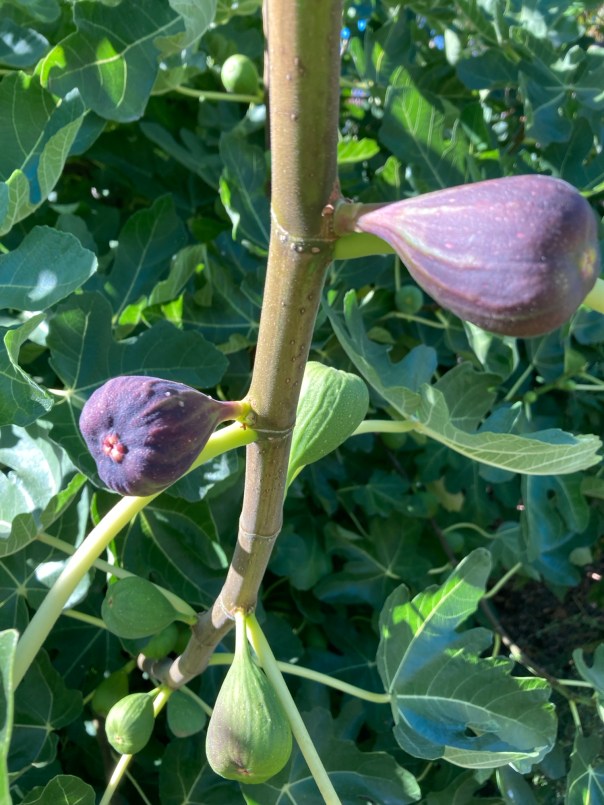
The fig tree towering over my garden is loaded with fruit — but wait, what is wrong here? The figs are turning purple while they are still very small; they stay hard, they stay small, and they fall on the ground. You can see in the photo below how they don’t have enough water content to droop at all, and the sign of a ripening fig is that it droops more and more on its stem until it is hanging quite limp and juicy and sweet. I am distressed about the situation, but from what I’m reading the tree has been stressed. And I think I know why.
My wonderful new landscaper who turned out to be not so wonderful, adjusted my irrigation settings several weeks ago, and since then I’ve been concerned about a few plants that don’t look happy. When I checked the control box it appeared that everything was horribly mixed up, but I didn’t trust myself to understand it, so I had my neighbor down to look at the setup, and between us we got it straightened out.
In the meantime the poor tree was very thirsty. Evidently when this happens the tree itself doesn’t show signs of stress, but it neglects the fruit ripening process. I have followed advice online to remove the smallest fruits at the ends of the branches, farthest from the tree; many of these were only 1-2 centimeters in diameter and probably would not have ripened before the frost anyway. Removing them lets the tree pour more energy into the larger fruit, and I hope at least some of them will ripen. I gave the tree a deep watering with the hose, too.
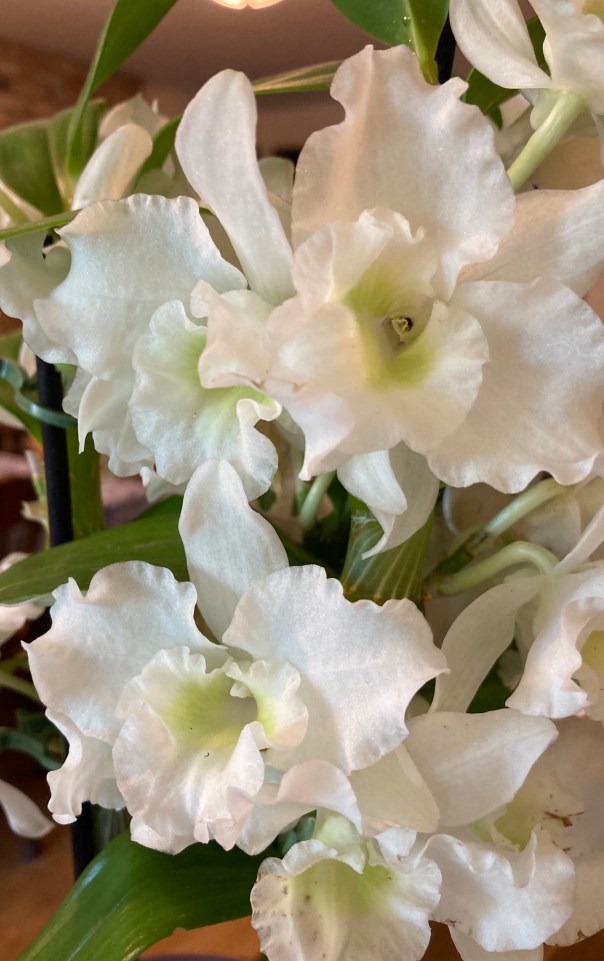
My newest orchid.
We’ve been having nice warm weather for a week or so, but at this moment it is raining. This afternoon the sun was shining and I had a young family for lunch. The children played in the garden and the playhouse, arranging salads on the little plastic plates. They’d collected snippets of parsley, mints, cherry tomatoes, rosemary, lavender, and even kale, and to top it off, asked me to cut up a lemon for them to squeeze over. They liked their salads better before the addition of lemon.
I showed them this bird’s nest that I found in the fig tree. It doesn’t look as though any baby birds hatched in it. It is very clean, and a unique building project. I see familiar materials from close by: cast-off garden twine (two types), needles from the Canary Island Pine, long Bermuda grass stems, and even dried nigella flowers. The strangest element, and not something I’ve seen outside here, is steel wool, forming the center of the bottom.
At least half the garden is in transition and upheaval right now; I will soon have all of the irises out and will amend the soil in several places before I put those back, or install the many new plants I have, or transplant old ones to an environment with more suitable amounts of sun.
milkweed
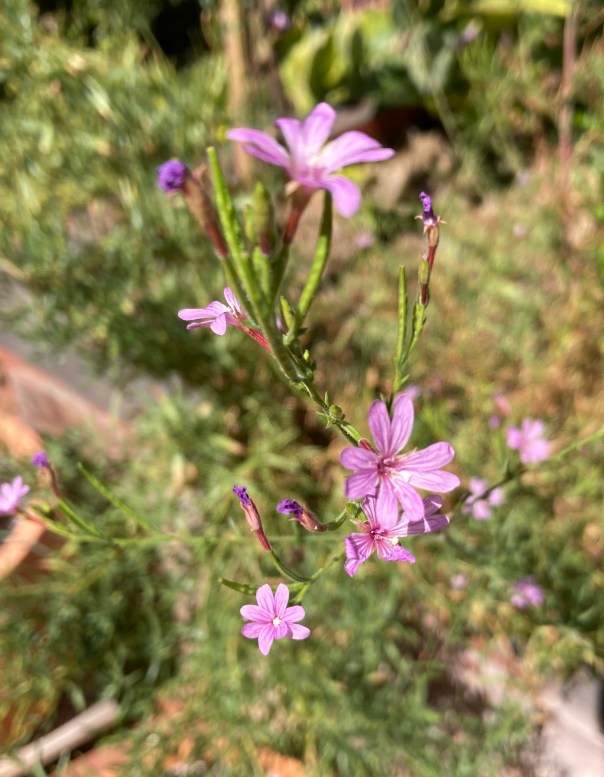
The tarragon has flowers! That was a surprise; it’s evidently a bigger plant than I can make use of anymore. It will go dormant soon…
Tarragon flowers
I finally took the time to cut zinnias and bring bouquets into the house, for the sake of my lunch guests. They are like much of my backyard garden now, not getting as much sun as they used to, and they are leggy — but plenty productive. Yesterday I was able to spend quite a while, in the 90-degree heat, tidying up all over the place, so I feel better about the stuff that remains undone. And there are still twelve days left of September ❤
When you are already here you appear to be only a name that tells of you whether you are present or not
and for now it seems as though you are still summer still the high familiar endless summer yet with a glint of bronze in the chill mornings and the late yellow petals of the mullein fluttering on the stalks that lean over their broken shadows across the cracked ground
but they all know that you have come the seed heads of the sage the whispering birds with nowhere to hide you to keep you for later
you who fly with them
you who are neither before nor after you who arrive with blue plums that have fallen through the night
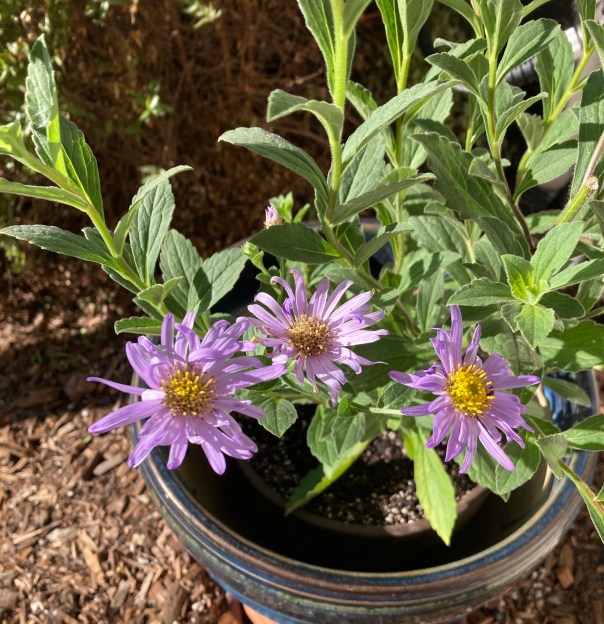 (I’m reposting this from five years ago. Every September, many, many people still find the poem below on my blog. This fall, for the first time, I am pleased to say I have acquired a purple aster to enjoy for the next couple of months, and have installed it by the front door.)
 In the city of Denver, Colorado,