Tag Archives: nasturtiums

Bitter and sweet, and three favorites.

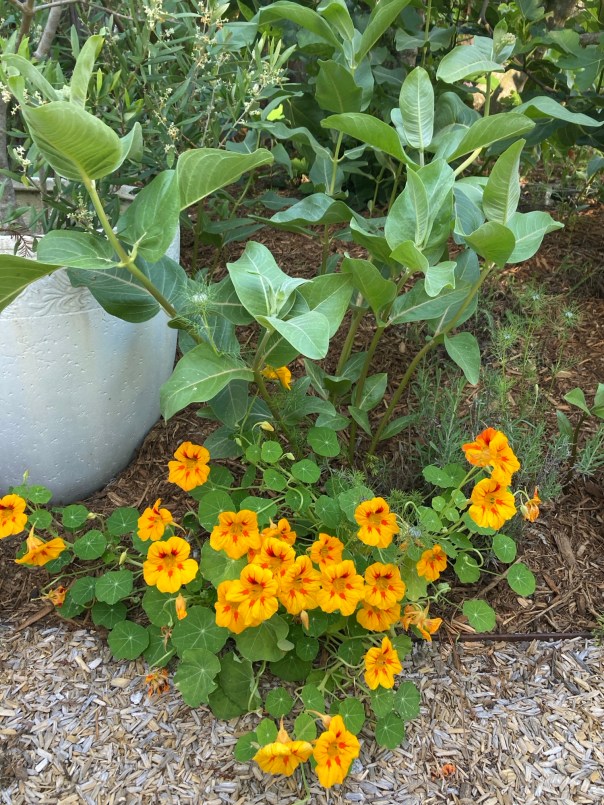
Showy Milkweed with nasturtiums.

It’s been a lovely afternoon in the garden, a day warm enough that my body can relax, and allow my mind to focus and Get Things Done. I planted all my zinnia seeds left over from the last couple of years, everything that remained in six packets. Also two types of sunflowers, and nasturtiums.
Three of my favorite plants have popped up very healthy this spring. I especially appreciate these because they volunteer to sprout on their own, and bloom over a long period. They don’t always grow in the same place, but I figure they know what is best, so I’m trying to be accommodating. The thing is, the spots they choose might feel good to them in winter and spring, but be uncomfortable in our rainless summers.
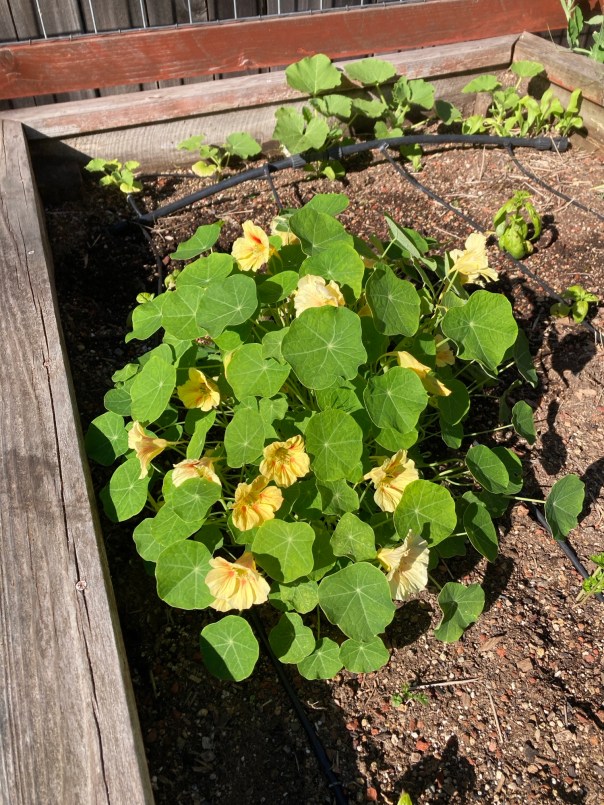
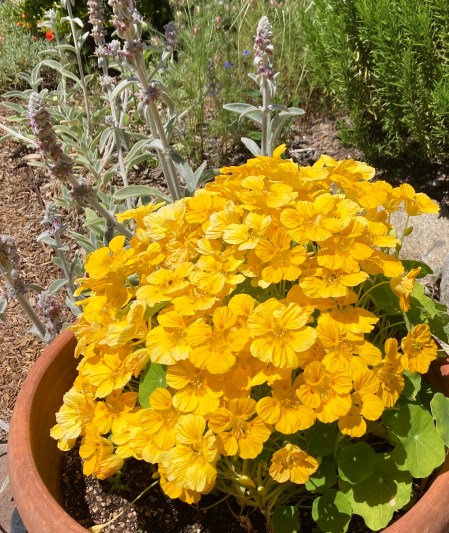
Mounding nasturtiums, “Cup of Sun.”
Bees love borage.

Nasturtiums used to grow enthusiastically and unbidden out of a crack in the concrete near our pool pump, but that situation is long gone, and I’m forever trying to find another good place for them. Right now a trailing one grows in a pot, a “mounding” type in a planter box, and one in the ground.

Borage is wonderful, the bees adore it, and it grows best in the planter box where it gets regular water. But then it tries to take over…. Two plants came up this spring where they often do, near the fig tree, and I am hoping that this summer I can give them a squirt more often, and help them to survive. I usually have the hose right there for filling the fountain.
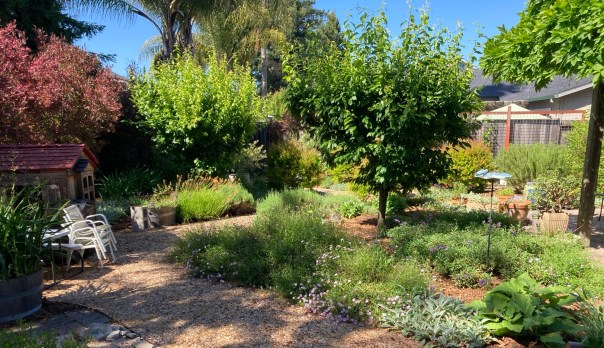
My friend Bella gave me a little feverfew plant a year or two ago, and some leaves freshly cut from the mother plant, with instructions to make a tea with it, to drink and to splash on my face to heal my rosacea. I drank the very bitter tea once; I can’t remember if I did the splashing. That plant loves my garden more than anything, and if I gave it free rein it would take over the whole planter box.
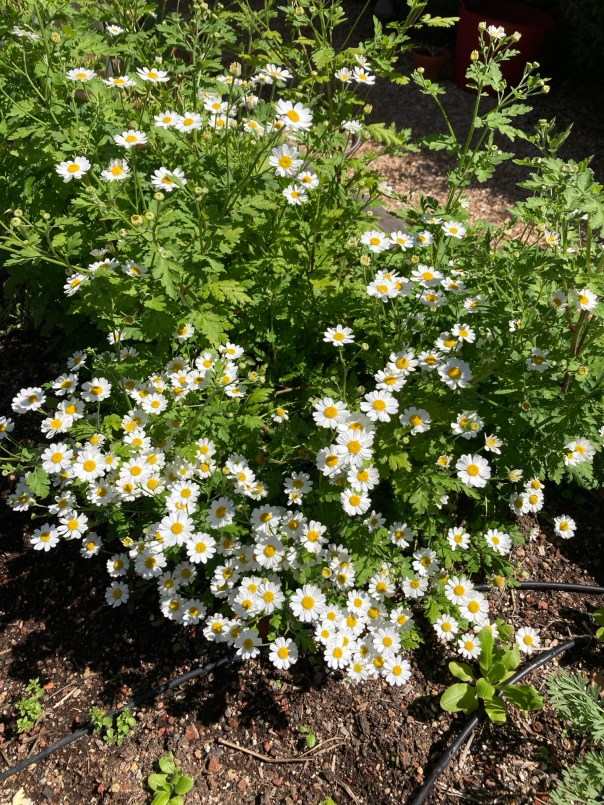
Feverfew

This afternoon I cut it way back, and filled a vase with its daisies, but I left them on the patio because the plant is actually pretty stinky. My fingers are holding on to the bitter taste even after several washings. Feverfew is not one of my favorites, only because of this bitterness — and I do understand that bitter herbs are good for us, but I am content to do without. I don’t know how feverfew might do out of the box in the wider garden; I’ve only ever had it in the one place, where it spreads to become a larger and larger clump. It blooms beautifully over most of the year.
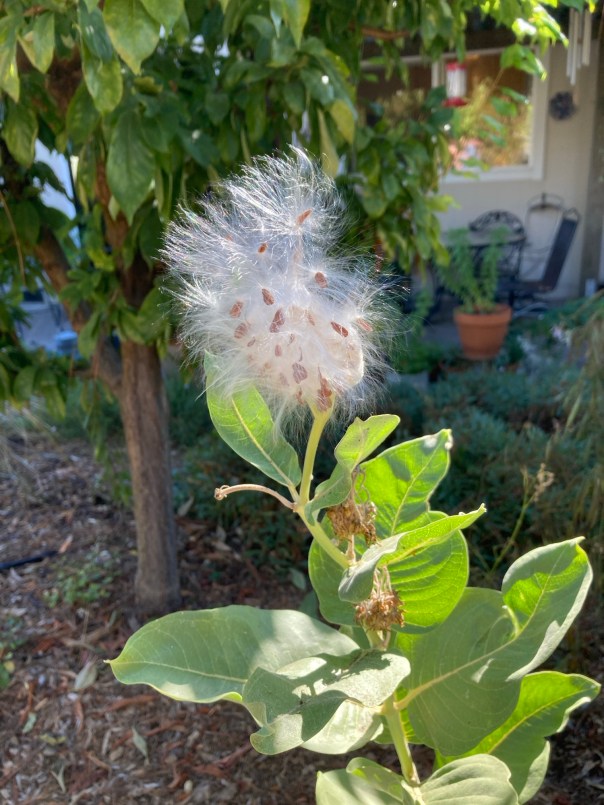
Showy Milkweed in September

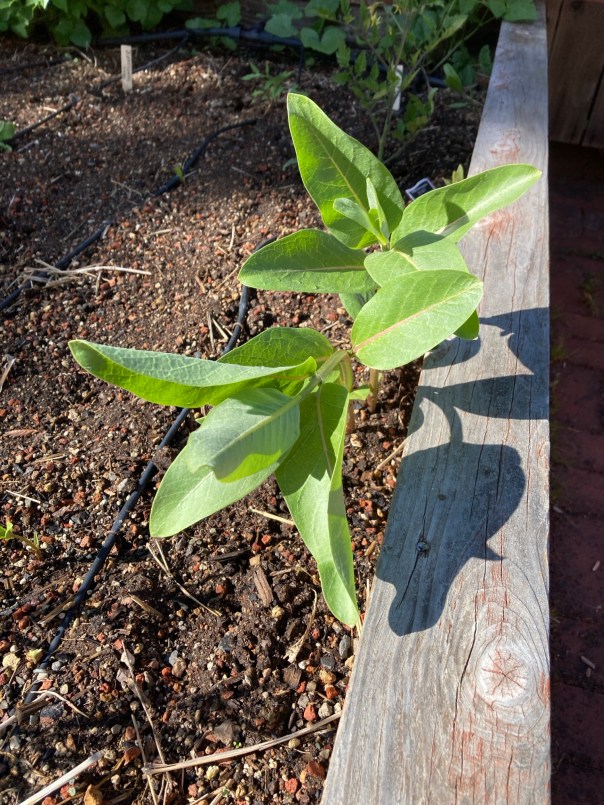
The third plant I appreciate is Showy Milkweed, which is native to this area of California. I guess last summer the wind was blowing strongly to the east when its seeds were flying, because for the first time I have lots of little milkweeds coming up in the nearest planter. I haven’t removed all of them. We’ll see how crowded it gets in there, after the zinnias are going strong — but as they haven’t sprouted yet, it’s all theoretical.
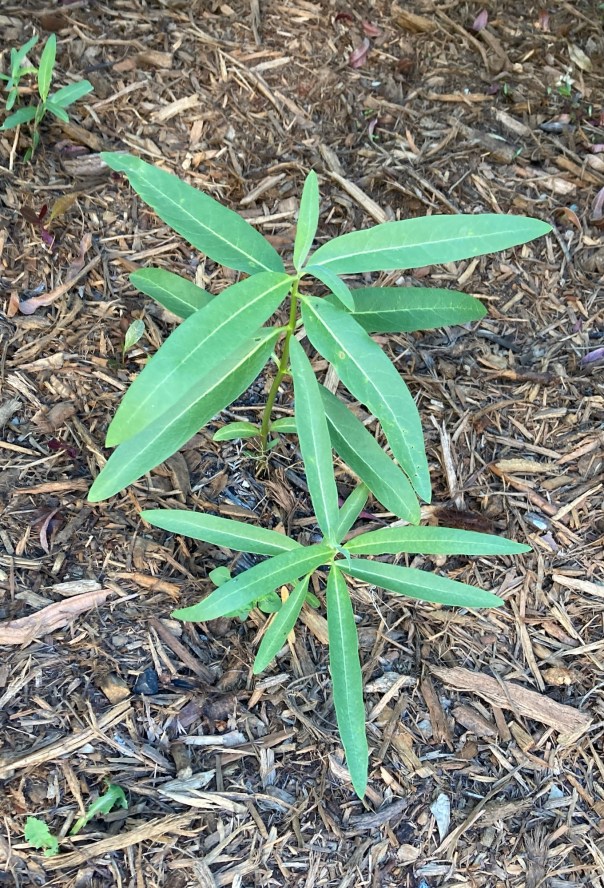
At left are some young Narrow-Leaf Milkweeds, whose seeds also sowed themselves last fall, way across the garden from their usual place.

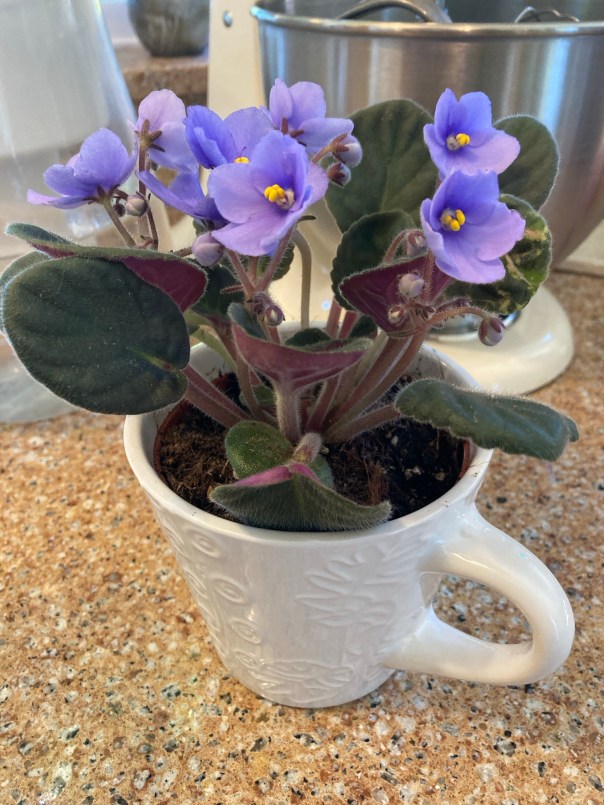
A sweet planting of flowers I saw this week was not in a garden but at Trader Joe’s: For Mother’s Day they were offering lots of different flower items, and when I saw the African violets in mugs I immediately thought of my godmother and got one for her. I got one for myself, too. To all of you who are mothers or were born of mothers, Happy Mother’s Day! ❤
My tree is stressed and so am I.

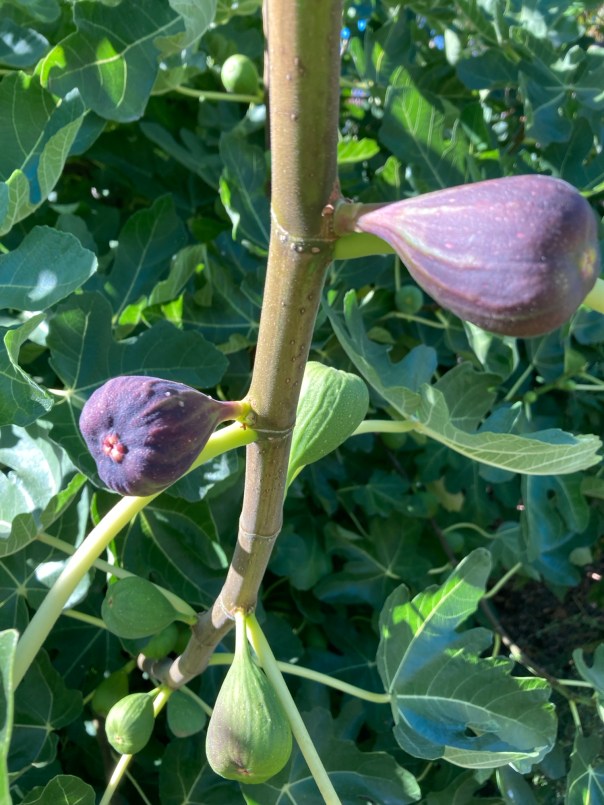
The fig tree towering over my garden is loaded with fruit — but wait, what is wrong here? The figs are turning purple while they are still very small; they stay hard, they stay small, and they fall on the ground. You can see in the photo below how they don’t have enough water content to droop at all, and the sign of a ripening fig is that it droops more and more on its stem until it is hanging quite limp and juicy and sweet. I am distressed about the situation, but from what I’m reading the tree has been stressed. And I think I know why.

My wonderful new landscaper who turned out to be not so wonderful, adjusted my irrigation settings several weeks ago, and since then I’ve been concerned about a few plants that don’t look happy. When I checked the control box it appeared that everything was horribly mixed up, but I didn’t trust myself to understand it, so I had my neighbor down to look at the setup, and between us we got it straightened out.

In the meantime the poor tree was very thirsty. Evidently when this happens the tree itself doesn’t show signs of stress, but it neglects the fruit ripening process. I have followed advice online to remove the smallest fruits at the ends of the branches, farthest from the tree; many of these were only 1-2 centimeters in diameter and probably would not have ripened before the frost anyway. Removing them lets the tree pour more energy into the larger fruit, and I hope at least some of them will ripen. I gave the tree a deep watering with the hose, too.

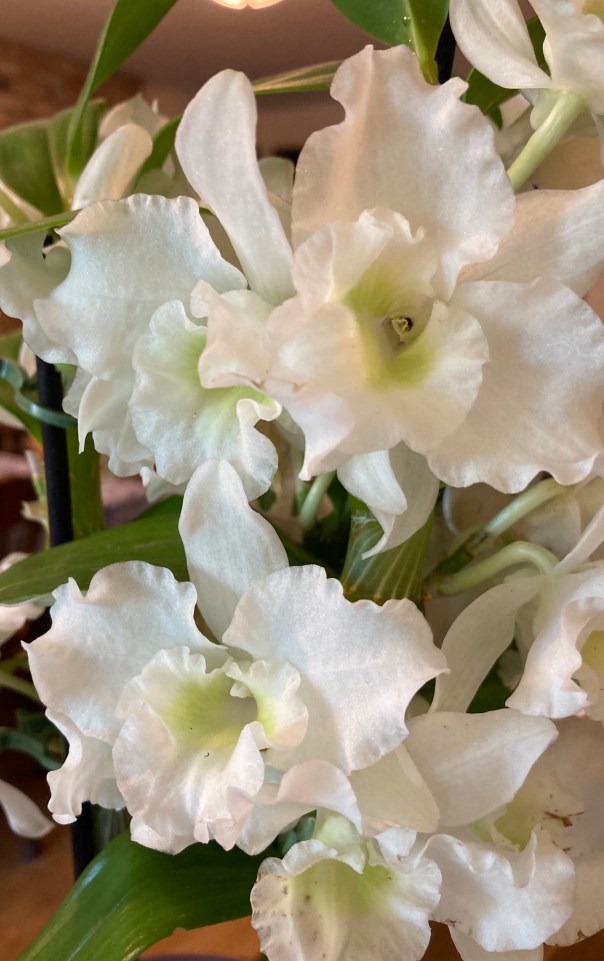
My newest orchid.

We’ve been having nice warm weather for a week or so, but at this moment it is raining. This afternoon the sun was shining and I had a young family for lunch. The children played in the garden and the playhouse, arranging salads on the little plastic plates. They’d collected snippets of parsley, mints, cherry tomatoes, rosemary, lavender, and even kale, and to top it off, asked me to cut up a lemon for them to squeeze over. They liked their salads better before the addition of lemon.

I showed them this bird’s nest that I found in the fig tree. It doesn’t look as though any baby birds hatched in it. It is very clean, and a unique building project. I see familiar materials from close by: cast-off garden twine (two types), needles from the Canary Island Pine, long Bermuda grass stems, and even dried nigella flowers. The strangest element, and not something I’ve seen outside here, is steel wool, forming the center of the bottom.

At least half the garden is in transition and upheaval right now; I will soon have all of the irises out and will amend the soil in several places before I put those back, or install the many new plants I have, or transplant old ones to an environment with more suitable amounts of sun.

milkweed

The tarragon has flowers! That was a surprise; it’s evidently a bigger plant than I can make use of anymore. It will go dormant soon…

Tarragon flowers

I finally took the time to cut zinnias and bring bouquets into the house, for the sake of my lunch guests. They are like much of my backyard garden now, not getting as much sun as they used to, and they are leggy — but plenty productive. Yesterday I was able to spend quite a while, in the 90-degree heat, tidying up all over the place, so I feel better about the stuff that remains undone. And there are still twelve days left of September ❤

Extending a welcome to ourselves.

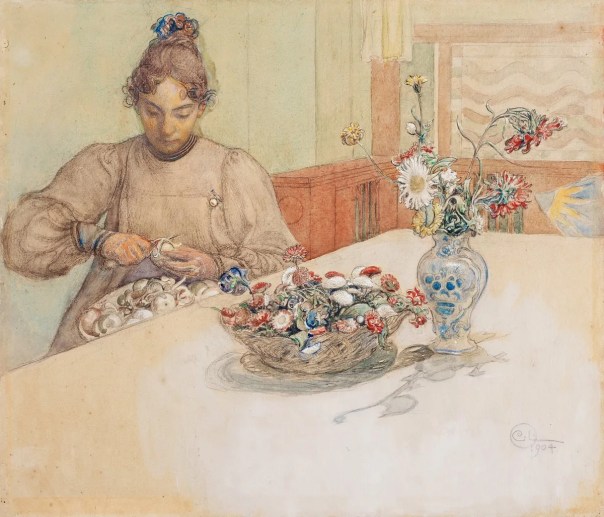
“We are needy creatures, and our greatest need is for home—the place where we are, where we find protection and love. We achieve this home through representations of our own belonging, not alone but in conjunction with others. All our attempts to make our surroundings look right—through decorating, arranging, creating—are attempts to extend a welcome to ourselves and to those whom we love.”

― Roger Scruton

By Carl Larsson

In the last couple of weeks I’ve felt a certain comfort and rest deep in my bones. Maybe it has something to do with having made time for my Hospitality Work. I forced myself to stay home from a couple of events just to recover my peace, which had been disturbed by events hard to explain. Once I was able to focus on my home-work, I also could do it in an honorable way, that is, without hurrying. Instead of “The hurrier I go, the behinder I get,” it’s “Take more time, you’ll get there faster.”

I love to do the dishes calmly, but even when I do, I tend to leave the task before I’m completely done, because I get distracted by a thought, some idea that makes me drop my dishtowel on the counter as I head to the bookcase or the garden and don’t remember to come back until it’s bedtime, and a little late for dishes. Lately, when that happens, I’ve finished up, calmly, self-hospitably, in the morning. So all is good.

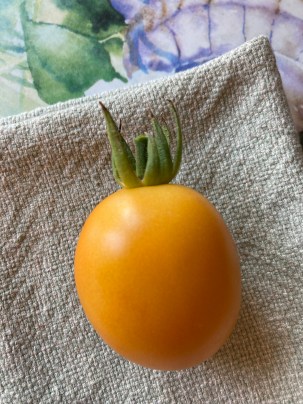
One Moonglow tomato so far.

I’ve been cooking zucchini (from my three plants) for myself, and serving myself the first Green Doctors cherry tomatoes right off the vine. In this season when I don’t have anyone upstairs to see my bedroom, I make my bed for my own pleasure and so that the rumpled blankets don’t spread their mood to my easily agitated mind.

If I slow down enough, I can look ahead and plan for full days at home, and occasionally plan the night before to make bread the next day. I have done that three times now, with increasing success. It’s not realistic to think that I will make bread more than once every week or two, and my goals must be adjusted from four years ago when I’d first resumed bread baking again, because as with so many things in life, I realize that I can’t have everything I want, even when I am myself the only (human) guest in my home.

This is the last loaf I made, and I’m pretty pleased with it. If I had started the dough the night before it would have been a little more sour; I’m still experimenting. It has what I would consider a good “regular bread” crumb, not custardy, but not doughy or dry, either. I like artisan breads with that custardy and open crumb, but I also don’t like the holes very big, because whatever I put on my slice of toast will melt through them all over my hand and shirt.

The sides did not crack on this one — I recently remembered that 40 years ago when I’d make four or five sourdough loaves at a time, I had to slash them with a straight gash down the middle, not diagonal cuts as I think looks nicer. Otherwise pieces of the top would break off. Maybe that helped take the strain off the sides as well, to keep them from cracking. This loaf has a little whole spelt flour in it, plus sesame, poppy, caraway and fennel seeds.

I got lots of new plants in the ground this month, the latest being portulaca, which I love, but haven’t always had good luck with. Maybe August is the best month to put that in, when the sun is burning down the way those flowers like it.

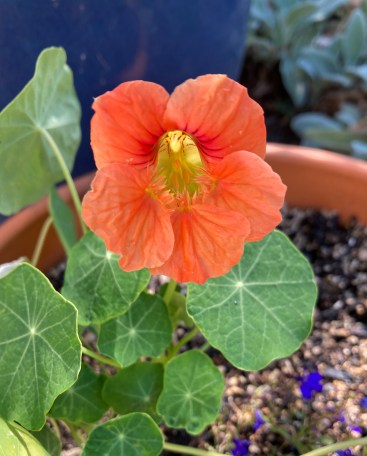
Once again, I planted nasturtium seeds in various places, early and later, and this year I got one plant to grow. Its first bloom just opened this weekend. Welcome, little flower friend!

Summer evening layers.

At my Airbnb.

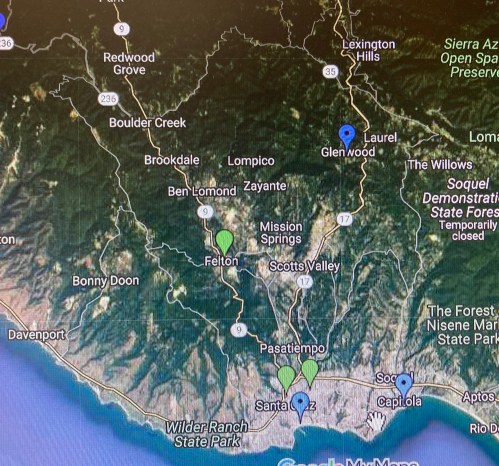
Soon after returning from Pippin’s forest dwelling in the northern reaches of California, I drove southward to the Santa Cruz mountains, where I hadn’t visited for six years. My Airbnb was quite close to Henry Cowell Redwoods State Park, and also to the cousins whom I was visiting.

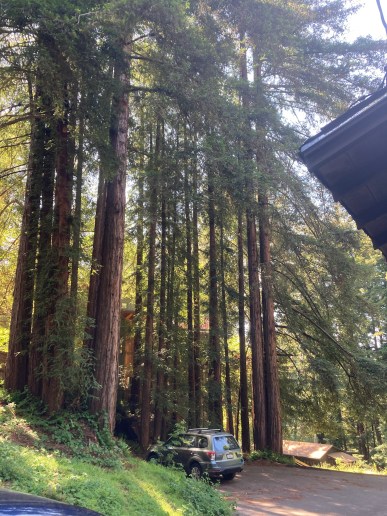
This area is where our extended family used to have a cabin, at Mount Hermon, just up the hill from Santa Cruz, under the redwoods. Under the redwoods is the theme of this whole area, which I had apparently forgotten, because when I came into town and found my lodging, and found again my cousins’ place, I was astounded by the height of the forest and its unique scents. I know, I was just remarking similarly about Pippin’s trees, but of course these are a unique experience, in a different climate zone. The forest here is mainly redwoods, madrones, and oaks. Fog is abundant, and redwoods thrive in it.

The cousins’ driveway.

My first encounter with dogwoods was in the understory of these towering  trees, many decades ago. Little towns have nestled on the slopes and along the creeks since the 19th century, and humans have planted their own shrubs and flowers that thrive, and add to the good smells that rise up when the morning fog dissipates and the sun draws out their essences.

The climate this far south and close to the ocean is very mild. Sometimes the winter passes without a frost; this June is cooler than usual here as it has been farther north.

But summer has officially arrived! My cousins and I ate seafood on the wharf at Santa Cruz, with views of the boardwalk and the beach. We drove as far south as Capitola, and north to Boulder Creek; the sun came out every day, eventually, and flowers bloomed everywhere. We were nourished by all the beauty (and great food), but primarily by our memories, and our affection for one another.

Now I have returned home, and see that my garden has filled out a lot just from the beginning of the week to the end. The layers of blooms and textures are different, now that the ixia has faded and the succulents and lavender are coming into prominence. In the last few years it seemed that the yarrow was dying out, but now I think maybe it just needed extra water, because after the wet winter it is doing great.

Everything looks pretty when the sun shines through in the evening. The acanthus is so tall, and the heuchera, whose flowers change tone week by week as they dry up; they started as greenish white, and now are ever darkening orangey brown…

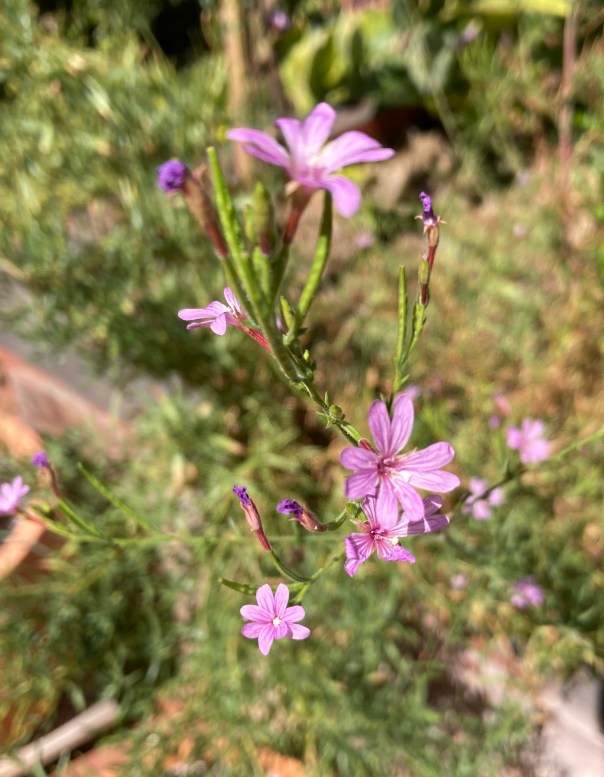
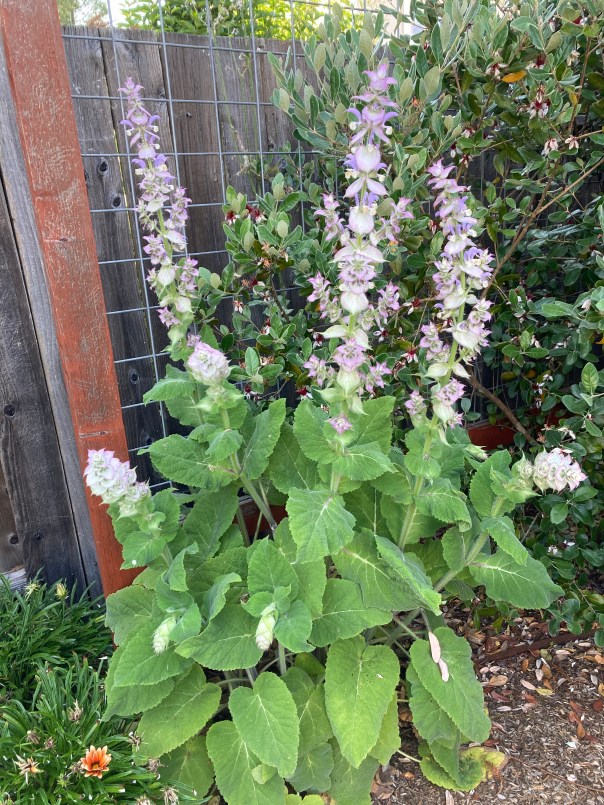
Clary Sage

I’ll be traveling again in just two weeks, to visit Kate and her family in D.C. In the meantime I plan to take advantage of the energizing warmth of summer, and enjoy every moment, in the garden and all over the place. Summer is the best!