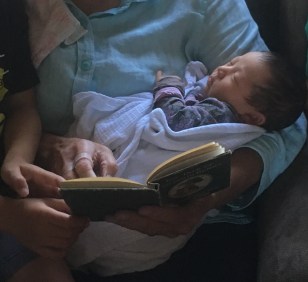
 Ever since the King of Glory was born into this world of death, His people have suffered under and among the kingdoms of this world. We talk a lot about how He was weak and helpless, being a baby. But any of us mothers might remember the vulnerability of women in pregnancy, in the very season when one wants to be most in control, so as to nurture and protect.
I think a lot about my children and grandchildren, who are likely to live on after I am gone, and what they might have to endure in this earthly world, where it seems that the rich and powerful, and often the evildoers, are getting stronger; in any case, the relative impotence of the majority is being revealed. I was very glad to see my friend Anna Mussman write about these concerns last spring, in “Why I’m Grateful to be Pregnant During This Pandemic.” It may be that I linked you to her article back then. She safely gave birth to her fourth child after publishing this article, in which she reminds us of reasons for confidence, even in the face of vulnerability:
We can’t say for sure what will happen to our children, our children’s children, or their children, but we can remember that our God’s promises are just as true for them as for us.
We need not mourn past seasons of prosperity “as those who have no hope” mourn. We know that sometimes suffering is exactly what we humans need to recognize our sin, repent, and receive forgiveness. Besides, suffering does not last forever. Eternity, the answer and fulfillment of all seasons, is yet to come.
 Babies are cute and adorable and fill us with love, but they also remind us that we are vulnerable. Strangely enough that is actually the most comforting thing about them. Their very perfection forces us to realize we will not be able to save and protect them in the way we wish. We mothers cannot guarantee that our babies will be safe and happy in this world.
That’s how babies drive us to God. Through our babies and the difficult seasons they may bring, we are reminded over and over that our hope is found in the Father who has promised never to leave us, to never forsake us or our children. God’s love is not seasonal.
That is why even though the world has upended itself and the media is declaring this year a bad one to have a baby, the world and the media do not get the last say. God does.
In his Advent collection Waiting on the Word, Malcolm Guite offers a sonnet of his own for December 22. With its reference to the facts of Christ being despised, cast off, “never on the throne,” under imminent threat of murder even as an infant, it reminded me of Anna’s exhortation. We who are followers of Christ can expect no less than the treatment He got; kingdoms rise and fall, and there haven’t been very many truly good kings in all those millennia.
It doesn’t matter. Christ’s Kingdom is real, and the only lasting one, and it is where “we ourselves are found.” It is even right and proper, given the presence of this Kingdom, that we be cheerful, because He told us to be: “These things I have spoken unto you, that in me ye might have peace. In the world ye shall have tribulation: but be of good cheer; I have overcome the world.”
O REX GENTIUM
O King of our desire whom we despise,
King of the nations never on the throne,
Unfound foundation, cast-off cornerstone,
Rejected joiner, making many one,
You have no form or beauty for our eyes,
A King who comes to give away his crown,
A King within our rags of flesh and bone.
We pierce the flesh that pierces our disguise,
For we ourselves are found in you alone.
Come to us now and find in us your throne,
O King within the child within the clay,
O hidden King who shapes us in the play
Of all creation. Shape us for the day
Your coming Kingdom comes into its own.
Therefore thus says the Lord God, See, I am laying in Zion for a foundation stone, a tested stone, a precious cornerstone, a sure foundation: ‘One who trusts will not panic.’ (Isaiah 28:16)
-Malcolm Guite, in Waiting on the Word

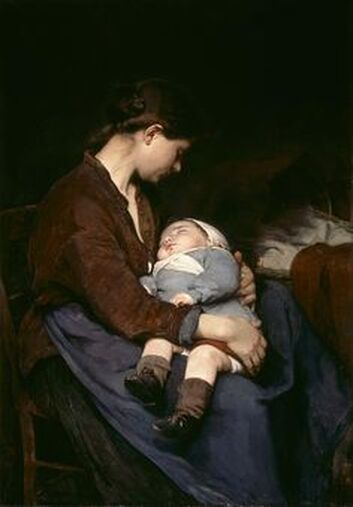
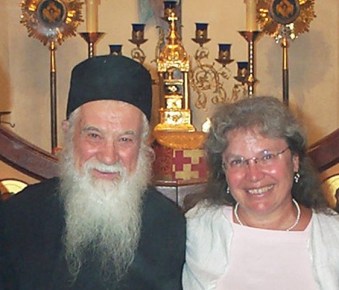
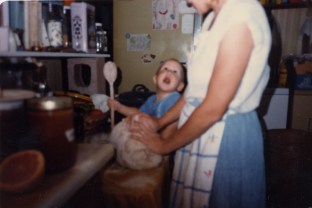 I have read many stories about people who, when as adults they found themselves in deep trouble and disorder from whatever source, for whatever reason, were sustained and preserved — and sometimes brought to repentance — by simple childhood memories of what was normal and good. Sometimes it was the thought of one sweet person, or one beautiful day, long ago embedded in their soul, like an ember still glowing. From this one bit of warmth and light they found the strength to pray and the courage to do whatever was necessary.
 Gladsome Lights